Top

AliExpress Partners With ‘The Moment3!’ NFT Project

Web3 & Enterprise·June 09, 2023, 11:33 PM

AliExpress, the renowned global e-commerce platform and subsidiary of China’s Alibaba Group, is making its entry into the world of non-fungible tokens (NFTs) through a newly announced partnership with The Moment3!, a Web3 project. The collaboration aims to release a collection of 5,555 NFTs later this month.
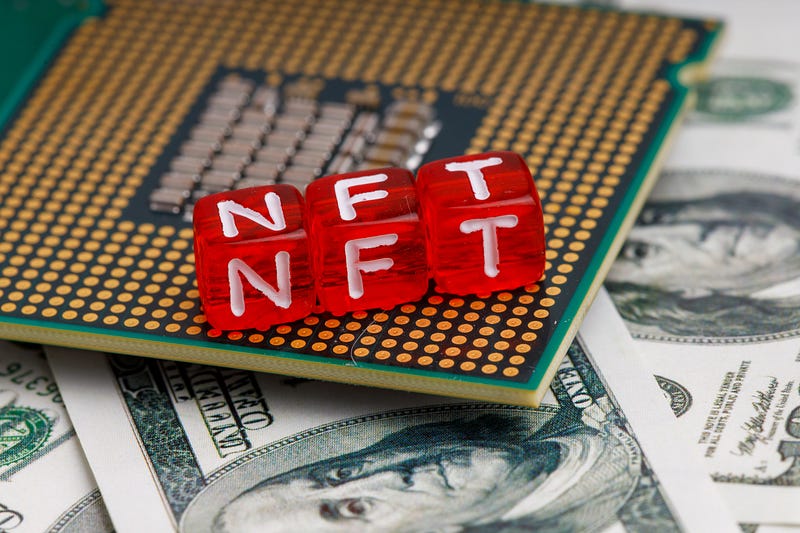
Photo by Andrey Metelev on Unsplash


What is ‘The Moment3!’?

Oddly, we know very little about the project. Its Telegram channel has just been established, it doesn’t have a website, while its Discord and Twitter channels are also recently established with modest followings. Anonymity is a feature in Web3 and perhaps that’s the approach this project is taking. Whatever the background, it has to be said that there must be some talent behind the project for it to secure the backing of an entity like AliExpress by way of this partnership.

This recent announcement was initially made on AliExpress’ official Twitter account but that tweet has since been removed. The project itself tweeted out news of the partnership on Thursday. The Moment3!’s mission, as stated in its Twitter bio, revolves around utilizing NFTs to immortalize special moments on the blockchain.

According to the project’s Discord channel, The Moment3! aims to connect with real-world businesses and provide NFT owners with benefits and exclusive rights beyond the collectible value.


NFT debut

This marks AliExpress’ initial venture into the NFT market, although its parent company, Alibaba, has previously explored the Web3 space. In September 2022, Alibaba’s luxury shopping platform, Tmall Luxury Pavilion, introduced an immersive shopping metaverse experience and introduced the Meta Pass, granting users free access to virtual experiences.


Alibaba-Centric Web3 projects

There have been several other Web3-related investments and developments related to Alibaba Group companies in recent months.

Last month, Alibaba Cloud, one of the world’s largest cloud computing companies, joined forces with the Avalanche layer one blockchain project to introduce “Cloudverse,” a launchpad facilitating the creation of personalized spaces within the metaverse for businesses.

In April Alibaba Cloud was the co-organizer of the Web3 Festival, an event held in Hong Kong to showcase the autonomous Chinese territory for the development of the Web3 sector. The four-day event attracted 10,000 attendees.

In early May, Artifact Labs, a Hong Kong-based start-up company that specializes in metaverse and Web3 product offerings, raised $3.25 million in a funding round led by Blue Pool Capital. The investment firm is the personal investment vehicle of Alibaba founders Jack Ma and Joe Tsai.


NFT warning

AliExpress, owned by Alibaba Group, is a global e-commerce platform that does not cater to customers in mainland China, despite being headquartered in China. The Chinese government prohibited all cryptocurrency transactions in September 2021. NFTs remained legal although authorities recently issued a warning on their use, together with some guidelines.

With its new collaboration, AliExpress is expanding its reach into the Web3 space and exploring the potential of NFTs. As the release date approaches, anticipation grows to witness the specific features and benefits offered by the 5,555 NFTs that will soon be available to the public.


More to Read
View All
Web3 & Enterprise·

Jul 07, 2023

Korea Fintech Industry Association Establishes Council for Security Tokens

Korea Fintech Industry Association Establishes Council for Security TokensThe Korea Fintech Industry Association (KORFIN) has recently held a successful kickoff meeting to launch the Fintech Council for Security Tokens. Comprised of 18 members specializing in security token-related fields, including blockchain technology and fractional investments, the council aims to expand its membership by inviting more enterprises interested in security token projects.Current participants in the council include The Seed Partners, a venture capital firm; Lucentblock, a blockchain-based real estate securities platform provider; and Leadpoint System, a blockchain tech developer.Photo by Ethan Brooke on UnsplashActivities for ecosystem growthThe purpose of the council is to foster the growth of the security token ecosystem by undertaking various activities. These activities encompass engaging in discussions to strengthen the security token industry, conducting research on policy development, and seeking expert consultations.Promoting innovationLee Keun-ju, the President of KORFIN, expressed the association’s commitment to supporting fintech companies in realizing their innovative ideas in the industry. In line with this commitment, KORFIN will organize a range of events, including educational courses and seminars, to facilitate knowledge sharing and enable fintech companies to establish valuable business network connections.Growing enthusiasmSince the Korean Financial Services Commission (FSC) authorized the issuance and trading of security tokens in February, the interest in security tokens has gained momentum within the country. This growing enthusiasm aligns with the global trend, as highlighted in a 2022 report by Boston Consulting Group (BCG) and Singaporean investment platform ADDX, which projected that the global market for illiquid tokenized assets would hit $16 trillion by 2030.

news
Markets·

Apr 21, 2023

True Potential of Asian Crypto ETFs Yet to Be Realized

True Potential of Asian Crypto ETFs Yet to Be RealizedA recently published report by Hong Kong Exchanges and Clearing Ltd. (HKEX), the Hong Kong stock exchange, has found that crypto exchange traded funds (ETFs) have the potential to play a significant part in unlocking the next phase of digital asset expansion in Asia.©Pexels/Burak The WeekenderThe report, titled “Crypto ETF: Key to unlocking the next phase of digital asset growth in Asia,” highlights how crypto ETFs could attract more institutional investors and lead to increased liquidity in the digital asset market. Furthermore, HKEX claims that the ETF investment mechanism can play its part in offering a more regulated and safe manner through which investors can gain exposure to digital assets.Regulatory progressWhile the report cites an Asian regulatory environment that is becoming increasingly more supportive of digital assets of late, it still identifies a need for further progress to be made to improve the level of regulatory clarity and to provide a truly standardized approach to digital assets. That, it says, will result in crypto ETFs becoming more accessible, offering a diversified way in which the investor can access and gain exposure to digital assets in Asia.Nonetheless, HKEX applauds the work done thus far by regulatory authorities in Hong Kong and Singapore, where regulatory frameworks relative to crypto ETFs have been implemented. Those are measures that the Hong Kong stock exchange believes will increase investor confidence, and in turn, bring about further adoption of digital assets.Modest daily trading volumeBetween December 16 and February 7 the two Bitcoin ETFs and one Ether ETF listed on the Hong Kong stock exchange achieved a daily trading volume of $1.19 million. That’s rather underwhelming when compared with the $3 billion in daily volume being achieved by the Chicago Mercantile Exchange (CME) relative to its Bitcoin and Ether futures ETF in the United States. On the New York stock exchange ProShares Bitcoin Strategy ETF achieves a daily average trading volume of $196 million.These findings are a bit counter-intuitive given the contrasting regulatory approaches in the two territories. In the US, regulators have failed to approve a physically settled Bitcoin ETF. Furthermore, the Securities and Exchange Commission (SEC) has denied the attempts of Grayscale Bitcoin Investment Trust (GBTC) to convert the Bitcoin fund into an ETF. Meanwhile, Hong Kong has much more regulatory clarity but yet trading volume in crypto-related ETFs remains minuscule by comparison with the United States.Despite that, the report remains upbeat with regard to what can be achieved in the market with crypto-related ETFs. It makes a case for crypto ETFs as a means for traditional financial institutions to enter the digital assets market with relative ease. Similarly, it sees a role for global stock exchanges in facilitating future growth of crypto-related ETFs and in developing new ETF products that could unlock access to specific digital assets or bespoke investment strategies.

news
Policy & Regulation·

Feb 17, 2024

Ethiopia may be embracing Bitcoin mining with new data mining partnership

Ethiopian Investment Holdings, the largest sovereign wealth fund in Africa, has announced the signing of a memorandum of understanding (MoU), which is suspected to involve a deal on Bitcoin mining. Deal uncertaintyTaking to LinkedIn on Feb. 15, the sovereign wealth fund outlined details of a partnership with Data Center Service, a subsidiary of Hong Kong’s West Data Group. Separately, Kal Kassa, CEO of Ethiopian operations at Hashlabs Mining, posted on the X social media platform, outlining that it was a stakeholder in the project and that it involved Bitcoin mining. The matter lacks full confirmation however, given that Kassa subsequently deleted his post while the sovereign fund’s statement falls short of mentioning Bitcoin mining. Once verified, the project would signify a substantial investment of $250 million. It’s understood that the investment would be directed towards the establishment of state-of-the-art infrastructure tailored for data mining and artificial intelligence (AI) training operations within Ethiopia.Photo by Kelly on PexelsExploiting abundant energy resourcesA key component of this venture may involve the setup of Bitcoin mining operations utilizing Canaan Avalon miners. This initiative would align with Ethiopia's broader strategy to capitalize on its abundant energy resources to attract international investment and stimulate economic growth.Ethiopia has about 5,200 MW of installed generation capacity, 90% of it coming from hydropower and the remainder from wind and thermal sources. While the official confirmation from the government is pending, the ambitious project has sparked both excitement and skepticism within the industry. Concerns linger regarding the energy-intensive nature of Bitcoin mining and its potential strain on the local electricity supply, an issue of particular relevance in a nation where energy accessibility remains a pressing challenge for many. Bloomberg reportEarlier this month, a report from Bloomberg highlighted Ethiopia as being a new haven for Chinese crypto miners. Following the imposition of a mining ban in China in 2021, many operations were redeployed overseas. Kazakhstan in particular was a popular choice. The Eurasian country wasn’t prepared for the influx, leading to power blackouts.Hashlabs Mining co-founders Jaran Mellerud and Alen Makhmetov both featured in the article. Mellerud outlined the difficulty, stating:“Firstly, countries can run out of available electricity, leaving no room for miners to expand. Secondly, miners can suddenly be deemed unwelcome by the government and be forced to pack up and leave.”Makhmetov outlined that he had a 10 MW facility in Kazakhstan which still sits idle today as curbs and taxes enforced in Kazakhstan on miners “basically killed the industry.” Despite these difficulties in Kazakhstan and China's official ban on cryptocurrency trading, the legalization of Bitcoin mining in Ethiopia in 2022 has spurred a notable influx of Chinese miners seeking new investment avenues. Ethiopia will need to be mindful of the difficulties experienced in Kazakhstan. With that, the Ethiopian government's move towards regulating cryptographic products, including mining activities, reflects a measured yet optimistic approach towards harnessing the economic potential of Bitcoin mining. This regulatory framework aims to strike a balance between fostering sector growth and safeguarding the country's energy security and environmental commitments.  

news
Loading