Top

Crypto.com Scores MPI License in Singapore

Policy & Regulation·June 02, 2023, 1:32 AM

In a significant move for the Web3 industry, the Monetary Authority of Singapore (MAS) has granted online crypto trading platform, Crypto.com, a Major Payment Institution (MPI) license. This regulatory development showcases Singapore’s commitment to welcoming innovation and embracing the potential of the Web3 sector.
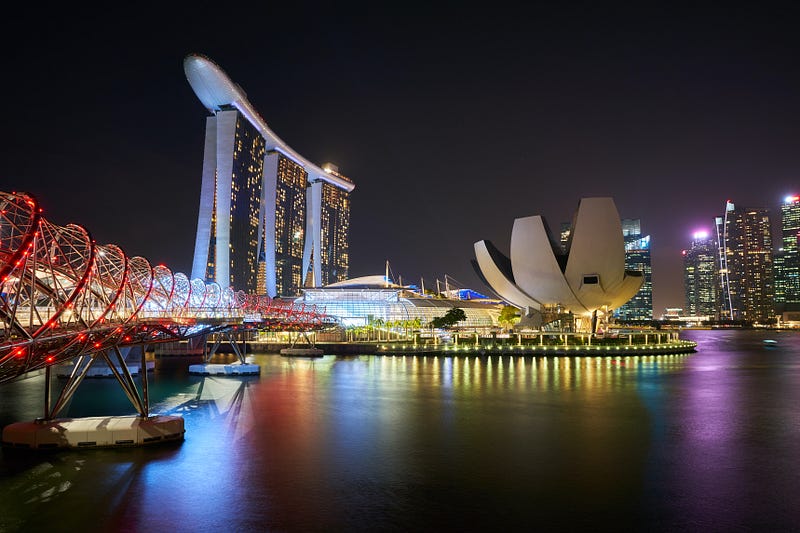
Photo by Timo Volz on Pexels


Licensing milestone

Crypto.com made the exciting announcement on Thursday, revealing that it has received the MPI license from the MAS, the country’s central bank and financial regulator. With this license in hand, Crypto.com can now provide its Digital Payment Token (DPT) services to residents of Singapore.

This achievement follows the in-principle approvals granted to Crypto.com by the MAS in June of the previous year, further highlighting the company’s adherence to regulatory standards and its dedication to operating within the guidelines set by financial authorities.


Community reaction

The news of the license has garnered positive reactions within the crypto community. Many members see the Singaporean government’s decision as a significant endorsement of the Web3 industry. ‘Aravind,’ a Twitter user, expressed this sentiment, stating, “Singapore government giving out a license is itself a massive plus for the Web3 Industry,” adding that it's probable the process to obtain the license has been hard fought, and likely two years in the making.

Interestingly, another community member drew comparisons between Crypto.com’s successes and the challenges faced by global crypto exchange, Binance. While Binance has encountered difficulties in various jurisdictions, Crypto.com has been praised for its steady progress and forward-looking approach.

Yet another Twitter user chimed in along similar lines, stating: “Whilst Binance seems to be losing ground, Crypto.com seems to be slowly doing things right and building for the future.”

Binance has recently faced setbacks, such as its diminishing presence in the Australian and Canadian markets and trading restrictions imposed in certain European countries. Reports have even surfaced suggesting that Binance plans to lay off 20% of its staff in June.

However, it’s important to note that Binance has not given up, as evidenced by its recent expansion into Thailand, where it established a regulatory-compliant platform. The exchange has also taken steps to ensure compliance in Japan through the creation of another regulatory-compliant platform.


Additional licenses

Crypto.com has set up its headquarters in Singapore, and it is in good company there with leading crypto firms Kraken and Coinbase also maintaining offices in the city state. The company has taken a truly global strategy, having marketed heavily in recent years. It maintains offices in nine other locations, including Miami, Dublin, London, Seoul, Malta, Sofia, Hong Kong and Shenzhen, as well as Kadıköy in Turkey.

The crypto trading platform has received a Minimal Viable Product (MVP) preparatory license from the Virtual Assets Regulatory Authority (VARA) in Dubai, alongside firms like Komainu, Hex Trust, and GC Exchange. The company has also successfully pursued digital asset licensing in France, Australia, and the United Kingdom.

Crypto.com’s acquisition of the MPI license in Singapore marks a significant milestone for the company and the broader Web3 industry. With Singapore embracing innovation and offering a favorable regulatory environment, Crypto.com is well-positioned to continue its growth and contribute to the advancement of the digital payment token ecosystem.

More to Read
View All
Policy & Regulation·

Feb 06, 2024

Thai SEC halts Zipmex operations amid financial concerns

The Thai Securities and Exchange Commission (SEC) has issued a directive mandating Zipmex, a Singapore-based digital asset trading and brokerage platform, to temporarily suspend its operations. This decision is driven by the SEC's call for significant changes in Zipmex's management structure and an improvement in its financial position. The regulator outlined that the cryptocurrency exchange can resume normal operations if it addresses these concerns.Photo by Dan Freeman on Unsplash15 days to rectify issuesIn an official announcement last Friday, the SEC conveyed that Zipmex has a specified period of 15 days to rectify its financial position and operational deficiencies, aligning with the prior orders from the financial regulator. The SEC emphasizes that once the crypto exchange fulfills the regulator's requirements, users should be able to resume fund withdrawals. The securities watchdog had initially issued an order to Zipmex on Jan. 12, instructing the exchange to adjust the maintenance of its net liquid capital and modify its business administration structure and personnel to enhance efficiency and protect customer interests. Anek Yooyuen, Deputy Secretary General of the SEC, explained the legal process involved, stating: "According to the process specified by law, if the digital asset business operator is unable to comply with the SEC’s orders within the specified period, the SEC may propose that the Minister of Finance consider revoking the order." Implementation of robust system to protect investorsIn addition to implementing the SEC's orders regarding its financial operation and operational deficiencies, the exchange is required to establish a robust system protecting investors' deposited assets against exploitation. Once these objectives have been achieved within the required timeframe, Zipmex is obligated to submit a report on these implementations for SEC approval, paving the way for the resumption of operations. The Thai regulator stated that “Zipmex will be able to resume normal business operations upon receiving permission from the SEC.” Longstanding regulatory scrutinyZipmex has been under the regulatory microscope since 2023, facing scrutiny following the company’s struggles off the back of the last crypto market downturn. The SEC's investigation includes a probe into an acquisition by V Ventures and whether Zipmex operated in Thailand without regulatory approval. V Ventures canceled its $100 million buyout of the company in 2023, which would have included the return of customer deposits. The Thoresen Thai Agencies subsidiary company deemed the entire deal terminated on the basis that Zipmex had not fulfilled its contractual obligations relative to the buyout. The platform suspended trading in November 2023, citing regulatory compliance as the reason. Despite the operational suspension, user withdrawals will remain accessible to facilitate an exit from the platform. The initial freeze of withdrawals in July 2022 due to Terra's ecosystem collapse, coupled with crypto lender bankruptcies, led Zipmex to seek court protection and legal assistance to raise capital for creditor payouts. The platform presented a reorganization plan last year, proposing creditor payouts of up to 30 cents on the dollar, subject to asset recovery. However, the initial offer was set at 3.35 cents, with the potential for a higher repayment figure based on the firm's eventual asset recovery. 

news
Web3 & Enterprise·

Aug 02, 2023

Binance Set For Japanese Market Re-Entry With 34 Token Listings

Binance Set For Japanese Market Re-Entry With 34 Token ListingsBinance, the world’s largest cryptocurrency exchange, is gearing up to re-enter the Japanese market with a bang on August 14. According to a report published by local crypto media outlet Coinpost, Binance Japan is set to immediately list an impressive 34 tokens.The move will put Binance ahead of its domestic rivals, as the offering will be the most extensive in terms of the selection of tokens made available to Japanese customers.Photo by David Edelstein on UnsplashBNB token offeringIn addition to that, Binance intends to make its native token, BNB, available in Japan for the first time. Exchange tokens have proven to be controversial in recent times. In November 2022, FTX’s reliance on their native token FTT caused a run on the exchange which Binance started once it started to sell off the token. Similar concerns have been expressed ever since about a similar reliance within Binance relative to its BNB token.The expansion into Japan will likely prove a tonic for Binance, given the difficulties it has experienced in other markets recently. Regulatory pushback has forced Binance out of markets such as Germany, Belgium, the Netherlands, and Cyprus over the course of the past three months.The company has been actively working to comply with Japan’s regulatory environment. In a Twitter video posted in July, Changpeng Zhao (CZ), Binance’s Founder and CEO, expressed his excitement about re-entering the Japanese market. He praised Japan’s clear and progressive approach to crypto regulations, citing the well-established framework that dates back to 2017, as well as recent developments, including the opening up of crypto listing frameworks and the passing of stablecoin regulations in June.Roadmap to market re-entryBinance’s journey back into Japan started in November 2022 when it acquired 100% ownership of Sakura Exchange BitCoin (SEBC). The acquisition paved the way for Binance to be regulated by the Japan Financial Services Agency (JFSA). As part of this move, SEBC underwent a name change, rebranding itself as Binance Japan Inc. The company then announced in May its plans to re-enter the Japanese market.The re-entry comes after the JFSA had previously issued warnings in 2021 against Binance for operating in the country without proper registration. Now, with the acquisition of SEBC and its regulatory compliance, Binance has gained a foothold in the Japanese market once again.Binance Japan aims to provide a comprehensive suite of services to its Japanese customers. New users can access spot trading, Earn products, and the NFT marketplace, while existing customers can migrate to the local subsidiary starting August 14. The token offerings include a diverse range of assets, and the addition of BNB presents exciting opportunities for traders and investors in Japan.Rival exchanges such as Coinbase and Kraken have decided to halt their operations in the country as they struggled to adjust to Japanese market conditions. The move by Binance to re-enter Japan’s market will be closely watched to see if it can succeed where others have failed.

news
Policy & Regulation·

Oct 04, 2023

Hong Kong’s Development as Crypto Hub May Soften Chinese Stance on Crypto

Hong Kong’s Development as Crypto Hub May Soften Chinese Stance on CryptoHong Kong is making waves in the crypto sector that could potentially signal a shift in China’s attitude toward digital assets. That’s a theory that has been given consideration by crypto analytics firm Chainalysis in a recently released report highlighting Hong Kong’s crypto transformation and suggesting a growing tolerance for crypto within China’s corridors of power.Photo by farfar on UnsplashOTC trade showing resilienceDespite China’s stringent regulations and the ongoing crypto market downturn, Hong Kong’s over-the-counter (OTC) crypto market has demonstrated remarkable resilience, with a transaction volume of $64 billion in the past year. While this is slightly less than China’s $86.4 billion, it’s a noteworthy achievement considering Hong Kong’s smaller population and the challenges facing the crypto industry.The close relationship between China and Hong Kong has led some industry commentators to speculate that Hong Kong’s rise as a crypto hub could indicate a shift in China’s stance on digital assets.The crypto-friendly environment in Hong Kong has not gone unnoticed. Merton Lam of Crypto HK, an OTC digital asset trading center in the city, notes that cryptocurrencies have become an integral part of investment portfolios for banks, private equity firms, and high-net-worth individuals in the region. Even Chinese state-owned businesses are launching cryptocurrency-focused investment funds.Hong Kong cornering institutional tradeWhat sets Hong Kong apart in the crypto landscape is its proficiency in large institutional crypto transactions, with 46.8% of its annual crypto trades exceeding $10 million. In contrast, retail trades under $10,000 accounted for just 4% of the city’s crypto volume, slightly below the global average of 4.7%. This institutional dominance distinguishes Hong Kong from other Asian regions.For comparison, South Korea heavily relies on retail trading on centralized exchanges, while Japan maintains a transaction breakdown that aligns closely with global trends, balancing centralized exchanges with DeFi protocols.A cautionary noteHowever, Dave Chapman of OSL Digital Securities offers a note of caution, suggesting that Hong Kong’s promotion as a crypto hub might be more exploratory, aimed at gaining a better understanding of digital assets without significantly loosening mainland policies.Despite the uncertainties, Markus Thielen, Head of Research and Strategy at Singapore’s Matrixport, believes that Hong Kong is acting as a “testing ground” for broader cryptocurrency adoption in China. The city’s unique position makes it an attractive destination for the crypto asset management industry, setting it apart from other jurisdictions that often view crypto firms as service providers rather than end-users.Hong Kong’s progress is particularly noteworthy when considering the broader context of East Asia’s crypto market. Chainalysis analysis reveals that East Asia’s share of crypto transaction value dropped from around 30% in 2019 to less than 10% by the second quarter of 2022 due to China’s crypto bans. Hong Kong’s recent surge could potentially act as a “tailwind” to reignite crypto activity in the region.The evolving relationship between the mainland and the autonomous territory of Hong Kong may hold the key to understanding the future of cryptocurrency in the region.

news
Loading