Top

Korean financial authority to heighten oversight on token listing with new guidelines

Policy & Regulation·March 27, 2024, 7:33 AM

The South Korean financial authority will establish new policies and guidelines for token listing and provide admirable examples from past listing events for local exchanges to follow, according to local media outlet News1


So far, fiat-to-crypto exchanges in Korea have been listing tokens on their platforms under a guideline issued by Digital Asset eXchange Alliance (DAXA) – a self-regulatory consultation group comprised of five major Korean crypto exchanges. The existing DAXA guideline outlines basic yet vague instructions, which have allowed exchanges to list tokens largely at their discretion. 


However, the new guideline from the financial authority, expected to be released by this June, will mark the government’s first official manual on token listing. This is in line with the upcoming Virtual Asset User Protection Act, which will be effective in July. 
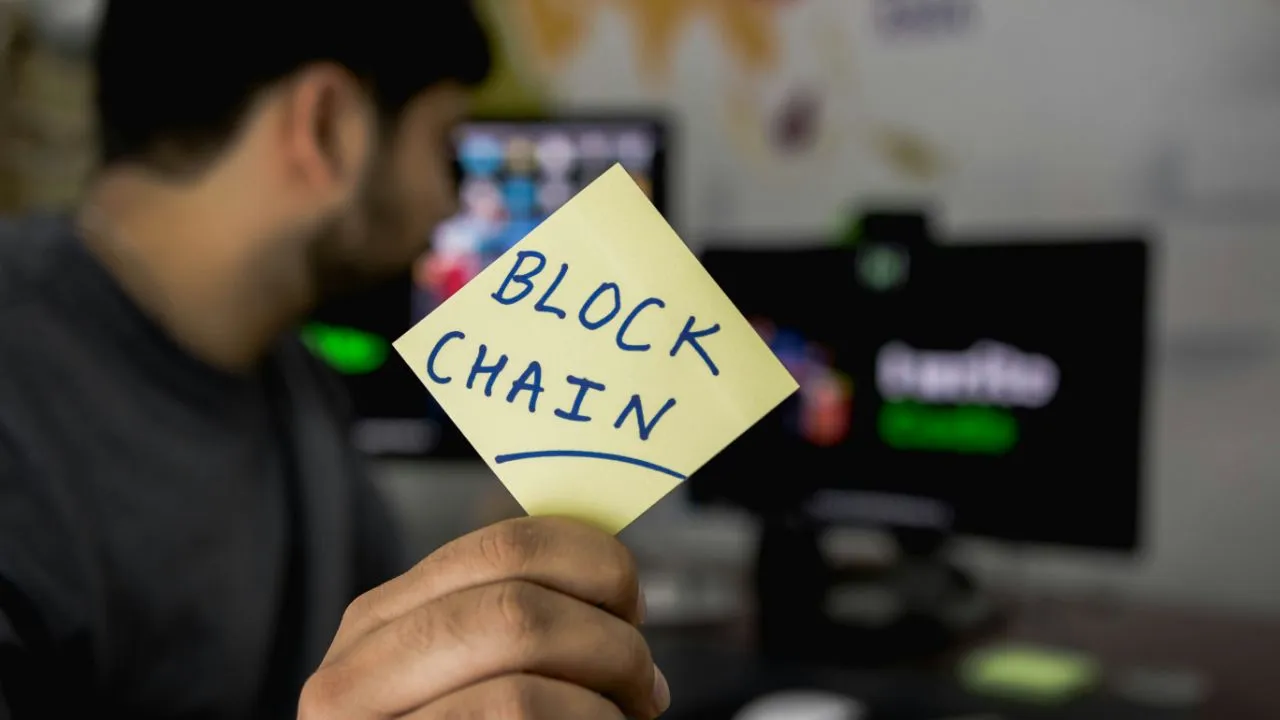
https://asset.coinness.com/en/news/8c990d27c74ed0a89c1ed24ddedf0331.webp
Photo by Hitesh Choudhary on Unsplash

Setting clear guidelines for token listings

The new guidelines are expected to include examples of past fraud detection and real-time monitoring cases which are deemed to have set precedents for the industry players. Moreover, the financial authority plans to distribute past exemplary cases of token listing as early as April, which is anticipated to set a model listing process and help local crypto exchanges adhere to the law and requirements. 


This announcement comes after the local game company Wemade relisted its native token WEMIX on Korbit, one of DAXA's member exchanges, just a year after it was delisted on major exchanges due to its deviant practices in token issuance. The relisting of WEMIX has since raised concerns among crypto insiders about the lack of criteria regarding token listings.


More refined token listing process 

As the crypto market's bullish trend continues, Bithumb and Coinone – the second and third-largest exchanges in Korea – are stepping up their efforts to speed up the listing of new coins. Industry experts expect these exchanges will double down on their efforts in screening and reviewing processes for tokens to align with the new guidelines in the future. 


An official from the Korean Financial Intelligence Unit (FIU) said that while the anticipated listing process is not legally binding, it will definitely have a more profound impact on local crypto exchanges compared to the self-regulated DAXA guidelines. 


More to Read
View All
Web3 & Enterprise·

Jun 07, 2023

Korea’s Traditional Customer Rewards Program Embraces NFTs

Korea’s Traditional Customer Rewards Program Embraces NFTsSouth Korean tech company SK Planet, the operator of the popular customer rewards program OK Cashbag, made an exciting announcement for points collectors today. In a recent press release, it revealed the launch of its new non-fungible token (NFT) membership program called “Road to Rich.”Photo by Markus Winkler on PexelsRewards program meets NFTsFor over two decades, OK Cashbag has been a beloved membership service for Korean consumers. Now, members can embark on a journey through the Road to Rich program, accompanied by a rabbit character NFT. By completing daily quests, participants will earn rewards such as OK Cashbag points. As they progress on their journey, users can even level up their character, with the ultimate goal of reaching level 5. At this pinnacle, users will receive a tradable TEM NFT, offering customized everyday benefits.Decentralized walletSK Planet, an affiliate of the South Korean conglomerate SK Group, has also introduced a new decentralized wallet called UPTN Station. Built on the Avalanche subnet, UPTN Station empowers users to store and transfer various digital assets, including NFTs. To enjoy the Road to Rich program, the installation of UPTN Station is required.Gaming and rewardsNotably, the Road to Rich program comprises two gaming episodes to further captivate its users and encourage active participation. Any OK Cashbag member aged 19 or older can partake in the first episode and mint their own rabbit NFT at no cost.Kim Kyo-soo, the head of SK Planet’s customer experience division, expressed enthusiasm about the NFT program, highlighting its ability to make Web3 experiences second nature for users. Moreover, he mentioned plans for future collaborations with SK Group affiliates and other partners, aiming to provide an extensive range of services.

news
Web3 & Enterprise·

Dec 20, 2023

Alchemy Pay plugs into Worldpay’s payment rails

Singaporean fintech Alchemy Pay, specializing in crypto payments, has inked a partnership with Worldpay, a well-known payment processor based in the United Kingdom.Photo by Markus Winkler on Unsplash More seamless crypto transactionsThe collaboration, announced on Tuesday, enables Alchemy Pay users to leverage Worldpay’s extensive Visa and Mastercard payment rails, facilitating more seamless cryptocurrency transactions via credit and debit cards. In addition, the parties have agreed that at some stage in the future, Worldpay’s payment channels will add support for Alchemy Pay’s NFT Checkout.Robert McCracken, the Ecosystem Lead at Alchemy, expressed the strategic advantage of the partnership, stating:“Alchemy Pay is now better positioned to assist our business partners and users in seamless cryptocurrency transactions worldwide.”This move aligns with Alchemy Pay’s broader mission of promoting global adoption of digital assets by connecting fiat to the Web3 economy.Nabil Manji, Head of Crypto and Web3 at Worldpay, emphasized the alignment of goals between the two entities. He stated: “Alchemy Pay’s mission to promote global adoption of digital assets by connecting fiat to the Web3 economy is aligned with Worldpay’s role in bridging the gap between traditional and digital finance.”Founded in 2018, Alchemy has established itself as a fiat-to-crypto onboard processor, supporting over 50 fiat currencies through platforms like Google Pay, Apple Pay and various mobile wallets. Licensing driveThe announcement follows Alchemy’s recent acquisition of a money service license in the U.S. state of Iowa on Nov. 23, building on its approval for a similar license in Arkansas in September. The firm has indicated that not only does it have other state licensing applications in the works but that it expects to be in a position to announce further approvals over the coming weeks.The Singaporean company has also been paying attention to licensing requirements elsewhere. In February Alchemy, alongside fintech firm PT Berkah Digital, jointly obtained licensing from the Central Bank of Indonesia. Pursuing collaborationsAlchemy Pay has had a steady stream of announcements relating to industry partnerships in 2023. In July it inked a deal with Checkout.com, allowing the firm to integrate Checkout.com’s Visa and Mastercard channels into its on and off-ramps.In recent weeks, the company introduced new payment options, linking in with Single Euro Payments Area (SEPA) Instant in Europe and the Faster Payments platform in the United Kingdom. Alchemy Pay also struck up a deal with self-custody crypto wallet Trust Wallet. It meant that Trust Wallet’s 70 million users could execute crypto transactions directly with fiat payments.Back in May, the payments gateway announced the provision of a rupee-denominated on-ramp via India’s UPI real-time payments system. Worldpay integrationsWorldpay, owned by Fidelity National Information Services (FIS), has been actively integrating with Web3 technologies. In July 2021, the firm partnered with OKCoin to provide infrastructure for the exchange’s fiat-to-crypto onboarding.Additionally, in October 2022, the digital asset custody platform Fireblocks launched a new payment engine for merchants, with Worldpay serving as one of the pilot partners alongside Checkout.com.

news
Web3 & Enterprise·

Nov 16, 2023

OKX collaborates with Polygon Labs on layer-2 network launch

OKX collaborates with Polygon Labs on layer-2 network launchSeychelles-incorporated OKX, one of the world’s largest cryptocurrency exchanges, has collaborated with blockchain development firm Polygon Labs to unveil the testnet for its latest zero-knowledge layer-2 network, named “X1.”Photo by Shubham Dhage on UnsplashIntroducing “X1”The company announced initial details on X1 via a press release published on Tuesday. This Ethereum-based ZK network has been constructed using the Polygon Chain Development Kit (CDK), with OKX playing a pivotal role as a core contributor to the CDK. Substantial engineering resources are being invested by OKX to strengthen the Ethereum scaling solution.The new network will serve to bolster the utility of OKX's native token, OKB. OKB will be used for X1’s gas fees. There has been a lot of chatter about the utility of exchange tokens following the collapse of FTX, as that platform was over-reliant on its native token in propping up the exchange. Similarly, critics are speculating that a comparable dynamic may be at play at Binance, relative to its native token BNB.Likely buoyed by news of this development, OKB observed a 10% unit price increase on Tuesday. However, that move has retraced downwards in the meantime.ZK proof technologyX1 has been designed with ZK proofs, a method through which one party can convince another that a particular claim is true without disclosing details of the claim itself. In this way, X1 ensures high security and scalability while mitigating transaction costs. The network seamlessly aligns with Ethereum, facilitating the secure deployment of EVM-based dApps and connectivity with a wide array of smart contracts, wallets and tools. OKX underscores X1’s status as its new native network.Chief Innovation Officer of OKX, Jason Lau, expressed optimism about X1, deeming it integral to the firm’s efforts in guiding users into the realm of Web3. Lau emphasized the scalability and accessibility of X1, especially for developers who can leverage it to construct user-friendly Web3 applications while maintaining interoperability with other networks.The collaboration with Polygon Labs marks another milestone in the evolution of Polygon’s CDK. Launched in August, the CDK enables the development of layer-2 blockchains on Ethereum, emphasizing zero-knowledge proofs. Networks deployed using the CDK gain the ability to connect to a shared ZK bridge, fostering interoperability.Sandeep Nailwal, co-founder of Polygon, underscored the significance of X1’s adoption of Polygon CDK technology, envisioning a future where CDK-deployed chains interoperate and coexist within a larger network of ZK-powered layer 2s in the Polygon CDK ecosystem. The CDK has gained traction, with various Layer 2s, including Immutable zkEVM, IDEX, Palm Network and Astar zkEVM, currently in development using this technology.Industry trendA trend is developing among crypto exchange platforms and their involvement in establishing layer two networks. Earlier this year, U.S. crypto platform Coinbase introduced the Base network, an Ethereum layer-2 network that focuses on offering a safe, low-cost and developer-friendly mechanism to build on-chain.Last week, it emerged that another leading U.S.-based crypto platform, Kraken, is on the lookout for a development partner to enable it in building out its own layer-2 blockchain network. According to those reports, it’s understood that Kraken is considering partnering with Polygon Labs, Matter Labs or the Nil Foundation.As this OKX-Polygon Labs collaboration progresses, the industry will continue to observe how X1, with its innovative technology stack and seamless integration with Ethereum, contributes towards broader Web3 development.

news
Loading