Top

STX Token Debuts on Korean Exchange Bithumb

Markets·May 23, 2023, 3:53 AM

STX, the native token of the Stacks network, made its debut on the KRW market of Bithumb, a renowned Korean cryptocurrency exchange, at noon (Korea Standard Time) on Tuesday. The listing price is 828.5 KRW per unit.

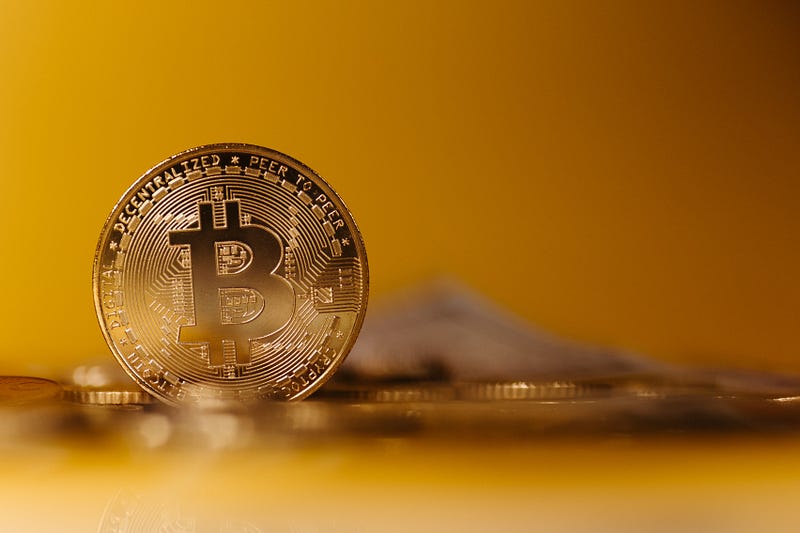
Photo by Jonathan Borba on Unsplash


Bitcoin scalability solution

Stacks is a Bitcoin scalability solution that addresses the challenge of transaction latency through the use of microblocks. It utilizes the programming language Clarity and benefits from the security of Bitcoin by employing its unique consensus algorithm called Proof of Transfer (PoX). This mechanism enables Stacks to settle transactions on the Bitcoin network.

Stacks is one of the most anticipated projects associated with Bitcoin, and its token was approved by the U.S. Securities and Exchange Commission in 2019.


STX token usage

The STX token serves multiple purposes within the Stacks blockchain ecosystem. Users can utilize it for stacking, participating in governance activities, and paying transaction fees.

More to Read
View All
Web3 & Enterprise·

Jan 15, 2024

Lotte Data Communication showcases metaverse and EV charging platform at CES 2024

Lotte Data Communication, the IT service management unit of South Korean conglomerate LG Group, brought its hyperrealistic metaverse platform Caliverse and electric vehicle charging platform EVSIS to the stage at CES 2024, attracting great interest from stakeholders from around the world, according to an article by South Korean news outlet KG News.Photo by GuerrillaBuzz on UnsplashExploring tomorrow's technologyCES is one of the biggest annual tech conventions in the world organized by Consumer Technology Association, where companies and other industry leaders gather in Las Vegas to showcase their innovations and visions for a future led by advanced technology. This year’s event was held from Jan. 9 to 12.  AI takes the spotlightIn particular, user-engaging technologies such as generative AI received much attention at the convention, such as AI mobile scanning, which allows anyone to take a picture of their product with a mobile device and virtually create their own digital object in less than five minutes. Another new technology called metaverse live streaming allows users to interact with each other in the virtual space in real-time by replicating their appearance. Standing at the forefront of the IT industryLotte’s Caliverse platform provides deeply immersive content based on world-class technologies such as ultra-high-definition VR shots, image synthesis and real-time rendering graphics. It can also be experienced through a head-mounted display (HMD) as well as most other electronic devices such as 3D monitors, PCs and smartphones, maximizing user accessibility. The company also showcased various EV chargers and digital platforms that are used in its other new product EVSIS, gaining popularity among visitors at the event. Lotte aims to further establish itself as a global market leader in the IT industry based on these cutting-edge platforms.

news
Policy & Regulation·

Jun 13, 2023

BOCI Partners with UBS in Hong Kong on First Tokenized Notes

BOCI Partners with UBS in Hong Kong on First Tokenized NotesIn a groundbreaking move, the investment arm of the Bank of China (BOCI), has partnered with Switzerland-headquartered global financial services company UBS, to issue tokenized notes in Hong Kong.Photo by Eric Prouzet on UnsplashHong Kong’s first tokenized notesThis marks the first instance of a Chinese financial institution issuing a tokenized note in the region. Leveraging the power of blockchain technology, the notes were tokenized on the Ethereum blockchain. UBS announced the milestone development via a press release published to its website on Friday.The Swiss banking giant has some expertise in this area, having first issued a tokenized fixed rate note in December 2022, recorded on a permissioned blockchain and established under English and Swiss law. On this occasion, the Hong Kong-issued tokenized notes will be compliant in terms of both Swiss and Hong Kong law.The issuance of these tokenized notes involved a significant amount, with BOCI issuing 200 million Chinese yuan worth of notes, equivalent to approximately $28 million. The collaboration with UBS aims to simplify digital asset markets and products for customers in the Asia Pacific region, specifically by developing blockchain-based digital structured products tailored to their needs.Ying Wang, Deputy CEO at BOCI, expressed enthusiasm for the digital transformation and innovative development of Hong Kong’s financial industry, recognizing the evolving digital economy in the region. Wang expressed the view that the development puts BOCI “at the forefront of innovation in technology finance and digital finance.”She sees the UBS collaboration as a means of driving “the simplification of digital asset markets and products, for customers in Asia Pacific through the development of blockchain-based digital structured products, designed specifically for customers in Asia Pacific.”Embracing digital assetsHong Kong has been actively working towards establishing itself as a hub for cryptocurrencies. Paul Chan Mo-po, the Chinese autonomous territory’s Financial Secretary, has emphasized the region’s intention to embrace regulation in this domain. Despite recent fluctuations in the virtual asset market and the closure of certain virtual asset exchanges, Chan remains optimistic about the prospects of Web3 and believes it is the opportune moment to drive its advancement.This month, Hong Kong lifted its ban on crypto retail trading and encouraged crypto exchanges to seek licenses within the region. The Securities and Futures Commission (SFC) has introduced exchange guidelines, leading firms such as Huobi, OKX, and BitMEX to express their intentions to apply for licenses in Hong Kong. Furthermore, in light of the recent lawsuit filed by the SEC against Coinbase, Hong Kong legislator Johnny Ng extended an invitation to the exchange to establish a hub in Hong Kong.The collaboration between BOCI and UBS is significant as unlike UBS’ previous tokenized note project which was established on a permissioned blockchain, this Hong Kong-based project is making use of Ethereum. By issuing tokenized notes on the Ethereum blockchain, these institutions are exploring the decentralized potential of digital assets and paving the way for further innovation in the Asia Pacific region.

news
Web3 & Enterprise·

Oct 27, 2023

Bithumb and Korbit Struggle to Gain Traction Despite Zero Trading Fees

Bithumb and Korbit Struggle to Gain Traction Despite Zero Trading FeesSouth Korean cryptocurrency exchanges Bithumb and Korbit have recently eliminated trading fees, but their bold decision hasn’t yielded much results. Bithumb was the first to implement this change and attracted users for about a week, but it is now seeing a loss in market share. Korbit, following Bithumb’s example, is also struggling to achieve meaningful outcomes.Photo by Alexander Grey on UnsplashLimited impactLocal media outlet Chosun Biz used data from crypto data platform CoinGecko to draw this conclusion. On October 26, Korbit’s daily trading volume represented 0.19% of the total trading volume among South Korea’s top five crypto exchanges (Upbit, Bithumb, Coinone, Korbit, and Gopax). This figure marked a 0.14 percentage point increase compared to the 0.05% recorded on October 19. Korbit had implemented a zero trading fee policy at 9 a.m. (KST) on October 20. Additionally, they launched a promotion offering KRW 5,000 ($3.69) worth of bitcoin to users who transferred virtual assets totaling KRW 1 million or more from Travel Rule-compliant exchanges to Korbit. While the promotion did contribute to Korbit’s market share, it still remains below 1%.Bithumb’s performance showed some improvement, albeit briefly. As of October 26, Bithumb’s market share stood at 18%, marking a 4.7 percentage point increase from its 13.3% share on October 3, the day before it eliminated trading fees. However, it’s worth noting that its market share had reached almost 30% shortly after the promotion’s launch. This indicates that its strategy is losing efficacy over time.The less-than-enthusiastic results from their daring marketing endeavors can be attributed to their inability to draw in retail investors. To begin with, Upbit, the leading player in the market, had already been providing a relatively low fee of 0.05%. Furthermore, adapting to new user interfaces on these exchanges posed a challenge. Zero trading fees weren’t attractive enough for crypto investors to leave their current platforms.Trading volume mattersIn the case of Korbit, its lower trading volume was a disadvantage when it came to attracting users. On crypto exchanges, a higher trading volume typically translates to faster trade executions. As a result, users of Korbit might experience delays in executing trades at their preferred price.Jeong Hye-won, a research associate at crypto data analytics platform Xangle, told Chosun Biz that users on exchanges with lower trading volumes tend to experience slippages due to slower transaction speeds and sparsely populated order books. A slippage means the difference between the initially placed order price and the executed order price. Jeong further explained that Korbit’s zero trading fee policy didn’t have a significant impact because it offers fewer listed tokens compared to Upbit and Bithumb.There is speculation that the free-trading fee promotions introduced by Bithumb and Korbit, despite their revenue sacrifices, might conclude sooner than initially anticipated due to their perceived ineffectiveness. Bithumb derives 99.95% of its revenue from trading fees, while Korbit relies on trading fees for 99.79% of its income. An industry insider has commented that trading fees play a vital role in an exchange’s revenue, and given Bithumb’s reported loss in earnings during the second quarter, there are concerns about their capacity to sustain this strategy.

news
Loading