Top

OKX Wallet to Support BRC-20 Tokens and Bitcoin Ordinals

Web3 & Enterprise·May 17, 2023, 12:23 AM

In a press release published on Tuesday, Seychelles-based cryptocurrency spot and derivatives exchange OKX announced that it is in the process of enabling an Ordinals marketplace on the OKX Wallet, which will enable customers to mint and trade BRC-20 tokens.
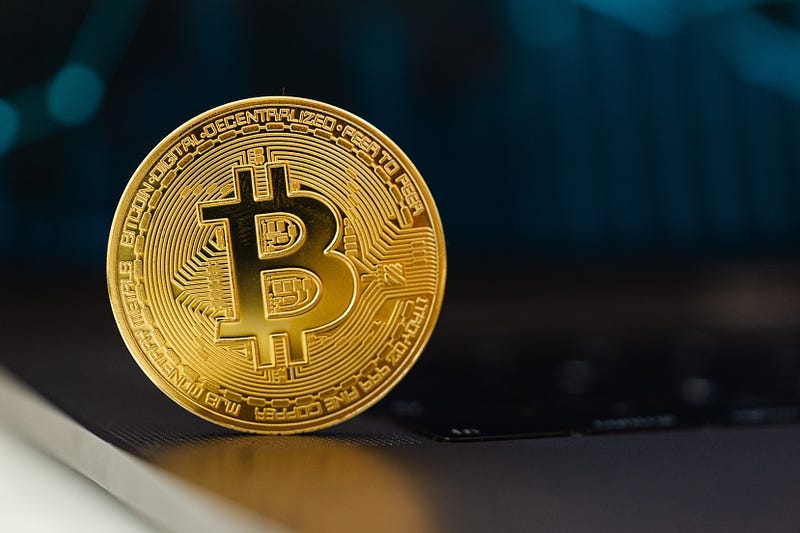
Photo by Karolina Grabowska on Pexels


Rising BRC-20 market cap

The move will also enable users to inscribe non-fungible token (NFT)-based digital content on the Bitcoin blockchain by way of ordinal inscriptions. The market capitalization of BRC-20 tokens has been rising exponentially over the course of the past few weeks despite only being in existence since March.

BRC-20 is an experimental token standard which was created by an anonymous developer with the handle “Domo” and username ‘@domodata’ on Twitter. A token standard governs how and where a cryptocurrency can be used. The approach has been pioneered by developers on the Ethereum blockchain who created the ERC-20 standard a number of years ago, relative to the Ethereum network.

OKX has clearly identified a rising trend and wants to be an early adopter in benefiting from it. In their short existence, BRC-20 tokens have mainly implicated meme tokens but as more experimentation follows, use cases that rely on the token standard are likely to expand.

Binance has signaled a similar intent, having stated last week that before the month is out, Bitcoin Ordinals will be added to its NFT marketplace. Ordinals preceded the development of the BRC-20 standard by a couple of months, with over five million of the inscriptions having been generated since they emerged. It’s believed that the minting of those Ordinals has generated fees to the value of around 1,000 BTC (or $27 million as per the BTC/USD price at the time of publication).


Growing pains

While the emergence of the BRC-20 standard and Bitcoin Ordinals brings quite a lot of excitement to a bitcoin blockchain that many found to be boring and lacking diversity in terms of potential use cases, it’s not been without its problems. On the one hand, these tokens and inscriptions make use of unused block space on the network.

They also offer a solution to the longer term issue of a reduction in fees. The bitcoin blockchain in-built subsidy to miners is halved every four years, meaning that there will be a need for fees to sustain the incentive to miners to continue to secure the network.

The downside to these recent developments is that the new tokens are going beyond using up unused block space. Instead, they’ve been responsible for driving Bitcoin transaction fees up to uncomfortable levels over the course of the past two weeks. It’s still early days in terms of this development, so there is every hope that developers can find solutions to the issue.

Last week, Singapore-based project OmniBOLT announced that it will support BRC-20 tokens on Lightning Network. Taking some of this activity away from the bitcoin mainnet will serve to dampen excessive transaction costs and transaction delays due to an excessively long queue of transactions within the bitcoin mempool.

The recent transaction cost difficulty relative to Bitcoin has prompted Binance to respond by stating its intention to add support for Lightning Network transactions in the not too distant future. OKX already supports Lightning transactions but not from within its wallet. As part of this announcement, the company stated that Lightning support will be coming to its wallet in the near future.
More to Read
View All
Policy & Regulation·

Aug 10, 2023

$120M Crypto Ponzi Scheme Exposed in India

$120M Crypto Ponzi Scheme Exposed in IndiaIn a recent crackdown, local authorities in the state of Odisha in India, have dismantled a massive $120 million cryptocurrency Ponzi scheme.That’s according to a report by local news agency ANI earlier this week. The operation led by the Economic Offences Wing (EOW) of the state police has resulted in the arrest of key individuals orchestrating the fraudulent endeavor. This latest development underscores the growing concerns around cryptocurrency scams and their detrimental impact on investors.Photo by Ayiman Mohanty on UnsplashSTA crypto tokenThe mastermind behind the Ponzi scheme had adeptly evaded capture by frequently changing locations. The scheme, operating across India, revolved around the STA crypto token, a digital asset at the heart of the fraudulent activities.Similar to the infamous OneCoin scandal, where billions were swindled from unsuspecting investors, the STA token scheme exploited victims who had invested in the token and then recruited others under the guise of a multi-level marketing initiative. Promised bonuses and extravagant returns were used as bait to lure individuals into the scheme, which eventually unraveled, leaving numerous investors financially devastated.Unregulated token offeringReports highlight that the STA token was not authorized by any regulatory body. This glaring absence of oversight enabled the scammers to continue their operations unchecked. The nature of the scheme involved recruiting victims in various Indian states who were promised substantial returns. These victims, in turn, were enticed to bring in new investors, creating a vicious cycle of recruitment and investment.The investigation into the scheme revealed that the STA token offering attracted individuals through aggressive promotional strategies. This allowed the scheme to establish a vast network across India, involving approximately 200,000 individuals. The victims were led to believe that their investments would yield significant bonuses and returns, a tactic that echoes the tactics used by OneCoin promoters.False claimsThe STA token was introduced in September 2021 and rapidly established a presence on social media platforms, presenting itself as a legitimate cryptocurrency. It falsely claimed to be a blockchain-based platform connecting users with local farmers. This facade lent an air of legitimacy to the scheme, effectively deceiving unsuspecting investors.The scheme’s audacity was further highlighted by a grand event hosted by STA criminal promoters in a luxurious hotel in Goa. This extravagant affair aimed to further legitimize the project and attract more victims.This incident adds to a series of cryptocurrency-related scams that have plagued India. The GainBitcoin scam, which came to light last year, led to the loss of over $1.25 billion for around 100,000 victims. The Indian authorities have responded by issuing public advisories warning citizens against falling victim to such schemes that promise quick wealth through cryptocurrency investments.In a recent parliamentary session, Minister of State for Finance Pankaj Chaudhary revealed that the Enforcement Directorate (ED) is actively investigating multiple instances of cryptocurrency-related fraud. These investigations have uncovered proceeds of crime amounting to over $130 million.

news
Policy & Regulation·

Apr 10, 2023

Four Pillars for Success in Korean Security Token Market

Four Pillars for Success in Korean Security Token MarketOn Wednesday, blockchain experts in various fields gathered at the 2023 Blockchain Meetup Conference held in Seoul to discuss issues with security tokens and their outlook.©Pexels/Alesia KozikWhat attracted security token businesses’ attention at the meeting was a presentation by Jung Eui-heon from Lambda256, a subsidiary of Korean crypto exchange Upbit’s operator Dunamu. He shared four pillars for success in the Korean security token market.Security tokens gaining traction in KoreaSecurity tokens have been a trending topic in the Korean blockchain industry since the Korean Financial Services Commission (FSC) allowed the issuance and trading of security tokens last February. Furthermore, a 2022 report jointly published by Boston Consulting Group and Singaporean investment platform ADDX predicted that the total size of illiquid tokenized assets worldwide would reach $16 trillion by 2030.Against this backdrop, here are the four keys to successful security token projects that Jung outlined.Technology adaptationFirst, he emphasized the importance of adopting rapidly changing technology. To tackle the issue, he suggested teaming up with advanced tech companies for long-term collaboration. When choosing tech partners, companies should ensure they are sustainable, possess technological prowess, hold credibility on high volume transactions, and maintain the security level of financial institutions, Jung advised.Forging partnershipsThe second point he mentioned was the need to forge partnerships. The FSC’s February guideline requires the issuance and distribution of security tokens to be managed separately. This means that security token projects require collaboration between issuers, distributors, account managers, asset holders, and tech companies.New securities productsJung also noted that discovering new securities products is crucial. Partnering with existing fractional investing companies may help accelerate the security token project initially, but in the long run, enterprises will eventually have to create products in various fields such as gaming, movies, and entertainment.Token liquidityLastly, Jung underlined the token liquidity, which plays a crucial role in determining its prices. Issuers will need to find various distributors and vice versa. Securing liquidity requires the establishment of a technical standard that improves interoperability and compatibility, he highlighted.

news
Policy & Regulation·

Dec 05, 2023

Terraform Labs fails to halt class action lawsuit

Terraform Labs fails to halt class action lawsuitThe High Court in Singapore has dismissed an appeal filed by Terraform Labs and its co-founders, marking a significant step forward for the plaintiffs behind a class action initiated against the company.That’s according to a report published by Singaporean publication, the Business Times, on Thursday. The legal development follows the collapse of TerraUSD (UST) tokens in May of 2022, resulting in the loss of billions of dollars in market value. The collapse, in turn, has led to several lawsuits against Terraform, its founders and affiliated entities, with those court actions playing out in courtrooms in Singapore, South Korea, Montenegro and the United States.Photo by Wesley Tingey on UnsplashFraudulent misrepresentation allegedThe class-action suit, initiated in September 2022 by Julian Moreno Beltran and Douglas Gan on behalf of 375 others, alleges fraudulent misrepresentation by Terraform, Co-Founders Do Kwon and Nikolaos Alexandros Platias and the Luna Foundation Guard (LFG). The claimants argue that these misrepresentations induced them to purchase UST, stake the tokens and retain them as their value plummeted.UST had been designed to be pegged to the U.S. dollar with a 1:1 ratio. However, flaws in the tokenomics behind that digital asset meant that it faced a loss of confidence in May 2022, trading at around $0.05 when the court’s decision was released. The claimants collectively suffered losses of nearly $57 million.Terms of use cited in attempt to dismissTerraform attempted to have the lawsuit dismissed by invoking an arbitration clause in its website’s terms of use, asserting that users had waived their rights to a jury trial or participation in a class action. However, the Assistant Registrar (AR) rejected this application, stating that the defendants failed to establish an arbitration agreement.The AR highlighted that the terms of use were inconspicuous on the website, and there was insufficient effort to draw users’ attention to those clauses. Terraform, Kwon and associated entities appealed this decision, which was heard by Justice Hri Kumar Nair on Sept. 25.Despite establishing a prima facie case for an arbitration agreement, the court ruled that Terraform’s participation in the legal proceedings, including filing a defense and counterclaim, meant it could no longer seek a stay in favor of arbitration.Multiple actionsIt’s a busy time for all stakeholders relative to the Terraform collapse. Playing out within the same timeframe is a lawsuit in the United States taken by the Securities and Exchange Commission (SEC) against Terraform and Do Kwon, where the SEC claims that crypto asset securities fraud has been carried out.The latest installments in that saga in recent weeks have seen both parties file to seek summary judgment. Last week, a court in New York approved the confidential treatment of specific documentation which had been produced by Jump Crypto, a division of proprietary trading firm Jump Trading.There are also criminal actions underway. In a South Korean court in October, Terraform Labs Co-Founder Daniel Shin denied wrongdoing in the Terra/Luna collapse. Meanwhile, a court in Montenegro has approved the extradition of Do Kwon, with a final decision to be made shortly as regards whether he should be extradited to the United States or South Korea.

news
Loading