Top

Korea’s Incheon City Takes Steps to Boost Blockchain Startup Growth

Policy & Regulation·May 26, 2023, 4:44 AM

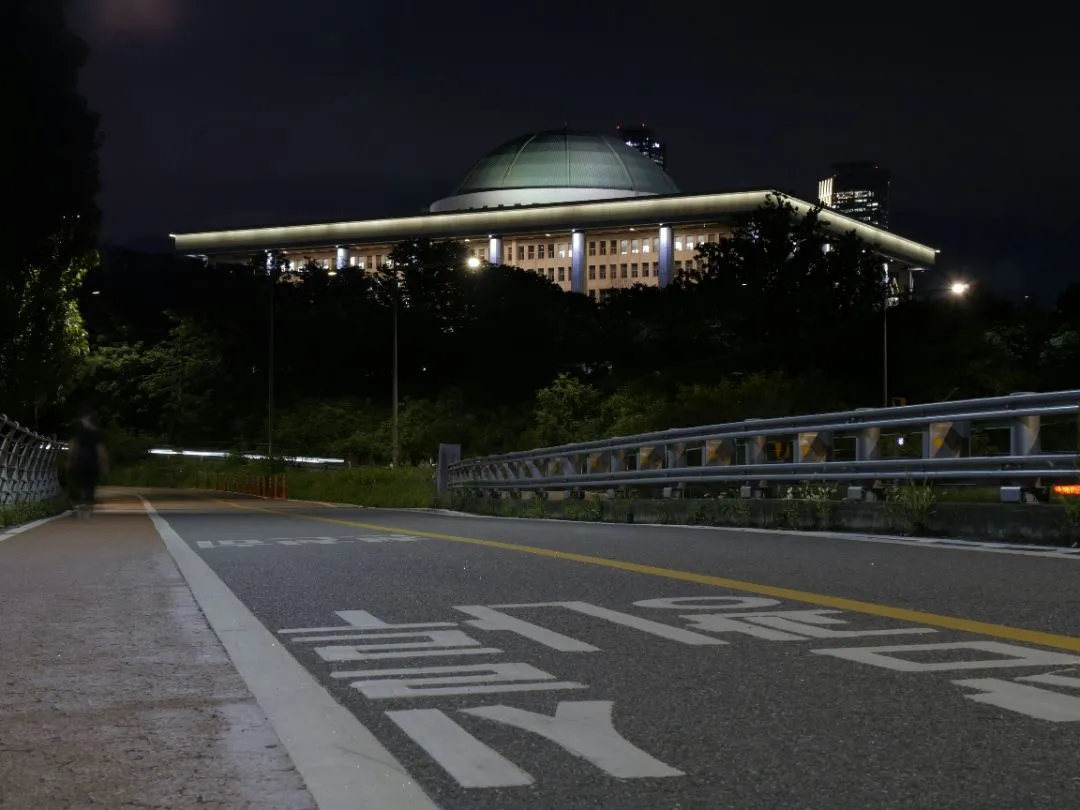
Incheon Technopark (ITP) announced today a collaborative effort with the Incheon Metropolitan City aimed at fostering the development of blockchain startups, with the goal of transforming the South Korean city into a blockchain hub.

Photo by GuerrillaBuzz on Unsplash


Tailored support programs

As a public organization dedicated to assisting startup businesses, ITP will offer tailored support programs, including funding for technology development and accelerator initiatives.


Funding for tech development

The tech development funding aspect will identify and select seven enterprises based in Incheon, each receiving up to 50 million KRW ($38,000) in funding. These businesses will be expected to integrate blockchain technology into local industries and contribute to Incheon’s economic growth.


Accelerator initiative

The accelerator program, on the other hand, will carefully select two operators who will provide education and consultation services for blockchain startups. Each operator will receive 100 million KRW ($75,000) to support five blockchain firms.

An ITP official said Incheon is seeing a growing number of blockchain enterprises, most of whom are startups and small- and medium-sized enterprises. The official emphasized the city’s commitment to fostering an environment conducive to the growth and success of such businesses.


Incheon’s emphasis on blockchain innovation

Incheon is among the Korean cities that have been proactively pursuing blockchain projects. Earlier this month, this city, which encompasses an airport, held the Incheon Metanomics 2023, a conference centered on blockchain technology. Guest speakers at the event were representatives from high-profile corporations, including the global crypto exchange Binance, the online gaming platform Roblox, and the semiconductor firm AMD.

In addition, Incheon is progressing with a $10 million urban blockchain plan that spans over five years until 2026, according to its press release. Since last year, the city has been conducting blockchain-powered pilot programs focused on public parking and recycling systems.
More to Read
View All
Web3 & Enterprise·

Jul 11, 2023

Crypto Exchange Loss Deters Temasek from Investing in Crypto Firms

Crypto Exchange Loss Deters Temasek from Investing in Crypto FirmsSingapore’s state-owned investor Temasek has ruled out investing in crypto companies for now, following a $275 million loss in the bankrupt US crypto exchange FTX.Photo by Plato Terentev on PexelsRegulatory uncertainty concernsTemasek’s Chief Investment Officer Rohit Sipahimalani said in a CNBC interview on Tuesday that the regulatory uncertainty in the crypto sector made it very difficult for the fund to make another investment in an exchange.“There’s a lot of regulatory uncertainty in this environment. And I do think that it will be very difficult for us to make another investment and exchange in the middle of all this regulatory uncertainty,” Sipahimalani said.He added that Temasek was not interested in investing in cryptocurrencies, but rather in exchanges that could generate fee-based revenue without taking balance sheet or trading risks. In May, it was reported that Temasek had invested in algorithmic currency system, Array. However, the global investment company was quick to deny those reports.“We’ve never been looking to invest in cryptocurrencies. Even the investment in FTX, we’ll be talking about investing in an exchange, which allowed us to get fee-based revenue without thinking [of] balance sheet risk or any trading risks,” he said. However, he said that Temasek would not be comfortable investing in exchanges given the way things are right now, and that it would depend on the right regulatory framework and investment opportunity.“If you have the right regulatory framework, and we are comfortable with it, and you have the right investment opportunity, there’s no reason for us to not to look at it,” he said. Temasek’s FTX investment was part of its early-stage investment strategy, where it invests in new disruptive technologies and tries to find the next winners, Sipahimalani said.But the strategy backfired when FTX filed for bankruptcy in November, with more than 1.4 million creditors and billions of dollars in liabilities, according to bankruptcy filings.Reputational damageTemasek wrote down its $275 million investment in FTX to zero soon after the collapse of the exchange. However, the bigger concern for the company is the posting of its worst returns since 2016 amid macroeconomic and geopolitical challenges. In the financial year ending in March 2023, the investing behemoth posted a $7.3 billion loss.The FTX loss sparked criticism from Singapore’s Deputy Prime Minister and Finance Minister Lawrence Wong, who called it “disappointing” and damaging for Singapore’s reputation. And that is the greater issue for Temasek relative to FTX.The amount of that particular loss is not that significant, given the size of the company and the scale of losses incurred elsewhere. The issue has been the reputational damage that the company has experienced as a direct consequence. Temasek maintains that it carried out competent due diligence, as have all of the venture capital investors who have all had their FTX investments wiped out.Further details on that due diligence are likely to emerge as Temasek, alongside many other leading investors in FTX, is being sued by creditors on the basis that they gave credence to what transpired to be a fraud. Temasek announced in May that it would cut the salaries of the staff responsible for the FTX investment, after conducting an internal review of the deal.

news
Web3 & Enterprise·

Jan 31, 2024

OKX adds token support for atomicals, runes, doginals and stamps

Leading crypto exchange platform OKX has recently unveiled its plans to enhance its marketplace by incorporating Atomicals (ARC-20), Runes, Stamps (SRC-20) and Dogecoin’s Doginals (DRC-20) into its Web3 wallet. ‘First-to-market’ initiativeTaking to social media on Monday, the firm provided further details regarding the additions, outlining that it is part of a "first-to-market" initiative, solidifying OKX's commitment to the expanding realm of Bitcoin NFTs. The integration of these token standards is aimed at positioning OKX as a leading one-stop NFT ecosystem within Web3. Starting with the integration of Stamps on Feb. 5, OKX Wallet users will gain the ability to view and transfer Bitcoin token standards. Subsequently, in late February, OKX Wallet will extend its support to Atomicals, Doginals and Runes, enabling millions of users to engage in buying and selling these NFTs without incurring any trading fees. OKX Marketplace will also follow suit, integrating DRC-20, ARC-20 and Runes standards in late February, thus broadening the scope for users to participate in zero-fee trading.Photo by Shubham's Web3 on UnsplashDriving mainstream adoption of Web3Jason Lau, chief innovation officer at OKX, underscored the platform's dedication to driving mainstream adoption of Web3 technologies, making the exploration and realization of NFT potential more accessible for users. Despite concerns about potential blockchain congestion due to NFTs, Lau characterized these challenges as "growing pains," expressing confidence that they will be addressed over time. Lau told CoinDesk that “these things will last forever, as long as the chain lasts.” Emphasizing the surge in activity and user growth since the launch of their product, Lau positioned OKX as an evolving platform at the forefront of developing tools for users to access all of Web3. OKX Wallet's inscriptions tool presently supports minting on 23 networks, including Bitcoin, Dogecoin, Ethereum, Polygon, BNB Chain, Avalanche-C and Arbitrum One, among others. Boosting OKX MarketplaceThe move aims to establish OKX Marketplace as the largest NFT marketplace in the industry, boasting zero-fee trading across an expanding range of token standards. The platform's advanced NFT offering includes features such as hex error checking, liquidity across multiple standards, bulk minting capabilities and automatic error detection. Despite OKX's open embrace of Ordinals and other Bitcoin protocols, some members of the Bitcoin ecosystem express discontent, labeling Ordinals as digital spam. Jason Lau vehemently disagrees, asserting that in open and permissionless networks like Bitcoin, "there is no such thing as spam." He contends that as long as fees are paid and transactions adhere to consensus rules, they are valid. Lau emphasizes OKX's historical support for the Bitcoin ecosystem, including upgrades like SegWit, Taproot and Lightning. As debates surrounding the role of Ordinals and NFTs within the Bitcoin ecosystem persist, OKX's proactive stance signals a belief in the potential of Bitcoin-based NFTs to introduce innovative use cases and design possibilities. The disruptions experienced by various blockchains in December, attributed to increased transaction activity related to inscriptions, underscore the growing impact of these developments within the Bitcoin ecosystem and the broader crypto landscape. 

news
Policy & Regulation·

Apr 13, 2023

Hong Kong Reiterates Web3 Credentials and Commitment

Hong Kong Reiterates Web3 Credentials and CommitmentHong Kong is committed to growing the Web3 industry under appropriate regulations, according to government officials.©Pexels/Andrea PiacquadioAt the four-day Web3 Festival, which is the largest Web3 event that the city has hosted since declaring its intention last year to become a digital asset hub, Financial Secretary Paul Chan stated that the stability of the financial system and investor protection should not be damaged, and that appropriate regulations are a must to create a sustainable development environment and a more ideal space for development.DeFi licensing requirementSome attendees were surprised to learn that the Securities and Futures Commission (SFC) believes that decentralized finance (DeFi) platforms for virtual assets need a license under existing rules. Keith Choy, interim head of the intermediaries division at the SFC, stated that people operating or performing DeFi activities should be subject to Hong Kong’s licensing requirements.This means that if Hong Kong really intends to regulate DeFi, it will have a stricter environment than Singapore. The Web3 industry has been closely watching the development of a new regulatory framework for virtual assets in Hong Kong since the city revealed at the end of October its intention to become a cryptocurrency hub. Under new regulations that go into effect in June, cryptocurrency exchanges serving customers in Hong Kong must be licensed by the SFC.10,000 Web3 Festival attendeesThe event attracted more than 10,000 people ahead of the conference, with several big-name speakers and exhibitors looking for new opportunities in the city. OKX and Filecoin were some of the large cryptocurrency firms in attendance, as were traditional tech firms like Tencent Cloud, which had a booth touting its blockchain-related services for corporate clients. Alibaba Cloud was also a co-organiser, along with Amazon Web Services and Hong Kong’s Cyberport.Binance co-founder and CEO Zhao Changpeng (CZ) also dialed in via video for a fireside chat. Last month, the US Commodity Futures Trading Commission (CFTC) sued CZ and Binance over what it alleged was “sham” compliance with domestic regulations. The company has been scrutinized over connections to its local firm Binance.US, which legally is meant to operate as a separate entity. Zhao was not asked and did not address his legal troubles at the conference. However, he did note that Binance is in talks with regulators in many markets.“We are actively engaged with regulators all around the world,” Zhao said. “Many of them are very receptive, some of them are still skeptical, and that’s fine, but we need to engage. We need to have dialogue, we need conversations, and we also need patience.”Singapore comparisonsHong Kong has frequently been compared with Singapore, which had been considered a friendlier market for related activity until Hong Kong’s policy shift. Some attendees had hoped that Hong Kong’s shift would provide some competition for Singapore in the region. “We did see a very obvious trend of people flying to Singapore to make sure their business was part of this space,” said Luke Liu, chief core ecosystem contributor at cross-chain protocol developer Poly Network. “Hong Kong and Singapore can coexist in some sense, but there is definitely a very positive change going on recently because of the Hong Kong policy announcement.”Hong Kong has reaffirmed its commitment to growing the Web3 industry under “appropriate” regulations, with the stability of the financial system and investor protection as a top priority. This has been reiterated during the largest Web3 event in the city since declaring its intention to become a digital asset hub.

news
Loading