Top

MaskEX Gets Initial Regulatory Approval in UAE

Policy & Regulation·May 12, 2023, 12:06 AM

The online cryptocurrency trading platform and wallet provider, MaskEX has been given initial regulatory approval by a regulator in the United Arab Emirates (UAE).

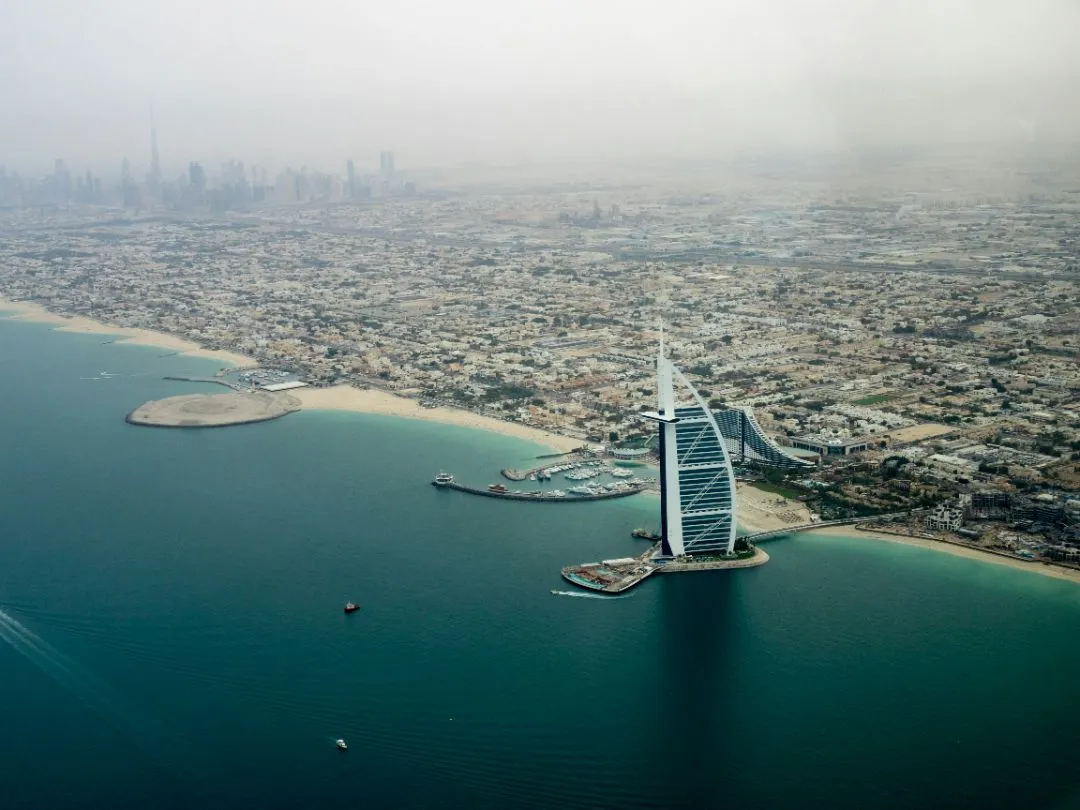
Photo by Carlos Alberto Gómez Iñiguez on Unsplash

The trading platform received outline approval from the Virtual Assets Regulatory Authority (VARA) in Dubai, where the company is headquartered. While the business has been around since 2021, this first compliance step is significant as it seeks to build and extend its footprint within the UAE and the broader Middle East and North Africa (MENA) region.


Regulatory significance

To say that regulation has lagged the development of crypto assets on a global basis is an understatement. However, the high profile and spectacular crypto business failures in 2022 have really captured the attention of regulators and lawmakers. Many point to inadequate regulation as a key cause of those failures. With that, most regulators recognize that it won’t be acceptable to the broader public to have such a loss impact on ordinary investors in a rerun of the collapses of 2022.

VARA has been one of the most proactive regulators in that respect. The Authority has developed a regulatory framework, culminating in its current licensing regimen for crypto businesses. It wouldn’t have been feasible for MaskEX to trade without obtaining regulatory approval.


Regulatory action

In February, VARA issued Open Exchange (OPNX), a platform that specializes in the trading of crypto bankruptcy claims, with a cease and desist order, relative to the establishment of that business in Dubai. Last month, the Regulatory Authority issued an investor alert related to OPNX, warning the investing public that OPNX was not regulated by them and that investing in or using the platform was risky.

That culminated with VARA sending OPNXs founders and CEO a formal warning letter. With that sort of action playing out, it’s no surprise that MaskEX has tried to go the compliant route, acquiring that initial approval.

The firm is not alone in taking that approach. On May 1, BitOasis, another crypto trading platform headquartered in Dubai, became the first entity to be awarded a broker-dealer license.

This milestone event for MaskEX means that it can now complete entity formation, expand its team, secure banking services and generally, open for business. In its application MaskEX requested permission to engage in the activity of acting as an exchange, offer borrowing and lending services, as well as to act as a broker and crypto asset manager.


Crypto market to be driven by ME and Central Asia

On social media on Thursday, MaskEXs VP and Chief Strategy Officer (CSO) Ben Caselin, said that the initial approval forms part of the firm’s application for a Full Market Product (FMP) license. Caselin used the opportunity to post a video offering a sneak peek at the firm’s new Dubai offices. “MaskEX will be the first crypto exchange to publicly disclose their headquarters and even allow the general public to visit,” he said.

Speaking at Finoverse Arabia this week, Caselin also said that “the next crypto bull market is once again going to be driven by Asia, and the unsurprising surprise will come from the Middle East and Central Asia.” That’s a prediction that’s being floated by quite a number of industry commentators, and with the US shooting itself in the foot in its approach to digital assets, it sounds like a reasonable prediction.

More to Read
View All
Policy & Regulation·

Feb 28, 2025

First stablecoins gain DFSA approval in Dubai

The Dubai Financial Services Authority (DFSA), the financial regulatory agency of the Dubai International Financial Center (DIFC), a special economic zone, has approved two stablecoins under its crypto regulatory framework. The two stablecoins, USD Coin (USDC) and EURC, are both issued by blockchain-focused financial services firm Circle. While USDC is a U.S. dollar-backed stablecoin, EURC is a euro-backed stablecoin. In a press release published on the Circle website on Feb. 24, the company announced details regarding the approval. The stablecoins are the first to be recognized and approved by the DFSA.Photo by Christoph Schulz on UnsplashStablecoin integrationThe development means that firms based in the DIFC are now free to integrate either stablecoin into digital asset applications and products focused on areas such as payments and treasury management. A number of Circle executives took to social media to comment on the development. Circle Co-founder and CEO Jeremy Allaire outlined on X that the approval means that financial institutions in Dubai “are now able to transact in markets with USDC and EURC.” In legally recognizing the two stablecoins, Allaire pointed out that the DFSA had joined regulators in the European Union (EU) and Canada.  Last Summer, Allaire announced that Circle’s stablecoins complied with the EU’s Markets in Crypto Assets (MiCA) regulation. In December, Circle became the first stablecoin issuer to meet Canadian listing regulations. Dante Disparte, Circle’s chief strategy officer and head of global policy, pointed out that a trend is emerging requiring the pre-clearing of stablecoins prior to them entering into circulation or gaining regulatory approval. “In always-on finance, reciprocity is key,” he added.  Meanwhile, the firm’s EU Strategy & Policy Director, Patrick Hansen, underscored the significance of the approval. Hansen pointed to the fact that the DIFC is home to 6,000 registered entities, including 800 authorized financial firms. An ‘edge’ over TetherEugene Cheung, Chief Institutional Business Officer at Hong Kong-based digital asset platform OSL, said that the approval was “massive for institutional adoption,” while giving Circle an “edge” over Tether within the $157 billion stablecoin market. While Circle has always taken a regulatory-compliant approach, competitor Tether has struggled with compliance. In Europe, 10 companies have been approved to issue stablecoins under MiCA regulations, but Tether is not among them. This has led to a number of exchanges delisting Tether’s USDT in Europe. The DIFC was first established in 2004. The economic free-zone caters to firms operating within the Middle East, South Asian and African regions. The number of businesses registered within the free zone has increased by 25% since 2023. In November 2022, the DIFC recognized Bitcoin (BTC), Ethereum (ETH) and Litecoin (LTC). The following year, it added Toncoin (TON) and Ripple’s XRP, together with ZETA, the native token of the ZetaChain network. In 2024, the DFSA amended its crypto regulations to allow foreign funds to invest in recognized crypto tokens, while enabling domestic qualified investor funds to invest in unrecognized tokens.Although the regulatory approach taken by the authorities in Dubai accommodates stablecoins, algorithmic stablecoins are prohibited.

news
Policy & Regulation·

May 28, 2025

Pakistan appoints crypto advisor to PM & allocates 2K MW to Bitcoin mining

Recent weeks have seen a positive policy shift in Pakistan with regard to digital assets and blockchain and that initiative has gathered further momentum with the appointment of a special assistant on blockchain and crypto to the Pakistani prime minister and the allocation of 2,000 MW of surplus electricity to Bitcoin mining and AI data centers.Photo by Abuzar Xheikh on UnsplashOn May 26, the Pakistan Observer, an English language daily newspaper, reported that Bilal bin Saqib has been appointed to serve as a special assistant on blockchain and crypto matters to Pakistani Prime Minister Shehbaz Sharif. Forbes ‘30 under 30’ social entrepreneurIn this role, Saqib assumes the status of a minister of state under Rule 4(6) of the Rules of Business, 1973, with the appointment effective immediately. Saqib had been featured by Forbes through its “30 under 30” list of social entrepreneurs in Asia in 2020. He is the founder of Tayaba.org, a non-governmental organization (NGO) focused on the provision of clean drinking water to vulnerable communities in Pakistan. Saqib came to prominence in the crypto sector earlier this year when he was appointed CEO of the newly formed Pakistan Crypto Council (PCC), an agency established to promote blockchain technology and digital assets within the South Asian country. In April he was added by World Liberty Financial, a crypto project connected with the family of U.S. President Donald Trump, as an advisor. Earlier this month, Pakistan’s Ministry of Finance gave the go-ahead for the establishment of the Pakistan Digital Assets Authority (PDAA), a body that will be responsible for the implementation of regulations governing the crypto and blockchain sector.  Utilizing surplus energyAt the time, one area of focus that had been highlighted in the announcement of the establishment of the PDAA was a desire to make better use of Pakistan’s surplus energy. The country runs an annual average surplus of 4,000 megawatts. A report by 24 Digital on May 25 indicated that action has already been taken in this regard. It outlined that Pakistan has allocated 2,000 megawatts of surplus electricity for the exclusive use of operators of AI data centers and Bitcoin mining facilities.  This plan is being rolled out in phases. The first phase makes surplus energy available to these operators. Phase 2 will focus on enabling crypto mining operators to avail of renewable energy to power their facilities, in an effort to develop the sector in Pakistan in an environmentally responsible manner. According to the Ministry of Finance, interest has already been expressed by international operators in the crypto mining and AI data center sectors. A number of international firms are understood to have visited the country in an effort to explore potential collaboration opportunities.  Earlier this month, Saqib claimed on social media that Pakistan “is moving at crypto speed.” He made the case that the country is a breeding ground for crypto innovation, citing the opportunity to exploit surplus electricity via crypto mining and the potential for crypto adoption given a $36 billion remittance market, millions of unbanked citizens and 64% of the population under 30.

news
Web3 & Enterprise·

Jun 22, 2023

Wemade Launches NFT-Based DeFi Service to Empower Its Ecosystem

Wemade Launches NFT-Based DeFi Service to Empower Its EcosystemSouth Korean gaming company Wemade today launched NFTFi, a peer-to-peer decentralized financial service based on non-fungible tokens (NFTs), according to an official press release. The service is now accessible on Wemade’s DAO-powered blockchain NFT platform NILE, also known as NFT Is Life Evolution.Photo by Choong Deng Xiang on UnsplashBorrow and lend NFTsInitially, NFTFi will enable users to borrow and lend NFTs, with plans to introduce a swap function in the future. The service will support trading for all NFTs available on the NILE marketplace, including the NEITH NFTs unveiled in March this year.Through NFTFi, borrowers have the ability to secure WEMIX tokens or WEMIX Dollars by using NFTs as collateral. Borrowers can request loans, and lenders can review these requests and assess the conditions under which they are willing to lend their assets.The borrower who presents the most favorable borrowing terms will be selected, and the loan contract will be automatically executed. The NFTs provided as collateral will remain locked until the loan is fully repaid. In the event of failure to repay, ownership of the NFTs will be transferred to the lender.Effective asset managementNFTFi users will have the ability to evaluate the value of an NFT based on various data. Notably, NEITH NFTs offer effective asset management as their holders can claim the amount of WEMIX tokens at any time from the Covenant Date. This token eligibility feature contributes to the stability of NEITH NFTs.NILE expects that NFTFi will enhance the value of NFTs as financial assets and play a role in the sustainable growth of the WEMIX3.0 ecosystem.

news
Loading
