Top

Ripple Pursues International Growth Via Dubai Expansion

Web3 & Enterprise·May 11, 2023, 1:13 AM

The Dubai Fintech Summit was held in the Venice of the Gulf earlier this week, bringing with it an announcement from Ripple outlining its plans to expand in the Middle Eastern location.
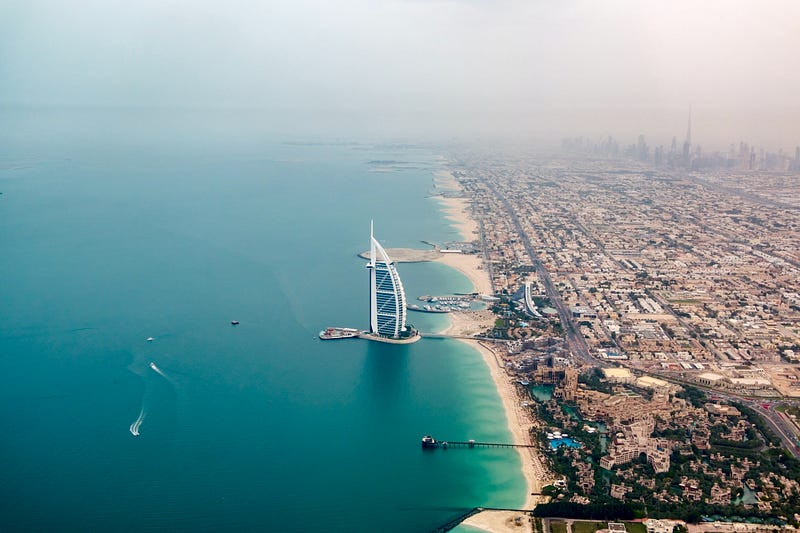
Photo by Christoph Schulz on Unsplash


Responding to the regulatory environment

Ripple CEO Brad Garlinghouse was a keynote speaker at the Summit on Monday, and he took that opportunity to outline the company’s plans within the region. Immediately following his speech, Garlinghouse took to social media to confirm those plans. He tweeted out:

“As I just shared on stage at #DubaiFintechSummit, @Ripple is expanding in Dubai. With 20% of our customers based in MENA and clear regulatory regimes being developed, it’s no surprise that Dubai is emerging as a key global financial hub for crypto innovation to thrive.”

It’s no coincidence that at the very same event, Coinbase CEO Brian Armstrong was present alongside the company’s executive team. Armstrong also spoke at the event and the outcome of that involvement saw Coinbase too, signaling that it sees potential in setting up a regional base in the United Arab Emirates (UAE).

In Coinbase’s case, it’s understood that it is considering the Emirate of Abu Dhabi as opposed to Dubai. Nonetheless, the rationale for pursuing such a move by both leading digital assets companies is the same. Both have been outspoken about the issues they have with the regulatory situation as it exists in the United States right now, relative to digital assets.


Office presence

As an initial step in that Middle East expansion, Ripple is opening an office in Dubai. The office will be located within the Dubai International Financial Centre (DFIC). In what appears like an effort to underscore the company’s official arrival in the United Arab Emirates, Ripple is holding its seventh annual customer conference in the country’s capital later this year.

This week, Garlinghouse confirmed that the company’s prolonged legal battle with the Securities and Exchange Commission (SEC) in the United States is projected to cost the company a whopping $200 million. The Biden administration is using all the major financial agencies in the US to clamp down on the sector. It’s little wonder, therefore, that companies like Ripple and Coinbase are seeking refuge overseas.

That regulatory and administrative landscape in the United States relative to crypto stands in total contrast to the experience of Navin Gupta, Ripple’s Managing Director of South Asia & MENA in respect of the UAE. In an interview with CoinDesk TV Gupta said that the “UAE as a market is very attractive to us, the Middle East as a market is doing very well.”

Gupta drew on his experience in working in Silicon Valley previously and recalling how back then it had three ingredients that made it function that he believes is now the case for the UAE: talent, venture capital investment and a workable regulatory approach.


More to Read
View All
Web3 & Enterprise·

Aug 11, 2023

Alchemic Investment and Nanuhm Angels Collaborate to Boost Web3 and Blockchain Investments

Alchemic Investment and Nanuhm Angels Collaborate to Boost Web3 and Blockchain InvestmentsKorean deep tech investment firm Alchemic Investments announced that it has entered into a partnership with venture capital firm Nanuhm Angels to enhance investments in blockchain, Web3, artificial intelligence, and deep tech.Photo by Precondo CA on UnsplashInvesting in the future of Web3 in KoreaThe two firms will work with the city of Incheon — a metropolitan city located near the nation’s capital of Seoul — to discover promising Web3 companies while strategically investing in and nurturing startups that aspire to innovate existing businesses using blockchain technology.They will also participate in Incheon’s roadmap for fostering blockchain businesses after Incheon Technopark’s blockchain company acceleration program kicks off this year. This program supplies Incheon-based startups and small companies with the resources required to grow their blockchain businesses, thereby establishing Incheon as a blockchain hub.“Just as Japan and Hong Kong are leading the Web3 market in Asia, many Korean startups are also likely to emerge as leaders of the market once a legal foundation is established in the country,” said Min Kyung-man, CEO of Alchemic Investments.“We plan to support global expansion through our network with major overseas companies and institutions that highly value Korea’s growth potential in leading the technologies of the future.”About Alchemic InvestmentsAlchemic Investments was established in March of this year and invests in areas such as Web3, fintech, and AI. Housing seasoned professionals in asset management and strategic investment in major corporations, the company is currently in the process of recruiting investors to establish its first fund, aiming for a funding scale of 30 billion KRW (approximately $22.7 million).About Nanuhm AngelsNanuhm Angels works with partners who have experience in managing funds worth 110 billion KRW, as well as acceleration experts skilled in business model validation and refinement and investor relations. Its investment portfolio consists of companies such as Rezi, Onthelook, and NS Studio.It is also an operator of the aforementioned Incheon Technopark blockchain company acceleration program along with a consortium consisting of Web3 gaming studio Ret Games and on-chain risk rating solution developer Undefined Labs.

news
Web3 & Enterprise·

Aug 01, 2025

Philippine government introduces document notarization on Polygon

In the Philippines, the Department of Budget and Management (DBM) has introduced an on-chain system utilizing the Ethereum layer-2 network Polygon to notarize and track documentation and the expenditure of public funds. The government contracted Manila-headquartered blockchain technology company BayaniChain Ventures in order to implement the system. The firm took to social media on July 31 to provide details on the DBM Blockchain Project.Photo by GuerrillaBuzz on UnsplashBuilding trust into infrastructureBayaniChain Ventures CEO Paul Soliman outlined that the new system “builds trust into the infrastructure itself.” The DBM Blockchain Project connects a DBM internal platform, the Action Document Releasing System (ADRS), which creates official budget documentation, with the Lumen Blockchain-as-a-Service (BaaS) system created by BayaniChain.  Lumen functions as a core framework, enabling government systems to connect securely with blockchain infrastructure. Consequently, Lumen facilitates the tokenization of government documents, managing access to those documents and publishing data to a portal. A third system, Prismo Protocol, interacts with Lumen and ADRS, determining what documentation should be shared with the public and what documentation should remain accessible exclusively to DBM staff.The upshot of the interaction of these systems is that select budget documentation is published to the Polygon blockchain. Soliman stated that the system provides transparency, enabling members of the public to “see proof, not just promises” with regard to the activity of the government department. Integrating blockchain into public governanceThe Undersecretary at DBM, Maria Francesca Montes Del Rosario, took to Facebook on July 30 to confirm that the DBM blockchain initiative had gone live. She described it as the “first ever Transparency Government Blockchain for immutable and verifiable action documents.” She added: “We are using cutting edge technology like AI, blockchain, satellite imaging to enhance how we do public policy and governance.”Del Rosario was quoted by local media as stating that the technology combats the problem of AI deepfakes and fake documents. Another stakeholder in the development of the system was Exakt IT Services, a local company that specializes in assisting government organizations in the Philippines to bring about digital transformation. Exakt was awarded a contract by DBM to act as a technology partner, supporting the project with technical expertise and infrastructure in order to bring about the implementation of the blockchain solution. BayaniChain’s Soliman believes that the new system “sets a precedent for transparency and accountability in public finance.” However, the timing of the launch of the service proved to be unfortunate, as it coincided with an outage suffered by the Polygon network. The outage, which lasted for one hour, disrupted apps running on Polygon. On X, Polygon CEO and Founder Sandeep Nailwal asserted that the incident didn’t prevent the blockchain from operating or producing blocks and with that, user transactions on the network were still being processed.In better news for the blockchain network, Crypto Analyst Lennaert Snyder reported on July 31 that Polygon has reached a yearly high of $1.2 billion in total value locked (TVL), an 80% increase since March.

news
Web3 & Enterprise·

Aug 04, 2023

Huobi Co-Founder Acquires 10 Million CRV Tokens

Huobi Co-Founder Acquires 10 Million CRV TokensJun Du, Chinese Co-Founder of Seychelles-headquartered global crypto exchange Huobi, has recently completed the purchase of 10 million curve tokens (CRV) from Curve founder Michael Egorov.Photo by Growtika on UnsplashCurve protocol loan exposureThe transaction amounted to $4 million and is part of Egorov’s ongoing efforts to mitigate his at-risk loan exposure, a further consequence of last week’s $52 million hack of the Curve DeFi protocol.Initially, Du expressed his interest in acquiring 10 million CRV tokens at the prevailing rate of $0.40. This price aligned with multiple over-the-counter (OTC) agreements between Egorov and various cryptocurrency individuals. According to a report by The Block, Du later confirmed the purchase through a Twitter direct message, revealing that he had chosen to lock up the acquired tokens as veCRV. This lock-up mechanism grants voting rights within the Curve platform while requiring the tokens to remain locked for a specified duration.“I intend to uphold this lock-up for at least a year, with optimism for continuous improvements within the Curve ecosystem,” Du stated, highlighting his commitment to the project’s long-term growth.On his Twitter account, Du emphasized his unwavering support for Curve, drawing parallels to his past backing of BendDAO during a liquidity crisis. He clarified: “Challenges faced now are transient, and collective support will foster a stronger industry.”Alongside being a Co-Founder at Huobi, Du holds the positions of CEO at New Huo Tech, a digital asset service platform, and Co-Founder and General Partner (GP) at the Web3 fund ABCDE.Ongoing token sell-offIn actively managing liquidation risk, Egorov is persistently offloading CRV tokens to bolster his loan position, given his significant exposure. He has utilized multiple DeFi lending platforms to secure loans, predominantly employing CRV tokens as collateral to borrow stablecoins. His borrowing activity on platforms like Aave alone has involved $56 million in stablecoins against $149 million worth of CRV collateral.Egorov’s health ratings on these platforms have improved recently, hovering around 1.67 or higher. Nonetheless, there remains a lingering risk associated with potential liquidation of his positions if CRV’s price were to dip substantially. This could potentially lead to bad debt scenarios for the platforms, particularly due to the substantial proportion of CRV supply involved.Sales of 72 million CRVEgorov’s token sales have amounted to 72 million CRV, according to Nansen analyst Sandra Leow. Notable recipients of these tokens include Tron Founder Justin Sun, crypto trader “DCFGod,” and Andrew Kang, Co-Founder of Mechanism Capital.Aave Chan Initiative, an entity tied to the Aave protocol, has proposed that the Aave treasury allocate funds to purchase up to $2 million worth of CRV tokens. The intention is to lock up these tokens as veCRV for an extended period, potentially up to four years. This move is aimed at further reinforcing the stability of CRV’s market dynamics.

news
Loading