Top

Shanghai launches international digital yuan hub to boost global use

Policy & Regulation·October 06, 2025, 5:40 AM

China has inaugurated a new center in Shanghai dedicated to the international operation of its central bank digital currency (CBDC), the e-CNY, the People's Bank of China (PBOC) recently announced. The hub also launched three specialized platforms for cross-border digital payments, blockchain services, and digital assets, according to state-run Xinhua News Agency.


The initiative is a key part of China's strategy to promote the digital yuan's adoption beyond its domestic borders. This effort aligns with a broader trend among BRICS nations, which have increased their use of the Chinese yuan for trade settlements. A Crypto Briefing report indicates that yuan-denominated payments accounted for roughly 24% of the bloc's trade transactions in early 2025.

https://asset.coinness.com/en/news/aeec42163f3ba4904447fe3b0d96a1b8.webp
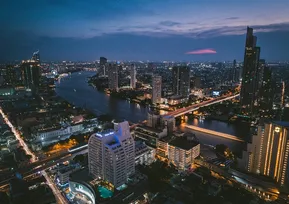
Photo by Edward He on Unsplash

Difference between digital yuan and stablecoins

The e-CNY, which functions without needing a bank account, is designed for daily uses like retail shopping, salary distribution, and transportation fares. While it cannot be converted into foreign currencies, its cross-border capabilities are being explored through the mBridge project, a multinational effort coordinated by the Bank for International Settlements.


In contrast to the state-controlled e-CNY, privately issued stablecoins, blockchain-based tokens pegged to fiat currencies like the U.S. dollar, are also gaining traction. These digital assets, backed by reserves such as U.S. Treasury bills, are widely used for faster and cheaper cross-border payments and remittances. Hong Kong established a clear regulatory framework for stablecoins on Aug. 1, setting high standards for potential issuers. However, the Hong Kong Monetary Authority (HKMA) has stated that it does not expect to grant the first licenses until early next year.


Yuan stablecoin in Kazakhstan

Recently, the HKMA had to clarify the status of stablecoin issuance in the region. According to the South China Morning Post, the monetary authority issued a statement refuting social media reports that the first offshore yuan-pegged stablecoin had been launched in Hong Kong. The company involved, AnchorX, later clarified on X that its yuan-pegged digital asset, AxCNH, was launched in Kazakhstan under a license from the Astana Financial Services Authority (AFSA).


Despite its launch outside of Hong Kong, the AxCNH stablecoin is seen by some as part of Beijing's broader ambitions. Yang Guang, the CTO of Conflux, which provides technical expertise to AnchorX, told Reuters that the Sept. 17 launch represents an effort to leverage blockchain technology for international trade. Yang suggested that Beijing would likely support such initiatives if they facilitate commerce, noting that offshore yuan stablecoins could be issued without direct sign-off from China's central bank.


Market analysts view China’s latest initiatives as part of a broader, multi-pronged strategy. Augustine Fan, head of insights at digital asset platform SignalPlus, described the stablecoin project as “another venue or trial to push the use of the offshore yuan,” adding that it also reflects the government’s cautiously positive stance toward blockchain technology.


China’s stablecoin ambiguity

At the policy level, signals remain mixed. A Caixin report indicated that Chinese digital platforms, state-owned enterprises (SOEs), and financial institutions in Hong Kong may face restrictions on stablecoin and broader crypto activity. In addition, branches of SOEs and major banks are unlikely to seek stablecoin licenses in the region. The English version of the Caixin article remains accessible, but Cointelegraph observed that the Chinese-language version has since been taken down.


At the same time, official engagement is visible. The National Natural Science Foundation of China (NSFC), a vice-ministerial institution under the Ministry of Science and Technology that oversees the National Natural Science Fund, earlier announced grants for research on stablecoins and the development of cross-border monitoring frameworks. According to the South China Morning Post, the foundation launched the study in response to concerns that unregulated circulation of private stablecoins, particularly those pegged to the U.S. dollar, could weaken capital controls and pose risks to the yuan. A clearer policy direction is expected once the results of this research are available.


More to Read
View All
Web3 & Enterprise·

May 11, 2023

Zodia Custody Launches Crypto Custodian Service in Dubai

Zodia Custody Launches Crypto Custodian Service in DubaiZodia Custody, a subsidiary of British multinational banking services firm Standard Chartered, has entered the Middle Eastern market, bringing its crypto custody service to Dubai.In a tweet on Thursday, the start-up announced that its parent company Standard Chartered has signed a memorandum of understanding (MoU) with the Dubai International Financial Centre (DIFC) to launch digital asset custody services in Dubai, powered by Zodia Custody.The move will only go ahead once it has been approved by Dubai’s regulator, the Virtual Assets Regulatory Authority (VARA). At the MoU signing ceremony, Standard Chartered CEO Bill Winters stated: “We see digital assets as an important part of the future of financial services and we are committed to investing in the infrastructure and talent necessary to be a leader in this space.”“The UAE [United Arab Emirates] has a well-balanced approach to digital asset adoption and financial regulation, making it an ideal first market for us to launch our digital asset custody proposition,” Winters added.With 54 years in the financial services arena, the UAE is already home to Standard Chartered’s operations in the Middle East and North Africa (MENA) region.SBI joint ventureIts London-based subsidiary has been busy. In addition to this expansion into the MENA region, in February the fledgling company entered the Japanese market. It achieved that by partnering with Japanese financial services conglomerate, SBI Holdings. The Japanese joint venture company is 51% owned by SBI, while Zodia holds the remaining 49% minority stake. At the time, Julian Sawyer, CEO of Zodia Custody, said that “partnering with SBI DAH ensures the joint venture will offer gold-standard crypto asset custody services in Japan.”Capital injectionLast month, SBI Holdings stepped up its association with Zodia Custody by becoming the lead investor in Zodia’s latest funding round. Up until that point, Zodia had been supported largely by Standard Chartered. Northern Trust took a 10% stake with Standard Chartered accounting for the remaining 90% equity stake. Following that most recent funding round, SBI now moves up the rankings to become Zodia’s second largest investor.Zodia was founded in 2020 in tandem with a separately launched trading platform, Zodia Markets. Its objective was to offer a safe, trustworthy platform through which institutional clients could invest in crypto assets. As a UK-based entity, the firm is regulated by the UKs Financial Conduct Authority (FCA).Heightened digital asset developmentAuthorities in Dubai and within the UAE in general have been working hard in recent months with an eye towards making the country, and particularly its Dubai and Abu Dhabi Emirates, a hub for digital asset-related business. Regulators in Dubai, Abu Dhabi, and at a national UAE government level, have been progressing in terms of getting a workable digital assets regulatory framework and licensing regime in place.With the Dubai Fintech Summit having taken place earlier this week, there were further developments still relative to digital asset business in the UAE. On Monday, Coinbase CEO Brian Armstrong was in attendance alongside his executive team. Just like Armstrong, Ripple CEO Brad Garlinghouse was also a keynote speaker at the event. Both complemented the UAE on its regulatory approach to crypto off the back of both of them having been sharply critical of the regulatory approach in the United States. Armstrong indicated that his company is interested in establishing a base in Abu Dhabi while Garlinghouse confirmed that Ripple is opening an office in Dubai.Photo by Aleksandar Pasaric on Pexels

news
Policy & Regulation·

Sep 08, 2023

Taiwan to Restrict Offshore Non-Complaint Exchanges

Taiwan to Restrict Offshore Non-Complaint ExchangesTaiwan’s Financial Supervisory Commission (FSC) has been working towards taking proactive steps to regulate the cryptocurrency industry within its borders recently. One key guiding principle it has developed is to impose strict regulation on offshore crypto exchanges operating in Taiwan.Photo by Vas on UnsplashTen guiding principlesTaiwan’s Central News Agency reported on Thursday that in an effort to ensure compliance and protect consumers, the FSC has developed ten guiding principles for virtual asset service providers (VASPs). These principles are set to be officially released by the end of this month, according to a government official.The guiding principles will encompass several important aspects of the crypto industry. They will emphasize the need for enhanced information disclosure, requiring businesses to establish clear review standards for the listing and delisting of virtual assets. Additionally, there will be a focus on ensuring the separation and proper custody of assets belonging to both companies and customers.Focusing on offshore complianceThe FSC intends to make it clear that offshore crypto exchanges must adhere to proper compliance registration if they want to conduct business onshore. The move is in line with what appears to be a commitment by the Taiwanese authorities to promote responsible and secure cryptocurrency operations.One particularly significant restriction is the prohibition of illegal solicitation of business by foreign crypto firms. The FSC is determined to enforce this rule strictly. Foreign VASPs that fail to register according to company law and declare their compliance with anti-money laundering regulations to the FSC will be barred from soliciting business in Taiwan or catering to domestic residents.It’s worth noting that Taiwan has been proactive in implementing anti-money laundering laws for VASPs since July 2021. Although this particular measure has been in place, the cryptocurrency industry in Taiwan has largely operated in a regulatory vacuum. However, recent developments suggest a shift towards greater oversight and accountability.One notable example is Binance, the world’s largest cryptocurrency exchange, which has initiated the process of registering for anti-money laundering compliance in Taiwan. Despite not being fully regulated in the country, Binance has established a local entity, “Binance International Limited Taiwan Branch (Seychelles),” and received government approval for company registration.Building a regulatory frameworkIn addition to these regulatory efforts, the Ministry of Economic Affairs has proposed the creation of a new business category within relevant regulations. This move aims to facilitate the formation of cryptocurrency-related industry associations, encouraging the development of self-regulatory guidelines.The forthcoming guiding principles for VASPs are expected to provide much-needed clarity and structure to the rapidly evolving world of cryptocurrencies within Taiwan’s borders.Many leading jurisdictions have been behind the curve in developing a clear, workable regulatory framework for crypto. That has led to many exchanges establishing themselves in offshore locations where light touch regulation is applied. It’s highly likely that the Taiwanese have examined the fallout from this development, best exemplified by the spectacular collapse of Bahamas-based FTX last November.

news
Policy & Regulation·

Nov 28, 2023

Interactive Brokers Hong Kong secures retail crypto trading license

Interactive Brokers Hong Kong secures retail crypto trading licenseInteractive Brokers Hong Kong has successfully obtained the necessary licensing to facilitate retail crypto trading in Hong Kong, marking a pivotal move for the brokerage firm in the rapidly evolving crypto landscape of the region.This announcement was made by David Friedland, the Managing Director for Asia Pacific at Interactive Brokers, on LinkedIn on Friday, solidifying the firm’s position as a significant player in the local crypto market.Photo by Risa Fukunaga on UnsplashOngoing interest in virtual assets in Hong KongThe decision to enter retail crypto trading comes at a time when Hong Kong is experiencing sustained interest and activity within the crypto sector. Interactive Brokers had rolled out BTC and ETH trading services to accredited investors in Hong Kong in February. Major companies are actively seeking local licensing, mirroring similar milestones achieved by entities like HashKey and Swiss crypto bank SEBA.In a parallel development, it emerged last week that Victory Securities, a prominent investment firm in Hong Kong, has also secured regulatory approval from the Securities and Futures Commission (SFC) to offer cryptocurrency services targeting retail clients. This positions Victory Securities alongside Interactive Brokers in the competitive retail crypto space of the region.Significance acknowledged within the industryThis milestone achievement by Interactive Brokers in Hong Kong has not gone unnoticed within the virtual assets sector. Gabor Gurbacs, Head of Digital Asset Strategy at American investment management firm VanEck, took to the X platform, stating:“Hungarians know inflation and the importance of hard money. Thanks to [Interactive Brokers Founder/Chairman Thomas Peterffy] for being a silent Bitcoin advocate. You can count on Hungarians when it comes to important matters.”As Interactive Brokers expands its footprint, recent financial reports reveal impressive growth. In the third quarter, the company reported a remarkable 45% year-over-year increase in net revenue, reaching $1.145 billion. The firm is strategically focusing on European expansion, consolidating operations in Ireland to enhance efficiency and better serve its growing client base.Moreover, Interactive Brokers has extended trading hours for U.S. equities and crypto services in partnership with Zero Hash, a move geared towards providing ever more comprehensive and accessible financial services. The successful entry into Hong Kong’s retail crypto trading arena is expected to contribute significantly to the firm’s overall growth and influence in the region.Fine-tuning regulationThe regulatory environment in Hong Kong has recently undergone adjustments, with the SFC refining its crypto policies. While certain offerings have been restricted to professional investors, there is now an increased emphasis on evaluating clients’ knowledge before allowing them to engage in crypto transactions. Despite these stringent measures, the sector has faced challenges, including the JPEX scandal that shook Hong Kong’s digital asset market.In 2022, Interactive Brokers extended its crypto trading service in the United States on a 24/7 basis, having first commenced with a crypto product offering in mid-2021. With this strategic move, Interactive Brokers, as a TradFi stalwart, has demonstrated adaptability and resilience in the face of ongoing digital asset innovation and evolving market conditions.

news
Loading