Top

Momentica’s NFT Photo Cards Captivate K-Pop Enthusiasts

Web3 & Enterprise·May 03, 2023, 8:12 AM

Momentica, a fan-artist engagement platform, has been captivating K-pop enthusiasts with NFT photo cards featuring their favorite artists.


Dunamu and HYBE

Levvels, the company behind Momentica, has garnered significant attention from both the tech and the entertainment industries, as it is a joint venture between Dunamu, the operator of Korea’s leading crypto exchange, and HYBE, the agency representing world-renowned boy band BTS.


K-pop photo cards

One of the primary goals of this promising company is to introduce the K-pop fandom culture to global audiences. K-pop fans enjoy collecting photo cards featuring their favorite singers or actors, and thanks to blockchain technology, these cards can now be transformed into non-fungible tokens (NFTs), ensuring their authenticity and preventing forgeries and counterfeits. Dunamu’s blockchain expertise has combined with HYBE’s intellectual property to create a range of collectible items for K-pop fans.

In a recent interview with Donga Ilbo, Levvels CEO Cha Sang-hoon explained the company’s current status and future plans. Cha said that Levvels is primarily a blockchain-based Web3 company aiming to leverage various technological tools to offer a range of services.

Levvels’ Momentica issues digital photo cards called TAKEs, which capture unique and memorable moments of artists, and the collection, appreciation, and trading of these cards are facilitated through the Momentica app. Fans can use Momentica to collect digital cards featuring artists such as Seventeen, Le Sserafim, and Fromis_9. The authenticity of TAKEs is verifiable, as they are recorded on the blockchain.

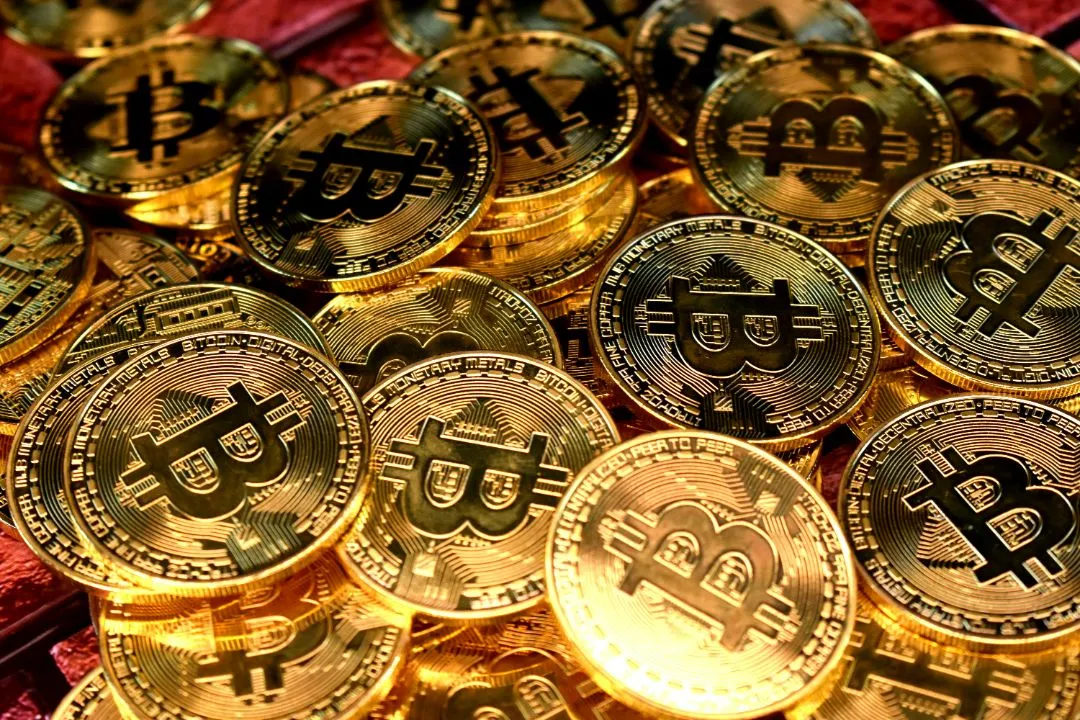
© Pexels/Sebastian Ervi


Physical to digital

Momentica transitions the fan experience from the physical world to the digital realm. Through the app, K-pop aficionados can now exchange photo cards, promote their favorite stars, and maintain a virtual album. Exclusive content, including pictures, videos, and handwriting from some artists, will be available only on Momentica.

Cha mentioned that Momentica has users across 93 countries, with Koreans constituting 40% of the total. Japanese users represent over 30%, indicating the app’s strong presence in the Japanese market. Taiwan, Indonesia, and the US follow in the number of users. Overall, the app’s popularity aligns with regional interest in K-pop.


Beyond HYBE

While the current service focuses on limited collections of digital photo cards, Momentica plans to enhance the experience by allowing K-pop fans to personalize and directly exchange cards. The company is also working on collaborations with artists from labels beyond HYBE for them to participate in Momentica.


More to Read
View All
Web3 & Enterprise·

Aug 08, 2023

Bithumb’s No-Trading-Fee Policy Proves Effective in Boosting User Engagement

Bithumb’s No-Trading-Fee Policy Proves Effective in Boosting User EngagementSince the recent introduction of a no-trading-fee policy for select cryptocurrencies, Bithumb, one of the leading cryptocurrency exchanges in South Korea, has experienced extended customer engagement on its platform.Increased user engagement and installationsOver the past week, the Bithumb app has witnessed growth in user engagement and installations. Both the average total time spent on the app and the average time spent per individual user have risen by nearly 20%. Additionally, there has been a 10% rise in the number of new app installs compared to the previous week.Photo by Mike Hindle on UnsplashTen new fee-free tokensIn this positive announcement today, the crypto exchange also revealed the addition of ten new virtual assets to its list of fee-free trading options. These newly added assets are SAND, AXS, BSV, QTUM, TFUEL, ANKR, T, KNC, STPT, and ONG. This brings the total number of fee-free trading assets on the exchange to 20.Customer engagement and trading volumeBithumb has demonstrated its commitment to making customers stay longer on its platform through various initiatives. Notably, the exchange, in late June, introduced Insight, a service that provides crypto investors with metrics to help them make informed decisions. The company believes that bolstering customer engagement will drive growth in the exchange’s trading volume.Bithumb, recognizing the positive impact of its zero trading fee policy on customer retention, internally saw this achievement as a successful step towards delivering tangible benefits to its users through an optimized trading environment.Since the beginning of the month, the exchange has been unveiling a weekly lineup of fee-free tokens, accompanied by a no-fee BTC market. These fee-free tokens are easily identifiable with a blue badge and can be conveniently sorted by clicking the “fee-free” tab at the top of the chart.Moon Sun-il, the Head of Services at Bithumb, emphasized the company’s commitment to noticeable user experience enhancement. Moon highlighted the recent implementation of the no-trading fee policy and the introduction of the trading data service, Insight, as key initiatives driving towards this goal.

news
Markets·

Mar 11, 2024

Korea’s daily crypto trading volume surpasses that of stocks at nearly $9B

With Bitcoin prices hitting an all-time high, the daily crypto trading volume in South Korea has surpassed that of the stock market, local media outlet The Financial News reported.  As of yesterday at noon (KST), the local daily trading volume of cryptocurrencies over the past 24 hours stood at over KRW 11.8 trillion, or nearly $9 billion, according to data from crypto platform CoinMarketCap. Meanwhile, the daily trading volume on the Korea Composite Stock Price Index, or KOSPI, was KRW 11.4 trillion on Friday.  The total daily crypto trading volume was tallied by adding trading volume across Korea’s five major crypto exchanges – Bithumb posted KRW 8.8 trillion, Upbit KRW 2.7 trillion, Coinone KRW 176.4 billion, Gopax KRW 55.2 billion and Korbit KRW 32 billion. Photo by Alexander Mils on UnsplashUnlike stock markets which have a closing time, crypto assets are traded 24/7, which makes it difficult to do an apple-to-apple comparison. Still, the numbers clearly demonstrate retail investors’ bullish sentiment toward the crypto market.  According to the U.S. crypto exchange Coinbase, the Bitcoin price touched $70,199 on Friday (UST), just three days after the flagship coin surpassed $69,000 on March 5, an already record-breaking price in 28 months since November 2021.  Inflation and recession drive retail investors to crypto Financial experts say that Korea’s persistently high inflation and slowing economic growth are driving local retail investors to seek relatively riskier yet high-yielding assets such as cryptocurrencies. Young investors in their 20s and 30s are particularly leaning towards investing in crypto, as they fear not being able to buy houses solely with their wages. Moreover, Koreans’ average monthly real wage declined by 1.1% year-on-year, which marks a continuous decline for two consecutive years since 2022.  Despite the country’s economic slowdown, the KOSPI has actually risen, fueled by capital influx from foreign investors who are expecting a valuation increase in local firms. In contrast, local retail investors are rushing out from the stock market as they see a lack of outperforming companies.  Data from the Korea Exchange (KRX), the sole securities exchange operator in the country, showed that foreign investors purchased KRW 4.4 trillion in stocks over the past month on the KOSPI market, while local retail investors sold KRW 3.3 trillion worth of stocks during the same period.  Local crypto boom prompts ‘Kimchi Premium’ effectThe recent bullish sentiment in the Korean crypto market can largely be attributed to local retail investors, because current laws prohibit foreign investors from trading crypto assets in the country and regulations limit enterprises from making direct investments in crypto.  While the KOSPI market grapples with the so-called Korea Discount effect, which refers to the undervaluation of the Korean stock market, the local crypto market is experiencing the exact opposite trend – crypto investors are benefitting from something called the Kimchi Premium effect, a newly coined term referring to the overvaluation of crypto assets in Korean crypto markets compared to those in their foreign counterparts. As of yesterday at 14:00 (KST), Bitcoin changed hands at KRW 917.4 million on foreign exchanges while at KRW 971.8 million on Korean exchanges, per data from local crypto exchange Upbit.  Cho Dong-keun, a professor at the Economics Department at Myongji University, described the current Korean economic situation as “a competition for the country’s limited wealth”. He said that the stagnant national growth has pushed people to fight for more wealth, urging them to invest in crypto assets, adding that Kimchi Premium could substantially appeal to many retail investors.   

news
Web3 & Enterprise·

Aug 15, 2023

Nod to Gender Diversity as ZORIXchange Appoints Female CEO

Nod to Gender Diversity as ZORIXchange Appoints Female CEOIn an industry historically dominated by men, Dilys Cheng’s recent appointment as the CEO of Dubai-based ZORIXchange’s digital assets platform marks a progressive step in achieving gender diversity in the cryptocurrency space.The Middle Eastern crypto exchange business announced the appointment via a press release which was published on Monday.Photo by JÉSHOOTS on PexelsBanking backgroundThe firm articulated that Cheng, who hails from Nantou in Taiwan, gained experience in the banking world, igniting a fervent passion for streamlining financial ecosystems. Her eagerness to simplify these processes dovetailed with the potential of blockchain technology, propelling her on a mission of transformation.Leveraging her extensive background in finance, Cheng has merged her expertise in fiat exchanges with the emerging capabilities of blockchain technology. Her tenure as the former Director of Asia Blockchain Accelerator showcased her acumen, propelling startups toward global expansion by harnessing the power of blockchain.Addressing a gender imbalanceThe company also outlined the importance of the appointment from the perspective of gender equality, in an industry that is not well represented by women. The press release goes on to state that Cheng herself “places a strong emphasis on gender equality.” Cognizant of the formidable challenges women encounter in what is very much a male-dominated sector, it appears that Cheng has made the subject a cornerstone of her agenda.Cheng stated: “As we evolve technologically, it’s equally imperative that our culture evolves.”DiversificationThe gender diversity problem in crypto has long been recognized. When it comes to venture capital-backed crypto startups, less than 20% implicate female startup founders.Her rise through the ranks is more than just a professional achievement; it symbolizes the dismantling of merit-based glass ceilings and underscores the ongoing progress in society. Cheng’s ascendancy signifies a profound shift in the crypto realm, one that champions innovation and inclusiveness.From the perspective of investors, a study carried out by Gemini in 2021 found that only 26% of crypto investors were women. The issue isn’t confined to crypto and extends across the broader finance and technology spaces in general. A McKinsey study highlighted that 64% of C-suite executives in financial services were men, with 23% being women.ZORIXchange was founded in 2022 by David Pan. Pan previously worked for KPMG in Taiwan as its COO for Startups and Innovation. In 2018 he left KPMG to establish the ACE crypto exchange in Taiwan. ZORIXchange builds on his experience in the exchange business, within the Middle Eastern market and beyond. ZORIX has offices not only in Dubai, but also in Malaysia and Singapore. The firm has plans to extend its geographical offering further, with a proposed expansion into Hong Kong and Australia in the works.According to a press release published earlier this year, the company is focusing on getting compliance right. With that, it is in the process of acquiring licensing in Dubai, having previously obtained crypto trading licenses in Lithuania and Slovakia.The exchange is expected to launch fully in September, with plans to offer fiat withdrawal and deposit options, together with a debit card product.

news
Loading