Top

Metaplanet issues more bonds to buy Bitcoin & opens U.S. subsidiary

Web3 & Enterprise·May 07, 2025, 12:17 AM

Japanese Bitcoin treasury firm Metaplanet has opened a U.S. subsidiary company in Florida while also issuing 3.6 billion Japanese yen ($24.7 million) in bonds for the purpose of buying more Bitcoin.
https://asset.coinness.com/en/news/946f7c120d3324c08ba0ea58b0d39489.webp
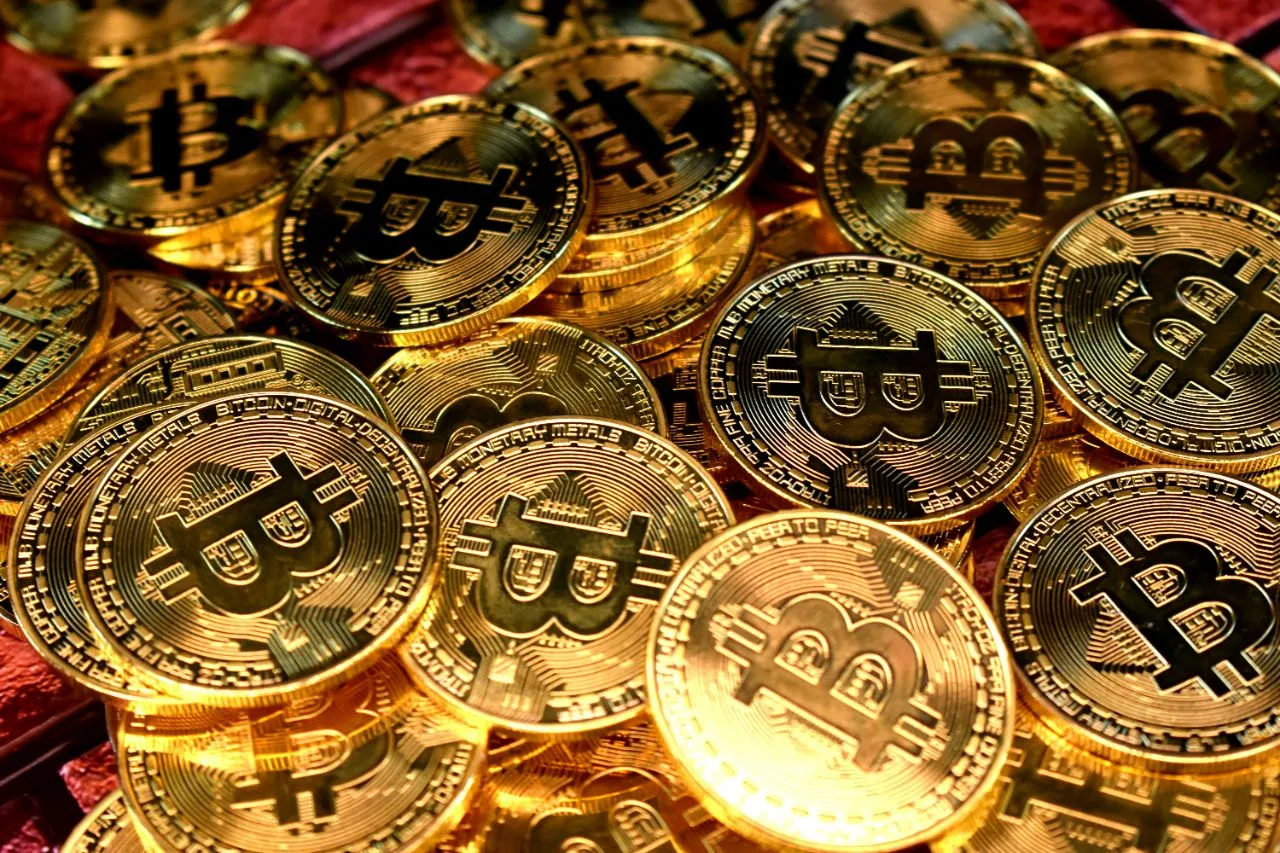
Photo by Kanchanara on Unsplash

Accelerating the Bitcoin strategy

In an announcement on May 1, the company outlined that it had established Metaplanet Treasury Corporation in Miami, Florida. The firm cited the purpose of the subsidiary as a means through which it can accelerate its overriding strategy of accumulating more Bitcoin.

Metaplanet CEO Simon Gerovich commented on X on the rationale behind locating the U.S. subsidiary in Florida, stating:

”The reason for choosing Florida is clear: the state is rapidly emerging as a global hub for Bitcoin innovation, corporate adoption and financial liberalization.”


Gerovich added that the newly formed company will enhance Metaplanet’s “around-the-clock operational capabilities across time zones.” The Metaplanet CEO sees the development as part of the firm’s evolution as a global Bitcoin treasury company. 


$250 million capital raise

The company stated that it had already established a corporate entity in the British Virgin Islands (BVI), with the U.S. addition enhancing the company’s ability “to respond to market dynamics with speed and precision.” 


Metaplanet intends to raise $250 million in funding through the Miami-based entity, having launched it with initial capital of $10 million. It’s envisaged that the U.S. subsidiary can act as a vehicle to attract institutional investment. 


Back in March it was reported that Metaplanet was investigating the idea of listing its stock in the U.S. At the time, Gerovich stated that the firm was “considering the best way to make Metaplanet shares more accessible to investors around the world.” As part of that process, Gerovich met with officials from the New York Stock Exchange (NYSE) and the Nasdaq. 


In further U.S.-related developments, the company appointed Eric Trump, second son of U.S. President Donald Trump, to its strategic board of advisors in March. Last week, Metaplanet appointed David Bailey, CEO of Bitcoin Magazine, to its strategic board of advisors.


Bond issuance

In a separate development, Metaplanet has issued 3.6 billion Japanese yen ($24.7 million) in 0% ordinary bonds to purchase additional Bitcoin. The company used its EVO FUND as the mechanism through which it issued the bonds. 


It has set out a goal of accumulating 10,000 BTC by the end of the year. Currently, the company holds 5,000 BTC. One community member believes that Metaplanet could hit this target as early as July on the basis of ongoing share dilution.

Appearing on The Bitcoin Treasuries Podcast earlier this year, Metaplanet’s Director of Bitcoin Strategy, Dylan LeClair, described how prior to adopting its Bitcoin treasury strategy in 2024, the firm was a “zombie” on the Tokyo stock exchange with the pandemic having had a negative impact on the company’s fortunes. 


He outlined that the company consolidated and dealt with some debt issues, but at that point it lacked a clear strategy. It then set out to replicate the success of U.S. Bitcoin treasury pioneer, Strategy (formerly MicroStrategy).


On May 1 Gerovich posted on X that the company had achieved unrealized gains on Bitcoin exceeding six billion yen ($41.68 million). 

More to Read
View All
Web3 & Enterprise·

May 16, 2024

Metaplanet turns to Bitcoin amidst Japan's economic challenges

Metaplanet Inc., a Tokyo-listed crypto investment and consulting firm, has announced its adoption of Bitcoin as its strategic treasury reserve asset. This decision comes in response to the ongoing economic challenges facing Japan, including high government debt levels, prolonged negative real interest rates, and a weakened yen. Japan currently faces significant economic adversity, with the highest government debt-to-GDP ratio among developed countries at 254.6%, according to the International Monetary Fund. Despite the government's decision to raise interest rates in March, the Japanese yen experienced a sharp decline to its lowest level in 34 years last month, as reported by Reuters.Photo by Takashi Miyazaki on UnsplashBitcoin as a store of valueMetaplanet Inc. highlighted Bitcoin's attributes as a non-sovereign store of value that has demonstrated appreciation against fiat currencies. The firm noted that Bitcoin's monetary policy is predetermined and immutable, with a maximum supply of 21 million coins set to be reached by the year 2140. This characteristic distinguishes Bitcoin from traditional monetary metals and other cryptocurrencies subject to centralized control. Strategic approachIn its official release, Metaplanet Inc. stated its intention to leverage a variety of capital market instruments to enhance its bitcoin reserves. As of May 10, the company reportedly held 117.7 BTC, equivalent to $7.2 million, according to data from Bitcointreasuries.net. This move reflects Metaplanet's strategic response to Japan's economic conditions and its commitment to diversifying and growing its assets in the cryptocurrency space. 

news
Policy & Regulation·

Jul 27, 2023

Singapore High Court Recognizes Cryptocurrency as Personal Property

Singapore High Court Recognizes Cryptocurrency as Personal PropertyIn a significant ruling on July 25, Judge Philip Jeyaretnam of the High Court of Singapore declared that cryptocurrency is capable of being held in trust and should be recognized as property.The judge’s decision came in response to a case brought by Dubai-headquartered crypto exchange Bybit against its former employee, Ho Kai Xin, who was accused of transferring approximately 4.2 million Tether (USDT) from the crypto exchange to her private accounts without authorization.Photo by Tingey Injury Law Firm on UnsplashNo fundamental differenceIn his ruling, Judge Jeyaretnam emphasized that there is no fundamental difference between cryptocurrencies, fiat money, or even physical objects like shells when it comes to their status as property. He argued that as long as these objects hold value and are based on mutual faith, they can be considered property. The judge’s verdict is seen as a crucial step in establishing the legal status of digital assets within the Singaporean jurisdiction.Addressing the argument that cryptocurrencies lack physical presence and therefore cannot be considered property, Judge Jeyaretnam drew an analogy, stating: “We identify what is going on as a particular digital token, somewhat like how we give a name to a river even though the water contained within its banks is constantly changing.” By equating cryptocurrencies to named entities, the judge made it clear that physical tangibility is not a prerequisite for something to be classified as property.Cryptocurrencies have valueFurthermore, the ruling challenges the perception that cryptocurrencies have no “real” value. Judge Jeyaretnam firmly refuted this notion, highlighting that the value of any asset, whether physical or digital, is ultimately determined by collective human belief and judgment.One critical classification made by the judge is grouping cryptocurrencies under the category of “things in action” within British common law. This categorization means that cryptocurrencies are considered a form of property, over which personal rights can be claimed and enforced through legal actions, rather than requiring physical possession.The judge’s decision also referenced the Monetary Authority of Singapore’s (MAS) consultation paper, which proposes implementing segregation and custody requirements for digital payment tokens. By taking cues from the MAS’s stance on digital assets, the court emphasized the legality of holding cryptocurrencies on trust, as long as practical methods for identification and segregation are in place.Cues taken from existing lawSingapore’s legal framework for property also played a crucial role in the ruling. Judge Jeyaretnam pointed to Order 22 of Singapore’s Rules of Court 2021, which defines “movable property” to include various assets, such as cash, debts, bonds, shares, and cryptocurrency or other digital currency. This inclusion reinforces the recognition of cryptocurrencies as a valid form of property within Singaporean law.In April of this year, a Hong Kong court reached a similar conclusion, recognizing cryptocurrency as property. In the High Court of Justice in London the following month, non-fungible tokens (NFTs) were recognized as “private property.”Overall, Judge Jeyaretnam’s ruling represents a significant milestone in the legal recognition of cryptocurrencies in Singapore. By acknowledging cryptocurrencies as property, the court provides greater clarity and certainty for crypto users and investors while affirming the importance of embracing digital assets within the nation’s legal framework.

news
Web3 & Enterprise·

Oct 31, 2023

Thailand’s KBank Furthers Crypto Business Through Satang Acquisition

Thailand’s KBank Furthers Crypto Business Through Satang AcquisitionKasikornbank (KBank), Thailand’s second largest bank, is expanding its involvement in the digital assets sector through the acquisition of a majority stake in the local crypto exchange Satang.Photo by Lisheng Chang on UnsplashTradFi embracing cryptoThe acquisition, involving a purchase of 97% of Satang’s shares, is a significant move in the context of an ongoing trend of traditional financial institutions embracing digital assets. The deal was officially announced on Monday, as disclosed on KBank’s official website.KBank executed the acquisition through its newly established subsidiary, Unita Capital, whose registered capital is valued at 3.7 billion Thai baht (approximately $103 million). Unita Capital specializes in investments within the digital asset sector. This move underlines the bank’s commitment to stay ahead in the dynamic world of digital finance.Subsidiary formationIn light of the acquisition, Satang Corporation is set to undergo a name change and will soon be known as Orbix Trade Company Limited. Unita Capital has established a number of other subsidiary companies as a consequence of the buy-out.KBank’s cryptocurrency venture will be structured into three distinct divisions. Orbix Custodian has been formed, focusing on secure digital asset storage and management. There is a growing demand for reliable digital asset custody services. KBank will use Orbix Custodian as a vehicle to capitalize on that growth opportunity.Orbix Invest has been established to act as the venture arm of the business relative to the digital assets space. It will focus on fund management in meeting the needs of clients looking for exposure to the digital assets sector. Lastly, Orbix Technology has been established to concentrate on blockchain technology development.Satang, a prominent player in the Thai cryptocurrency scene, operates a cryptocurrency exchange alongside a range of digital asset services. Notably, Poramin Insom, the founder of Satang, is recognized for his role in launching Firo (formerly Zcoin), a privacy-centric cryptocurrency. Insom confirmed the acquisition via a Facebook post on Monday, acknowledging the evolution of Satang as it transitions under KBank’s ownership.Insom stated: “I’ve been at Satang since 2017 until now, six years have passed. Currently, Satang on the trading board has already exited according to the news. And there should be an official announcement soon.” He also highlighted Satang’s diversified ventures, including Satang Technology, a blockchain service platform, and Satang Space, focusing on space-related endeavors.This strategic move by KBank follows its recent launch of a $100 million fund, introduced in September, targeting investments in Web3, fintech, and artificial intelligence (AI). In 2022, KBank launched Bigfin, a digital asset investment analysis platform. Bigfin has since been integrated with the Binance platform.Last year the bank backed Thai digital asset and blockchain startup Forward, a project that is working on developing a decentralized derivative platform.KBank is recognized as the second largest lender in Thailand based on assets, trailing behind Bangkok Bank. Thai NVDR Company Limited is the largest shareholder of KBank, as per data from the Stock Exchange of Thailand (SET), with the SET itself owning 99.9% of NVDR’s shares.

news
Loading