Top

Growing Concerns about Single Crypto Exchange Listings in Korea

Policy & Regulation·April 14, 2023, 2:11 AM

According to Yonhap Infomax, there is increasing concern about single crypto exchange listings in the Korean market, following the recent arrest of two former Coinone employees.
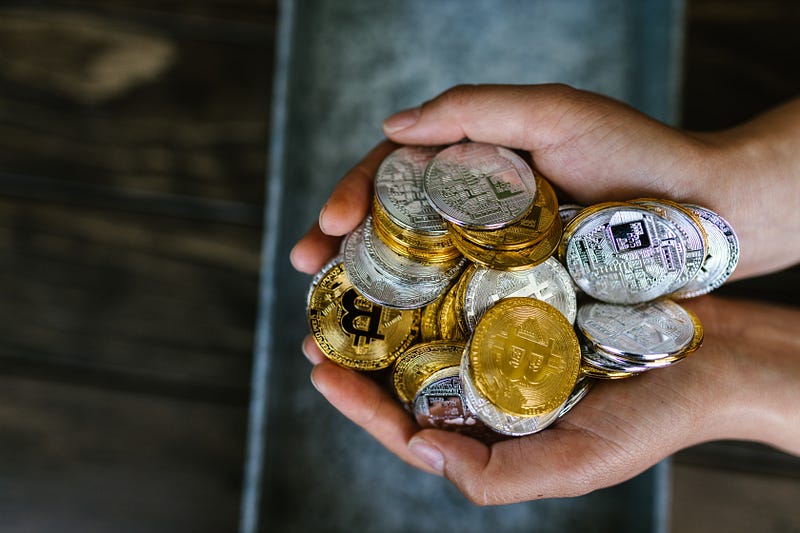
crypto coins
©Pexels/RODNAE Productions


Crypto listing bribery

The individuals were detained by the Seoul prosecution for allegedly accepting about 3 billion KRW (equivalent to over $2.2 million) in bribes to list a certain cryptocurrency on the exchange.

Prosecutors are investigating if these suspects were also involved in the listing of the Puriever token, which is reportedly connected to the kidnapping and murder of a woman in her forties in Gangnam, Seoul.


Single exchange-listed cryptos

A recent report by the Financial Services Commission (FSC) revealed that 389 cryptocurrencies were listed on a single Korean exchange in the second half of last year, a decrease from the previous year’s 403. Despite the decrease, the trend of single exchange listings continued. Exchanges often exclusively list specific cryptocurrencies to gain a competitive edge, as investors typically prefer larger exchanges with greater liquidity.

However, these cryptocurrencies may lack proper review and management and are often highly volatile. The FSC report showed that 34% of cryptocurrencies listed on a single exchange had a market cap of less than 100 million KRW (~$76,000). The Financial Intelligence Unit also warned investors about price fluctuations and liquidity shortages.

High volatile cryptocurrencies are attractive to exchanges, as they can lead to increased transaction fee profits.


Transparent listing

To address this issue, experts advocate for a transparent listing process.

One lawyer in the crypto industry noted that there is a global trend of regulating cryptocurrencies as securities, and if relevant bills pass in Korea, their issuance and disclosure will be regulated. Clear guidelines on disclosures could resolve the issues of single crypto exchange listings, the legal advisor added.

Another industry insider has called for investor caution, stressing the need to consider the potential delisting of these crypto assets.

More to Read
View All
Web3 & Enterprise·

Jul 27, 2023

KuCoin Dismisses Notion of a Layoff Plan

KuCoin Dismisses Notion of a Layoff PlanAmidst recent rumors of significant layoffs at Seychelles-based cryptocurrency exchange KuCoin, the company’s CEO has come forward to deny any such plans.While not refuting the possibility of staff reductions, KuCoin’s CEO, Johnny Lyu, took issue with the term “layoffs,” asserting that it was a reevaluation of the organization’s structure rather than job terminations. The speculations about staff cuts were first reported by Colin Wu of Wu Blockchain on Twitter.Photo by Joao Viegas on UnsplashAlleged 30% workforce reductionAccording to his sources, KuCoin was planning to layoff around 30% of its workforce, attributing the alleged measure to a strict know-your-customer (KYC) policy that had impacted the firm’s profits.The KYC policy in question was introduced after KuCoin faced legal action from the United States. In March, the New York Attorney General accused the exchange of violating securities and commodities laws, leading to the implementation of the more stringent KYC measures.Routine bi-annual appraisalsInstead, Lyu has clarified that any adjustments to the company’s headcount were a result of routine bi-annual appraisals aimed at maintaining competitiveness in the market.Taking to Twitter on Tuesday, Lyu referred to the layoff reports as “rumors.” He emphasized that the company regularly evaluates its organizational structure based on employee performance and overall company development to ensure dynamism and competitiveness.The Kucoin CEO pointed to a recent report issued by the company as evidence of the exchange’s ongoing growth. The report revealed that the firm had added 300 new employees in the first half of the year. It also mentioned that KuCoin was in the process of upgrading its KYC authentication systems to enhance user asset security, comply with global compliance requirements, and create a safer trading environment.Despite the speculation and policy changes, KuCoin ranks 11th in terms of “trust score” among other exchanges, according to CoinGecko. Over the past day, the exchange notched up an impressive $327 million in trading volume.KYC policy changeRecently, KuCoin updated its KYC policy, requiring newly registered users to complete the KYC process to access the exchange’s products and services. Existing registered users who had not completed KYC by the deadline faced restrictions on their accounts, limiting certain activities but allowing fund withdrawals.The update to the KYC policy had a notable impact on KuCoin’s trading volume. A day after the announcement, trading volume skyrocketed to $6.8 billion from the previous day’s $500 million, according to CoinGecko data.Lyu has pledged to continue investing in the company’s core businesses while providing users with the exceptional trading experience they’ve been promised.KuCoin may have dispelled rumors of widespread layoffs and clarified that any staff adjustments were part of routine organizational development. However, there’s no doubt that the crypto exchange business is going through a difficult period.Most exchanges have suffered due to regulatory pushback, particularly those that have focused their activities in the United States. Earlier this month, global exchange Binance cut 1,000 jobs with plans to make further cuts in the future.

news
Policy & Regulation·

Mar 18, 2024

Korean tax agency’s move hints at approving corporate crypto accounts

The South Korean National Tax Service (NTS) is reportedly in the process of setting up virtual asset accounts for its district offices. This initiative is aimed at confiscating and liquidating the digital assets of individuals who fail to pay their taxes. This move comes after the creation of similar accounts by public prosecutors' offices, leading to speculation in the crypto industry that virtual asset accounts will soon be allowed for corporate entities as well.Photo by Nataliya Vaitkevich on PexelsDirect confiscation of virtual assetsA report by the local news outlet Etoday today has revealed that each district office of the NTS is working towards establishing a virtual asset account. This development will empower the tax agency to directly sell virtual assets confiscated from tax delinquents. Previously, the NTS would freeze the accounts of overdue taxpayers at Korean cryptocurrency exchanges, compelling them to convert their assets into Korean won. These funds were then confiscated by the NTS. The new initiative is set to streamline the process, enabling the tax authority to directly confiscate virtual assets without the intermediary step of conversion to Korean won. Speaking about this development, an NTS officer said that as each district office director holds the authority to collect taxes from taxpayers with overdue payments, it's necessary for each office to have its own account. Prosecutors’ Offices’ Upbit and Bithumb accountsThe crypto industry views this development as a potential step towards allowing the creation of virtual asset accounts for corporate entities, starting with government agencies. In December, the prosecutors' offices established their entity accounts at major cryptocurrency exchanges Upbit and Bithumb. Since then, the prosecution has utilized these accounts to sell confiscated virtual assets, aiming to recover funds that had not been collected.  An official from a cryptocurrency exchange indicated that the South Korean government is currently focusing on allowing entities that serve the public good to own virtual asset accounts. This approach is seen as the starting point, with expectations that the trend will gain momentum in the future. The official added that it's rare for the government to provide blanket permissions from the outset, suggesting a gradual and cautious approach to the integration of virtual asset accounts.Money laundering concernsMeanwhile, the Financial Intelligence Unit (FIU) of the Financial Services Commission (FSC), along with other financial regulators, has remained silent on the matter of virtual asset accounts for corporate entities. This reticence stems from concerns with the financial authority that the introduction of corporate crypto accounts could potentially lead to money laundering and the creation of slush funds. An official from the National Assembly’s National Policy Committee said that they have not received any comments from the financial authority in response to inquiries about plans to allow such accounts for corporate entities. The current law doesn’t prohibit corporate entities from trading virtual assets. However, under the auspices of the financial authority, banks have refrained from offering real-name accounts to corporate entities. This policy has been a point of contention within the crypto industry. Advocates argue that allowing corporate accounts could mitigate issues of market manipulation and challenge the dominance of Upbit in the Korean cryptocurrency market.  The official from the cryptocurrency exchange pointed out that the financial authority does not have a clear legal basis for prohibiting the creation of corporate crypto accounts. They suggested that the regulator should develop clearer guidelines and enforce these rules for corporate entities. More serious discussions in AprilMore serious discussions about the introduction of corporate crypto accounts are anticipated to take place in April, following the conclusion of the general election. Last month, the main opposition party, the Democratic Party of Korea, made election promises to open the crypto market to institutional investors. Meanwhile, the ruling People Power Party has been quietly deliberating on virtual asset policy. Despite these political movements, earlier reports indicate a disconnect between the political parties' efforts to relax crypto regulations and the financial regulator's stance. Meanwhile, Hwang Seok-jin, a professor at Dongguk University’s Graduate School of International Affairs and Information Security, expects to see a conclusion on the permission of corporate crypto trading by the end of this year. He said that there has been ongoing discussion about the approval of spot Bitcoin exchange-traded funds (ETFs) and that allowing the trading of such funds requires the ownership of virtual assets by institutions. 

news
Web3 & Enterprise·

Oct 21, 2023

UAE Emirate Launches Digital Asset Oasis Free Zone

UAE Emirate Launches Digital Asset Oasis Free ZoneRas Al Khaimah (RAK), one of the seven Emirates of the United Arab Emirates (UAE), has launched the RAK Digital Assets Oasis (RAK DAO), a free zone tailored exclusively for digital and virtual asset enterprises.Photo by Mostafa Ashraf Mostafa on UnsplashFrom conception to launchThe Emirate has been working on the RAK DAO project for some time, having enacted a law to establish the free zone in March of this year. In July it emerged that RAK Digital Assets Oasis had partnered with the HBAR Foundation, the project team behind the Hedera public ledger, with HBAR extending funding and resources to fuel the growth of free zone members.Having put in the hard yards to establish the free zone, RAK DAO, under the patronage of RAK Emirate ruler His Highness Sheikh Saud Bin Saqr Al Qasimi, had its launch event on Thursday. The event included a range of industry speakers including Ledger Chairman and CEO Pascal Gauthier, Animoca Brands Co-Founder and Executive Chairman Yat Siu, DFINITY Founder Dominic Williams, and TON Foundation President Steve Yun, among others.During the event, DAO creation and governance platform DeXe DAO Studio announced its partnership with RAK DAO.With an eye towards keeping the RAK Emirate ahead of the technological curve, RAK DAO aims for the digital assets oasis to become the world’s first free zone dedicated solely to digital and virtual asset companies. While RAK DAO is initially expected to focus on non-financial activities, it holds the potential to introduce financial activities at a later stage.Nurturing Web3 innovationThe mandate of RAK DAO is to provide robust support to companies engaged in cutting-edge technologies. This includes but is not limited to ventures in the metaverse, blockchain, utility tokens, virtual asset wallets, non-fungible tokens (NFTs), decentralized autonomous organizations (DAOs), decentralized applications (DApps), and various other Web3-related businesses.Entrepreneurs who establish their presence within the confines of this free zone will be granted the privilege of retaining 100% ownership of their enterprises. Moreover, they will benefit from innovative tax schemes and a regulatory framework that is tailored to the unique demands of the digital asset industry.Progressive approach to Web3The UAE, as a nation, has actively pursued and courted crypto and blockchain firms by cultivating a progressive regulatory environment. Dubai led the charge by introducing a virtual assets law and establishing the Virtual Asset Regulatory Authority.RAK is not the first Emirate to establish a free zone that caters to crypto and Web3 business within the UAE. The Emirate of Abu Dhabi has established the Abu Dhabi Global Market (ADGM) while the Dubai International Financial Centre (DIFC) established its own financial regulator in Dubai, paving the way for attractive free zones for digital asset businesses. The Dubai Virtual Assets Regulatory Authority (VARA) even took its commitment a step further by inaugurating its headquarters in The Sandbox in May 2022.Dubai has issued operational licenses to several crypto firms, including prominent names like Binance, Crypto.com, and Nomura’s Laser Digital and digital asset custodian Komainu. These licenses have further solidified the UAE’s position as a preferred destination for crypto, blockchain, and Web3 enterprises.

news
Loading