Top

UAE Emirate Launches Digital Asset Oasis Free Zone

Web3 & Enterprise·October 21, 2023, 1:56 AM

Ras Al Khaimah (RAK), one of the seven Emirates of the United Arab Emirates (UAE), has launched the RAK Digital Assets Oasis (RAK DAO), a free zone tailored exclusively for digital and virtual asset enterprises.
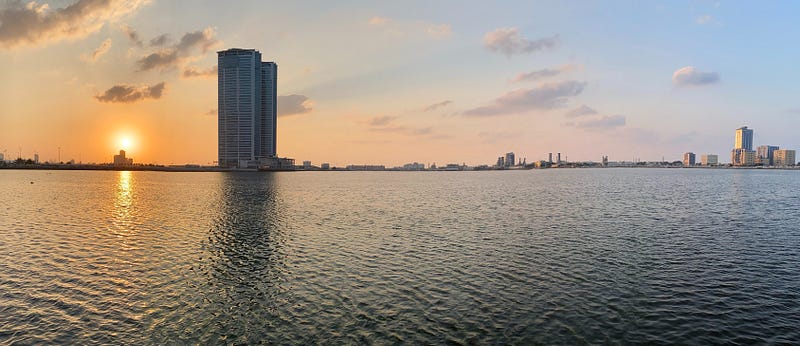
Photo by Mostafa Ashraf Mostafa on Unsplash


From conception to launch

The Emirate has been working on the RAK DAO project for some time, having enacted a law to establish the free zone in March of this year. In July it emerged that RAK Digital Assets Oasis had partnered with the HBAR Foundation, the project team behind the Hedera public ledger, with HBAR extending funding and resources to fuel the growth of free zone members.

Having put in the hard yards to establish the free zone, RAK DAO, under the patronage of RAK Emirate ruler His Highness Sheikh Saud Bin Saqr Al Qasimi, had its launch event on Thursday. The event included a range of industry speakers including Ledger Chairman and CEO Pascal Gauthier, Animoca Brands Co-Founder and Executive Chairman Yat Siu, DFINITY Founder Dominic Williams, and TON Foundation President Steve Yun, among others.

During the event, DAO creation and governance platform DeXe DAO Studio announced its partnership with RAK DAO.

With an eye towards keeping the RAK Emirate ahead of the technological curve, RAK DAO aims for the digital assets oasis to become the world’s first free zone dedicated solely to digital and virtual asset companies. While RAK DAO is initially expected to focus on non-financial activities, it holds the potential to introduce financial activities at a later stage.


Nurturing Web3 innovation

The mandate of RAK DAO is to provide robust support to companies engaged in cutting-edge technologies. This includes but is not limited to ventures in the metaverse, blockchain, utility tokens, virtual asset wallets, non-fungible tokens (NFTs), decentralized autonomous organizations (DAOs), decentralized applications (DApps), and various other Web3-related businesses.

Entrepreneurs who establish their presence within the confines of this free zone will be granted the privilege of retaining 100% ownership of their enterprises. Moreover, they will benefit from innovative tax schemes and a regulatory framework that is tailored to the unique demands of the digital asset industry.


Progressive approach to Web3

The UAE, as a nation, has actively pursued and courted crypto and blockchain firms by cultivating a progressive regulatory environment. Dubai led the charge by introducing a virtual assets law and establishing the Virtual Asset Regulatory Authority.

RAK is not the first Emirate to establish a free zone that caters to crypto and Web3 business within the UAE. The Emirate of Abu Dhabi has established the Abu Dhabi Global Market (ADGM) while the Dubai International Financial Centre (DIFC) established its own financial regulator in Dubai, paving the way for attractive free zones for digital asset businesses. The Dubai Virtual Assets Regulatory Authority (VARA) even took its commitment a step further by inaugurating its headquarters in The Sandbox in May 2022.

Dubai has issued operational licenses to several crypto firms, including prominent names like Binance, Crypto.com, and Nomura’s Laser Digital and digital asset custodian Komainu. These licenses have further solidified the UAE’s position as a preferred destination for crypto, blockchain, and Web3 enterprises.


More to Read
View All
Web3 & Enterprise·

May 30, 2024

Marketnode secures Series A funding led by HSBC and Temasek to enhance digital market infrastructure

Singapore-based Marketnode has successfully completed its Series A investment round, receiving backing from global banking leader HSBC and its existing shareholder, Temasek. While the precise funding amount remains undisclosed, the firm plans to utilize the capital to expand its financial market infrastructure. Marketnode aims to develop neutral infrastructure for digital fixed-income and structured products, initially focusing on the Asia-Pacific region. This initiative is part of a broader strategy to create a comprehensive multi-asset ecosystem.Photo by Markus Winkler on UnsplashStrategic collaborations and future projectsRehan Ahmed, President of Marketnode, highlighted the strategic alliance with HSBC as a pivotal move towards establishing the next generation of trusted and neutral market infrastructure. The investment will also accelerate the launch of Fundnode, a new investment fund infrastructure powered by distributed ledger technology. Additionally, the collaboration will support future offerings of tokenized assets. Marketnode has been engaging with HSBC since 2020, including participation in Singapore's Project Guardian and various digital bond initiatives led by the Monetary Authority of Singapore. Regulatory landscape in SingaporeSimultaneously, Singapore continues to tighten regulations within its crypto sector. Following its stringent licensing framework, the Singaporean authorities recently announced an expansion in the scope of companies regulated under its payment services rules. This measure aims to enhance supervision of digital asset firms, focusing on anti-money laundering efforts and user protection. 

news
Web3 & Enterprise·

Apr 11, 2023

Jump Trades to Top of NFT Marketplace

Jump Trades to Top of NFT MarketplaceJump.trade, which is considered to be the largest NFT marketplace in Asia, has now emerged as the leading NFT marketplace on the Polygon Network, as per a recent report published by DappRadar. This new ranking has placed Jump.trade ahead of other popular NFT marketplaces like OpenSea, Decentraland, and OKX NFT marketplace, among others.©Unsplash/Andrey MetelevJump №1 on PolygonThe firm acknowledged the achievement on social media last week, thanking its community for making the accomplishment a reality. Kameshwaran Elangovan, Co-Founder and COO of Jump.trade, expressed his delight with the recent ranking and called it “an astounding statement of our team’s hard work and the enthusiasm of our community who keep our marketplace always buzzing.”While clearly an “unlocked achievement” as the company itself put it, it’s important to note that NFT marketplace development on the Polygon network has been much more recent. The bulk of NFT marketplace trading volume still occurs on blockchains such as Ethereum with NFT marketplaces OpenSea and upstart Blur dominating and accounting for 90% of NFT trade.First P2E cricket gameIt is worth noting that Jump.trade had introduced the world’s first P2E cricket game NFT collection last year, which consisted of 55,000 NFTs from the Meta Cricket League. Interestingly, this collection had sold out within a mere nine minutes, underlining the immense popularity and demand for NFTs. Jump.trade has also formed partnerships with various renowned brands such as Pepsi and Cadbury to make NFTs more accessible and develop a metaverse ecosystem where both brands and individuals can collaborate.Global ambitionsThe company has set its sights on becoming a major global player in the gaming NFTs market and is expected to benefit from the projected growth in the NFT market. This market is estimated to be worth $231 billion by 2030, with the gaming and sports industries anticipated to be the key drivers of NFT-related products.Jump.trade is a collaboration between Indian firm Appstars Applications and Singapore’s Guardian Blockchain Labs. As an emerging tech superpower, India has a robust technical infrastructure that can enable the NFT industry to penetrate even the remote areas of the country. However, a well-structured regulatory framework will be critical for faster adoption of NFTs and digital collectibles, and ownership will play a crucial role in taking India closer to achieving its goal of an $800 billion digital economy by 2030.Flipkart Labs partnershipJump.trade is also the platform for the upcoming RADDX Racing Metaverse NFTs, and it provides opportunities for brands to leverage Web3/gaming for branding. On Wednesday, Jump.trade announced its partnership with Flipkart Labs, the blockchain and NFT offshoot of Indian e-tailer Flipkart. Both companies are collaborating on the RADDX Web3 advertising innovation.Jump.trade CEO and Co-Founder Ramkumar Subramaniam said that “brands like Flipkart getting into metaverse advertising and Web3 marketing will serve as an encouragement and a beacon for a lot of brands to follow suit.” As part of the deal, Flipkart Labs bought Digital Lands, a digital land parcel within the RADDX Racing Metaverse.

news
Policy & Regulation·

Sep 06, 2023

Japan’s FSA Proposes Tax Exemption for Unrealized Crypto Gains

Japan’s FSA Proposes Tax Exemption for Unrealized Crypto GainsThe Financial Services Agency (FSA) of Japan has taken the step of putting forward amendments that provide a notable tax exemption for unrealized gains on cryptocurrency holdings.Photo by Erik Eastman on UnsplashFSA proposalThe move is significant in that it spares domestic companies from the standard 30% corporate tax rate typically imposed on digital assets up until now. According to reports in local media, that proposal was detailed in a comprehensive 16-page document outlining various regulatory modifications.The most pivotal change within this document is the exemption of domestic companies from the annual “unrealized gains” tax on cryptocurrencies. Unlike some countries that only tax crypto assets when they are converted into fiat currency, Japan currently enforces an annual tax on these digital assets.2023 tax reform agendaThe proposed amendment has garnered support from the Ministry of Economy, Trade and Industry, indicating its potential passage. These discussions are part of Japan’s broader tax reform agenda for 2023, suggestive of the Asian nation’s interest in fostering a favorable environment for the blockchain and cryptocurrency industries.It is important to note that this tax exemption applies exclusively to companies that issue their own tokens and does not extend to entities solely involved in investing in other digital currencies. Additionally, individual crypto investors will still be subject to a maximum income tax rate of 55% on earnings exceeding JPY 200,000 ($1,355) related to cryptocurrency, categorized as “miscellaneous income.”The exemption is structured in a way that excludes these digital coins when assessing a company’s asset market value, provided specific conditions are met. Presently, Japanese law mandates that companies holding crypto assets must pay taxes on unrealized gains at the end of each tax period.To qualify for the tax exemption, a company must meet specific criteria outlined by the tax authority. Firstly, the company must be the issuer of the cryptocurrency in question. Additionally, it must retain continuous ownership of the crypto asset after issuance, while the asset itself remains subject to transfer restrictions.Blockchain ambitionsThis development aligns with Japan’s broader ambition to nurture and expand its blockchain and cryptocurrency sectors. Prime Minister Fumio Kishida recently articulated a vision for a “new form of capitalism,” emphasizing the importance of fostering innovation and growth in emerging industries, inclusive of the Web3 sector. As Japan moves forward with these changes, it signals its interest in creating a conducive environment for blockchain and crypto ventures to thrive.Over time Japan has been iteratively building a framework in respect of digital assets. In 2017 the country recognized Bitcoin as a legitimate property in accordance with the Payment Services Act (PSA). That same year, the Tax Agency classified crypto earnings as miscellaneous income. In 2020, crypto assets were included in Japan’s fund settlement law. Around the same time frame, the FSA brought in the requirement for crypto exchanges to register and obtain a license.These amendments also form part of a series of changes that the Japan Blockchain Association (JBA), an industry advocacy group, has been canvassing for. The proposed changes reflect a pragmatic approach to taxation, doing away with a paper profits taxation treatment in favor of a more progressive approach.

news
Loading