Top

Bitget works towards goal of Bitcoin ecosystem support

Web3 & Enterprise·December 26, 2023, 1:19 AM

Bitget Wallet, a Web3 trading wallet offered by the Bitget Seychelles-based crypto derivatives platform, has unveiled a plan designed to bolster its support for and development within the Bitcoin ecosystem.
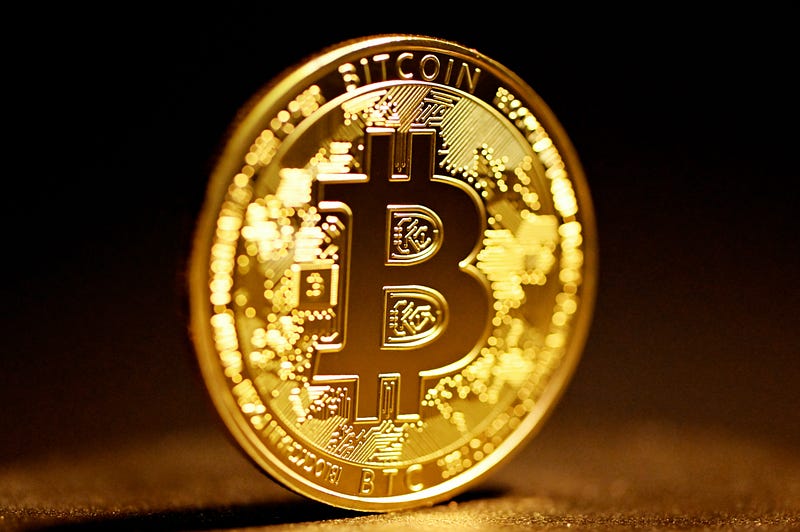
Photo by Kanchanara on Unsplash


Enhancing user experience

In an effort to elevate user experience and expand trading options, Bitget Wallet is committing to extensive product research, development initiatives and increased investments. The company plans on offering a wide array of services tailored to the Bitcoin ecosystem.

This includes robust support for BTC asset management, cross-chain swaps, on-ramping for externally owned account (EOA)-based wallets, multi-party computation (MPC) wallets, Taproot compatibility and streamlined asset transfers for both BRC-20 tokens and NFTs. In October, Bitget announced that it was taking the route of enhanced security by embarking on integrating MPC.


Integrated dApp browser

The platform also provides users with insights into macro and micro market trends through Bitget Swap, enabling interaction with popular projects via its dApp browser.

Bitget Wallet’s move has already garnered support from several Bitcoin ecosystem projects, with integrations on official websites such as Unisat, ALEX Lab, LifeRestart and Bitmap Explorer. The integrated dApp browser ensures convenient user access to these projects, fostering increased engagement and accessibility.

Looking forward, Bitget Wallet aims to capitalize on the medium to long-term market prospects within the Bitcoin ecosystem. The company is directing its efforts towards enhancing both technological infrastructure and product features, with a specific focus on critical areas such as Lightning Network, Nostr, Taproot Assets, BRC-20 and ARC-20 inscriptions.


Facilitating cross-chain transactions

An important facet of Bitget Wallet’s approach involves supporting multiple address formats, particularly within the Lightning Network. By doing so, the platform aims to improve asset transfer efficiency and introduce asset swaps between the Bitcoin mainnet and the Lightning Network. This move is geared towards facilitating cross-chain transactions between BTC and Ethereum Virtual Machine (EVM) assets on Bitget Swap, providing users with increased opportunities for portfolio diversification.

Alvin Kan, the Chief Operating Officer of Bitget Wallet, underscored the significance of Bitcoin as the foundational cornerstone of the crypto industry. He emphasized the platform’s commitment to becoming a key player in the growing Bitcoin ecosystem, providing users with robust and seamless ways to manage and grow their assets.

Formerly known as BitKeep, Bitget Wallet stands as Asia’s largest all-in-one Web3 trading wallet, boasting a five-year legacy and over 12 million users worldwide. On a global basis, the non-custodial wallet recently ranked fourth overall in terms of the number of wallet downloads.

Bitget acquired the Singaporean startup wallet project in June. Its addition helped the broader Bitget platform to achieve the milestone of 20 million users. The product was rebranded as Bitget Wallet shortly afterwards.

The company is keen to support other blockchain networks and ecosystems also. Earlier this month, the company announced an investment into Morph, a layer-2 blockchain that uses zero knowledge roll-up technology in an effort to focus on enhanced consumer experience.

Last week, the platform added support for ZKFair, a zero knowledge layer-2 network which is based on the Polygon CDK.


More to Read
View All
Policy & Regulation·

Jul 21, 2023

Fraud Defense Sees Terraform Labs Pursue Access to FTX Wallets

Fraud Defense Sees Terraform Labs Pursue Access to FTX WalletsTerraform Labs, the Singapore-based cryptocurrency firm at the center of a lawsuit filed by the United States Securities and Exchange Commission (SEC) in February, is taking steps to bolster its defense against fraud charges.Photo by Anete Lusina on PexelsSubpoena for debtors’ recordsAccording to a motion filed with the FTX bankruptcy court in Delaware on Wednesday, the company is seeking permission from a judge to subpoena data from the bankrupt crypto exchange. The filing shows that Terraform’s legal team is requesting access to information about digital wallets utilized by short sellers between March and May 2022.The company believes that its algorithmic stablecoin’s collapse was not a result of natural market forces but rather a coordinated attack by short sellers, potentially involving Alameda Research, FTX’s sister company.The motion states: “To establish these defenses, TFL needs Debtors’ records about wallets, accounts, and assets used to transact on the FTX International and US exchanges and sales/offers of large volumes of cryptocurrencies developed by TFL, if any, by FTX Trading and West Realm Shires Services Inc. d/b/a FTX US.”Alleged securities fraudThe SEC’s lawsuit, filed on February 16, accuses Terraform Labs and its founder, Do Kwon, of orchestrating a multi-billion dollar crypto asset securities fraud. The regulator alleges that Terraform offered unregistered securities through its algorithmic stablecoin, TerraUSD (UST), and the Terra Luna (LUNA) token. The failure of Terraform in 2022 led to a staggering loss of over $40 billion in the crypto markets.The motion also targets Jump Trading, another entity accused by the SEC of colluding with Terraform to manipulate the price of the UST stablecoin. Jump Trading is facing a separate lawsuit in Illinois in the US, accused of purchasing millions of UST tokens in 2021 as part of an agreement with Terraform to maintain the stablecoin’s peg to $1.“Defendants misrepresented UST’s recovery by claiming that the algorithm was able to restore and maintain the price peg. According to the SEC, UST instead recovered its price peg because Defendants entered an arrangement with a U.S. trading firm, Jump Trading, […] to purchase substantial amounts of UST to support the price,” reads the court filing.Jurisdictional argumentsAside from its pursuit of FTX’s data, Terraform is also seeking to dismiss a class-action lawsuit in California, having already sought to have the SEC lawsuit dismissed. The company argues that since it is based in Singapore, US securities laws referenced in the lawsuit are not applicable to its foreign-developed protocols.Using a similar jurisdictional argument, Do Kwon also tried to conceal documents held in Singapore by the Singaporean company from the SEC, but he failed in that endeavor.Another significant development at Terraform has seen a new CEO appointed to lead the troubled company. According to a report in the Wall Street Journal on Wednesday, Chris Amani, who has been acting as Terraform’s Chief Operating Officer and Chief Financial Officer up until now, has been appointed as CEO.

news
Policy & Regulation·

Mar 11, 2025

Thailand’s SEC expands list of approved cryptocurrencies to include stablecoins

Thailand's Securities and Exchange Commission (SEC) has approved the leading U.S. dollar stablecoins USDT and USDC, expanding its list of approved cryptocurrencies within the Southeast Asian country.Photo by Tarun Ottur on UnsplashListing on regulated exchanges The approval was announced in a statement published on the SEC website on March 6. It means that Tether’s USDT and Circle’s USDC can now be listed on regulated exchanges in Thailand. The regulator had arrived at its decision to add the two stablecoins following a public consultation process regarding regulatory changes. Those changes were finalized last month and will now proceed to go into effect on March 16. The two stablecoins join five cryptocurrencies that had previously been approved. These include Bitcoin (BTC), Ethereum (ETH), Ripple (XRP) and Stellar (XLM). Certain cryptocurrencies are also being used for the testing of payment settlement through the Bank of Thailand’s Programmable Payment Sandbox.   A regulatory sandbox is a controlled environment testing ground for products and services developed within the private sector. Back in June of last year, the Southeast Asian country’s central bank launched an enhanced regulatory sandbox focused on programmable payments.  USDT issuer Tether responded to the addition of its stablecoin within the approved cryptocurrency list, stating: “This approval enables USD₮ to be traded within the country, facilitating its listing on regulated exchanges and paving the way for USD₮ to be accepted for payments, which advances the region’s leadership in digital asset innovation.” Tether CEO Paolo Ardoino said that the company sees value in the Thai market and with that, it intends to continue to explore ways to broaden its service offering within Thailand. He added:  “We are committed to supporting the long-term success and adoption of stablecoins in Thailand and look forward to contributing to the growth of the country’s digital asset ecosystem by fostering a strong and sustainable stablecoin infrastructure.” Stablecoin market growth According to DeFi data aggregation platform DefiLlama, the stablecoin market now stands at $227 billion in terms of market capitalization. This represents a 68% increase by comparison with the size of the market in 2023. It indicates that stablecoin adoption is on an upward growth trajectory. Digital assets are being used in many instances to facilitate international payments and remittances, particularly in emerging markets. In Europe, American investment bank JPMorgan recently forecasted that the introduction of the Markets in Crypto-Assets (MiCA) regulation will drive euro-pegged stablecoin growth.  Meanwhile, in the United States, S&P Global Ratings recently identified that a current lack of stablecoin regulation is acting as a barrier to broader institutional use. The company anticipates adoption growth once regulatory clarity has been achieved. Vlad Tenev, CEO of commission-free investing platform Robinhood, stated last month on Yahoo Finance’s Opening Bid podcast that stablecoin legislation will be passed in the U.S. in 2025. Tenev believes that applying a 4% interest rate to stablecoins would lead to a greater rate of adoption.

news
Policy & Regulation·

Jan 16, 2024

New bill in Singapore could broaden MAS regulatory oversight of crypto

The Monetary Authority of Singapore (MAS) is set to gain enhanced powers through the Financial Institutions (Miscellaneous Amendments) Bill 2024 (FIMA Bill), currently under consideration in the country's parliament.Photo by Kenneth Koh on UnsplashProfound impactIf the bill passes, it could have a profound impact on cryptocurrency firms operating in Singapore. One significant aspect of the proposed amendments is the expansion of MAS's authority to issue directives to capital markets services license (CMSL) holders involved in unregulated business activities. This move is particularly aimed at firms offering unregulated products that might pose contagion risks to their regulated operations. The bill cites examples such as bitcoin futures and payment token derivatives traded on overseas exchanges. At the moment, the regulator is actively monitoring the crypto space in Singapore, issuing investor alerts relative to unregulated entities. Last month, MAS added imToken, a non-custodial crypto wallet, to its Investor Alert List. The list serves as a means for the regulator to draw attention to entities that may be actively trading within the city-state while being wrongly perceived by the investing public as licensed or regulated entities. Greater powersIn response to potential risks, MAS had previously issued guidance on risk-mitigating measures for CMSL holders conducting unregulated business with retail investors. The FIMA bill seeks to empower MAS further by enabling it to issue written directions specifying the minimum standards and safeguards for CMSL holders and their representatives engaging in unregulated businesses. Cryptocurrency exchanges, potentially categorized as CMSL holders, along with Major Payment Institution (MPI) licensees, may face increased regulatory scrutiny. MAS has been active in implementing measures to curb speculation in cryptocurrency investments and has updated its regulatory framework for stablecoins. The bill introduces additional provisions empowering MAS to compel individuals to participate in interviews and provide written statements. It grants MAS the authority to enter premises without a warrant and obtain court orders to seize evidence. Furthermore, the bill allows MAS to approve agents appointed by foreign regulators for inspecting Singaporean financial institutions. Precursor to ETF offeringThe potential ramifications of the bill extend beyond local regulatory dynamics. Industry observers suggest a connection between these developments and the recent approval of spot bitcoin exchange-traded funds (ETFs) in the United States. Lasanka Perera, CEO of Independent Reserve Singapore, recently highlighted that the approval of bitcoin ETFs in the U.S. will likely attract major global wealth management firms, intensifying the demand for bitcoin and transforming it into an accessible asset class for traditional institutions. Perera sees relevance in this proposed legislation as it pertains to the potential offering of spot bitcoin ETF products within the Republic of Singapore. While he speculates that it's too early to tell, he said Singapore’s proposed new bill to enhance regulatory authority over financial services, including bitcoin futures, makes provisions for possible spot bitcoin ETFs in the Republic. As Singapore continues to refine its regulatory framework, the proposed amendments reflect a broader trend of regulatory tightening in the global cryptocurrency landscape, emphasizing the importance of compliance and risk management for industry participants. 

news
Loading
