Top

HashKey secures $30M in funding from Chinese VC firm

Web3 & Enterprise·February 19, 2025, 8:28 AM

A Beijing-headquartered venture capital firm has invested $30 million in Hong Kong’s HashKey Exchange.


That’s according to a report published by Bloomberg on Feb. 14, citing unnamed sources understood to be familiar with the matter. HashKey’s capital injection has come from Gaorong Ventures. 


The Chinese VC firm was founded in 2014, initially known as Banyan Capital before rebranding as Gaorong Ventures in 2018. The VC firm focuses on early and growth-stage investments, with a specific interest in new technology. 


Gaorong has 23 IPO portfolios on its books, together with 30 projects valued at in excess of $1 billion. It has been an early-stage investor in Chinese tech firms such as Chinese shopping platform Meituan and online retailer PDD Holdings. 


Last year, the company participated in a funding round for Dongchedi, the car information and trading platform belonging to ByteDance, the parent company of TikTok.

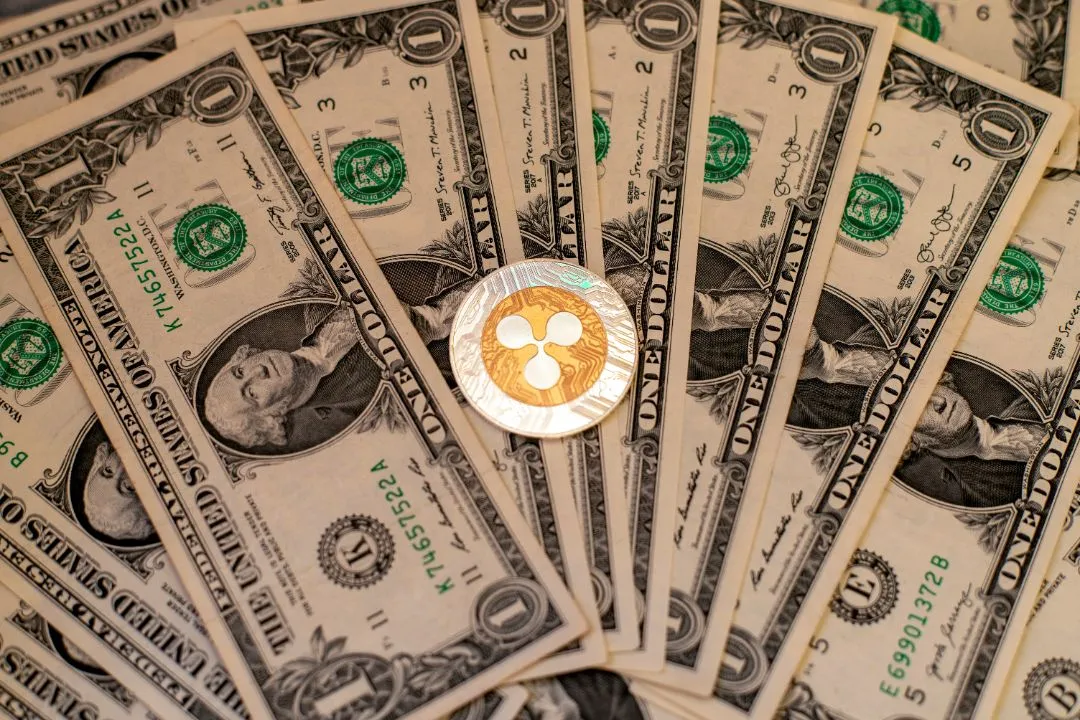
https://asset.coinness.com/en/news/d8d1d0d02f2f9e0489726ce1c33da636.webp
Photo by Towfiqu barbhuiya on Unsplash

Beyond unicorn status

In this instance, the funds were invested with HashKey Group weighing in with a post-money valuation in the region of $1.5 billion. That puts the company well beyond unicorn status, which it achieved in a previous $100 million funding round over a year ago.


At that time, HashKey didn’t disclose the names of investors other than to state that they were “prominent institutional investors” and “leading Web3 institutions.” It’s understood that the round included both existing and new investors.


Surging VC investment in crypto startups 

This latest investment comes amid a backdrop of a surge in venture capital investment into the crypto sector. Well-known American venture investors Sequoia Capital and Andreessen Horowitz (a16z) invested almost $1.2 billion in crypto projects last month. 


In 2024, $13.7 billion was invested in crypto and blockchain startups by venture capital firms, marking a 28% increase on the previous year. In Q4 2024, the United States took first place, accounting for 46% of investment into startups across the market in general. Hong Kong weighed in with 17% in second place.

HashKey is also playing its own role in crypto and blockchain startup investment. HashKey Exchange’s sister company, HashKey Capital, is an institutional asset manager that also invests in crypto startups. In recent weeks, the company has invested in SignalPlus, a crypto trading software firm focused on the Asian market, and Kelpr, a Cosmos (ATOM) ecosystem wallet project.


More crypto VC investment in 2025

In January, HashKey Capital CEO Deng Chao told Cointelegraph that he expected more VC capital investment in crypto startups in 2025. He stated:


“As we enter into a supportive macro environment driven by stimulative US policies and the formalization of crypto regulatory frameworks, these macro tailwinds are set to drive more VC investments heading into 2025.”


Meanwhile, the overarching HashKey Group is positive in its outlook with regard to the crypto and blockchain sector in 2025. Last month, it outlined that it expects Bitcoin and Ethereum to surge in price, the share of the market held by decentralized exchanges (DEXs) to increase, capital inflows into the sector from institutions to grow, the approval of more crypto ETFs and further development of layer-2 networks over the course of the year.

More to Read
View All
Web3 & Enterprise·

Jun 05, 2023

Gate.io Threatens Legal Action Against Speculators

Gate.io Threatens Legal Action Against SpeculatorsGate.io, the erstwhile legacy Chinese cryptocurrency exchange currently headquartered in the Cayman Islands, has issued a stern warning to individuals spreading rumors of imminent bankruptcy.The exchange intends to take legal action against those responsible for causing panic among investors by disseminating baseless rumors without any concrete source of information. This announcement, originally written in Turkish, was posted on Gate.io’s official Twitter account on June 4.Photo by Kai Pilger on UnsplashInsolvency rumorsThe insolvency rumors surrounding Gate.io emerged following a series of events involving Multichain, a troubled cross-chain protocol. Multichain has been facing technical difficulties since May 24, when a node issue resulted in transaction delays. Several days later, the Multichain team revealed that they were unable to contact their CEO to access the servers and resolve the problem.These circumstances fueled speculation that the protocol’s leadership had been arrested and that Chinese authorities had seized over $1.5 billion in smart contract funds.On May 24, data from blockchain analytics firm Arkham Intelligence indicated a significant inflow of Multichain tokens ($MULTI) from Gate.io’s platform. In response to mounting concerns, Gate.io categorically denied any liquidity issues on May 31. The exchange asserted that its operations were running smoothly and that withdrawals were not a problem. Despite reports on Twitter and Telegram channels of traders withdrawing funds, Gate.io’s trading volume has remained relatively stable in recent days.As of now, Gate.io’s native token, GateToken ($GT), is trading at $4.01, representing a 18% decline over the past week, according to CoinGecko data. Gate.io, which although headquartered in the Cayman Islands, has recently expanded its presence to Hong Kong, Turkey, and Dubai.Multichain falloutThe ongoing issues faced by Multichain have prompted other cryptocurrency exchanges to take action. Binance, for example, suspended deposits for 10 bridged tokens on the BNB Smart Chain, Fantom, Ethereum, and Avalanche blockchain networks on May 25. Furthermore, transaction downtime compelled the Fantom Foundation to remove 449,740 $MULTI ($2.4 million) from liquidity on the decentralized exchange SushiSwap.Gate.io’s firm denial of insolvency rumors coupled with its threat of legal action underscores the exchange’s determination to combat the spread of this speculation. The exchange is seeking to protect the interests of its investors and maintain the stability of its operations.All stakeholders need to rely on continued vigilance in the crypto space. However, if Gate.io is to be afforded the benefit of the doubt in this instance, then it could be interpreted that it is demonstrating a commitment to transparency and swift action in the face of seemingly baseless rumors. On that basis, the firm’s response could be perceived as a demonstration of its resolve to navigate the challenges presented by the Multichain situation and uphold its reputation as a reliable cryptocurrency exchange.

news
Policy & Regulation·

Mar 21, 2025

Pakistan moves towards legalizing & regulating crypto

While Pakistan’s Minister of State for Finance and Revenue stated back in 2023 that cryptocurrencies “will never be legalized in Pakistan,” recent events suggest that policy change is now likely.Photo by Hamid Roshaan on UnsplashAttracting foreign direct investmentIn an interview with Bloomberg TV on March 20, Bilal bin Saqib, CEO of the Pakistan Crypto Council (PCC), outlined that the South Asian country plans to move forward towards unbanning cryptocurrency within the country, while establishing a legal framework for such digital assets. The PCC itself was only established in February, with bin Saqib appointed as CEO earlier this month. The role of the PCC is to regulate and integrate blockchain technology and digital assets in Pakistan. The motivation for the proposed change in policy is a desire to attract foreign direct investment into Pakistan. The Trump effectWhen asked “why now,” bin Saqib said that “if [not] now, then never.” Expanding on that theme, he articulated that the return of U.S. President Donald Trump to office combined with his support of cryptocurrency, stands as a “bullish” catalyst for the global development of digital assets. He added: “Trump is essentially flipping the script. Trump signing an executive order instructing regulatory bodies to accommodate digital assets, forming the White House crypto advisory team, creating the U.S. strategic Bitcoin reserve,” . . . “that means that the largest economy in the world is creating it like a valuable national asset.” bin Saqib told Bloomberg that Pakistan is done with sitting on the sidelines and that the country now wants to achieve regulatory clarity on behalf of participants in the crypto sector within the country. He added that there’s a need to establish a legal framework that is pro-business. He added: “We want Pakistan as the leader in blockchain-powered finance, and we want to attract international investment.” Policy u-turnThis new stance on crypto stands in stark contrast to Pakistan’s previous position on cryptocurrencies. The country’s central bank, the State Bank of Pakistan, has warned investors of the risks of dealing in cryptocurrencies on a number of occasions previously, highlighting the fact that no entity is licensed within Pakistan to offer remittance services that implicate crypto tokens.  Earlier this month, bin Saqib outlined that Pakistan is investigating the use of blockchain technology to streamline remittances. The South Asian nation ranks within the top 10 countries in terms of total value remitted each year. At that time, he also confirmed to CoinDesk that Pakistan is exploring real-world asset (RWA) tokenization initiatives.  A report by Chainalysis in 2023 stated that Pakistan is “a world leader in grassroots cryptocurrency adoption.” Wealth preservation was identified as one catalyst for crypto adoption, given that the country has faced high inflation rates in recent years and a devaluation of its sovereign currency. That has led to stablecoins being popular despite a ban being in place on cryptocurrencies all the while. In taking matters forward from this point, bin Saqib said that the PCC is keen to learn from the experiences of jurisdictions such as the United Arab Emirates (UAE), Nigeria, Turkey, Singapore and Hong Kong in determining how best to formulate a pro-business regulatory framework for digital assets in Pakistan. 

news
Policy & Regulation·

Jan 13, 2025

Bybit suspends services in India amid regulatory blowback

It’s been a tough couple of months for global crypto exchange, Bybit. Having had to leave the Malaysian market due to regulatory issues, the firm is now being forced to shutter its service in India for similar reasons.Photo by Naveed Ahmed on UnsplashWithdrawing services on January 12The exchange announced its withdrawal from the Indian market via a statement published to its website on Jan. 10. The service for Indian residents has been ceased from 08:00 UTC on Sunday, Jan. 12.  Account opening and crypto trading has been disabled. Furthermore, the ability to place market orders through other exchange products offered by the company has also been disabled. The ability for customers to withdraw fiat currency and digital assets remains in place. Achieving full complianceWhile the company is leaving the market, it has stated that its services are temporarily suspended in India. It cited a need to “operate in full compliance” as the firm’s primary objective relative to the Indian market. Elaborating on this, it stated:”We have taken this measure while we continue to work closely with the regulator to finalize our registration as a Virtual Digital Asset Service Provider in India, which we expect to secure in the coming weeks.” Malaysian market issueThe situation mirrors a similar set of circumstances that Bybit finds itself in relative to the Malaysian market. On Dec. 27, the Malaysian Securities Commission published a statement outlining details of an enforcement action it had taken against Bybit and the firm’s CEO, Ben Zhou.  In that instance, Bybit was directed to disable its service offering within the Malaysian market. The company indicated that it would return to the market once it had secured the necessary licensing. India hasn’t proven to be the most crypto-friendly jurisdiction to date. Indian crypto influencer R.K. Gupta took to the X social media platform, claiming that the government was at fault for Bybit having to withdraw from the Indian market. He stated: “Our country’s flawed policies are ruining crypto, while others aim for reserve currency status. Govt targeting exchanges, and now Bybit might stop services in India.” In December 2023, India’s Financial Intelligence Unit (FIU) took action to prevent unregistered overseas exchanges from operating within the Indian market. It issued compliance show-cause notices to nine exchanges at the time. Shortly afterwards, Apple India blocked access to these exchanges on the Indian Apple App Store.  While Bybit wasn’t amongst them, it is now being brought into line by Indian regulators. Back in September, it emerged that the FIU was considering requests to allow four offshore cryptocurrency exchanges to resume activity within the Indian market. Having been deemed to have come into compliance, Binance and KuCoin resumed activities in India in August 2024. Aside from Malaysia and India, Bybit has also encountered regulatory difficulties in Europe. Last August, it left the French market due to regulatory problems. In May 2022, the Autorité des Marchés Financiers (AMF), the French financial markets authority, blacklisted Bybit, warning investors that it wasn’t a registered digital asset service provider.  As part of that market withdrawal, Bybit collaborated with partner Coinhouse, a regulated French crypto-asset platform. Accounts holding assets above the value of 10 USDC were transferred to Coinhouse.

news
Loading