Top

Ripple APAC executive predicts institutional adoption surge in 2024

Policy & Regulation·December 20, 2023, 12:48 AM

Fiona Murray, the Managing Director overseeing the Asia-Pacific region (APAC) at enterprise blockchain firm Ripple, envisions a substantial uptick in institutional adoption of cryptocurrencies in the upcoming year.
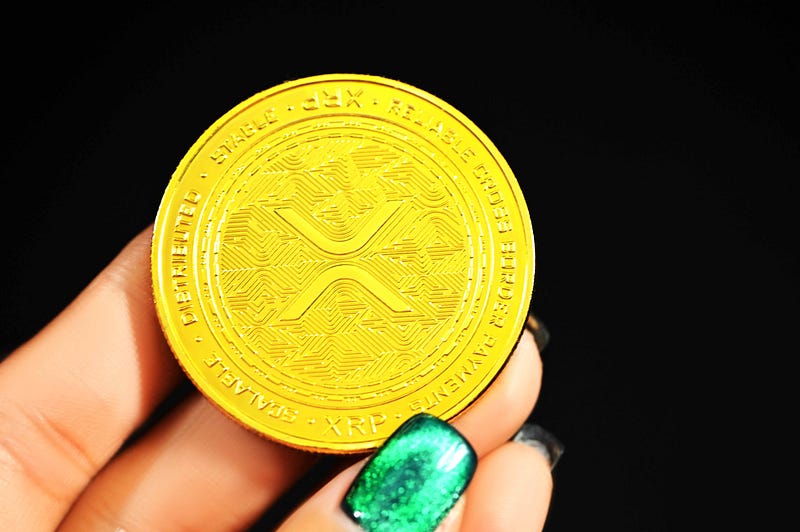
Photo by Kanchanara on Unsplash


Emphasis on Asia

Murray set out her predictions for the coming year in a thread of posts on the X social media platform on Monday. This foresight coincides with a notable upswing in interest from traditional financial institutions within the digital currency market, especially in the APAC region.

Murray predicts an unprecedented surge in cryptocurrency adoption within financial institutions, underscoring a shifting landscape where companies increasingly leverage cross-border payment solutions powered by blockchain technology. She wrote:

”Entering 2024, we are expecting to see a surge in institutional adoption of crypto by financial institutions, especially in the APAC region. This includes the greater usage of cross-border payments among companies.”


Web2 firms to integrate blockchain

This departure from traditional payment methods signifies a growing confidence in the security and efficiency offered by digital currencies. Ripple’s APAC executive emphasizes the escalating investments by well-established Web2 companies and legacy payment institutions as they integrate blockchain utility into their offerings.

“More than ever, leading Web2 companies and legacy payments institutions are investing resources to integrate blockchain utility into their services — ‘Nearly half of APAC finance leaders expect blockchain to have a significant impact on business in the next 3 years.’” she stated.

This positive outlook is reinforced by proactive measures taken by countries like Singapore and Hong Kong, positioning themselves as global leaders in cryptocurrency and blockchain adoption.


Crypto ETFs

The continued rollout of crypto exchange-traded funds (ETFs) adds to the level of institutional adoption that has occurred in 2023 and is likely moving forward into 2024. Hong Kong has been the regional leader in this regard within APAC. The Hong Kong Stock Exchange was the first platform in Asia to offer crypto asset exposure by way of an ETF in December of last year. Since then, several such ETFs have been listed within the Chinese autonomous territory.

Last month, multinational investment bank UBS joined industry peers like HSBC in following suit to offer institutional clients access to crypto-linked ETFs. Going into 2024, most industry commentators seem to be convinced that the emergence of BlackRock, the world’s largest asset manager, in promoting a spot bitcoin ETF in the United States means that approval is likely over the course of the next few months. That milestone will undoubtedly have positive reverberations for institutional digital asset adoption in the APAC region also.


Strategic importance of APAC

The APAC region holds strategic importance for Ripple’s expansion plans, given its rapid technological advancement and openness to innovation. In Singapore, the company received “in principle” approval from the Monetary Authority of Singapore in June. That was upgraded to full license approval in October.

Singapore and Hong Kong, among other countries in the region, have emerged as frontrunners in the global cryptocurrency market, fostering regulatory environments conducive to blockchain innovation.

These factors underscore the region’s crucial role in Ripple’s global strategy, aligning with the company’s vision and objectives as it seeks to grow its business.


More to Read
View All
Web3 & Enterprise·

Jun 10, 2025

Metaplanet raises funds to fulfill 2027 Bitcoin goal

Japanese Bitcoin treasury company Metaplanet, whose shares are listed on the Tokyo stock exchange (3350/TYO), has taken an important step towards its goal of holding 210,000 BTC by 2027. ‘Asia’s largest-ever equity raise’The firm’s CEO, Simon Gerovich, took to the X social media platform on June 6 to outline details of what he termed “Asia’s largest-ever equity raise.” Gerovich stated that Metaplanet had raised 770.9 billion yen ($5.4 billion) by means of moving strike warrants, implicating 555 million shares. Moving strike warrants are a type of equity warrant through which the strike price changes over time. Photo by Cullen Cedric on UnsplashGerovich claimed that the warrants were issued at a premium to the market due to Metaplanet’s “high volatility and deep liquidity.” The Metaplanet CEO stated that the firm is targeting 100,000 BTC by the end of 2026 and 210,000 by the end of 2027. On June 2, the firm announced that it had acquired its latest tranche of Bitcoin, adding another 1,088 BTC to its corporate treasury. The company paid an average Bitcoin unit price of 15,519,019 yen ($107,000). Metaplanet has adopted the treasury playbook first pioneered by Michael Saylor’s Strategy (formerly MicroStrategy), acquiring the leading crypto asset through a combination of equity issuance, debt financing and opportunistic buying.  Russell Okung, a former professional American football player and well-known Bitcoin proponent, took to X on June 6 to highlight that Saylor “lit the match” through Strategy in the United States.  Okung stated: “Metaplanet just launched the rocket in Asia. When capital moves, narratives follow.”He added that “Metaplanet didn’t just buy Bitcoin. They’re directing global attention toward Japan.” Both Metaplanet and Strategy have appealed to investors who are otherwise not in a position to gain exposure to Bitcoin directly, either as a result of regulatory issues or concerns with regard to the custody of the digital asset.  Corporate treasuries adopting BitcoinIn addition to these companies who have led first with a Bitcoin treasury as their primary attraction, other corporates have added Bitcoin to their corporate treasuries while maintaining their focus on other business activities.  Announcements have come thick and fast over the course of recent weeks, particularly in the Asian region.  A number of Nasdaq-listed companies, including Hong Kong-based Reitar Holdings, Indonesian fintech firm DigiAsia, Malaysia-based Treasure Global and South Korea-based K Wave Media, have all announced the addition of Bitcoin to their corporate treasuries.  Metaplanet’s new funding round will put it on track to achieve the goal of obtaining 210,000 BTC by 2027, equating to approximately 1% of the entire Bitcoin supply. The Japanese firm’s shares have risen in price by over 275% since the beginning of this year. According to BitcoinTreasuries.net, Strategy remains the largest corporate treasury holder of Bitcoin with 582,000 BTC. It’s followed by MARA Holdings, Twenty One, Riot Platforms, Galaxy Digital Holdings and CleanSpark. Tesla, Hut 8 Mining Corp and Coinbase Global also feature prior to Metaplanet which comes in tenth place.

news
Policy & Regulation·

Jan 10, 2024

Singapore regulator adds imToken crypto wallet to Investor Alert List

Singapore's Monetary Authority (MAS) has recently added the non-custodial crypto wallet, imToken, to its Investor Alert List, prompting a response from the Singapore-based company.Photo by Zhu Hongzhi on UnsplashIdentifying unregulated entitiesAccording to the official MAS website, imToken found its place on the alert list on Dec. 5. This regulatory move demonstrates that MAS is monitoring the evolving crypto landscape with a view towards safeguarding investors from potential risks. The list serves as a repository of unregulated entities that might be mistakenly perceived as licensed or regulated by MAS. The regulatory body had also flagged BKEX digital asset exchange in December. BKEX had suspended withdrawals earlier in the year, having gotten caught up in an investigation surrounding money laundering activity on the platform. More recently, the company has ceased operations. Company responseIn response to being added to MAS's alert list, imToken took to the X social media platform (formerly Twitter) to address user concerns on Tuesday. The non-custodial wallet clarified that it had not applied for a financial business license in Singapore, the primary reason for its listing. Notwithstanding that, ImToken reassured its users that their assets remain unaffected due to the platform's decentralized nature. The company outlined that it is actively engaging with MAS to clarify its business model and aims to have imToken removed from the Investor Alert List. This development highlights the ongoing dialogue between crypto platforms and regulatory bodies, emphasizing the need for clear communication and compliance within the evolving crypto regulatory landscape. As MAS continues to take decisive actions, the industry remains under scrutiny, necessitating collaboration between regulators and crypto entities for a well-balanced and secure financial ecosystem. Unintended consequencesMAS has taken a proactive approach to regulation in the crypto space. That has been evidenced in previous actions such as blacklisting Binance in 2021, leading to Binance relocating its operations to Dubai. That blacklisting turned out to provide a classic example of the law of unintended consequences. With Binance having removed itself from the local market following the blacklisting, many Singaporeans chose to use FTX instead. FTX subsequently failed in November 2022, leaving a disproportionate number of Singaporean customers out of pocket. The inclusion of imToken on the alert list is particularly noteworthy amid the growing popularity of non-custodial wallets. Statista data from 2022 indicates that 81 million users have adopted non-custodial wallets, providing them with greater control over private keys and crypto assets. However, this surge in usage has also brought about increased regulatory attention due to associated risks. Founded in 2016, imToken was initially launched in Hangzhou, China, prior to relocating its headquarters to Singapore. At various stages, the firm has been funded by companies such as IDG Capital, Qiming Venture Partners and HashKey. HashKey has also collaborated with the company by extending trading services to imToken wallet users, including direct bank transfers. In 2021 imToken partnered with U.S. blockchain infrastructure provider Infinity Stones in order to enable an in-wallet ETH2.0 staking service.

news
Web3 & Enterprise·

Sep 15, 2025

Bybit restores app access in India amid evolving regulatory stance

Cryptocurrency exchange Bybit has reinstated access to its mobile app for users in India via Apple’s App Store and Google Play, saying website access has been restored following regulatory steps taken earlier this year. The company said it registered with the Financial Intelligence Unit–India (FIU-IND) in January 2025 and re-enabled trading functions for eligible users on Feb. 25, with full app access announced on Sept. 8.Photo by appshunter.io on UnsplashPenalty and registration paved way for Bybit’s comebackThe return follows an enforcement action at the start of the year. On Jan. 31, FIU-IND imposed a penalty of 92.7 million Indian rupees (approximately $1.05 million) on Bybit for violations under India’s anti-money laundering law and said its website had been blocked under the Information Technology Act until compliance was achieved. The following month Bybit announced it had paid the penalty and completed its FIU registration. Bybit’s latest announcement comes against the backdrop of India’s cautious approach to sector-wide rules. A government document reviewed by Reuters indicates New Delhi is distancing itself from a comprehensive cryptocurrency law, citing the Reserve Bank of India’s view that regulation could confer “legitimacy” and elevate systemic risks, while an outright ban would not stop peer-to-peer or decentralized exchange activity. India does not have a comprehensive crypto law but applies a flat 30% tax on income from transfers of virtual digital assets (VDAs) and a 1% tax deducted at source (TDS) on consideration paid for VDA transfers under section 194S of the Income-tax Act. Platforms bet on India despite tighter oversightIt's worth noting that authorities had moved to bring offshore platforms within local oversight. FIU-IND issued show-cause notices to nine foreign exchanges (Bitfinex, Bittrex, Binance, Bitstamp, Gate.io, Huobi, Kraken, KuCoin and MEXC Global) in December 2023 and sought to block access to non-compliant services. App store removals of several offshore exchange apps occurred in January 2024 following the notices. Binance later registered with FIU-IND as a reporting entity after paying a fine of 188.2 million Indian rupees (about $2.14 million) for earlier violations, imposed in June 2024. KuCoin also registered, with a smaller penalty of $41,000. In March 2025, Coinbase joined the list by gaining clearance from the Indian financial regulator, announcing plans to launch offerings for retail customers in the country later this year, with other products to follow. Their rush to establish a foothold makes sense, as India topped the Chainalysis Global Crypto Adoption Index, underscoring the country’s widespread embrace of digital assets. Bybit’s re-entry follows a major security incident unrelated to India’s rules. In February, the exchange reported a theft of roughly $1.5 billion in Ethereum (ETH), which the U.S. Federal Bureau of Investigation later attributed to North Korean actors known as “TraderTraitor.” Shortly after the incident, Bybit CEO Ben Zhou said the exchange had replenished the gap in the ETH reserves. 

news
Loading