Top

Crypto exchange Foblgate unites with HKVAC to expand global reach

Web3 & Enterprise·December 14, 2023, 8:00 AM

South Korean cryptocurrency exchange Foblgate has taken a step onto the global stage by signing a business agreement with the Hong Kong Virtual Asset Consortium (HKVAC), a private institution committed to building and sustaining Hong Kong’s cryptocurrency market, according to an article by local news outlet ZDNET Korea.

“We look forward to strengthening our leadership in the global blockchain market with Hong Kong,” said Ahn Hyun-jun, CEO of Foblgate. “Korea has one of the most competitive markets in the world, and this partnership will further strengthen our presence in the global market.”

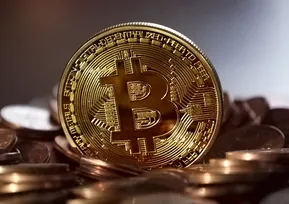
Photo by Erika Fletcher on Unsplash


International cooperation

Through this agreement, the two companies will provide opportunities for their respective business partners to expand their projects into Hong Kong and South Korea. They also plan to work together within the crypto and real asset markets and explore new business opportunities with companies in the security token sector.


Pioneering the future of the crypto industry

Established in May, the HKVAC is a private consortium consisting of a professional credit rating agency as well as big data firms, institutional investors and cryptocurrency exchanges like HTX (formerly Huobi) and KuCoin. It offers services like exchange and crypto asset ratings as well as data and research geared towards investors.

In particular, its credit ratings — issued by licensed rating agency FrancXav Asia Ratings — are aimed at reducing information asymmetry and promoting fair competition. They also serve to guide regulatory authorities in their own assessment of potential risks in the crypto industry.

More to Read
View All
Policy & Regulation·

Jun 08, 2023

Korean Financial Watchdog Takes Action to Prevent Abnormal Foreign Currency Transfers

Korean Financial Watchdog Takes Action to Prevent Abnormal Foreign Currency TransfersAccording to yesterday’s press release, the South Korean Financial Supervisory Service (FSS) has undertaken measures to tackle the issue of abnormal foreign currency transactions disguised as cross-border trade transactions. After identifying suspicious transactions of a total of approximately $7.2 billion involving 83 companies, the FSS has collaborated with the Korea Federation of Banks and domestic financial institutions to establish a task force. The objective is to improve the existing system and prevent such occurrences in the future.Photo by Eric Prouzet on UnsplashWeaknesses in internal controlsDuring inspections conducted within the banking industry since June 2022, the FSS uncovered weaknesses in internal controls related to foreign currency transfers. These included instances where banks neglected to verify the required documents for transfers and failed to detect abnormal transactions that had been ongoing for an extended period of time. The abnormal foreign currency transfers primarily involved funds flowing out of Korean virtual asset exchanges and being sent overseas under the pretense of trade transactions.Three-line defense internal control systemTo address these vulnerabilities, the task force has engaged in discussions and decided to build an internal control framework within the banking industry, rather than to add a new procedure. This was to minimize the disruption that the new system can pose to banks regarding foreign exchange transactions. The dedicated group has introduced a three-line defense internal control system.The new internal control system comprises three parts. Firstly, it involves standardizing a checklist of vital checkboxes that must be completed before initiating advance remittance transfers for imports. Secondly, the monitoring system employed by banks will be strengthened. Lastly, a follow-up system will be developed, clearly outlining the roles and responsibilities of banks and incorporating a review process.Implementation and timelineBanks plan to implement these improvement measures in July, following necessary preparations such as guidelines revision and rules update in the second quarter of this year. Since developing a computerized system and devising new procedures may require additional time, they will be gradually introduced in the third quarter.The FSS expects these improvements will ensure the systematic operation of banking institutions’ internal control functions related to cross-border prepayments, thereby preventing suspicious foreign currency transfers and curtailing companies’ risks of violating their obligations.

news
Policy & Regulation·

Apr 10, 2023

Korea’s Internet Agency Encourages More Blockchain Tech Adoption to Overcome Crypto Winter

Korea’s Internet Agency Encourages More Blockchain Tech Adoption to Overcome Crypto WinterVirtual asset and blockchain technology needs to be more broadly adopted to overcome crypto winter, an official from the Korea Internet and Security Agency (KISA) said at the 2023 Blockchain Meetup Conference on Wednesday.©Pexels/Helena LopesUser-friendly apps and regulatory supportPark Sang-hwan, the leader of the blockchain technology promotion group at KISA, encouraged the blockchain industry to develop user-friendly applications to give positive impressions, adding that blockchain-based apps should be faster and efficient to meet users’ expectations.He also said the blockchain industry needs regulatory support, explaining that regulatory issues can hinder the growth of the industry’s growth.KISA’s support for blockchain industryAccording to Park, the quasi-government internet agency introduced a business quality control system to offer advice on legal, technological, and business issues to companies, as well as to provide them with business problem-solving support. KISA will continue driving the development of key blockchain technologies, create new business plans for Web 3.0, and devise a mid- to long-term roadmap for research and development, he said.Blockchain projects in KoreaDuring his speech at the conference, Park presented several KISA-led public sector projects that will unfold this year, as reported by the Korean economics newspaper Hankyung. They include blockchain-based online voting systems, the establishment of digitally formed national licenses, and the verification of personal identification.Endeavors in the private sector were also revealed, including NFT-based concert tickets, oil waste disposal systems, and identification using soulbound tokens.

news
Web3 & Enterprise·

Aug 02, 2023

Binance Set For Japanese Market Re-Entry With 34 Token Listings

Binance Set For Japanese Market Re-Entry With 34 Token ListingsBinance, the world’s largest cryptocurrency exchange, is gearing up to re-enter the Japanese market with a bang on August 14. According to a report published by local crypto media outlet Coinpost, Binance Japan is set to immediately list an impressive 34 tokens.The move will put Binance ahead of its domestic rivals, as the offering will be the most extensive in terms of the selection of tokens made available to Japanese customers.Photo by David Edelstein on UnsplashBNB token offeringIn addition to that, Binance intends to make its native token, BNB, available in Japan for the first time. Exchange tokens have proven to be controversial in recent times. In November 2022, FTX’s reliance on their native token FTT caused a run on the exchange which Binance started once it started to sell off the token. Similar concerns have been expressed ever since about a similar reliance within Binance relative to its BNB token.The expansion into Japan will likely prove a tonic for Binance, given the difficulties it has experienced in other markets recently. Regulatory pushback has forced Binance out of markets such as Germany, Belgium, the Netherlands, and Cyprus over the course of the past three months.The company has been actively working to comply with Japan’s regulatory environment. In a Twitter video posted in July, Changpeng Zhao (CZ), Binance’s Founder and CEO, expressed his excitement about re-entering the Japanese market. He praised Japan’s clear and progressive approach to crypto regulations, citing the well-established framework that dates back to 2017, as well as recent developments, including the opening up of crypto listing frameworks and the passing of stablecoin regulations in June.Roadmap to market re-entryBinance’s journey back into Japan started in November 2022 when it acquired 100% ownership of Sakura Exchange BitCoin (SEBC). The acquisition paved the way for Binance to be regulated by the Japan Financial Services Agency (JFSA). As part of this move, SEBC underwent a name change, rebranding itself as Binance Japan Inc. The company then announced in May its plans to re-enter the Japanese market.The re-entry comes after the JFSA had previously issued warnings in 2021 against Binance for operating in the country without proper registration. Now, with the acquisition of SEBC and its regulatory compliance, Binance has gained a foothold in the Japanese market once again.Binance Japan aims to provide a comprehensive suite of services to its Japanese customers. New users can access spot trading, Earn products, and the NFT marketplace, while existing customers can migrate to the local subsidiary starting August 14. The token offerings include a diverse range of assets, and the addition of BNB presents exciting opportunities for traders and investors in Japan.Rival exchanges such as Coinbase and Kraken have decided to halt their operations in the country as they struggled to adjust to Japanese market conditions. The move by Binance to re-enter Japan’s market will be closely watched to see if it can succeed where others have failed.

news
Loading