Top

Temasek Cuts Pay Following FTX Autopsy

Web3 & Enterprise·May 29, 2023, 11:47 PM

Singaporean state-owned investment firm, Temasek Holdings, has announced a reduction in compensation for executives responsible for the company’s investment in the now-defunct cryptocurrency exchange FTX. Temasek, once the second-largest outside investor in FTX, faced scrutiny after the collapse of the exchange.
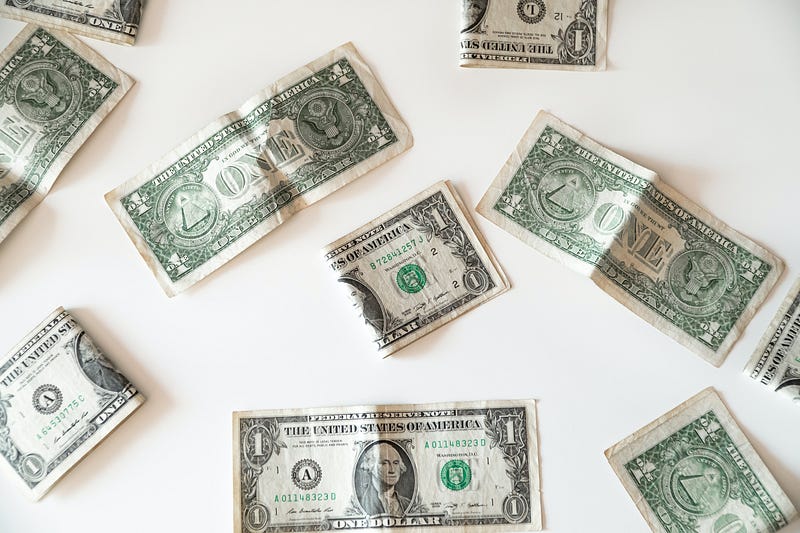
Photo by Emilio Takas on Unsplash


No misconduct finding

On May 29, Temasek released a statement confirming the completion of its internal review of the $275 million investment loss incurred from FTX. The review determined that there was “no misconduct” within the company. However, both the investment team and senior management took “collective accountability” and experienced a reduction in their compensation.

While acknowledging the inherent risks associated with any investment, Temasek emphasized the importance of continuing to invest in new sectors and emerging technologies to understand their potential impact on the business and financial models of existing portfolios. They recognized the need to adapt to an ever-changing world and explore avenues that could drive future value.

It’s worth noting that the $275 million loss from the FTX investment constituted only 0.09% of Temasek’s portfolio value, which stood at over $293 billion at the time of the collapse.

Temasek maintained that it conducted extensive due diligence before investing in FTX, emphasizing its commitment to a thorough review process. Chairman Lim Boon Heng stated in a May 29 interview with Bloomberg that there was fraudulent conduct intentionally hidden from investors, including Temasek. The negative outcome of the investment has been disappointing for the company and has had a significant impact on its reputation.


Reputational damage

Singapore Deputy Prime Minister Lawrence Wong echoed similar sentiments, highlighting the financial loss and reputational damage caused by the FTX collapse during a parliamentary meeting in November 2022.

During the due diligence process, Temasek reviewed FTX’s financial statements, assessed regulatory risks related to financial service providers in the cryptocurrency market, and sought legal advice. The company also engaged with individuals who had firsthand knowledge of FTX, including employees, investors, and industry participants.

In recent news, Temasek addressed and dismissed rumors about a $10 million investment in Array, a developer of algorithmic currency systems based on smart contracts and artificial intelligence. The company clarified that such reports were incorrect, refuting the circulating news articles and tweets.

Temasek’s internal review process is certainly a move towards transparency and accountability. It indicates a willingness towards addressing the matter. That said, there are FTX creditor groups who fervently disagree with Temasek’s analysis.


Class action lawsuit

Earlier this year a number of FTX creditors filed a class action lawsuit against a number of venture capital (VC) firms, including Temasek. The FTX customers maintain that Temasek and others played a role in a conspiracy to defraud them. Venture capital firms have countered with the view that they themselves were victims as a consequence of the FTX collapse, suffering multi-million dollar losses.

The fact remains that VCs get much further involved than merely handing over a check. They get involved with marketing, operations, and many other facets of the businesses of their portfolio companies. Meanwhile, other creditors suggest that Temasek has a responsibility to do right by the 1.4 million FTX creditors (a disproportionate number of them being Singapore-based) and to invest in a restructured FTX business, an option that represents the best opportunity for FTX customers to recover their funds.

Temasek may have reached certain conclusions by way of their internal report on the matter but this is not likely to be the final analysis relative to its involvement in the fall of FTX.

More to Read
View All
Policy & Regulation·

Nov 20, 2025

Seoul launches global expansion program for fintech firms on XRP Ledger

The Seoul Metropolitan Government has launched a new initiative designed to help South Korean fintech firms expand into global markets. According to a Nov. 18 press release, the city and its blockchain partner, Catalyze Research, will utilize the XRP Ledger (XRPL), Ripple Labs’ public blockchain, to provide technology-focused mentorship and facilitate networking with overseas partners.Photo by Kanchanara on UnsplashFunding for global growthParticipating startups are eligible to receive up to $200,000 each, with the total funding pool capped at $1.8 million. The Seoul government anticipates that this initiative will assist early-stage ventures in establishing a meaningful presence in the global marketplace. Selected participants will receive mentorship from Catalyze Research on entering the blockchain ecosystem via the XRP Ledger, refining business models, and developing multichain strategies. The program is open to applicants working in a variety of specific sectors, including blockchain payments, asset tokenization, cross-border transfers, decentralized identifiers (DIDs), decentralized finance (DeFi), and regulatory technology. Beyond the core business training, Seoul is offering technical workshops that allow participants to explore complex topics such as XRPL-based issuance, liquidity configuration, fee optimization, and security architecture in greater depth. Follow-up support programs will continue to assist participating ventures after the initial phase, offering help with investor relations and jurisdiction-specific regulatory consulting. Pilot projects with overseas partners are also planned to further support company growth. The capital’s move to back crypto ventures follows its recognition in the Global Financial Centres Index (GFCI), produced annually by the London-based think tank Z/Yen and the China Development Institute (CDI). In the latest report released in September, Seoul ranked eighth in fintech among 135 cities. Price swings amid XRP ETF debutsWhile the city pushes to grow the country’s blockchain sector, XRP, the native asset of the XRP Ledger, has faced market headwinds. According to CoinMarketCap data, the token’s price dropped more than 15% over the past week amid a broader market downturn. This decline came even after the Nov. 14 launch of XRPC, a Canary Capital–managed ETF that is the first in the U.S. to track the spot price of XRP. Subsequently, the Bitwise XRP ETF is also set to debut on the New York Stock Exchange on Nov. 20. Amid the recent price weakness, XRP’s retail positioning offers a more nuanced backdrop. Glassnode’s Nov. 19 update estimates the average retail cost basis for the token at roughly $2.17, putting the typical holder about 61% in profit. The firm’s analysis a day earlier showed, at the network-wide level, 58.5% of the total supply in profit and 41.5% held at a loss—a structure that the firm said reflected a market dominated by recent buyers and prone to volatility.

news
Policy & Regulation·

4 days ago

Asia diverges on crypto policy as China clamps down, neighbors embrace

A regulatory divide regarding the digital asset sector is emerging across Asia. While China is moving to strengthen its prohibition on cryptocurrency operations to ensure financial stability, Central Asian states such as Kazakhstan and Turkmenistan are increasingly formalizing frameworks to integrate and regulate the industry.Photo by Road Ahead on UnsplashChina cites renewed crypto speculationAccording to Reuters, the People’s Bank of China (PBOC) has reaffirmed its prohibition on business activities involving digital assets, citing a renewed wave of speculation as a complication in managing financial risks. At a Nov. 28 meeting on crypto regulation, the central bank reiterated that commercial activity involving cryptocurrencies remains illegal. PBOC officials stated that enforcement against unlawful financial operations tied to cryptocurrencies would be intensified to safeguard economic stability. The central bank identified stablecoins as a primary concern, noting that they fail to meet customer identification standards and broader anti-money laundering (AML) requirements. Officials warned that these assets could create vulnerabilities to fraud, money laundering, and unregulated cross-border capital flows. Kazakhstan mulls $300M crypto moveIn contrast to Beijing’s elevated oversight, Kazakhstan is exploring the integration of digital assets into its financial reserves. According to BeInCrypto, National Bank Chairman Timur Suleimenov indicated on Nov. 28 that the monetary authority is considering an allocation of up to $300 million into crypto assets. However, he clarified that deploying the full amount is unlikely. Suleimenov explained that any potential investment would be drawn from the central bank’s gold and foreign-exchange reserves rather than the National Fund. He added that the National Bank of Kazakhstan intends to wait for market conditions to stabilize, citing recent volatility as a factor making the timing of such an investment uncertain. The latest development comes after Bloomberg Law reported last month that the country is preparing to launch a crypto reserve fund valued between $500 million and $1 billion as early as next year. This proposed fund is expected to target exchange-traded products and industry-related companies rather than direct crypto purchases, with capital potentially sourced from repatriated assets and mining proceeds. Simultaneously, the government is advancing physical infrastructure for the sector. In May, President Kassym-Jomart Tokayev unveiled plans for a "CryptoCity" pilot zone in the Alatau development north of Almaty. Under this government-approved sandbox program, authorities are testing blockchain-based tools for taxation, investment, and decentralized identity systems, with the aim of positioning Kazakhstan as a regional hub for innovation. Turkmenistan to launch licensing rulesFurther deepening the regional trend toward adoption, Turkmenistan has moved to establish a formal legal infrastructure for the sector.  Another Reuters report said the country recently passed legislation to legalize and regulate digital assets, which President Serdar Berdymukhamedov has signed into law. Scheduled to take effect on Jan. 1, the legislation creates a licensing regime for crypto exchanges and mining operations. A government spokesperson said the law spells out the legal and economic status of virtual assets, covering their creation, storage, circulation, and other functions, and aims to boost digitalization and draw foreign investment. Despite their differing approaches, the three countries reflect a shared recognition of digital assets’ growing relevance in global finance. China continues to view cryptocurrencies as a source of systemic risk, while Kazakhstan and Turkmenistan are testing whether regulation, licensing, and selective investment can deliver economic gains without compromising stability. Together, these diverging paths underscore a broader debate over whether engagement or exclusion offers a more resilient long-term model. 

news
Web3 & Enterprise·

Jan 23, 2024

Terraform Labs files for bankruptcy in wake of $40 billion crash

Singapore-based Terraform Labs, the company behind the failed algorithmic stablecoin TerraUSD, has officially filed for Chapter 11 bankruptcy protection in the United States. It appears that the crypto space is not finished with dealing with the excesses and mismanagement that emerged at the end of the last market cycle. This move from Terraform comes in the wake of a $40 billion cryptocurrency crash and ongoing legal scrutiny, with the firm stating its intention to continue operations and support for the Terra community.Photo by Melinda Gimpel on UnsplashBusiness plan executionTerraform Labs was co-founded by Do Kwon, who is currently under investigation for its alleged wrongdoing relative to the failure of TerraUSD. The bankruptcy filing, submitted on Sunday to the Bankruptcy Court for the District of Delaware, aims to facilitate the company's business plan execution while navigating ongoing legal proceedings, including representative litigation in Singapore and the United States involving the Securities and Exchange Commission (SEC). In a statement, Chris Amani, CEO of Terraform Labs, commented on the decision, stating:"The Terra community and ecosystem have shown unprecedented resilience in the face of adversity, and this action is necessary to allow us to continue working toward our collective goals while resolving the legal challenges that remain outstanding." Amani reassured stakeholders that the decision ensures the company can maintain its commitment to working with the community on infrastructure, innovative tools, products and other ecosystem support. Amani became CEO of the company in July of last year, having been acting as Terraform’s COO prior to that. He acknowledged the challenges faced and expressed optimism about overcoming them, highlighting the resilience of the ecosystem after previous hurdles. Liabilities and assets in $100M to $500M rangeThe company emphasized that the Chapter 11 filing is designed to allow it to meet all financial obligations to employees and vendors without requiring additional financing. The estimated liabilities and assets fall within the range of $100 million to $500 million, as indicated in the filing. The SEC has initiated a civil trial against Terraform Labs and Do Kwon, accusing them of orchestrating a $40 billion cryptocurrency fraud through the TerraUSD algorithmic stablecoin and its sister token Luna. The SEC alleges that Terraform Labs and Kwon raised billions of dollars from investors through unregistered transactions, leading to the collapse of TerraUSD and Luna in May 2022. Both the SEC and Terraform have unsuccessfully filed for summary judgment in the case. Far-reaching consequencesThe crash had far-reaching consequences, impacting several crypto firms, including Singaporean crypto hedge fund Three Arrows Capital, Singaporean crypto lender Hodlnaut, Voyager Digital and Celsius Network. Do Kwon, a South Korean national, faces additional criminal charges in the United States related to fraud and market manipulation. His arrest in Montenegro in March 2023 and pending extradition requests from South Korea and the United States underscore the global legal challenges confronting him. The U.S. District Court for the Southern District of New York has scheduled the SEC trial against Terraform Labs and Kwon for late March, accommodating Kwon's extradition process. Meanwhile, in South Korea, Terraform Labs co-founder Daniel Shin has denied wrongdoing in the collapse as part of separate proceedings taken against him.  

news
Loading