Top

Foblgate adds Ripple market for increased investor opportunities

Web3 & Enterprise·December 05, 2023, 9:42 AM

South Korean cryptocurrency exchange Foblgate has added a Ripple (XRP) market, where cryptocurrencies can be traded for XRP, according to an article published by South Korean news outlet Blockchain Today. This is the third crypto-to-crypto market on Foblgate along with Bitcoin and Ethereum, providing users with expanded investment opportunities and convenient trading options.

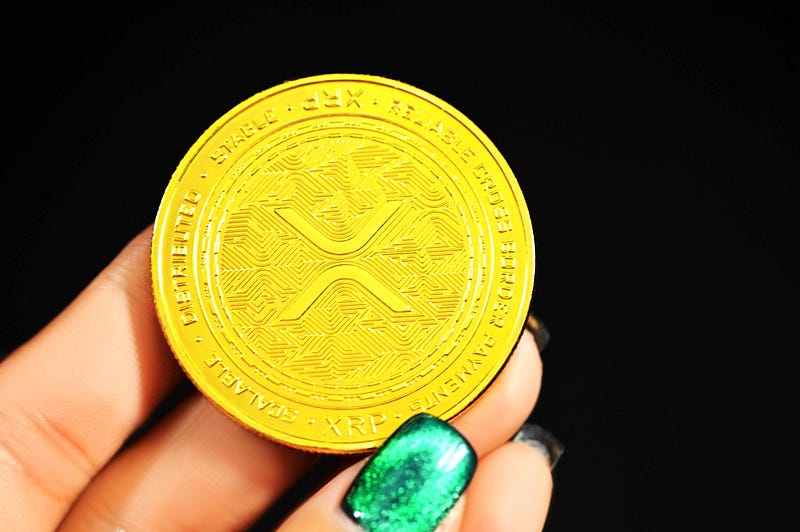
Photo by Kanchanara on Unsplash

The Ripple market opened at 10 a.m. today (local time) with a transaction fee of 0.01% and a minimum order amount of 6.5 XRP. Currently, it supports trading for EOS and BNB. Foblgate plans to add more trading pairs in the future.


Ripple’s rise in South Korea

The exchange revealed that it decided to add a Ripple market due to the cryptocurrency’s fast transaction speed and low trading fees, along with its popularity in the South Korean market. The company also emphasized the widespread expansion of Ripple’s ecosystem based on its blockchain network, XRP Ledger, and active participation from the country’s Ripple community.


Foblgate’s vision

“We have always been sensitive to the demands of investors and market changes,” said Ahn Hyun-jun, the CEO of Foblgate. “The launch of our XRP market aims not only to provide new investment options but also to play a role in promoting the growth and innovation of the crypto industry.”

More to Read
View All
Web3 & Enterprise·

Jun 02, 2023

First Digital to Introduce USD-Backed USD Stablecoin

First Digital to Introduce USD-Backed USD StablecoinFirst Digital Trust, a Hong Kong-based qualified custodian and trust company, is set to introduce a new stablecoin called “First Digital USD,” with the short-code $FDUSD. This stablecoin will be pegged to the US dollar but regulated within Asia.Photo by Alexander Grey on UnsplashIntroducing $FDUSDAccording to First Digital, $FDUSD will be backed by one US dollar or an asset of equivalent fair value on a one-to-one basis. The reserves supporting FDUSD will be held in segregated accounts at institutions in Asia.$FDUSD aims to provide stability and will be programmable, enabling the execution of financial contracts, escrow services, and insurance without the need for intermediaries. In a statement published on Thursday, First Digital emphasized its commitment to full compliance with current and future laws and regulations. The company also expressed its intention to participate in shaping the regulatory landscape for $FDUSD and First Digital itself.The announcement of $FDUSD is particularly significant in light of the new “Guidelines for Virtual Asset Trading Platform Operators” set to take effect in Hong Kong on June 1. These guidelines outline rules for safe asset custody, client asset segregation, conflict of interest avoidance, and cybersecurity standards, as mandated by Hong Kong’s Securities and Futures Commission (SFC).Hosted on BNB Smart ChainFDUSD will operate on the BNB Smart Chain and will be issued by First Digital Labs, a subsidiary of First Digital Trust, a regulated digital asset custodian under the Hong Kong Trustee Ordinance. The law ensures that $FDUSD will be fully backed by US dollar reserves or highly liquid, high-quality assets held in regulated Asian financial institutions, with no commingling with other assets of First Digital.Vincent Chok, CEO of First Digital, emphasized the company’s commitment to regulatory compliance and setting a new standard for legitimacy in the industry. First Digital intends to comply with all applicable laws and regulations and actively contribute to the shaping of regulatory regimes for $FDUSD and First Digital in the future.The $FDUSD stablecoin will be redeemable for US dollars, providing users with a reliable bridge between the digital and fiat currencies.Biden administration's own goalAs regulatory uncertainty persists in the United States, some industry players are expressing concerns about losing the country’s leadership position in the crypto sector. They warn that the industry may be offshore to more favorable jurisdictions.News of First Digital Trust’s US dollar stablecoin intentions brought scathing criticism of US policy from US commentators within the crypto space. Austin Campbell, Managing Partner at Zero Knowledge Consulting, a firm that advises on crypto payments and stablecoins, stated that the US government and US regulators had created a paradigm where they now have less control over distribution and regulation while the product they were suppressing continues to exist and scales elsewhere.Nic Carter, Partner at venture capital firm Castle Island Ventures, wrote that “the wise sages in US government took one look at the onshore registered stablecoin market and decided they’d much prefer unaccountable offshore crypto-eurodollars.”Macro-economist Luke Gromen described this consequence of US policy as the “monetary equivalent of deciding they would prefer making their goods in China rather than paying US workers and deal with union labor.” Meanwhile, Caitlin Long, Founder and CEO of digital asset-focused Custodia Bank, suggested that US federal regulators “thought they could kill USD stablecoins” but that “they miscalculated.”
news
Web3 & Enterprise·

Dec 30, 2023

Japan's Monex acquires majority stake in Canadian crypto firm

Monex Group, a well-known securities broker in Japan’s financial services sector, is delving further into the digital currency space through the acquisition of a majority stake in 3iQ Digital Holdings, a Canadian crypto asset management company. Whilst the acquisition was announced via a joint press release on Thursday, the specific details of the deal were not disclosed.Photo by sebastiaan stam on UnsplashAchieving growth through cryptoYuko Seimei, the CEO of Monex Group, emphasized the long-term strategy of strengthening their asset management business. By incorporating 3iQ into their portfolio, the aim is to achieve substantial growth by catering to the evolving crypto asset management needs of institutional investors and crypto exchanges globally. Monex Group is already a key player in the Japanese crypto landscape, owning the Coincheck exchange. Coincheck is one of the largest cryptocurrency exchanges in Japan. It has regained market dominance after a cyber attack resulting in the theft of $534 million in digital assets in 2018. Monex collaborated with Japanese telecommunications firm NTT DOCOMO in October, forming Monex Securities as a holding company containing Coincheck, while selling NTT DOCOMO a 49% stake. ETF focusThe acquisition of 3iQ marks Monex’s strategic move to extend its exposure to the North American crypto industry. This adds to the conglomerate’s existing presence in the United States through the ownership and operation of TradeStation, an American brokerage firm. 3iQ, operating under a Canadian license, has come to prominence in the crypto-sphere for launching two exchange-traded funds (ETFs) in Canada. Notably, it introduced Bitcoin and Ethereum ETFs on the Toronto Stock Exchange, showcasing innovation in a region where regulatory approval is awaited by U.S.-based companies. Spot bitcoin ETFs have been hotly tipped to offer the next form of crypto adoption, potentially facilitating the in-flow of massive amounts of money currently within the domain of traditional finance. While the focus has been largely on the United States in that regard, other centers such as Hong Kong are similarly gearing up towards offering spot ETF crypto products to both institutions and retail investors. Amid that background, this acquisition by Monex didn’t go unnoticed by ETF sector professionals. Bloomberg Intelligence ETF Research Analyst James Seyffart took to social media platform X on Thursday to draw attention to the deal. Frederick Pye, the Chairman and CEO of 3iQ, expressed enthusiasm about joining forces with Monex Group. With Monex already owning Coincheck, a crypto exchange powerhouse in Japan, Pye highlighted the potential synergy. The collaboration is seen as an opportunity to enhance Coincheck’s offerings, particularly for institutional investors. Pye characterized the partnership as a groundbreaking collaboration that promises to reshape the crypto industry. Monex’s acquisition of 3iQ is aligned with its broader vision of being a key player in the global crypto asset management landscape. The move not only expands their reach into North America but also positions them to capitalize on the growing demands of institutional investors in the evolving digital currency market.

news
Web3 & Enterprise·

Oct 10, 2025

MUFG pushes into tokenized finance as Japan enters a new political chapter

Japan’s largest bank is stepping deeper into digital assets at a moment of political change. Mitsubishi UFJ Financial Group (MUFG) and its securities arm Mitsubishi UFJ Morgan Stanley Securities (MUMSS) have launched a blockchain-based business, according to CoinDesk Japan. The move puts the country’s biggest lender at the center of a fresh push to bring regulated finance onto distributed ledgers while retail investors gain a new way to buy and trade tokenized products. MUMSS has begun offering bond security tokens, marking its formal entry into the security token market. At the same time, the firm introduced ASTOMO, a trading venue for retail investors built with Japanese fintech company Smartplus. The system will debut with real estate-backed security tokens. Individuals can invest from 100,000 yen (about $655) through a smartphone app. Under the partnership MUMSS will select and source the digital securities. Smartplus will run account management and build and operate the trading system using its Brokerage as a Service (BaaS) platform. MUFG also revealed that it has started preparing a public offering of subordinated bonds in token form. The bank intends the instruments to qualify as Tier 2 capital under international rules. The offering is expected to be the first of its kind for Japan’s banking sector. MUFG has submitted an amended securities registration statement to the Director General of the Kanto Local Finance Bureau in advance of the sale.Photo by Asm Arif on PexelsTakaichi’s victory sparks interest in Japan’s crypto pathThe corporate steps arrive as conservative lawmaker Sanae Takaichi rises to lead the ruling Liberal Democratic Party. She won the party election on Oct. 4 and is set to become Japan’s first female prime minister, with lawmakers expected to make the formal choice in the middle of this month.  Several industry voices see her leadership as supportive of digital assets, according to Cointelegraph. Elisenda Fabrega, general counsel at tokenization platform Brickken, said Takaichi’s victory might reshape how Japan perceives and regulates digital assets, reinforcing the country’s commitment to clear and reliable crypto laws. Maarten Henskens, chief operating officer at Startale Group and head of the Astar Foundation, chimed in to say that a looser monetary stance under Takaichi could keep liquidity flowing and drive greater investor interest in alternative assets such as cryptocurrencies. That optimism has already spilled into Japan’s equity markets. The Nikkei index has continued to soar since the leadership vote, reaching a record high of 48,580.44 on Oct. 9. Not all signals point in the same direction. A BeInCrypto report published before the election noted market predictions that Takaichi might also back tighter oversight. The report cited her March proposal to build a framework that lets financial institutions, including crypto exchanges, share information on suspicious transactions. That system would support faster account freezes. Nikkei 225 Index Source: Google FinanceLoose fiscal tone brings new pressures for BitcoinFrom a broader economic view, the picture looks more complex. CoinDesk reported that Takaichi’s preference for easy Abenomics-style policies could weigh on Bitcoin in the short term. Expansionary fiscal measures tend to increase bond supply and drive yields higher, which often curbs risk appetite by raising borrowing costs and making assets like stocks and cryptocurrencies less appealing. Her stance has also reduced expectations for a Bank of Japan rate hike, weakening the yen and strengthening the U.S. dollar. The stronger dollar has cooled Bitcoin’s momentum, while gold has continued to attract investors seeking stability. MUFG’s blockchain venture arrives at a turning point for Japan. The bank’s push into tokenized assets shows how traditional finance is adapting to digital change just as new leadership tests the balance between innovation and control. Whether this marks the start of a broader transformation will depend on how policy, regulation, and investor confidence evolve together in shaping Japan’s financial future. 

news
Loading