Top

Seoul Auction Blue seeks to register security tokens with the FSS for Andy Warhol’s artwork

Web3 & Enterprise·November 29, 2023, 6:14 AM

Seoul Auction Blue, the operator of fractional artwork investment platform Sotwo, recently submitted an application to the South Korean Financial Supervisory Service (FSS), local news outlet Seoul Economic Daily reported on Wednesday (local time). Its aim is to register security tokens linked to artworks with the financial authority, marking it the third entity in the country to pursue this innovative financial venture.
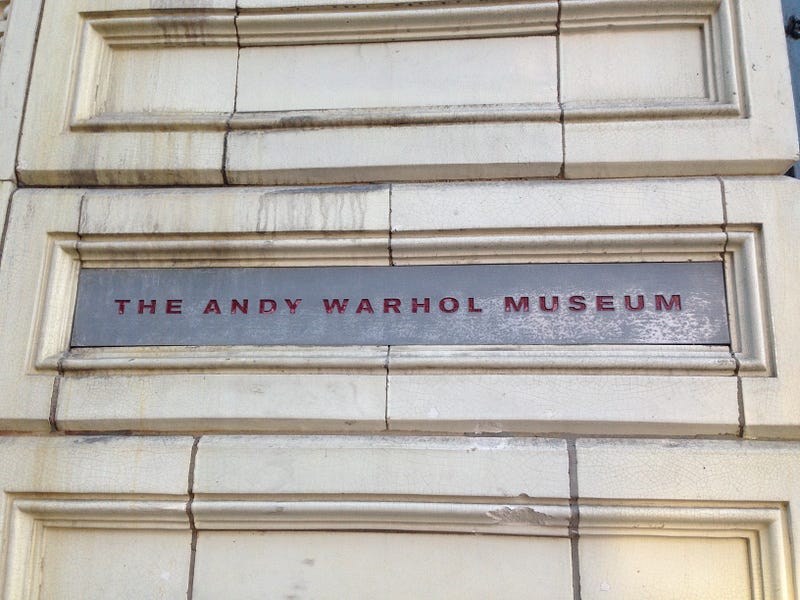
Photo by Guido Coppa on Unsplash


Andy Warhol’s ‘Dollar Sign’

The artwork investment app plans to issue security tokens based on Andy Warhol’s “Dollar Sign,” a piece measuring 51.0 cm in height and 40.5 cm in length. This artwork was purchased by Seoul Auction Blue at an auction for KRW 626.2 million (approximately $485,000). The total value of the security tokens, inclusive of issuance costs, is approximately KRW 700 million. The firm will issue a total of 7,000 tokens, each valued at KRW 100,000. Upon receiving regulatory approval, Seoul Auction Blue is set to open for subscription requests from Dec. 20 to 26.

In its endeavor to issue digital investment contract securities, Seoul Auction Blue has meticulously prepared its documentation in line with the FSS’s guidelines. The selection of the artwork of Andy Warhol, the renowned and iconic 20th-century artist, aligns with the FSS’s recommendation to choose a significant piece by an internationally acclaimed artist. This strategic choice reflects the company’s commitment to compliance and the recognition of Warhol’s global stature in the art world.


Preventing conflicts of interest

The registration application submitted by Seoul Auction Blue includes specific restrictions aimed at preventing conflicts of interest with its affiliates related to security tokens. As per these rules, the company is barred from buying idle assets of affiliates to back its security tokens. Instead, Seoul Auction Blue is permitted to acquire them only through public methods like participating in an open bid or a post-sale bid process. Notably, the token issuer is in principle prohibited from purchasing these assets via intermediaries in private sales or any other non-transparent settings.

The acquisition of underlying assets requires approval from the compliance monitoring committee. Furthermore, this regulation strips Seoul Auction Blue of the capacity to determine the final trading prices or conditions for these transactions.

In addition, the company is collaborating with a couple of securities firms to safeguard investors’ funds, creating a buffer against any potential bankruptcy of the issuer. The funds raised from subscriptions for the security tokens will be managed in accounts overseen by KB Securities. Additionally, an investor protection fund is being set up, which will be handled as a trust fund by Shinhan Securities. This fund acts as an extra layer of security, offering investors enhanced protection for their investments.

More to Read
View All
Policy & Regulation·

Apr 20, 2023

Singapore Judge Says Crypto Not Money

Singapore Judge Says Crypto Not MoneyIn recent years, legal processes in various jurisdictions worldwide have seen judges comment on whether cryptocurrency is actually money. The latest such determination has been made by Justice Vinodh Coomaraswamy who outlined in a Singapore court that while being a component of financial transactions, cryptocurrencies are not money.The consideration emerged in a recent court hearing at Singapore’s High Court in a case involving the Algorand Foundation and failed Singapore-based hedge fund, Three Arrows Capital (3AC). Justice Coomaraswamy’s comments arose due to a discussion in the midst of the court proceedings involving the Judge and counsel representing the Algorand Foundation.©Pexels/EKATERINA BOLOVTSOVASeashells as moneyIn setting out his rationale for the need for 3AC to be wound up, Daniel Chan, a lawyer for the WongPartnership law firm that was representing the Algorand Foundation in the proceedings, told the judge that despite foreign currencies not being recognized as legal tender in Singapore, or used broadly as a medium of exchange within the city state, those foreign currencies are recognized by Singapore law as money. Using that analogy Chan suggested that by implication, the same scenario should be considered where cryptocurrencies are concerned.The judge provided a counterpoint: “What if you had a [community] in the world that used seashells as its internal medium of exchange? Would the Singapore courts have to recognize that as money.” Chan claimed that the judge had used an extreme example although Coomaraswamy remained steadfast in his view, pointing out that seashells had indeed been used as a form of money in the distant past.Coomaraswamy proceeded to dismiss the Algorand Foundation’s winding up application. He acknowledged that the Foundation did have standing in bringing the application. However, as he determined that cryptocurrency couldn’t be classed as money, on that basis he dismissed the application. In conveying his decision, he stated: “The word indebtedness, in my view, must require a debt which is in fiat currency. Determining whether or not a particular intangible, such as cryptocurrency, is money would require a detailed examination of evidence which is not appropriate in the context of insolvency.”Legal tenderThus far, bitcoin has been recognized as legal tender in two countries — El Salvador and the Central African Republic. In 2020, a French court referred to the leading cryptocurrency as money, agreeing that Bitcoin loans can be recognized as customer loans in the same way as loans denominated in fiat currencies. Earlier that year, an Australian court recognized bitcoin as a legally legitimate form of investment. In the United States, a Federal court recognized bitcoin as “money” or “funds” in a prosecution taken against Silk Road website operator Ross Ulbricht.There have been many similar instances in courts globally where judges have had to grapple with the consideration of whether bitcoin and crypto more generally can be regarded as money. Similar to the difficulty authorities are having in regulating cryptocurrency, it’s an issue that in most cases lacks complete clarity and in which we can expect further discussions on, similar to this most recent consideration in the Singaporean high court.

news
Policy & Regulation·

Nov 02, 2023

Taiwan police uncover $320M crypto money laundering operation

Taiwan police uncover $320M crypto money laundering operationTaiwan police have recently exposed the largest cryptocurrency money laundering case in the nation’s history, involving 320 million USDT (approximately 10.5 billion New Taiwan dollars).Photo by DrawKit Illustrations on UnsplashCross-border laundering operationIt emerged on Tuesday that the Electronic Investigation Team of the Criminal Bureau initiated their probe after uncovering a fraudulent scheme related to a counterfeit Taishin Securities mobile software last year. This led them to a merchant with the surname Qiu, the alleged mastermind behind this operation who was suspected of laundering substantial sums through virtual currency.Qiu is believed to have maintained connections with overseas gambling and fraud groups, engaging in cross-border communication with illicit organizations in countries including Hong Kong, Malaysia and the Philippines.Their investigation revealed that Qiu had been conducting transactions involving 320 million Tether US dollar stablecoins since February of the previous year. In June, law enforcement apprehended Qiu during one of his visits to Taiwan, along with four alleged accomplices.High value goodsDuring the operation, authorities seized high-value assets from Qiu, including a Lamborghini Urus, a Lexus LM and three Audemars Piguet watches, with a combined market value exceeding TWD 13 million. The lavish lifestyle maintained by Qiu, evident from his luxury cars and high-end watches, serves as a stark reminder of the extensive underground economy driven by money laundering.Evidence from the operation suggested Qiu’s involvement in handling illicitly obtained Tether coins worth approximately TWD 70 million. Further investigations uncovered that Qiu regularly sold virtual currency and converted it into cash to effectively obscure the money’s origins, accomplishing the goal of laundering.In piecing the activities of the group together, police determined that victims were instructed to transfer their funds to fictitious accounts. In that way, the money found its way to crypto exchanges and individual crypto traders under the direction and control of the group.Qiu would also retain a 1% profit margin from the laundered amount. Several other individuals were implicated in this extensive operation, including a foreign affairs officer named Liao and two other individuals named Chen and Huang. Each of these individuals is presently under investigation, with varying levels of bail and restrictions imposed.The intricate web of transactions and the substantial amount laundered by Qiu have surpassed previous records held by the Electronic Investigation Team. As investigations continue, law enforcement is determined to uncover the full extent of this operation and trace the entirety of the money flow.Taiwan’s legislators are currently working on producing a regulatory framework for crypto in the country. The only regulatory aspect that is covered right now is oversight relative to anti-money laundering (AML) and know-your-customer (KYC) regulation. In 2018 Yang Chin-long, Taiwan’s central bank Governor, called for a need to regulate crypto on the basis of existing AML rules, with the authorities subsequently following through on that measure.In July 2022, the country’s Financial Supervisory Commission (FSC) penned a letter to the banking sector, banning the purchase of digital assets via credit cards.

news
Policy & Regulation·

Aug 18, 2025

Japan’s FSA set to approve JPYC stablecoin

The Japanese Financial Services Agency (FSA), a government body that oversees banking, securities and the digital assets market in Japan, is gearing up to approve the country’s first stablecoin pegged to the yen. Local media platform Nikkei reported on Aug. 18 that it is anticipated that the FSA will approve the issuance of the JPYC stablecoin in the coming months.Photo by Dayo Adepoju on UnsplashEfficient payment infrastructureJPYC, Inc. was founded by Noritaka Okabe in 2019, establishing the JPYC yen-pegged stablecoin in 2021. Okabe believes that the company can better enable innovation in Japan through a more efficient payment infrastructure that JPYC claims to provide via its stablecoin. Prior to launching the stablecoin, JPYC had entered into proof-of-concept and regulatory discussions with the FSA. The JPYC stablecoin has almost complete market dominance within its domestic market, with stablecoins to the value of 30 billion yen ($202.7 million) having been issued. In 2022, JPYC registered with the FSA as a third-party prepaid payment instrument service provider. It’s understood that the company will seek registration once again within the month, this time as a money transfer business. Japan’s Payment Services Act recognizes the issuance of stablecoins by banks, trust companies and money transfer businesses. JPYC backs its stablecoin with liquid assets such as Japanese government bonds and bank deposits. Growing stablecoin importanceOn a global basis, the leaders in terms of stablecoin market capitalization are Circle (USDC) and Tether (USDT), both U.S. dollar-pegged stablecoins. The U.S. recently enacted its GENIUS Act stablecoin legislation with many politicians and market commentators taking the view that USD-pegged stablecoins will promote ongoing use of the U.S. dollar internationally.U.S. Treasury Secretary Scott Bessent took to X on Aug. 18 on that topic, stating:”Stablecoins will expand dollar access for billions across the globe and lead to a surge in demand for U.S. Treasuries, which back stablecoins.”Foreign governments are starting to see the significance of supporting stablecoins pegged to their country’s sovereign currency. The ongoing development of U.S. dollar-pegged stablecoins has not escaped the attention of Chinese officials. In July, government officials in Shanghai held a meeting to explore policy strategies for stablecoins. The same month, Darryl Chan, Deputy Chief Executive of the Hong Kong Monetary Authority (HKMA), said the authority was likely to issue its first stablecoin license in early 2026. His comments preceded the rollout of Hong Kong’s stablecoin regulatory framework on Aug. 1. Last week, JPYC’s Okabe said that JPYC would soon start "buying up Japanese government bonds.” He added, “The interest rates on government bonds in countries where stablecoin issuance does not grow will likely continue to rise. It’s no exaggeration to say that the interest rates on Japanese government bonds rest on JPYC’s shoulders.” Okabe is also going out of his way to draw a clear distinction between his company’s stablecoin and cryptocurrency. On X, he stated that “JPYC is an electronic payment method, not a cryptocurrency.” He went on to assert that given that the JPYC stablecoin is a currency-denominated asset whose value is linked to fiat currency, it incorporates the best qualities of both digital cash and deposits.

news
Loading