Top

Japan’s FSA set to approve JPYC stablecoin

Policy & Regulation·August 18, 2025, 11:53 PM

The Japanese Financial Services Agency (FSA), a government body that oversees banking, securities and the digital assets market in Japan, is gearing up to approve the country’s first stablecoin pegged to the yen.


Local media platform Nikkei reported on Aug. 18 that it is anticipated that the FSA will approve the issuance of the JPYC stablecoin in the coming months.

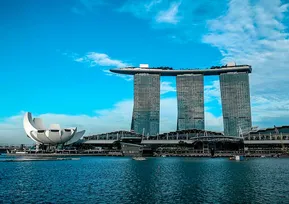
https://asset.coinness.com/en/news/41c0e339e81ce5847191896b474972a1.webp
Photo by Dayo Adepoju on Unsplash

Efficient payment infrastructure

JPYC, Inc. was founded by Noritaka Okabe in 2019, establishing the JPYC yen-pegged stablecoin in 2021. Okabe believes that the company can better enable innovation in Japan through a more efficient payment infrastructure that JPYC claims to provide via its stablecoin.


Prior to launching the stablecoin, JPYC had entered into proof-of-concept and regulatory discussions with the FSA. The JPYC stablecoin has almost complete market dominance within its domestic market, with stablecoins to the value of 30 billion yen ($202.7 million) having been issued.


In 2022, JPYC registered with the FSA as a third-party prepaid payment instrument service provider. It’s understood that the company will seek registration once again within the month, this time as a money transfer business.


Japan’s Payment Services Act recognizes the issuance of stablecoins by banks, trust companies and money transfer businesses. JPYC backs its stablecoin with liquid assets such as Japanese government bonds and bank deposits.


Growing stablecoin importance

On a global basis, the leaders in terms of stablecoin market capitalization are Circle (USDC) and Tether (USDT), both U.S. dollar-pegged stablecoins. The U.S. recently enacted its GENIUS Act stablecoin legislation with many politicians and market commentators taking the view that USD-pegged stablecoins will promote ongoing use of the U.S. dollar internationally.

U.S. Treasury Secretary Scott Bessent took to X on Aug. 18 on that topic, stating:

”Stablecoins will expand dollar access for billions across the globe and lead to a surge in demand for U.S. Treasuries, which back stablecoins.”

Foreign governments are starting to see the significance of supporting stablecoins pegged to their country’s sovereign currency. The ongoing development of U.S. dollar-pegged stablecoins has not escaped the attention of Chinese officials. In July, government officials in Shanghai held a meeting to explore policy strategies for stablecoins. The same month, Darryl Chan, Deputy Chief Executive of the Hong Kong Monetary Authority (HKMA), said the authority was likely to issue its first stablecoin license in early 2026. His comments preceded the rollout of Hong Kong’s stablecoin regulatory framework on Aug. 1.


Last week, JPYC’s Okabe said that JPYC would soon start "buying up Japanese government bonds.” He added, “The interest rates on government bonds in countries where stablecoin issuance does not grow will likely continue to rise. It’s no exaggeration to say that the interest rates on Japanese government bonds rest on JPYC’s shoulders.”


Okabe is also going out of his way to draw a clear distinction between his company’s stablecoin and cryptocurrency. On X, he stated that “JPYC is an electronic payment method, not a cryptocurrency.” He went on to assert that given that the JPYC stablecoin is a currency-denominated asset whose value is linked to fiat currency, it incorporates the best qualities of both digital cash and deposits.
More to Read
View All
Policy & Regulation·

Dec 26, 2023

Key appointment sees Turkey’s central bank enhance crypto expertise

Key appointment sees Turkey’s central bank enhance crypto expertiseTurkey’s President, Recep Tayyip Erdogan, has taken a step in integrating blockchain and cryptocurrency expertise into the nation’s monetary policy by appointing Professor Fatma Ozkul to the central bank’s rate-setting committee.Photo by Engin Yapici on UnsplashIncorporating digital financial knowledgeThis decision, which became effective on Saturday, marks a significant move towards incorporating digital financial knowledge within the economic framework of Turkey.As part of Turkey’s economic strategy, President Erdogan has been restructuring the economic management team since his victory in the May general election. This reshuffling included the appointment of ex-Goldman Sachs banker Hafize Gaye Erkan as the central bank’s governor in June.That appointment led to a series of policy rate increases, totaling 3,400 basis points, bringing the rate to 42.5%. Further changes in the Monetary Policy Committee (MPC) occurred in July, reinforcing the trajectory of monetary tightening.Crypto credentialsProfessor Fatma Ozkul, a lecturer at Istanbul’s Marmara University, joins the MPC with a primary focus on accounting, finance and auditing. Notably, she brings expertise in blockchain technology and crypto assets, having conducted courses on these subjects. Her recent work has delved into the implications of blockchain and crypto assets on finance, culminating in the publication of a book on crypto asset accounting in 2022.While Ozkul’s appointment may not immediately alter the current monetary policy direction, it reflects an understanding of the need to incorporate digital financial tools when formulating economic and monetary policy. Her extensive knowledge in digital finance is expected to contribute significantly to the process of setting benchmark interest rates, a critical instrument in controlling inflation within Turkey.President Erdogan’s emphasis on digital banking aligns with Turkey’s proactive steps in this direction. The central bank introduced a digital Turkish lira collaboration platform in 2021 and successfully tested digital lira transactions in late 2022. Additionally, the government is anticipated to submit a draft law regulating crypto assets in the coming year.Crypto adoptionThe political and economic climate in Turkey has shown a growing interest in cryptocurrencies, particularly Bitcoin. Chainalysis, a blockchain analytics company, reports that Turkey recorded nearly $170 billion worth of cryptocurrency transactions between July 2022 and June 2023, ranking fourth globally in terms of raw transaction volumes.A report by KuCoin earlier this year identified a noteworthy increase in the overall number of crypto investors in Turkey over the course of the past 18 months. That growth in adoption was found to be youth-driven. The importance of the Turkish market within the crypto sector is further evidenced by the recent revelation that the Turkish Lira is the most dominant fiat trading pair on leading global crypto exchange Binance.In response to this surge, the Turkish government has been working on cryptocurrency regulations, focusing on licensing and taxes. This regulatory move aims to remove Turkey’s name from the Financial Action Task Force’s “gray list” and align the country with global financial norms.As Professor Ozkul assumes her role, her expertise and input may well play a pivotal part in shaping Turkey’s evolving position and approach where digital assets, blockchain and cryptocurrencies are concerned.

news
Markets·

Jan 02, 2024

Mixed opinions on crypto as investment instruments revealed in Korean surveys

When Samsung Securities surveyed its high-net-worth clients about which investment assets they believed would be most effective for wealth growth in the future, only a small fraction, 1.9%, pointed to virtual assets, as reported by South Korean news outlet Newsis. The majority favored domestic and foreign stocks, which garnered a significant 45.4% of the vote. Following this, domestic and foreign bonds were chosen by 18.1% of respondents, and real assets like real estate and gold were also considered favorable, with 16.8% backing these options.Photo by Lukas on PexelsInvestment preferences of high-net-worth clientsThe survey conducted by Samsung Securities involved a select group of 368 participants, each with assets totaling KRW 3 billion ($2.3 million) or more. It focused on their perspectives regarding this year’s stock market trends and their individual investment strategies. This specific demographic provided insights into the investment preferences and outlooks of high-net-worth individuals. In the survey, when these individuals were queried about the methods they’ve used to accumulate their wealth, the most prevalent answer was investment in financial instruments such as stocks and funds, with 35.9% indicating this as their primary method. Business income was the second most common source of wealth, cited by 29.9% of participants. Wage income was also a significant contributor, mentioned by 19.6%. Additionally, gifts and inheritance played a role, accounting for 7.1% of wealth growth. Meanwhile, real estate investments were the least common, with only 6.5% of the respondents identifying it as a key wealth growth strategy. Regarding the optimal timing for stock purchases this year, a notable portion of the investors expressed a preference for the beginning of the year, with many pinpointing the first quarter as the ideal time, as indicated by 51.6% of respondents. This preference was followed by the second quarter, favored by 27.7%, the third quarter at 13.6% and the fourth quarter being least favored with only 7.1%. In terms of promising industries for investment, over half of the respondents, 50.6%, identified artificial intelligence (AI) and semiconductors as the most prospective sectors. These technologies are viewed as pivotal in shaping the future of the tech industry. Following AI and semiconductors, rechargeable batteries, which were the top-performing segment in the previous year, garnered notable interest, with 16.7% of respondents favoring them. The survey identified key figures likely to impact the stock market this year: former U.S. President Trump (30.4%), U.S. Federal Reserve Chair Powell (15.8%), U.S. President Biden (7.1%) and Saudi Prime Minister Mohammed bin Salman (3.3%). Business leaders like Tesla’s Elon Musk (6.0%), OpenAI’s Sam Altman (5.4%) and Novo Nordisk’s Lars Fruergaard Jorgensen (2.4%) were also mentioned for their influence. When asked about the most important issue of the financial market for the new year, 51.1% pointed to “interest rate cuts in major economies” as their top concern. Following this, 15.2% highlighted the outcome of the U.S. presidential election as a significant issue. Additionally, the advancement of new industries such as AI and robotics was flagged as an important topic by 10.3% of those surveyed. Stock market experts’ crypto optimismIn contrast, a 2024 stock market outlook survey by local media outlet Money Today, which polled 225 stock market experts, showed a more optimistic stance towards investing in cryptocurrencies this year. When questioned about their willingness to invest in crypto assets like bitcoin, 20% responded very affirmatively, and an additional 34.2% expressed a similar interest, totaling over half of the respondents showing readiness to invest in cryptocurrencies. Meanwhile, 18.7% were unsure, and 27.1% had negative views, including 16.4% saying “no” and 10.7% opting for “strongly no”. In the newspaper survey, when specifically asked about bitcoin’s future value, 24.9%, the largest group of respondents for this question, predicted that bitcoin’s price would reach or exceed KRW 70 million, the highest estimate provided in the survey’s options. Meanwhile, 17.8% of the experts estimated that the price would range between KRW 60 million and 70 million. 

news
Policy & Regulation·

Aug 01, 2023

Binance Expands Crypto Offering in Dubai with New License

Binance Expands Crypto Offering in Dubai with New LicenseDubai has welcomed one of the biggest players in the crypto sector, Binance, with the Virtual Asset Regulatory Authority (VARA) awarding the firm a new trading license.Photo by Petar Avramoski on UnsplashServing qualified investorsAccording to an announcement made by the company on Monday, Binance’s Dubai-based subsidiary, Binance FZE, has secured the operational Minimum Viable Product (MVP) license from VARA.Eligible investors in Dubai, deemed as “qualified retail clients,” will now have access to authorized services such as compliant crypto-to-fiat exchanges, adhering to the guidelines set by the Financial Action Task Force (FATF). To qualify, investors must meet specific criteria, including being at least 21 years old and possessing a minimum of 500,000 United Arab Emirates dirhams ($136,000) in net liquid assets, supported by relevant documentary proof like bank statements and proof of funds.Additionally, qualified investors are required to provide valid identification documents, including passports and visas, along with proof of a valid UAE address and contact details. This comprehensive verification process ensures compliance with regulatory requirements and enhances security measures for all parties involved.Expanded service offeringThe move is a significant development as it allows Binance to offer cryptocurrency exchange and virtual asset broker-dealer services to institutional and qualified retail investors in Dubai.With the new license, Binance’s Dubai entity can now offer crypto-to-fiat exchange, conversions, transfer and custody solutions, brokerage facilities, as well as virtual asset payments and remittance services. The development builds upon Binance’s previous progress, having received the provisional MVP license in March 2022, followed by the preparatory MVP license in September 2022.Licensing challengesIt’s worth noting that some crypto exchanges have faced challenges operating with preparatory MVP licenses due to limited capabilities, only serving a restricted set of accredited investors. Bybit CEO Ben Zhou had previously highlighted this concern. That said, Zhou still came to the conclusion recently that the regulatory approach in the UAE is superior by comparison with many other jurisdictions.The news of Binance’s successful licensing comes shortly after VARA suspended the operational license of another crypto exchange, BitOasis, for not meeting required conditions within the set timeframes. BitOasis assured its commitment to fulfilling the remaining conditions in collaboration with VARA.In April 2023, VARA sought additional information from Binance, aiming to tighten regulatory standards in the emirate. Binance promptly provided all requested information and looked forward to further collaboration with VARA as it prepared for the next phase of licensing.Compliance with VARA’s framework includes adherence to compulsory rulebooks related to general operations, compliance, and market conduct requirements. The regulator has published key highlights of the regulations in 2023, underscoring its efforts to create a robust and well-regulated crypto market in Dubai.Regulatory headwindsBinance’s latest regulatory achievement indicates the exchange’s dedication to expanding its services and offerings in the region. It could potentially lead to something even more significant for the company in the Middle East as Binance has suggested that it would be more likely to expand in places such as Dubai, given an adverse regulatory approach elsewhere.Over the course of the past three months, the company has been forced out of key markets such as Germany, Canada, Belgium, the Netherlands, and Cyprus, due to regulatory pushback.

news
Loading
