Top

Taiwan police uncover $320M crypto money laundering operation

Policy & Regulation·November 02, 2023, 2:25 AM

Taiwan police have recently exposed the largest cryptocurrency money laundering case in the nation’s history, involving 320 million USDT (approximately 10.5 billion New Taiwan dollars).
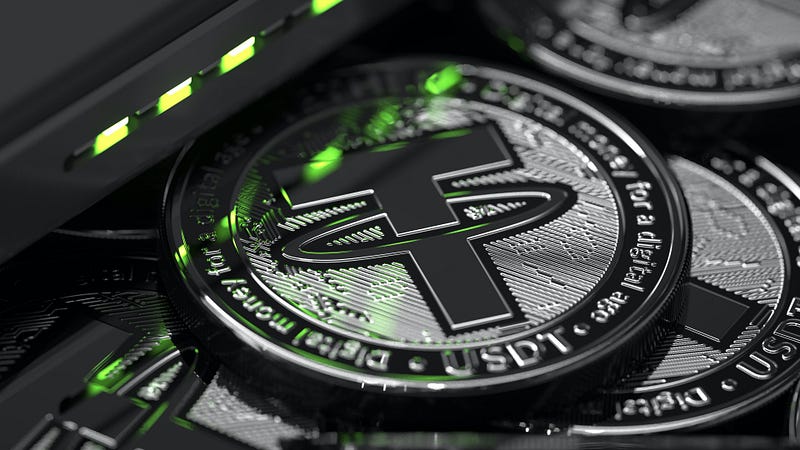
Photo by DrawKit Illustrations on Unsplash


Cross-border laundering operation

It emerged on Tuesday that the Electronic Investigation Team of the Criminal Bureau initiated their probe after uncovering a fraudulent scheme related to a counterfeit Taishin Securities mobile software last year. This led them to a merchant with the surname Qiu, the alleged mastermind behind this operation who was suspected of laundering substantial sums through virtual currency.

Qiu is believed to have maintained connections with overseas gambling and fraud groups, engaging in cross-border communication with illicit organizations in countries including Hong Kong, Malaysia and the Philippines.

Their investigation revealed that Qiu had been conducting transactions involving 320 million Tether US dollar stablecoins since February of the previous year. In June, law enforcement apprehended Qiu during one of his visits to Taiwan, along with four alleged accomplices.


High value goods

During the operation, authorities seized high-value assets from Qiu, including a Lamborghini Urus, a Lexus LM and three Audemars Piguet watches, with a combined market value exceeding TWD 13 million. The lavish lifestyle maintained by Qiu, evident from his luxury cars and high-end watches, serves as a stark reminder of the extensive underground economy driven by money laundering.

Evidence from the operation suggested Qiu’s involvement in handling illicitly obtained Tether coins worth approximately TWD 70 million. Further investigations uncovered that Qiu regularly sold virtual currency and converted it into cash to effectively obscure the money’s origins, accomplishing the goal of laundering.

In piecing the activities of the group together, police determined that victims were instructed to transfer their funds to fictitious accounts. In that way, the money found its way to crypto exchanges and individual crypto traders under the direction and control of the group.

Qiu would also retain a 1% profit margin from the laundered amount. Several other individuals were implicated in this extensive operation, including a foreign affairs officer named Liao and two other individuals named Chen and Huang. Each of these individuals is presently under investigation, with varying levels of bail and restrictions imposed.

The intricate web of transactions and the substantial amount laundered by Qiu have surpassed previous records held by the Electronic Investigation Team. As investigations continue, law enforcement is determined to uncover the full extent of this operation and trace the entirety of the money flow.

Taiwan’s legislators are currently working on producing a regulatory framework for crypto in the country. The only regulatory aspect that is covered right now is oversight relative to anti-money laundering (AML) and know-your-customer (KYC) regulation. In 2018 Yang Chin-long, Taiwan’s central bank Governor, called for a need to regulate crypto on the basis of existing AML rules, with the authorities subsequently following through on that measure.

In July 2022, the country’s Financial Supervisory Commission (FSC) penned a letter to the banking sector, banning the purchase of digital assets via credit cards.


More to Read
View All
Web3 & Enterprise·

Nov 13, 2023

Over 3,700 participants flock to Upbit D Conference to explore insights in blockchain

Over 3,700 participants flock to Upbit D Conference to explore insights in blockchainThe sixth annual Upbit D Conference (UDC), a major blockchain event in South Korea hosted by the country’s biggest cryptocurrency exchange Upbit, commenced on Monday (local time) at the Grand Walkerhill Seoul Hotel. Touting the theme “All That Blockchain,” the conference gathered some 3,700 participants — including 39 blockchain experts from 29 countries — both online and offline.Aimed at contributing to the blockchain ecosystem, UDC has gained acclaim as a non-profit event featuring in-depth lectures by experts from around the globe. While it initially focused on industry and technology alone, the conference has since expanded its scope to cover areas such as policy, finance, business, culture and trends.Photo by Gerd Altmann on PixabayLively guest discussionsHighlights of the event included a session led by Roger Ver, the founder of Bitcoin.com, who discussed the trajectory of the blockchain industry and the current status of Bitcoin. Korean telecommunications giant SK Telecom’s Executive Vice President, Oh Se-hyeon, also shared insights into the prospects of Web3 and blockchain services in Korea.Other speakers included Emily Parker, Executive Director of CoinDesk; Howard Fischer, former Senior Trial Counsel at the US Securities and Exchange Commission (SEC); Nizam Ismail, former Founding Chairman of the Regulatory and Compliance Sub-Commitee at Blockchain Association Singapore; and Kim Kab-lae, Senior Research Fellow at the Korea Capital Market Institute. Together, the four experts discussed country-specific perspectives and current issues regarding the rapidly changing regulatory landscape of the global virtual asset industry.“As blockchain’s influence expands across the economy, culture and society, UDC has evolved into a comprehensive conference capable of encompassing all aspects of blockchain. We hope it serves as a place that sparks positive inspiration and valuable connections,” said Song Chi-hyung, Chairman of Dunamu, the operator of Upbit.Growing recognitionOver the past five years, UDC has seen participation from over 1,190 companies and nearly 19,100 individual attendees. As of this month, the cumulative number of views on the conference’s official YouTube videos has reached 1.12 million. Videos of all of this year’s sessions can be viewed on the UDC YouTube channel and website.

news
Policy & Regulation·

Nov 01, 2023

Terraform Labs seeks summary judgment to dismiss SEC allegations

Terraform Labs seeks summary judgment to dismiss SEC allegationsLawyers representing bankrupt Singaporean crypto firm Terraform Labs and its co-founder, Do Kwon, have requested a summary judgment from a New York judge in their legal battle against the United States’ Securities and Exchange Commission (SEC).If granted, such a dismissal could potentially spare them from a full-blown trial. In their motion, the legal team argued vehemently that they are innocent of the SEC’s allegations, maintaining that the regulator has failed to provide any compelling evidence of wrongdoing.Photo by Bermix Studio on UnsplashDefining a securityThe motion, which was filed last Friday in the U.S. District Court for the Southern District of New York, asserts that the implicated cryptocurrencies of Terra Classic (LUNC), TerraClassicUSD (USTC) and Mirror Protocol (MIR), together with its Mirrored assets (mAssets), are not securities as claimed by the SEC in its complaint.The heart of the matter revolves around the SEC’s assertion that Terraform Labs offered or sold securities, a claim vehemently denied by the defendants. The SEC initially brought the case in February, referencing algorithmic stablecoin TerraUSD, which famously collapsed in May 2022.Lawyers claim case is unsubstantiatedBoth Kwon and Terraform Labs’ attorneys argued that despite over two years of investigation, more than 20 depositions, and the exchange of a staggering two million pages of documents, the SEC’s case remains unsubstantiated.The SEC’s original complaint in February accused Kwon and Terraform of raising substantial sums from investors by offering and selling an inter-connected suite of crypto asset securities, many of which were unregistered transactions. SEC Chair Gary Gensler added that Terraform and Kwon had failed to provide investors with full disclosures, notably concerning LUNA and TerraUSD.A key element of the dispute centers on the SEC’s allegation that Kwon and Terraform moved millions of dollars into Swiss bank accounts for personal gain. According to the agency’s complaint, the company and Kwon transferred 10,000 bitcoins to a financial institution based in Switzerland. The legal team representing Kwon and Terraform vehemently denies this allegation, characterizing it as baseless and unfounded.Flawed stablecoin designAlgorithmic stablecoins, such as TerraUSD, operate using market incentives via algorithms to maintain a stable price. Terra was tied to Luna, a governance token, in an attempt to stabilize prices. Unfortunately, the collapse of TerraUSD in 2022 destroyed in excess of $40 billion in value held by investors. It also had a domino effect, leading to a series of other crypto platform collapses later in 2022.Judge Jed Rakoff, presiding over the case in the Southern District of New York, had previously denied an attempt by Terraform Labs and Kwon to have the case dismissed. This new motion for summary judgment represents their latest effort to put an end to the legal proceedings.In a separate but related action, lawyers representing Terraform Labs Co-Founder Daniel Shin asserted that Shin played no role in the collapse of TerraUSD. In a Seoul district court, they emphasized that Shin had nothing to do with the collapse despite being indicted in South Korea in April on various charges, including fraud.

news
Web3 & Enterprise·

Dec 01, 2023

Late Korean artist Lee Jung-seob’s ‘Bull’ NFT on auction at OpenSea

Late Korean artist Lee Jung-seob’s ‘Bull’ NFT on auction at OpenSeaNFT marketplace OpenSea is hosting an ongoing auction for a digital representation of the painting “Bull” by the late Korean artist Lee Jung-seob, Yonhap News TV reported on Tuesday. Celebrated for his distinctive lines in his paintings, Lee passed away in 1956. This auction is set to conclude on Dec. 12, with the starting bid placed at 300 WETH (Wrapped Ethereum), which is approximately equivalent to $626,000.Photo by Hans Eiskonen on UnsplashWhite bull as NFTLee’s “Bull,” featured in the OpenSea auction, is distinguished by its depiction of a white bull set against a dark green background. This particular piece is one of Lee’s unpublished works and is currently being offered for sale by a private art collector. Regarding the authenticity of the painting, the description on the OpenSea page states, “This work received a handwritten evaluation from Professor Jung Jum-sik, a founding member of the Lee Jung-seob Art Award, on November 9, 2000.”The current owner of the original artwork has expressed their intention for auctioning it as a desire to share a valuable piece of art. The painting originally belonged to poet Ku Sang and has since changed hands multiple times, experiencing some damage along the way. While the copyright for an artist’s work typically remains with their inheritors for 70 years posthumously, in the case of Lee Jung-seob, this period has already lapsed.Authenticity and NFT investmentsMeanwhile, art appraisal experts are advising caution, emphasizing the need to first confirm the authenticity of the original painting. This caution stems from the fact that the painting has not undergone evaluation by an official appraisal organization.During his interview with Yonhap, Jung Jun-mo, CEO of Korea Art Authentication Appraisal Inc., offered a word of caution regarding investment in NFTs tied to artworks with questionable authenticity. He emphasized that NFTs representing works that lack genuine authentication also hold no value in terms of authenticity. Jung advised potential investors to thoroughly verify the legitimacy of such artworks before proceeding with any investment in their NFT representations.Last year, many paintings of modern Korean artists were converted into NFTs, but they sparked controversy over issues of authenticity. Experts in art investment have since been advising thorough research prior to making any investments in these digital assets. They warn that losses incurred from transactions involving these NFTs fall squarely on the investors.

news
Loading