Top

Arthur Hayes: Chinese monetary policy could ignite crypto market

Policy & Regulation·November 29, 2023, 3:04 AM

Arthur Hayes, Co-Founder of Seychelles-incorporated crypto exchange and derivatives platform BitMEX, suggests that China could inject a substantial amount of credit into its economy, potentially giving a boost to Bitcoin and the broader crypto market.
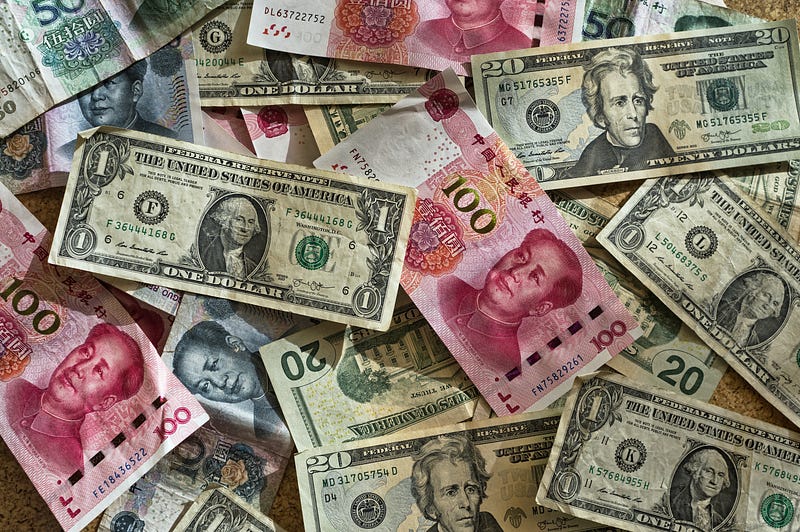
Photo by Eric Prouzet on Unsplash


Potential flood of yuan credit

The firebrand crypto OG outlined his thoughts on the matter in a blog post which was published on Monday. Hayes discussed how, although China has currently made credit expensive in order to hold back credit growth and inspire confidence in the economy, its monetary authorities might be gearing up to flood the economy with yuan credit, creating a favorable environment for cryptocurrencies.

He outlined a series of factors contributing to this potential surge in Chinese credit. He pointed to the interplay between U.S. monetary policy and the Chinese yuan, emphasizing how recent U.S. actions are laying the groundwork for China to issue substantial credit, particularly to its struggling property sector.

Describing U.S. policy as “weakening the dollar by issuing more Treasury bills,” Hayes noted the consequent decline of the dollar index (DXY) throughout November. He argued that the weaker dollar gives China the flexibility to increase yuan credit without significant depreciation, possibly even leading to yuan appreciation.

If the Federal Reserve at a minimum holds rates and better still, starts to cut rates, China will be in a position to pursue the stimulus needed for its property market and for infrastructure spending.


Hong Kong as the gateway to capital markets

According to Hayes, the global monetary dynamics set in motion by these factors could be advantageous for Bitcoin and the broader cryptocurrency market. He explained that the bulk of the financing will trickle down into speculation within the financial markets. If China starts printing yuan, the capital is likely to flow into global markets, supporting the prices of various risk assets.

But how can this happen, given that speculation and crypto trading are prohibited in China? Hayes’ view is that Hong Kong is now China’s gateway to the global capital markets. Wealthy Chinese individuals now bank via Hong Kong. As we have seen, the autonomous Chinese territory has a workable regulatory framework in place and is now actively licensing crypto exchanges and brokers. Consequently Bitcoin and crypto, generally, could be among the risk assets benefiting from an influx of capital.

Furthermore, the BitMex co-founder believes that as yuan credit becomes abundant, the global demand for dollar credit and liquidity may decrease. Given that the dollar is a primary funding currency, a fall in the price of credit could lead to a rise in fixed-supply assets like Bitcoin and gold in dollar terms.

Hayes concluded what is a long and detailed blog post by stating:

“I will continue moving money out of T-bills and into crypto because I want to get in now before it becomes apparent through the data that China’s money printer is going brrrrr.”

He suggested that Chinese New Year, which occurs in mid-February of next year, could be the time in which that extra credit materializes in China. Hayes’ latest assertion comes on the back of a bold claim he made last month when he suggested that bitcoin could reach a unit price of $1 million by 2026.


More to Read
View All
Policy & Regulation·

Jun 26, 2023

Korea’s Chungcheongbuk-do to Foster Regional Blockchain Ecosystem

Korea’s Chungcheongbuk-do to Foster Regional Blockchain EcosystemChungcheongbuk-do, a South Korean province located 117km south of Seoul, has entered into a partnership with the Korea Internet and Security Agency (KISA) to launch a regional blockchain initiative. The province won the bid for this initiative, proposed by the Ministry of Science and ICT, with the goal of fostering a thriving blockchain ecosystem within the region. Spearheading this project will be the Chungbuk Innovation Institute of Science and Technology (CBIST).Photo by Suzi Kim on UnsplashComprehensive supportWith a budget of 1.4 billion KRW ($1.07 million), CBIST will spearhead the initiative by providing support to startups and creating a business-friendly environment. The province of Chungcheongbuk-do will offer consulting services to assist startups in exploring innovative blockchain solutions. They will also provide comprehensive support, including accommodations, infrastructure, equipment, and access to cloud computing platforms.Blockchain into other industriesFurthermore, Chungcheongbuk-do will extend funding opportunities and implement educational programs to nurture skilled individuals and develop a self-sustaining blockchain sector within the province. The goal is to catalyze the emergence of innovative business models that incorporate blockchain technology into various industries such as storage batteries, semiconductors, and parts and materials. This initiative is expected to boost the region’s economy and enhance its competitive advantage.Since the establishment of the Chungbuk Blockchain Promotion Center at CBIST in 2018, the provincial government has been actively involved in discovering and planning various blockchain projects and raising awareness. With the current blockchain initiative, Chungcheongbuk-do aims to build a comprehensive support system that will facilitate the growth of the regional blockchain sector.Kim Jin-hyung, Chief of the Science and Talent Bureau of the Chungcheongbuk-do government, expressed that this blockchain initiative aligns with the strategic vision of the elected local government to establish a high-tech region. The provincial government is dedicated to identifying software-focused projects that can strengthen startup ecosystems and empower young entrepreneurs.

news
Web3 & Enterprise·

Aug 03, 2023

KuCoin Halts Bitcoin and Litecoin Mining Pools Amidst Strategic Shift

KuCoin Halts Bitcoin and Litecoin Mining Pools Amidst Strategic ShiftIn an announcement on Tuesday, Seychelles-based cryptocurrency exchange KuCoin revealed its decision to temporarily suspend its Bitcoin and Litecoin mining pools, effective from 16:00:00 on August 15, 2023 (UTC).Photo by Traxer on UnsplashChanging business strategyThis move is attributed to KuCoin’s evolving business strategy, although specific details remain undisclosed. The exchange expressed its regret for any inconvenience caused and extended gratitude for users’ continued support.It appears that the company wants to focus on core business activities and for that reason, it’s terminating its mining pool activity. That said, the discontinuation was described in its statement as being “temporary” although that has been left open-ended with no indication of if or when it would bring the service back into operation.The company is open to the idea of revisiting the facilitation of mining pools in the future. “We will see if it is needed to restart based on the market and users’ demand in the future,” a spokesperson for the company told The Block.To ensure miners’ uninterrupted earnings during the suspension, KuCoin advised users engaged in cryptocurrency mining to transition their Bitcoin (BTC) and Litecoin (LTC) miners to alternative mining pools before the specified suspension date. Additionally, the exchange emphasized the importance of backing up and preserving mining records and related data, recommending users complete these actions before August 27.Presently, the KuCoin Bitcoin mining pool maintains a hash rate of 9.08 exahash per second (EH/s), while the Litecoin pool operates at 3.90 terrahash per second (TH/s). These figures contribute to the broader hash rate landscape, where the entire Bitcoin network boasts a hash rate of 349.19 EH/s, compared to the Litecoin network’s 792.16 TH/s.Workforce reductionIt is clear that the company is in the process of adjusting to current market conditions. Last week, rumors surfaced of a plan to effect a workforce reduction. That prompted KuCoin’s CEO Johnny Lyu to respond, clarifying that the exchange’s operations are running smoothly. Dismissing layoff speculation, Lyu highlighted the exchange’s steady expansion and strong growth as demonstrated by the H1 2023 report. The report showcased an increase in users and new listings, underscoring the platform’s vitality and development.Mandatory KYCIn recent months, KuCoin has also implemented mandatory Know Your Customer (KYC) requirements, obligating users to undergo verification processes. Existing customers who fail to complete KYC procedures will be unable to make deposits. With over 20 million registered accounts, the exchange felt that it needed to improve on its level of regulatory compliance and security measures.It’s highly likely that an action taken by authorities in New York in the United States in March prompted KuCoin’s decision to tighten up on KYC. At that time, the New York Attorney General said that action was being taken against KuCoin due to its failure to register as a securities and commodities broker-dealer.As KuCoin undergoes these changes, the suspension of its mining pools raises questions about the broader implications for its business strategy and the potential impact on miners within its ecosystem. That said, the firm is not alone in making changes, with most crypto exchanges having had to adjust to a business and regulatory environment that has changed considerably since the 2021 crypto bull run.

news
Policy & Regulation·

Apr 29, 2024

South Korea considers permanent crypto investigative unit

Reports from South Korea indicate that the nation is considering transforming its temporary crypto investigative unit into a permanent fixture to tackle the escalating cases of crimes and fraud related to cryptocurrencies. Government deliberations to elevate investigative unitAccording to local publication Segye Ilbo, the South Korean Justice Ministry and the Ministry of the Interior and Safety are gearing up to commence discussions in early May regarding the elevation of the Joint Virtual Asset Crime Investigation Unit to an official department.Photo by Daniel Bernard on UnsplashAims of the promotionThe proposed elevation seeks to formalize the status of the unit, which currently operates as a temporary body under the Seoul Southern District Prosecutor’s Office and faces the possibility of disbandment. The transition aims to enhance operational efficiency by facilitating the appointment of new prosecutors and allocating dedicated budgetary resources, as outlined by Segye. Background of the investigative unitEstablished in July 2023, the unit comprises approximately 30 experts drawn from seven financial and tax regulatory authorities. It represents South Korea's inaugural investigative body specializing in digital asset crimes, a response to the surge in crypto-related criminal activities witnessed in the country. Rising incidents of crypto-related crimesThe urgency to establish a permanent investigative unit stems from the notable increase in crypto-related criminal incidents. According to a February report from South Korea’s Financial Intelligence Unit, local crypto firms reported a total of 16,076 suspicious transactions in 2023, reflecting a significant 49% surge compared to the previous year. Upcoming crypto regulationsIn tandem with efforts to strengthen investigative capabilities, South Korea is preparing to implement its first comprehensive crypto regulation on July 19. The new regulatory framework aims to safeguard investors by imposing stricter penalties for market manipulation, including the possibility of life sentences in certain cases. 

news
Loading