Top

Metalpha invests in Nextgen Digital Venture

Web3 & Enterprise·January 09, 2024, 2:22 AM

Metalpha Technology Holding Limited, based in Hong Kong, has strategically invested in NextGen Digital Venture Limited, aiming to enhance institutional participation in the digital asset space. This move is part of Metalpha's broader effort to bridge the gap between traditional finance (TradFi) and the crypto sphere.

https://asset.coinness.com/en/news/7e6404ed5aa8af2bb4df90edac5bb86f.jpg
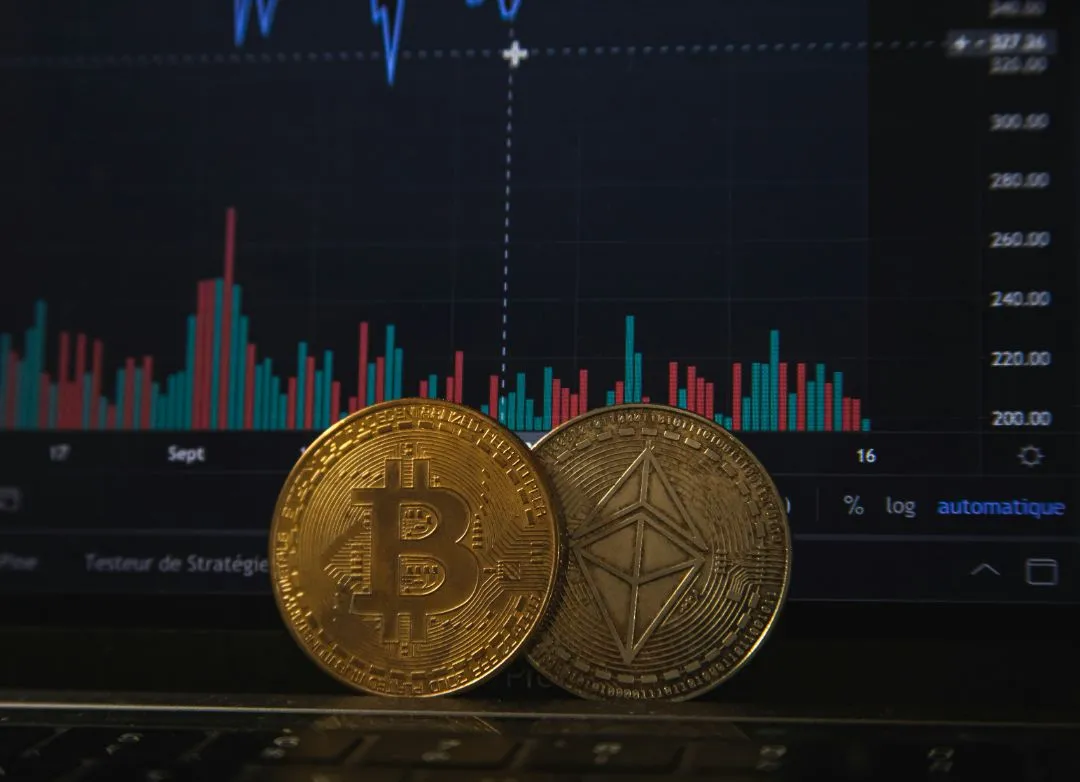
Photo by cottonbro studio on Pexels

Building on Next Generation Fund

News of the collaboration broke via a PR Newswire press release published by Metalpha on Monday. The deal builds upon a previous partnership struck by the two companies in April of last year, which resulted in the creation of Next Generation Fund I.


This fund is specifically tailored to leverage Grayscale Investments LLC's suite of products, with Grayscale being one of the world’s largest crypto asset managers. Notably, the fund has demonstrated solid performance, surpassing bitcoin's annualized return by 35%. This success has instilled confidence in Metalpha, fostering optimism for the fund's future achievements.


NextGen Digital is a Hong Kong-based investment company that aims to provide cryptocurrency and Web3 exposure to institutional clients in the conventional finance realm. Alongside its previous partnership with Metalpha, the firm has invested directly in Web3 startups such as iZumi Finance, a liquidity-as-a-service DeFi protocol.


In announcing the Metalpha investment, NextGen founding partner Jason Huang said that the company “is committed to providing secure, compliant cryptocurrency investment opportunities and is always focused on achieving alpha returns.”


The company is leveraging its Hong Kong Type 9 license, while aspiring to deliver secure and compliant cryptocurrency investment opportunities.


Adrian Wang, president and director of Metalpha Technology Holding, expressed enthusiasm about the partnership, stating:


"The launch of the NextGen fund marks the first step for both parties to jointly develop compliant products with generous returns. We look forward to establishing a more solid partnership in the future.”


Wang had previously stated that clients of the Next Generation Fund were overseas Chinese institutions. “Some of them are family offices, some of them are public companies,” he stated.


On-boarding TradFi investment

Positioned as a notable platform in Asia, NextGen aims to facilitate traditional finance's seamless entry into the realm of cryptocurrencies. This strategic investment by Metalpha underscores the evolving landscape where traditional financial institutions increasingly embrace the potential of digital assets.


Metalpha, recognized as one of Asia's leading providers of crypto derivatives solutions, collaborates closely with traditional financial entities, including family offices and crypto mining firms. Holding both Type 4 and Type 9 licenses from the Securities and Futures Commission (SFC) of Hong Kong, Metalpha is authorized to advise on securities and engage in real estate investment scheme management or securities and futures contracts management.


In May of last year, Metalpha secured a $5 million investment from leading crypto mining equipment manufacturer, Bitmain. Metalpha counts hybrid crypto exchange GRVT among its portfolio of investments. In September it emerged that it had invested in ParaX, a Web3 super app developed by Parallel Finance. In February 2023, the Litecoin Foundation partnered with Metalpha in an effort to provide environmentally friendly mining techniques to the Litecoin ecosystem.

More to Read
View All
Web3 & Enterprise·

May 03, 2023

Temasek Refutes Claims of Investment in Array

Despite reports emerging on Monday that it had invested in Array, an algorithmic currency system, Singaporean state-owned conglomerate and global investment firm Temasek has denied any such investment.In a very brief statement published to its website on Tuesday, Temasek stated:“We have seen news articles and a tweet from Array about Temasek’s investment in it. This news is incorrect. Temasek has not invested in Array and we have no relationship with them.”CoinTelegraph had taken to reporting the claim on Monday. The article had outlined a $10 million investment by the Singaporean state investor into Array, the developer of an algorithmic currency system that relies upon smart contracts and artificial intelligence. Reputational lossIf it had been true, such an investment would have been seen as a positive for the crypto space as it would be indicative of a renewed appetite for crypto-based projects from the giant Southeast Asian investor.Temasek was a key investor in failed cryptocurrency exchange, FTX. In November 2022, the company had to write down its entire investment of $275 million into the fraudulently managed exchange business. To an onlooker, a $275 million write-down may seem like an extraordinary loss.However, given that the Singaporean investing behemoth has a $403 billion dollar portfolio, the loss represents just 0.09% of that portfolio, hardly making a dent in the health of the company.The greater loss for Temasek relative to the FTX collapse has been reputational. Top tier venture capital investors like Temasek, who had otherwise been assumed to be the most diligent of actors in the professional investing world, were all sharply criticized for failing to identify the extent of the mismanagement and fraud that had occurred at the now bankrupt cryptocurrency exchange. Bogus ClaimsIn fairness to those who had reported the fake news, they were acting on information that Array had put out into the ether and as of yet, has not corrected. At the time of publication, the project’s website features a list of renowned investors including Temasek. Alongside Temasek, Array claims to have obtained investment from Standard Chartered, Coinbase Ventures, Spark Capital, Khosla Ventures, The Blackstone Group, Binance Labs, Sequoia Capital and a16z.In the case of Binance Labs, a spokesperson for the venture arm of the global exchange told The Block that it is not an investor in the project. To further dispel the claim, Temasek took to Twitter, stating:”Fake news about Temasek’s investment in @Array_Protocol. We have seen news articles and a tweet from Array about Temasek’s investment in it. This news is incorrect. Temasek has not invested in Array and we have no relationship with them.” Further instances of misinformationThe misinformation follows a similar scenario that played out with OPNX, a newly launched platform that offers spot and futures trading, alongside the ability for investors to trade bankruptcy claims.A couple of weeks ago, the platform, which had been founded by Kyle Davies and Su Zhu, the key executives behind failed crypto hedge fund, Three Arrows Capital, asserted that it had the backing of some notable investors. Almost immediately, venture capital and market maker DRW and venture capital firm Nascent denied that they were investors in OPNX.

news
Web3 & Enterprise·

Feb 14, 2024

High-profile sports sponsorships driving Crypto.com user base expansion

Crypto.com, the Singapore-headquartered cryptocurrency exchange platform, has outlined that it has seen significant growth thanks to high-profile sports sponsorship and advertising. Reaping the rewardsThe company has established advertising partnerships with Formula 1 (F1) motor racing and the Ultimate Fighting Championship (UFC). These lucrative sponsorship deals have propelled the exchange into the spotlight of two massive fan bases, contributing to its expansion. In an interview with Cointelegraph last week, Eric Anziani, president and chief operating officer of Crypto.com, discussed the company's successful advertising campaigns with F1 and the UFC, as well as its naming rights deal for the Crypto.com Arena in downtown Los Angeles. In 2021, what was then the Staples Center was renamed to the Crypto.com Arena in a $700 million naming rights deal. Anziani expressed gratitude for these partnerships, emphasizing the importance of staying top of mind for users in the competitive cryptocurrency market.  That same year, the company signed a multi-year partnership deal with leading French football club Paris Saint-Germain (PSG), rolling out various PSG-related marketing activities since then.Photo by Austin Loveing on UnsplashBrand recognition benefitsMarket surveys conducted by Crypto.com indicate a high level of global awareness and brand recognition among retail cryptocurrency users. The exchange's logo prominently displayed during F1 races and UFC events has helped it reach millions of fans worldwide. ESPN reports an average of 1.11 million viewers per race for the 2023 F1 season in the United States alone, with global viewership exceeding one billion over the entire race calendar. Similarly, the UFC boasts a global audience, with some of its biggest fights attracting millions of pay-per-view viewers. Anziani highlighted the effectiveness of these partnerships in bringing people into the cryptocurrency space.  User base approaching 100 millionThese partnerships have significantly contributed to Crypto.com's growing user base, which is approaching 100 million users in 2024, up from an estimated 80 million in the previous year. Anziani discussed the factors that drive users' choice of exchange platforms, emphasizing the importance of compliance, security, convenient access to cryptocurrency and competitive fees. He noted that different users prioritize different aspects based on their trading preferences and requirements. The firm is not alone in pursuing high-profile sports sponsorship deals. Rival platform OKX has an ongoing sponsorship deal in place with Manchester City Football Club in the English Premier League (EPL). It also has doubled down recently on the sponsorship of F1 racing team McLaren. Other notable partnerships include crypto gambling platform Stake.com’s sponsorship of Sauber F1, crypto exchange platform Kraken’s deal with Williams F1 and BingX’s sleeve sponsorship agreement with Chelsea football club in the EPL. High-profile marketing initiatives are alive and well, although in a much more sober way than in 2022 when six crypto companies featured in Super Bowl advertising in the United States. Kraken’s chief marketing officer, Mayur Gupta, recently stated that the Super Bowl is no longer an effective means of promotion for crypto companies.  

news
Policy & Regulation·

Oct 28, 2025

Chinese tech groups pause Hong Kong stablecoin plans amid regulatory scrutiny

Several leading Chinese technology firms have reportedly shelved their plans to launch stablecoins in Hong Kong, following regulatory pushback from the People’s Bank of China (PBOC) and the Cyberspace Administration of China (CAC). According to the Financial Times, the authorities have expressed growing concerns over the risks posed by privately issued digital currencies, prompting companies to delay their initiatives.Photo by Jacky Yu on UnsplashBeijing’s focus on control and digital yuanThe companies’ hesitation underscores Beijing’s broader push to preserve control over its monetary system while advancing the rollout of its central bank digital currency (CBDC), the e-CNY. Earlier this month, the PBOC unveiled a new Shanghai-based center to oversee the e-CNY’s international operations, signaling China’s ambition to extend the digital yuan’s reach beyond its domestic market. Over the summer, companies including Ant Group, backed by Alibaba, and e-commerce platform JD.com signaled interest in Hong Kong’s pilot stablecoin initiative or in issuing crypto products such as tokenized deposits. Those plans are now on hold as firms assess policy signals from Beijing and weigh the implications for their businesses. Research efforts reflect China’s cautious approachChina’s cautious stance is also reflected in its research priorities. The National Natural Science Foundation of China (NSFC), a vice-ministerial body under the Ministry of Science and Technology, has begun inviting grant applications for projects focused on stablecoins and cross-border regulatory frameworks. In announcing the initiative, the NSFC cautioned that the unchecked circulation of privately issued stablecoins could erode the effectiveness of the country’s capital controls. Globally, approaches to fiat-pegged digital assets diverge. In the United States, President Donald Trump in July signed the GENIUS Act, the country’s first stablecoin legislation, into law. A White House fact sheet argued that stablecoins could strengthen demand for U.S. Treasuries and reinforce the dollar’s standing as the world’s dominant reserve currency. In Europe, however, regulators remain wary. In a blog post that same month, European Central Bank (ECB) adviser Jürgen Schaaf warned that the widespread use of U.S. dollar-denominated stablecoins in the euro area could pose financial risks, noting that dollar-based tokens already account for the vast majority of global stablecoin market capitalization. Geopolitics adds to market volatilityThe recalibration by Chinese firms comes against a turbulent geopolitical backdrop. Cointelegraph, citing President Donald Trump’s interview with Fox News, reported that Trump is expected to meet Chinese President Xi Jinping in South Korea during the Asia-Pacific Economic Cooperation (APEC) summit, scheduled for Oct. 31 to Nov. 1. The anticipated meeting follows a string of shifting statements from Trump throughout October—ranging from skepticism about meeting Xi, to announcing new 100% tariffs on Chinese imports, and later adopting a more conciliatory tone. The back-and-forth has coincided with heightened volatility across crypto markets. Market turbulence deepened as a wave of liquidations swept through crypto derivatives, erasing nearly $20 billion in positions on Oct. 10, the largest such event on record. Bitcoin plunged to as low as $104,749 on Oct. 17 and has since rebounded to around $114,000 as of Oct. 28. The pullback by Chinese tech groups underscores the fine line regulators and firms must navigate: advancing digital finance innovation while safeguarding monetary stability and control. How that balance is managed across China, the U.S., and Europe will shape the future of stablecoins and define their place in the evolving global financial order. 

news
Loading