Top

Animoca founder: $200T crypto market within 10 years

Markets·May 31, 2024, 7:30 AM

The global cryptocurrency market is poised for unprecedented growth, potentially reaching $200 trillion within a decade, according to Yat Siu, co-founder of Animoca Brands, a prominent Hong Kong-based Web3 game software company and venture capital firm.


2-3x within 18 months

Currently valued at approximately $2.7 trillion according to data from crypto aggregator CoinGecko, the cryptocurrency market is set to double or triple in the near term, Siu predicted on The Valr Podcast on May 28. “In the near term — within 12 to 18 months — we can conceive of a doubling or tripling of the space,” he stated, expressing strong confidence in the industry's future milestones.


Siu elaborated on his bold forecast, suggesting that over a five to ten-year period, the market could accelerate by 100 to 200 times, potentially reaching a valuation of $200 trillion or even higher. In conversation with Farzam Ehsani, the co-founder of Valr, a platform that allows users to buy, sell, store and transfer crypto assets, Siu said:

“I think we could reach that kind of number within a decade.”


This explosive growth, according to Siu, will be driven by billions of people becoming digital property owners within the Web3 ecosystem. Siu stated:


“It is entirely conceivable that we’re going to have a billion property owners because we’re going to have a billion token holders. This is not possible in the physical world.”
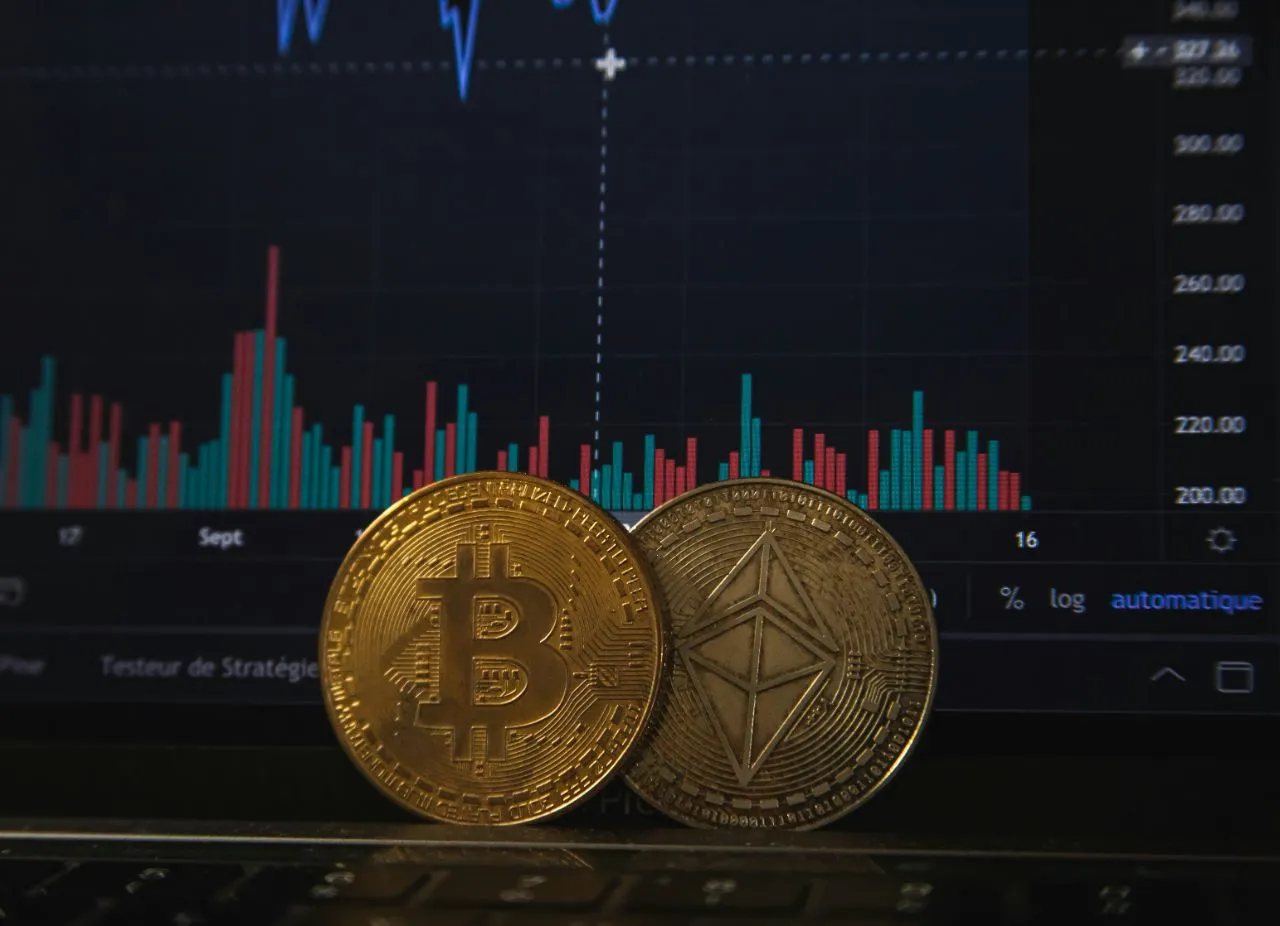
https://asset.coinness.com/en/news/925497e8a8c19ece65c64d3e0f2adff9.webp
Photo by Pierre Borthiry - Peiobty on Unsplash

Asia fastest growing market

Siu also pointed out the regional dynamics within the Web3 space, noting that Asia has emerged as the fastest-growing market. “Right now, the leading force in Web3 is clearly Asia,” he argued, citing robust adoption rates in regions such as Southeast Asia, Hong Kong and Japan. In contrast, jurisdictions like the United States are lagging behind, primarily due to regulatory uncertainties.


Siu pointed out that historically, the United States has tended to take a leadership role where new technology is concerned. Web3 is turning out to be the exception to that rule. With that, he thinks that it is Asia that will lead the way and that it will continue to lead for the foreseeable future where Web3 is concerned.


Bullish on Bitcoin

His optimism about the Web3 market's potential aligns with his bullish stance on Bitcoin, currently standing at a market capitalization of $1.3 trillion. Siu made another bold prediction recently, expressing confidence that Bitcoin would eventually reach $1 million. At the time of writing, Bitcoin is trading at $68,346. While that’s far from his $1 million unit price prediction, he did state at Web Summit Rio in April that it would do so “over time.” 


That bullishness from the Animoca founder has also manifested itself within the company itself. In early May, the company announced its entry into the Bitcoin ecosystem by endorsing the Opal Foundation, a Bitcoin-centric protocol. At the time, Siu suggested that Bitcoin is now primed for Web3.


Siu's projections reflect a broader optimism in the cryptocurrency industry, where rapid technological advancements and increasing adoption rates are expected to drive significant growth. As more individuals and institutions embrace digital assets, the potential for exponential market expansion becomes increasingly plausible.





More to Read
View All
Web3 & Enterprise·

Mar 12, 2024

CryptoTax joins hands with Infinite Block to provide crypto custodial and accounting services

Xxsoft, an information technology firm based in South Korea, announced today that it entered a partnership with a blockchain firm Infinite Block, local media outlet Kyunghyang Games reported. Xxsoft is the operator of CryptoTax, a tax and accounting service specializing in crypto assets. The two companies aim to provide crypto custodial and accounting services for companies and enterprises.Photo by Sarah Elizabeth on UnsplashCryptoTax specializes in handling crypto investors’ taxation using algorithms designed to process crypto tax and accounting. These algorithms were developed with participation from tax accountants and accountants with expertise in crypto assets. CryptoTax also offers a solution as a service (SaaS) called Cryptotax Enterprise, which offers corporate clients the advantage of automated tax processing with direct access to accounting documents.  Meanwhile, Infinite Block is a key management service (KMS) provider based in Korea, serving clients ranging from startups to big firms. The company provides crypto wallets catering to individual clients’ needs, from internet-enabled hot wallets to cold wallets that keep private keys offline. Infinite Block employs multi-signature technology and multi-party computation to securely protect clients’ private keys. Rising demand for institutional crypto accountingYoon Dong-hwan, CEO of Xxsoft, said the shift in crypto regulations – as seen in events like the approval of spot Bitcoin ETFs by the U.S. Securities Exchange Commission – will result in higher demand for crypto custodial services compliant with financial authorities. He stated that the partnership with Infinite Block will allow the company to provide a convenient service tailored to the needs of corporate clients.  Jeong Gu-tae, CEO of Infinite Block, highlighted the importance of companies being equipped with a fully compliant internal control system when it comes to crypto taxation and accounting, because firms are subject to stricter regulations compared to individual investors. Jeong reaffirmed the company’s commitment to building a healthy local crypto market, saying that it will continue developing effective crypto asset management systems for corporations in close cooperation with CryptoTax.  

news
Web3 & Enterprise·

Jan 16, 2024

Blockchain research startup Four Pillars snags $527k investment

South Korean blockchain research firm Four Pillars has secured KRW 700 million (approximately $527,000) in investment funds from Kakao Ventures, Hashed and Bass Investment, according to South Korean news site Coin Readers on Tuesday.Photo by Precondo CA on UnsplashEmpowering blockchain venturesLed by a team of industry experts, Four Pillars is dedicated to supporting companies that aim to develop blockchain projects and successfully bring their business to the market. It conducts research based on its technological expertise and experience in blockchain collaborations, providing customized solutions based on each client’s circumstances. It aims to save time and money for companies looking to enter the blockchain market by providing comprehensive and relevant insights on cryptocurrency basics, the blockchain industry, regulations and market analyses, rather than simply listing information. Rapid growth and strategic partnershipsSince its establishment last year, the research platform has attracted more than 30,000 visitors per month on average in just two months. The company has also signed an agreement with Japanese publishing agency Gentosha to publish a Japanese version of its content. Other partners include the layer 1 blockchain Sei Network, Web3 gaming platform Iskra, tech juggernaut LINE’s blockchain Finschia, and Korean telecommunications provider SKT's digital T Wallet.  Before securing the recent investment, the Four Pillars team was recognized for collaborating with various developers on global blockchain projects and receiving a research sponsorship from the dYdX Foundation, a decentralized protocol operator known for being highly selective when offering sponsorships. "The core members of Four Pillars, including CEO Kim Nam-woong, are among the few people in the Korean crypto scene who can bring unique insights to research," said Brian Jang, Director at Kakao Ventures. "Based on their unrivaled research capabilities, we expect them to grow rapidly while connecting domestic and international protocols and corporate needs to business outcomes." Bridging markets, breaking barriersAs trends in the global blockchain market change at a rapid pace, the importance of high-quality, relevant research is amplified, even more so than in the era of Web2. However, information tends to be scattered across platforms, making it overwhelmingly difficult for companies to utilize it in their business endeavors. This is also one of the key reasons why overseas companies have a hard time navigating their entry into the Korean market with their limited knowledge of market trends or conditions. The same can be said for Korean companies who want to launch their businesses overseas. By bridging Korean and overseas companies and projects, Four Pillars aims to resolve this widespread information asymmetry in the ever-growing blockchain industry and establish its foothold as a global research firm. This is reminiscent of Delphi Digital, a U.S.-based crypto research firm founded in 2018 that quickly expanded and established a global Web3 accelerator service called Delphi Labs.  The Four Pillars team also aims to dedicate the investment funds towards accelerating its efforts in talent acquisition, product development and continued research. In the future, the company plans to boost diverse blockchain projects and contribute to the participation of various stakeholders in the blockchain ecosystem.  "Our priority and goal is to create a developer-friendly environment by leveraging the high-quality research and products that we provide at Four Pillars," the firm’s CEO said. "We will lower the barriers to entry for blockchain and grow the entire Web3 market by making it more suitable for both users and developers."

news
Policy & Regulation·

Dec 16, 2025

Korea to seek central bank input only for major stablecoins

South Korean lawmakers are moving to seize control of the nation’s stalled second phase of digital asset legislation, aiming to bypass months of interagency gridlock and introduce a comprehensive regulatory framework by January. The legislative acceleration comes as Seoul races to align with global standards following the implementation of the U.S. GENIUS Act in July, a shift that has intensified pressure on local regulators to formalize oversight of the crypto sector. According to a report from the Maeil Business Newspaper, the ruling Democratic Party of Korea (DPK) plans to introduce the Digital Asset Basic Act as a lawmaker-sponsored bill rather than wait for a government submission. The procedural move is intended to ensure that formal deliberations can begin during the February provisional session. Lawmaker Kang Jun-hyeon, a DPK member of the National Policy Committee, told reporters on Dec. 11 that relying on the government’s timeline would jeopardize passage of the bill in the first half of next year. Kang cited points of disagreement among the parliament, the government, and industry stakeholders. Among the authorities, in particular, a standoff between the Bank of Korea (BOK) and the Financial Services Commission (FSC) over monetary policy and issuance authority has been a key source of delay.Photo by Lauren Seo on UnsplashDraft sets ‘major’ stablecoin requirementsAt the heart of the legislation is a new classification system for stablecoins. The government delivered its draft for the Digital Asset Basic Act to DPK’s Digital Asset Task Force, outlining its intention to classify won-denominated stablecoins exceeding a certain issuance threshold as “major digital payment tokens.” According to Blockmedia, citing sources familiar with the closed-door briefing to the task force, these assets would fall under a rigorous oversight framework developed in consultation with the central bank. Under the draft rules, issuers would be required to maintain 100% reserves, prohibited from making interest payments to holders, and obliged to submit detailed issuance plans to the FSC. Foreign-issued stablecoins would only be permitted to circulate domestically if the issuer establishes a local branch. Although the government ultimately submitted its draft to the DPK, the delivery was delayed by two days, missing the Dec. 10 deadline set by the party. Officials attributed the postponement to unresolved interagency disagreements. The central bank had argued that any issuance should require unanimous approval from all relevant agencies, including itself, but the government agreed to involve the bank only when a token is designated as “major.” The Bank of Korea continues to advocate for a bank-led consortium issuance model, highlighting the coordination challenges that have complicated the bill’s preparation. Supply thresholds emerge as fault lineCritics warn that the proposed regulations could inadvertently tilt the market against domestic innovation. Analysts argue that if the threshold for the "major" designation is set too low, new won-based issuers may face compliance costs that could undermine their business viability before they reach meaningful scale. They added that setting the bar for entrenched dollar-backed issuers such as USDT and USDC is also complex, given that their combined global issuance already exceeds $250 billion. Market participants said concerns about triggering the “major” designation could prompt Korean issuers to cap supply to avoid heightened scrutiny, effectively stifling growth from the outset. Despite these concerns, political will to close the policy vacuum is hardening. The DPK intends to move the legislation forward on its own timetable, incorporating the government’s input but steering the process through parliament. Lawmaker Kang emphasized that while numerous issues remain, the task force aims to narrow the debate to a few essential questions before the bill’s planned introduction in January. Industry representatives have largely welcomed the clearer timeline, viewing the move as a necessary step to reduce uncertainty as the global crypto sector comes under more formal regulatory oversight. 

news
Loading