Top

Lotte Data Communication showcases metaverse and EV charging platform at CES 2024

Web3 & Enterprise·January 15, 2024, 9:43 AM

Lotte Data Communication, the IT service management unit of South Korean conglomerate LG Group, brought its hyperrealistic metaverse platform Caliverse and electric vehicle charging platform EVSIS to the stage at CES 2024, attracting great interest from stakeholders from around the world, according to an article by South Korean news outlet KG News.

https://asset.coinness.com/en/news/98202426874b7284f266a1aac841db31.webp
Photo by GuerrillaBuzz on Unsplash

Exploring tomorrow's technology

CES is one of the biggest annual tech conventions in the world organized by Consumer Technology Association, where companies and other industry leaders gather in Las Vegas to showcase their innovations and visions for a future led by advanced technology. This year’s event was held from Jan. 9 to 12. 


AI takes the spotlight

In particular, user-engaging technologies such as generative AI received much attention at the convention, such as AI mobile scanning, which allows anyone to take a picture of their product with a mobile device and virtually create their own digital object in less than five minutes. Another new technology called metaverse live streaming allows users to interact with each other in the virtual space in real-time by replicating their appearance.


Standing at the forefront of the IT industry

Lotte’s Caliverse platform provides deeply immersive content based on world-class technologies such as ultra-high-definition VR shots, image synthesis and real-time rendering graphics. It can also be experienced through a head-mounted display (HMD) as well as most other electronic devices such as 3D monitors, PCs and smartphones, maximizing user accessibility.


The company also showcased various EV chargers and digital platforms that are used in its other new product EVSIS, gaining popularity among visitors at the event.


Lotte aims to further establish itself as a global market leader in the IT industry based on these cutting-edge platforms.

More to Read
View All
Policy & Regulation·

3 days ago

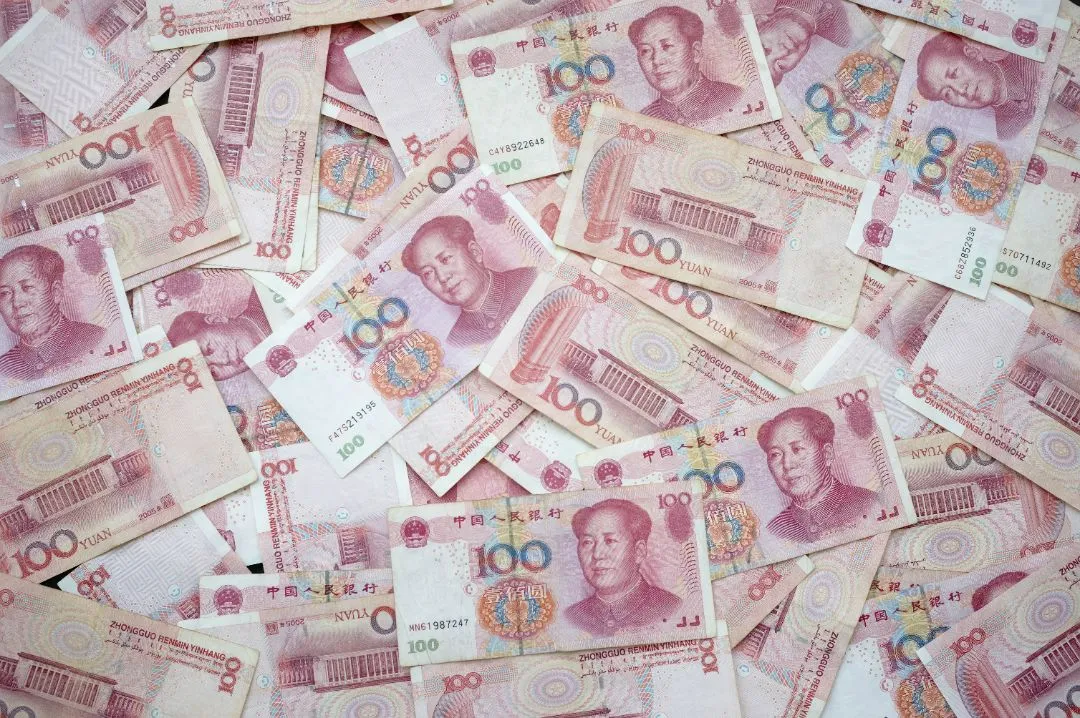
China’s digital yuan set for deposit-based role in banks next year

The People’s Bank of China (PBOC) plans to roll out a new structure for its central bank digital currency (CBDC) operations, moving the digital yuan into a deposit-based role within the commercial banking system beginning Jan. 1, 2026. Lu Lei, a deputy governor of the PBOC, announced the update, marking a new direction after nearly a decade of pilot programs. According to a report by FTChinese, the move fits into Beijing’s broader economic planning, as authorities seek to reinforce China’s role in global finance while containing risks tied to loosely regulated digital activity. The deputy governor said China will continue to run the digital yuan under a two-tier system, with the central bank responsible for rules and infrastructure, while commercial banks manage wallets, payments, and compliance. He added that the arrangement is designed to prevent banks from being sidelined and to limit shadow banking risks associated with digital payment platforms outside the regulated system.Photo by Eric Prouzet on UnsplashDigital yuan transactions top $2.3TThe announcement comes as use of the digital yuan, known as the e-CNY, continues to rise. By late November 2025, the system had handled 3.48 billion transactions with a total value of 16.7 trillion yuan ($2.3 trillion). There are about 230 million personal wallets and 18.84 million corporate wallets. Beyond domestic use, the e-CNY is being positioned for international trade. Lu pointed to progress on mBridge, a cross-border payments project involving multiple central banks. The platform has processed 4,047 transactions worth the equivalent of 387.2 billion yuan ($55.3 billion), with the digital yuan accounting for about 95.3% of the settlement value. The deputy governor also sounded a note of caution on private-sector innovation, saying the rapid growth of digital assets and stablecoins could complicate the conduct of monetary policy. He said central banks need to ensure that new payment tools do not undermine macroeconomic stability or allow money to circulate beyond regulated channels. Hong Kong to license crypto dealers, custodiansAs Beijing moves to strengthen its state-backed currency framework, Hong Kong is also tightening oversight of the crypto market. On Dec. 24, the city’s Financial Services and the Treasury Bureau (FSTB) and the Securities and Futures Commission (SFC) released their conclusions on proposed legislation to regulate virtual asset dealing and custodial services. Following the implementation of the Stablecoins Ordinance in August, regulators are now moving to require firms offering crypto dealing or custody services in Hong Kong to obtain licenses and operate under regulatory supervision. They also began seeking feedback on whether to extend oversight to virtual asset advisory and management providers, with the proposed framework modeled on existing securities market rules. In a separate development underscoring the contrast between state-backed and decentralized digital currencies in the region, reports this month pointed to a sharp drop in Bitcoin network activity linked to mainland China. BTC hashrate drop seen amid China mining changesKong Jianping, CEO of Nasdaq-listed Web3 infrastructure firm Nano Labs, said on the social media platform X that the global Bitcoin network’s hashrate fell by about 100 exahashes per second, or roughly 8%, around Dec. 15. He attributed the decline to the shutdown of an estimated 400,000 mining rigs, mainly in Xinjiang. A lower hashrate means less computing power is securing the network, reducing competition among miners that validate transactions. China has maintained a broad ban on crypto trading and mining since 2021. Industry outlet Wu Blockchain said the reasons for the latest shutdowns were unclear. 

news
Policy & Regulation·

Oct 10, 2023

HTX Hacker Returns Funds

HTX Hacker Returns FundsThe hacker responsible for the nearly 5,000 ETH exploit on the Seychelles-headquartered cryptocurrency exchange HTX (formerly known as Huobi) last month has decided to return the stolen funds.Towards the end of last month, the exchange fell victim to a hack, resulting in a loss estimated at around $8 million. According to on-chain data, the hacker has repatriated the pilfered cryptocurrency, marking a significant development in the aftermath of the cyberattack.Photo by Shubham Dhage on UnsplashHacker rewardedThe returned funds were sent back in two separate transactions, one consisting of approximately 4,000 ETH and the other totaling around 1,000 ETH. HTX advisor and Tron Founder, Justin Sun, took to X (formerly Twitter) to officially confirm the recovery. In his statement, Sun revealed that HTX had not only received all the stolen funds as promised by the hacker but had also extended a gesture of goodwill. HTX rewarded the responsible party with a “white hat bonus” amounting to 250 ETH, equivalent to a substantial $400,000.Sun expressed his satisfaction with the hacker’s decision, stating:“We have confirmed that the hacker has fully returned all funds, as promised, and we have also paid the hacker a white hat bonus of 250 ETH. The hacker made the right choice. We would like to express our gratitude to everyone in the industry for their help.”Hacker advisory messageDuring the return of the funds, the hacker conveyed a message on-chain, shedding light on the reason behind this act of restitution. The message read:“Received your message. White hat bonus to0x1Fc8674A51D6b97C968BE384337519CE7003152B. Your system hot wallet private key leak, you should change system hot wallet address and reduce the system hot wallet rate.”HTX, in response to the hacker’s decision to return the funds and in accordance with its commitment, promptly sent the white hat bonus to the specified address. The exchange also requested the hacker to provide a detailed security vulnerability analysis report to the email address htxsafe@htx-inc.com.This request aims to prevent similar incidents in the future, with assurances that the hacker’s privacy will be safeguarded.Justin Sun had confirmed the original hack in September, at the time reassuring the community that HTX had covered all losses arising from the attack and resolved associated issues satisfactorily.While acknowledging the severity of the hack, Sun pointed out that the stolen amount represented a relatively small fraction of the $3 billion in assets held by HTX’s users. To incentivize the return of the funds, HTX had even offered a reward of 5%, which equated to $400,000.However, Sun also emphasized that if the funds had not been returned within a seven-day window, the company would have been compelled to involve law enforcement authorities.Thankfully, it did not come to that, and the cryptocurrency exchange can now move forward with the confidence that its users’ assets are secure. This incident highlights the importance of cooperation and ethical choices within the crypto community, as well as the potential for resolution even in the face of cyberattacks.

news
Policy & Regulation·

Jun 14, 2023

Hong Kong Legislator Courting US Crypto Exchange Coinbase

Hong Kong Legislator Courting US Crypto Exchange CoinbaseRecently, Johnny Ng, a member of the Hong Kong Legislative Council, expressed his interest in the future development of Coinbase, a major US cryptocurrency exchange, in Hong Kong. In a tweet today, Ng said that he had been in contact with Coinbase and that he would keep the public updated on further progress.Photo by Ruslan Bardash on UnsplashNg’s invitation to crypto exchangesThis tweet follows Ng’s earlier invitation to Coinbase and other global crypto trading platforms to apply for licenses in Hong Kong. His comments are in line with Hong Kong’s efforts to become a hub for cryptocurrency and blockchain-related activities. As of June 1, a new licensing regime for centralized virtual asset trading platforms (VATPs) went into effect in the Chinese special administrative region.Differing opinionsDespite the enthusiasm shown by Ng, there are differing opinions on Hong Kong’s current suitability as a crypto-friendly jurisdiction. Leo Weese, the co-founder and President of the Bitcoin Association of Hong Kong, expressed reservations in an interview with crypto media outlet CoinDesk.Weese described Hong Kong’s current setup as “highly unattractive” for crypto businesses. He cited factors such as a relatively small and untested market, limited banking partnerships, and restrictive product offerings.Despite these challenges, Weese acknowledged some potential advantages, stating that Hong Kong’s classification of tokens as non-securities allows for the trading of securities that are deemed unregistered in other jurisdictions. It is important to note, however, that Weese cautioned against assuming that moving operations to Hong Kong would protect Coinbase from US regulatory measures.Moody’s altered outlook on CoinbaseMeanwhile, Moody’s, the American credit rating agency, recently revised Coinbase’s outlook from stable to negative, citing uncertainties surrounding the impact of the US Securities and Exchange Commission’s (SEC) charges on Coinbase’s operation as an unregistered securities broker.

news
Loading