Top

Terraform Labs files for bankruptcy in wake of $40 billion crash

Web3 & Enterprise·January 23, 2024, 1:20 AM

Singapore-based Terraform Labs, the company behind the failed algorithmic stablecoin TerraUSD, has officially filed for Chapter 11 bankruptcy protection in the United States.


It appears that the crypto space is not finished with dealing with the excesses and mismanagement that emerged at the end of the last market cycle. This move from Terraform comes in the wake of a $40 billion cryptocurrency crash and ongoing legal scrutiny, with the firm stating its intention to continue operations and support for the Terra community.
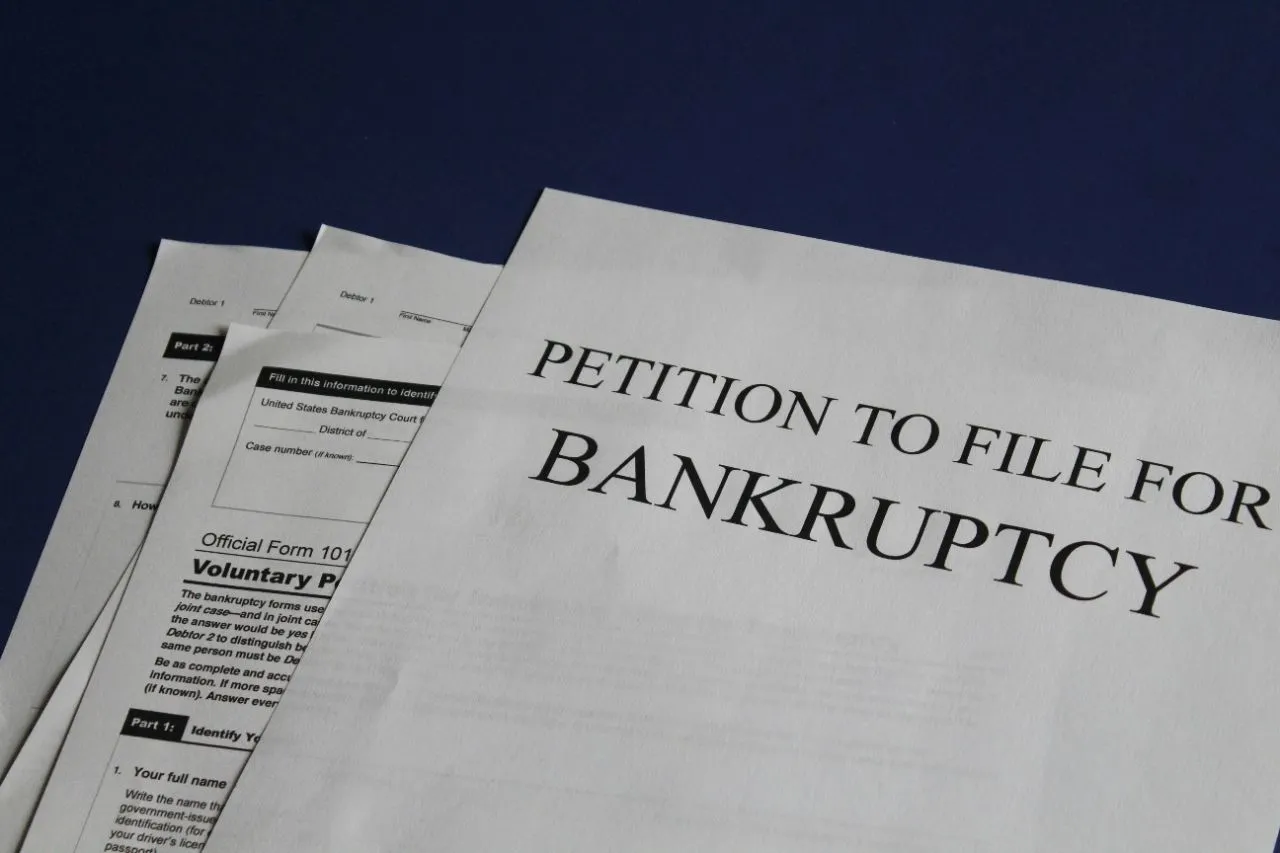
https://asset.coinness.com/en/news/4c19467ba144ff447d36011e3420d6a3.webp
Photo by Melinda Gimpel on Unsplash

Business plan execution

Terraform Labs was co-founded by Do Kwon, who is currently under investigation for its alleged wrongdoing relative to the failure of TerraUSD. The bankruptcy filing, submitted on Sunday to the Bankruptcy Court for the District of Delaware, aims to facilitate the company's business plan execution while navigating ongoing legal proceedings, including representative litigation in Singapore and the United States involving the Securities and Exchange Commission (SEC).


In a statement, Chris Amani, CEO of Terraform Labs, commented on the decision, stating:

"The Terra community and ecosystem have shown unprecedented resilience in the face of adversity, and this action is necessary to allow us to continue working toward our collective goals while resolving the legal challenges that remain outstanding."


Amani reassured stakeholders that the decision ensures the company can maintain its commitment to working with the community on infrastructure, innovative tools, products and other ecosystem support. Amani became CEO of the company in July of last year, having been acting as Terraform’s COO prior to that.


He acknowledged the challenges faced and expressed optimism about overcoming them, highlighting the resilience of the ecosystem after previous hurdles.


Liabilities and assets in $100M to $500M range

The company emphasized that the Chapter 11 filing is designed to allow it to meet all financial obligations to employees and vendors without requiring additional financing. The estimated liabilities and assets fall within the range of $100 million to $500 million, as indicated in the filing.


The SEC has initiated a civil trial against Terraform Labs and Do Kwon, accusing them of orchestrating a $40 billion cryptocurrency fraud through the TerraUSD algorithmic stablecoin and its sister token Luna.


The SEC alleges that Terraform Labs and Kwon raised billions of dollars from investors through unregistered transactions, leading to the collapse of TerraUSD and Luna in May 2022. Both the SEC and Terraform have unsuccessfully filed for summary judgment in the case.


Far-reaching consequences

The crash had far-reaching consequences, impacting several crypto firms, including Singaporean crypto hedge fund Three Arrows Capital, Singaporean crypto lender Hodlnaut, Voyager Digital and Celsius Network.


Do Kwon, a South Korean national, faces additional criminal charges in the United States related to fraud and market manipulation. His arrest in Montenegro in March 2023 and pending extradition requests from South Korea and the United States underscore the global legal challenges confronting him.


The U.S. District Court for the Southern District of New York has scheduled the SEC trial against Terraform Labs and Kwon for late March, accommodating Kwon's extradition process. Meanwhile, in South Korea, Terraform Labs co-founder Daniel Shin has denied wrongdoing in the collapse as part of separate proceedings taken against him.



More to Read
View All
Web3 & Enterprise·

Nov 23, 2023

Me2on launches P2E game ‘Solitaire Crypto War’ with crypto integration

Me2on launches P2E game ‘Solitaire Crypto War’ with crypto integrationMe2on, a Seoul-based game developer, revealed the launch of its new game, Solitaire Crypto War, a play-to-earn (P2E) tournament game developed internally and published by its subsidiary, Memoriki. This Android game will be available globally, excluding South Korea and China. Memoriki, established in 2009 and originally based in Hong Kong, was acquired by Me2on earlier this year, broadening Me2on’s reach in the gaming market.Photo by Erik Mclean on UnsplashPVP card gameSolitaire Crypto War, developed from Me2on Group’s Solitaire IP, is a card puzzle player-versus-player (PVP) game that has amassed over 130 million global downloads. Players can engage in the classic Solitaire game against multiple opponents, competing to achieve the fastest clear times. The game ensures fair competition by matching players under identical conditions, with the highest scorer emerging as the winner. Designed for fast-paced gameplay, it pairs players of similar skill levels. Additionally, each season introduces unique events like puzzle piece collecting, Monopoly, and Powerball games, offering various rewards.Available in both free and paid optionsSolitaire Crypto War is a free game, but it also offers a feature where users can opt to use cryptocurrencies like ETH, USDT, USDC, UNI, LINK, MATIC and MEV to participate in competitions against other players and win prizes. The game boasts a variety of modes, including PVP battles, challenges and tournaments, enhancing its appeal. Additionally, its integration with Face Wallet enables users to log in using their social accounts, eliminating the need for a separate wallet installation, thus simplifying the gaming experience.Event running until Dec 28In celebration of the official launch of Solitaire Crypto War, Me2on has planned an opening event running until Dec. 28, providing various benefits to its users. Everyone accessing the game during this event period will receive a welcome package. Additionally, players can engage in various activities such as the game review challenge, ticket triumph challenge, and community quest takedown to receive items daily, enhancing their gaming experience and rewarding their participation.Cho Choong-hyeon, who leads Me2on’s Blockchain Game Division, expressed that the company has integrated blockchain technology to bring the classic card game Solitaire into the Web3 realm. He emphasized that this move allows Solitaire to evolve into a play-to-own (P2O) game, where users can directly own their gameplay achievements. Cho also highlighted Me2on’s dedication to being at the forefront of the Web3 market, which he believes is set to transform the paradigm of the gaming industry.

news
Policy & Regulation·

Aug 16, 2023

Singapore Takes Lead in Regulating Stablecoins

Singapore Takes Lead in Regulating StablecoinsSingapore has taken a proactive step by finalizing regulations for stablecoins, solidifying its position as one of the first jurisdictions to do so on a global scale.The Monetary Authority of Singapore (MAS) has established a comprehensive framework that outlines essential prerequisites for stablecoin operations, according to an announcement made by the central bank on Monday.Key highlights include:Reserve Backing: Stablecoins must be backed by reserves consisting of low-risk and highly liquid assets. The value of these reserves should equal or surpass the circulating stablecoin value at all times.Prompt Redemption: Stablecoin issuers are mandated to return the par value of the digital currency to holders within five business days upon redemption requests.Transparency: Issuers must furnish users with “appropriate disclosures,” including audit outcomes of the backing reserves.These regulations will be applicable to stablecoins issued in Singapore that mirror the value of the Singapore dollar or any G10 currency, such as the US dollar. Stablecoins meeting all the requirements outlined by the regulations will receive recognition from the regulator as “MAS-regulated stablecoins.” This distinct categorization will differentiate them from tokens lacking regulation.Photo by CoinWire Japan on UnsplashKey roleWith a market valuation of approximately $125 billion, stablecoins have rapidly emerged as a significant force within the crypto space. Leading the pack are Tether’s USDT and Circle’s USDC, which together command around 90% of the market’s total value.Stablecoins play a key role in the crypto trading market. They allow traders to move in and out of various cryptocurrencies and back into fiat. However, despite their immense influence, stablecoins have largely remained unregulated across the globe. While their primary use has been in trading, stablecoin proponents assert their versatility in various applications, including remittances.Digital currency hubSingapore has been actively positioning itself as a hub for digital currencies, striving to attract foreign companies seeking refuge from the crypto industry’s apprehensions surrounding the current unwelcoming US regulatory approach.Despite their prevalence, stablecoin issuers have faced criticism regarding the transparency of their reserve holdings. Singapore’s regulatory measures aim to bring increased clarity to this sector.Ho Hern Shin, Deputy Managing Director of Financial Supervision at MAS, expressed that the framework’s purpose is to enable stablecoins to serve as a credible digital medium of exchange and bridge the gap between fiat and digital asset ecosystems.Positive industry responseLeading stablecoin firms, Tether and Circle, have applauded Singapore’s new regulations. Yam Ki Chan, Vice President of Strategy and Policy for APAC at Circle, stated that MAS is at the forefront of forward-looking regulators globally, establishing a transparent regulatory framework for stablecoins and digital assets. Paolo Ardoino, CTO of Tether, hailed the framework for providing a clear structure, accountability, and transparency in stablecoin operations within Singapore.The collapse of algorithmic stablecoin UST last year drew regulatory attention to this category of stablecoins. Unlike traditional stablecoins like USDT and USDC, UST was governed by an algorithm and lacked real-world assets as reserves.Singapore’s stablecoin regulations have placed it in a select group of jurisdictions pioneering such rules. Hong Kong is presently undergoing public consultation on stablecoins and plans to introduce regulations in the coming year.

news
Policy & Regulation·

Sep 21, 2023

Philippines Regulator Collaborates with US Counterpart to Tackle Crypto Fraud

Philippines Regulator Collaborates with US Counterpart to Tackle Crypto FraudThe Philippines Securities and Exchange Commission (SEC) has taken a step towards addressing the escalating issue of crypto scams, seeking assistance from its namesake and international counterpart, the US SEC.The international partnership was announced via a Philippines SEC press release, published last Friday. The collaboration highlights the severity of a growing problem in terms of crypto-related fraud, underscoring the importance of inter-agency cooperation in tackling the issue.Photo by Krisia on PexelsJoint training effortsBoth SECs will engage in joint training sessions. The collaboration also involves cooperation with the Asian Development Bank (ADB), and it has been established under the umbrella of the International Organization of Securities Commissions (IOSCO). Notably, the Philippines SEC has also signed IOSCO’s Multilateral Memorandum of Understanding (MoU) aimed at addressing crypto scams.The motivation behind these collaborative efforts is readily apparent given the scale of the cryptocurrency fraud that has occurred recently in the Philippines. Recent instances have captured the attention of the authorities, emphasizing the urgent need for regulatory action.Drawing on overseas enforcement experienceMost in the crypto sector are not enamored with US SEC Chair Gary Gensler’s stance relative to digital assets. Notwithstanding that, it may be that his assertive approach to enforcement may have a place in the Philippine context, given the extent of the issue of crypto fraud in the Southeast Asian country. For example, Gensler’s call for “more cops on the beat” to police the crypto industry, expressed in a Bloomberg Daybreak Podcast interview in July, resonates with the Philippines’ current predicament.Though Gensler’s remarks have been met with resistance from some quarters within the crypto industry, they may serve as sage advice in a climate where crypto-related crimes proliferate.Philippines SEC Chair Emilio Aquino outlined that the collaborative workshop involving the two securities commissions was aimed towards strengthening the capability of the Philippines’ SEC enforcement personnel in conducting investigations on securities-related crimes like insider trading, market manipulation, off-market fraud, and crypto scams.Aquino stated: “Scammers are becoming more advanced and sophisticated in their techniques as new technologies arise. As such, the SEC must constantly improve its investigation and enforcement capabilities to ensure that we are always one step ahead in preventing scams.”The Philippines, in particular, could benefit from a more robust regulatory presence to combat human trafficking networks and quash scams that tarnish the reputation of the crypto sector. These criminal activities have unfortunately led many to associate cryptocurrencies with fraud.The Philippines SEC Chair added that collaboration with US regulators and other enforcement agencies would likely guide the country in its pursuit of initiatives that lead towards the protection of the investing public.While expert training is essential, bolstering regulatory oversight, as suggested by Gensler, may be the key to mitigating the pervasive problem of crypto-related crime and protecting the integrity of the cryptocurrency sector.

news
Loading