Top

Mocaverse strikes up strategic alliance with Halo, KuCoin and OKX

Web3 & Enterprise·February 16, 2024, 11:45 PM

Mocaverse, a membership-based NFT collection initiative enabled by Hong Kong’s Animoca Brands, revealed on Friday the establishment of strategic alliances with prominent Web3 wallets OKX Wallet, Crypto.com DeFi Wallet and Halo Wallet. In a separate announcement, it also revealed a similar partnership with crypto exchange platform KuCoin.


Extending Moca IDs to OKX, Crypto.com and Halo users

In a statement released by Animoca Brands, it was highlighted that through the deployment of its recently introduced decentralized identity (DID) Moca ID, Mocaverse is set to catalyze user expansion by integrating with the aforementioned leading self-custodial wallets.


The statement clarified that Moca ID will act as the conduit for users to seamlessly navigate various Web3 cultural experiences, spanning PointFi, GameFi and SocialFi, thereby simplifying the onboarding process into the Mocaverse ecosystem.


The collaboration will mean that users of OKX Wallet, Crypto.com DeFi Wallet and Halo Wallet will soon have the opportunity to claim their unique Moca IDs within the app, thereby gaining entry into the Mocaverse ecosystem and unlocking access to a myriad of rewarding cultural and entertainment experiences.

https://asset.coinness.com/en/news/97e5af0585249c37fceab7ea5a463c5d.webp
Photo by Shubham's Web3 on Unsplash

Realm Points incentive

Holders of Moca ID stand to accrue Realm Points through active participation and engagement within partner ecosystems and experiences, with the ability to redeem these points for exclusive real-life benefits and rewards provided by Mocaverse and Animoca Brands. Commenting on the development, Kenneth Shek, project lead at Mocaverse, stated:

“This partnership encompasses the values and mission we set out when we envisioned Moca ID, which is to make interoperability a new standard to onboard new users and redefine the Web3 network effect through the Mocaverse Partner Network.”

Mocaverse seeks to unify Animoca's portfolio projects, subsidiaries, joint ventures and partners through a distinctive NFT collection. With 8,888 Mocas as NFT profile pictures (PFPs), Mocaverse serves as a membership pass for Animoca Brands team members, investors, partners and select token holders, aspiring to foster community cohesion and collaboration within the Web3 sphere.


Jason Lau, chief innovation officer of OKX, expressed enthusiasm for the collaboration, noting OKX Wallet's role as a premier gateway to explore the burgeoning realm of Web3 gaming, culture and entertainment experiences.


Likewise, Eric Anziani, president and chief operating officer of Crypto.com, underscored the commitment of Crypto.com DeFi Wallet to democratizing access to the realms of DeFi and Web3 for all users, stating the partnership with Mocaverse would extend these experiences to a broader audience.


Additional announcement

In a separate announcement, Mocaverse unveiled a similar partnership with cryptocurrency exchange KuCoin alongside Halo Wallet. The initiative endeavors to address the challenge of accessing benefits across distinct Web3 sub-ecosystems by establishing cross-platform identity links, ultimately enhancing the user experience and fostering greater collaboration and integration across partner offerings.

Halo Wallet CEO Jeff Hou shared his thoughts on the collaboration, stating:

“The partnership among Halo, KuCoin, and Mocaverse is more than just a fusion of services; it represents a strategic alliance to create a cohesive digital asset environment for our users. The initiation of this exceptional cross-platform alliance is a move that promises to bring together the best of what each party has to offer.”

 

More to Read
View All
Policy & Regulation·

Aug 21, 2024

Crypto sector mulls implications of appointment of new Thai PM

With Thailand just having elected its youngest-ever Prime Minister (PM), speculation has arisen within the crypto sector as to whether the new appointee will be bullish where digital assets are concerned. On Sunday, 37-year-old Paetongtarn Shinawatra was sworn in as the Southeast Asian country’s Prime Minister, having received two-thirds of the votes in a House of Representatives ballot on Friday. On Aug. 18, a pseudonymous crypto commentator, @martypartymusic, told his 109,000 followers on X that Shinawatra’s appointment was positive for crypto. He wrote:”She is a crypto bull. Her father was a crypto bull. IMO: Thailand could be next to adopt crypto as legal tender. Let’s watch it play out."Photo by Evan Krause on UnsplashDigital wallet programShinawatra has committed to continuing a similar approach to policy as followed by her predecessor, Srettha Thavisin. That will include an emphasis on pursuing economic reform and accommodating economic stimulus measures.  One crypto-related measure introduced by her predecessor is the digital wallet handout project. According to Nikkei Asia, the scheme has been burdened with both legal and budgetary challenges. Kasit Piromya, a former Thai Foreign Minister, is understood to have said that Shinawatra would be committing “political suicide” if she continues to drive that project forward.  It’s understood that she has indicated that the government will continue with the project but that it plans to take steps to ensure that the program can proceed in a financially sustainable way. Shinawatra’s Pheu Thai Party had first floated the notion of giving 10,000 baht in digital assets, at the time valued at $300, in April 2023, to Thai citizens above the age of 16. Further moves were made to progress that $14 billion project earlier this year. While insiders have reported that Shinawatra has been non-committal about the digital wallet project, she has been quoted as stating previously that “the digital wallet scheme is a project we intend to use as a major economic stimulus.” As various commentators speculate on her likely course of action, the reality is that these matters will remain unclear until such time as she appoints a cabinet and announces relevant policies. Tanawat Sutunthivorakoon, the CEO of Thai digital asset management platform Bitazza Thailand, expressed the view that this change in leadership will have very little impact on the development of digital asset regulation in the Southeast Asian country. Regulatory developmentThe country has seen a number of crypto-positive developments over recent months. Back in March, the country’s tax authority approved a crypto income tax exemption in an effort to incentivize crypto-based fundraising. The authorities had already made crypto trading VAT-free the previous month. Earlier this month, Thailand’s Securities and Exchange Commission (SEC) introduced a digital asset regulatory sandbox in an effort to foster innovation relative to the digital assets sector. The SEC allowed institutional investors in Thailand to access U.S. spot Bitcoin exchange-traded fund (ETF) products. In June, the regulator followed up by approving the country’s first spot Bitcoin ETF.

news
Policy & Regulation·

Jun 22, 2025

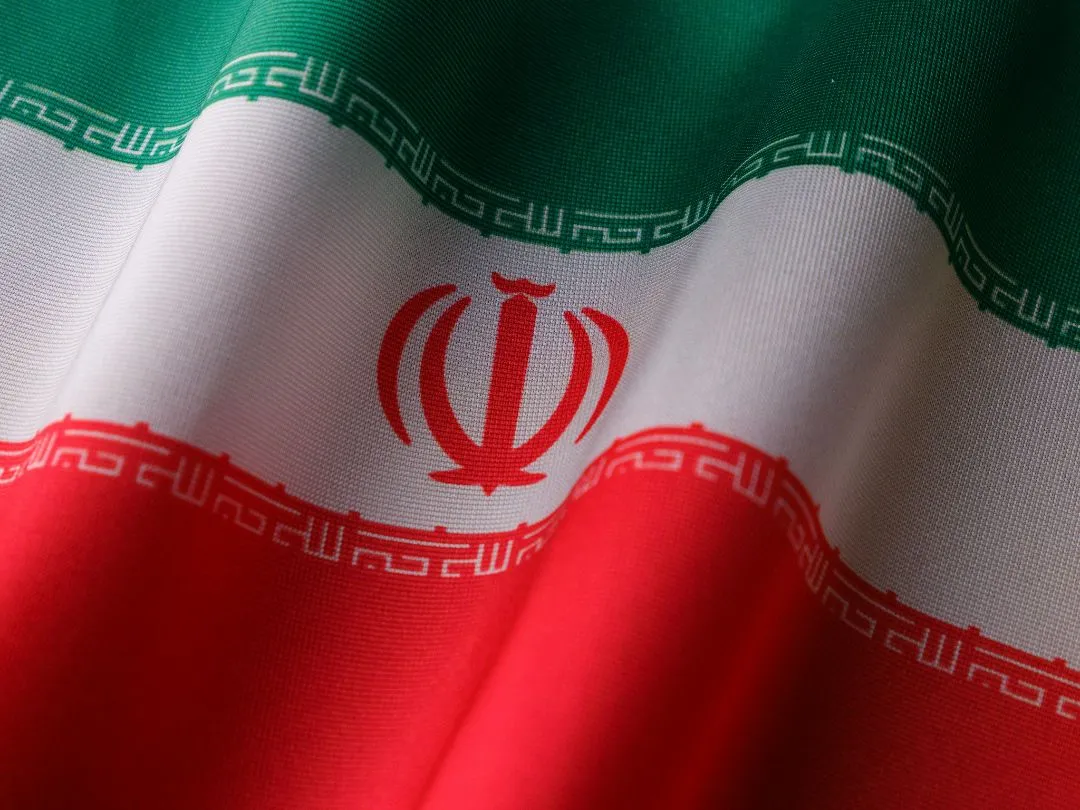
Iran curtails crypto exchange hours following $90M hack

While the crypto markets have not been immune to geopolitical developments, the sector in Iran experienced a more direct effect last week with a politically motivated $90 million exchange hack, prompting the authorities to introduce an exchange curfew. Blockchain analytics firm Chainalysis outlined on X on June 18 that Nobitex, Iran’s largest cryptocurrency exchange, had been hacked, with crypto assets to the value of $90 million having been drained from exchange-controlled wallets.Photo by Engin Akyurt on PexelsWeaponizing blockchain technologyThe hack had the hallmark of a politically-motivated attack given that rather than the digital assets being stolen, they were sent to vanity addresses, customized blockchain addresses involving user-defined sequences of characters. The vanity addresses contained “politically charged messages” and in sending the funds to them, the funds were effectively burned as they’re now permanently inaccessible.  The firm stated:”This incident highlights how crypto exploits aren’t always financially motivated. Bad actors can weaponize blockchain technology for geopolitical messaging, turning hacks into ideological statements rather than profit-driven crimes.” Pro-Israel hacker group Gonjeshke Darande, also known as “Predatory Sparrow,” appears to have carried out the hack, given that on June 18, it outlined on X that it would release Nobitex’s source code together with other internal information related to the firm’s internal network, while confirming that it had conducted cyberattacks against the company. The group made the following assertion:”The Nobitex exchange is at the heart of the [Iranian] regime’s efforts to finance terror worldwide, as well as being the regime’s favorite sanctions violation tool.” Rafe Pilling, director of threat intelligence at Sophos, a British cybersecurity company, told The Guardian that Predatory Sparrow “bears all the hallmarks of a false persona used by a government-sponsored threat group to conduct disruptive operations against targets” linked to the Iranian government. While Nobitex is estimated to have seven million users, an Open Source Intelligence (OSINT)-based investigation carried out in 2024 linked relatives of Ali Khamenei, Iran’s supreme leader, and other Iranian establishment figures to the crypto exchange. Minimizing systemic riskThe cyber attack has prompted a response from the Iranian government. In a blog post, Chainalysis outlined that the Central Bank of Iran has instructed all domestic crypto exchange platforms to curtail their service hours to between 10 a.m. and 8 p.m. The company speculated that this measure could be motivated by a desire to impose a higher level of oversight and control over the local crypto sector. However, it also suggested that it may be part of an attempt by the Iranian authorities to manage and minimize systemic risk. In recent years, Iran has been subject to extensive international sanctions applied by various entities including the United States, the European Union and the United Nations. Those sanctions have had a significant impact upon the country’s economy, triggering high inflation and currency devaluation.  With that, crypto has been increasingly viewed by the authorities as a means to circumvent sanctions. Last December, the Iranian authorities appeared to be working towards regulating crypto, embracing the asset class in acknowledgement of its growing importance to the Iranian economy. In February, Chainalysis reported that sanctioned entities worldwide had received $15.8 billion in crypto transactions in 2024.

news
Policy & Regulation·

Sep 13, 2023

Korean National Assembly Members’ Crypto Holdings to Undergo Investigation

Korean National Assembly Members’ Crypto Holdings to Undergo InvestigationThe Anti-Corruption and Civil Rights Commission of Korea (ACRC) has announced that it has convened a special investigative team to conduct an investigation into the virtual asset dealings of members of the 21st National Assembly, particularly details on acquisition, trading, and losses.Photo by Mediamodifier on UnsplashComing under scrutinyThe National Assembly passed a resolution back in May titled “The Resolution on Voluntary Reporting and Investigation of Virtual Assets of National Assembly Members,” requesting that all members of the Assembly should voluntarily report the status and changes in their holdings of virtual assets for a thorough investigation by the ACRC amid public concern about conflicts of interest and illegal transactions.As a result, individual consent forms for the collection, use, and third-party provision of personal information were submitted to the ACRC last Monday by Assembly members of the ruling and opposition parties.Other minor political parties like the Justice Party, Basic Income Party, and Transition Korea Party that had previously submitted their personal information consent forms have resubmitted their forms in accordance with the format of those submitted by the ruling and opposition parties. Independent lawmakers and some non-negotiation bodies have also voluntarily submitted forms of their own.Extensive legal probeThe scope of the investigation includes the domestic acquisition, trading, and losses of virtual assets by Assembly members starting from the beginning of their term on May 30, 2020, to May 31, 2023, when their personal information consent forms were submitted. The ACRC will compare this information with reports formerly filed by the members themselves.The ACRC appointed Vice Chairman and Secretary General Jung Seung-yoon as the head of the team and assigned some 30 investigators to carry out a census for 90 days starting on September 18. It will be executed under the Act On The Prevention Of Corruption And The Establishment And Management Of The Anti-Corruption and Civil Rights Commission and the Personal Information Protection Act.“As this is an important matter of public interest, we will conduct the investigation promptly and fairly in accordance with the law and guidelines,” said Jung. “We will also strictly protect the data acquired during the investigation process, including the personal information consent forms.”

news
Loading