Top

Iran curtails crypto exchange hours following $90M hack

Policy & Regulation·June 22, 2025, 11:56 PM

While the crypto markets have not been immune to geopolitical developments, the sector in Iran experienced a more direct effect last week with a politically motivated $90 million exchange hack, prompting the authorities to introduce an exchange curfew.


Blockchain analytics firm Chainalysis outlined on X on June 18 that Nobitex, Iran’s largest cryptocurrency exchange, had been hacked, with crypto assets to the value of $90 million having been drained from exchange-controlled wallets.
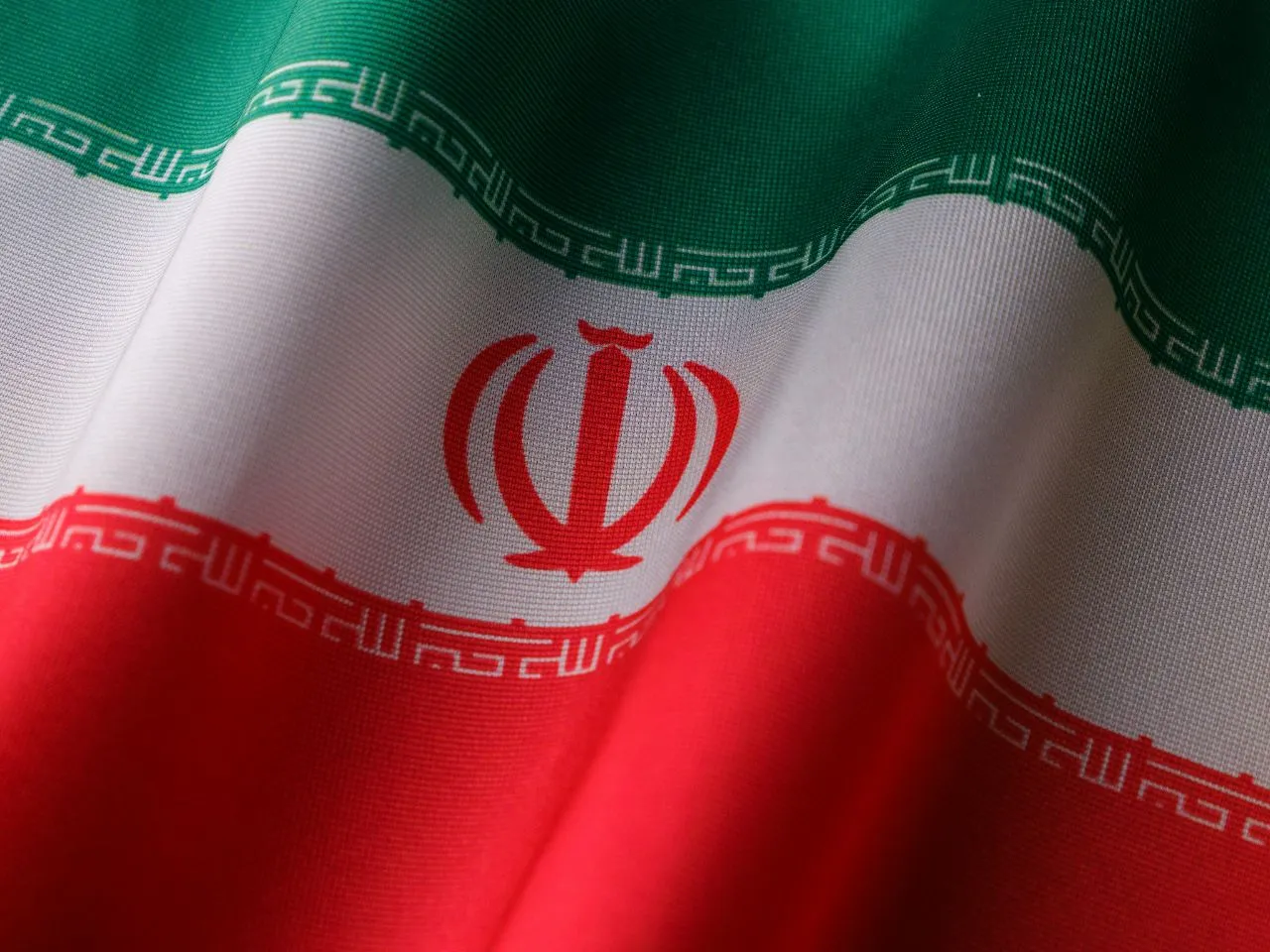
https://asset.coinness.com/en/news/91d6b522a07d63c927187c631d5bd852.webp
Photo by Engin Akyurt on Pexels

Weaponizing blockchain technology

The hack had the hallmark of a politically-motivated attack given that rather than the digital assets being stolen, they were sent to vanity addresses, customized blockchain addresses involving user-defined sequences of characters. The vanity addresses contained “politically charged messages” and in sending the funds to them, the funds were effectively burned as they’re now permanently inaccessible. 


The firm stated:

”This incident highlights how crypto exploits aren’t always financially motivated. Bad actors can weaponize blockchain technology for geopolitical messaging, turning hacks into ideological statements rather than profit-driven crimes.”


Pro-Israel hacker group Gonjeshke Darande, also known as “Predatory Sparrow,” appears to have carried out the hack, given that on June 18, it outlined on X that it would release Nobitex’s source code together with other internal information related to the firm’s internal network, while confirming that it had conducted cyberattacks against the company. The group made the following assertion:

”The Nobitex exchange is at the heart of the [Iranian] regime’s efforts to finance terror worldwide, as well as being the regime’s favorite sanctions violation tool.”


Rafe Pilling, director of threat intelligence at Sophos, a British cybersecurity company, told The Guardian that Predatory Sparrow “bears all the hallmarks of a false persona used by a government-sponsored threat group to conduct disruptive operations against targets” linked to the Iranian government.


While Nobitex is estimated to have seven million users, an Open Source Intelligence (OSINT)-based investigation carried out in 2024 linked relatives of Ali Khamenei, Iran’s supreme leader, and other Iranian establishment figures to the crypto exchange.


Minimizing systemic risk

The cyber attack has prompted a response from the Iranian government. In a blog post, Chainalysis outlined that the Central Bank of Iran has instructed all domestic crypto exchange platforms to curtail their service hours to between 10 a.m. and 8 p.m.


The company speculated that this measure could be motivated by a desire to impose a higher level of oversight and control over the local crypto sector. However, it also suggested that it may be part of an attempt by the Iranian authorities to manage and minimize systemic risk.


In recent years, Iran has been subject to extensive international sanctions applied by various entities including the United States, the European Union and the United Nations. Those sanctions have had a significant impact upon the country’s economy, triggering high inflation and currency devaluation. 


With that, crypto has been increasingly viewed by the authorities as a means to circumvent sanctions. Last December, the Iranian authorities appeared to be working towards regulating crypto, embracing the asset class in acknowledgement of its growing importance to the Iranian economy.


In February, Chainalysis reported that sanctioned entities worldwide had received $15.8 billion in crypto transactions in 2024.


More to Read
View All
Web3 & Enterprise·

Nov 19, 2024

OKX enables zero-fee SGD transfers in Singapore

Seychelles-headquartered global crypto exchange OKX outlined on Nov. 18 that it will offer instant, zero-fee Singaporean dollar (SGD) deposits and withdrawals into and out of the exchange platform for customers resident in Singapore.Photo by Peter Nguyen on UnsplashDBS partnershipIn a press release published by GlobeNewswire on behalf of OKX, the company outlined that it has been in a position to enable this feature for its Singapore-based customers due to a collaboration with Singapore’s largest bank, DBS Bank. OKX Singapore CEO Gracie Lin said that “working with DBS to provide payment rail infrastructure in Singapore provides customers with secure and seamless access to digital assets.” As DBS is one of 27 banks that participate in PayNow, a real-time payment system that falls under the Fast and Secure Transfers (FAST) service in Singapore, OKX customers who are also customers of a bank that participates in the PayNow scheme, can effect those SGD deposits and withdrawals in real time. Lin added that OKX is working towards the addition of more features in an effort to further enhance the customer experience. The new offering takes OKX a step further towards integrating with the local traditional finance system (TradFi).  Singpass integrationAdditionally, the exchange has also integrated Singpass verification. Singpass is a digital identity system that enables Singaporean residents to access private sector and government services online. Back in March, the company acquired in-principle approval (IPA) from the Monetary Authority of Singapore (MAS) in respect of a Major Payments Institution (MPI) license. Continuing that shift towards regulatory compliance, it followed up with the acquisition of a full MPI license from MAS in September. The company is now one of 29 crypto sector firms to have been licensed by MAS in Singapore. While a particular effort has been made in Singapore, OKX has been making similar in-roads elsewhere. Last month, it launched its service in the United Arab Emirates (UAE), having received full licensing from Dubai’s Virtual Assets Regulatory Authority (VARA). Making further progress in October, OKX partnered with UK-headquartered multinational bank Standard Chartered for institutional crypto custody. Both Singapore and the UAE are seen by the company to be strategic crypto hubs. However, its efforts in expanding its offering globally has also taken it into other markets. In February OKX launched OKX TR, a specialized crypto exchange platform catering to the specific needs of the Turkish market. In an emailed response to Reuters, DBS Bank’s Head of Digital Assets, Evy Theunis, commented on its partnership with OKX:”DBS has been actively fostering a responsible and innovative digital asset ecosystem in Singapore for several years now. Working with OKX deepens the bank's wide-ranging involvement in this space." DBS has been following its own path as a pioneering TradFi entity getting further involved in cryptocurrency, blockchain and tokenization. Last month it launched DBS Token Services for institutions, integrating tokenization and smart contracting capabilities within its existing conventional services. 

news
Policy & Regulation·

Apr 07, 2023

Korean Crypto Exchange Group Installs Separate Division to Prevent Money Laundering

Korean Crypto Exchange Group Installs Separate Division to Prevent Money LaunderingThe Digital Asset Exchange Alliance (DAXA), a group of five major Korean crypto exchanges, announced yesterday that it has installed a division to prevent money laundering.©Pexels/Anna TarazevichAML division’s roleThe anti-money laundering (AML) division will devise suspicious transaction report types, create guidelines to assess risks at virtual asset service providers, and hold various seminars.With the new AML division installed, DAXA now has five divisions, the other four of which are responsible for trading support, market monitoring, compliance monitoring, and education.Improving listing and delisting guidelinesDAXA also plans to improve listing and delisting guidelines that exchanges can share.DAXA vice chairman Kim Jae-jin said long-term efforts are required to build a healthy virtual asset ecosystem, calling for exchanges’ stronger voluntary compliance.

news
Policy & Regulation·

May 08, 2023

Korea’s Code Launches System to Detect Blacklisted Crypto Wallets

Korea’s Code Launches System to Detect Blacklisted Crypto WalletsCode, the only Travel Rule solution provider in South Korea, announced on Monday the launch of Protector, a detection system designed to identify blacklisted wallets in the cryptocurrency space. Established by a collaboration between three major Korean cryptocurrency exchanges (Bithumb, Coinone, and Korbit), Code aims to enhance security and compliance in the industry.Photo by Mariia Shalabaieva on UnsplashTravel RuleThe Travel Rule is a regulation that requires financial institutions to share information with each other about transactions to ensure their legitimacy and to prevent money laundering, terrorist financing, and other illicit activities.Wallet risk assessmentsThe Protector system of Code allows its members to assess risks associated with external wallets and take appropriate measures during the withdrawal and deposit of virtual assets. Risks will be categorized into three levels, represented by the colors white, gray, and black. A white designation signifies a normal status, gray serves as a warning, and black indicates a danger.Not only does Protector enable members to manage risks linked to crypto wallets more effectively, it also allows them to monitor the management status of Code’s Travel Rule.Streamlining regulatory complianceCode CEO Lee Sung-mi stated that the recently launched Protector system is designed to streamline regulatory compliance for Code members. By utilizing Protector, members can concentrate on their projects without being burdened by compliance concerns. Lee also emphasized that Code is committed to expanding its range of services for members in the future.The detection system was developed and is operated in partnership with Uppsala Security, a Singapore-based cybersecurity company specializing in blockchain-powered solutions.

news
Loading