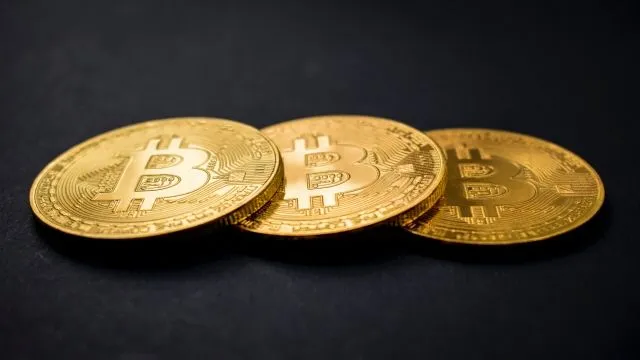
Korea’s daily crypto trading volume surpasses that of stocks at nearly $9B
With Bitcoin prices hitting an all-time high, the daily crypto trading volume in South Korea has surpassed that of the stock market, local media outlet The Financial News reported.
As of yesterday at noon (KST), the local daily trading volume of cryptocurrencies over the past 24 hours stood at over KRW 11.8 trillion, or nearly $9 billion, according to data from crypto platform CoinMarketCap. Meanwhile, the daily trading volume on the Korea Composite Stock Price Index, or KOSPI, was KRW 11.4 trillion on Friday.
The total daily crypto trading volume was tallied by adding trading volume across Korea’s five major crypto exchanges – Bithumb posted KRW 8.8 trillion, Upbit KRW 2.7 trillion, Coinone KRW 176.4 billion, Gopax KRW 55.2 billion and Korbit KRW 32 billion.

Unlike stock markets which have a closing time, crypto assets are traded 24/7, which makes it difficult to do an apple-to-apple comparison. Still, the numbers clearly demonstrate retail investors’ bullish sentiment toward the crypto market.
According to the U.S. crypto exchange Coinbase, the Bitcoin price touched $70,199 on Friday (UST), just three days after the flagship coin surpassed $69,000 on March 5, an already record-breaking price in 28 months since November 2021.
Inflation and recession drive retail investors to crypto
Financial experts say that Korea’s persistently high inflation and slowing economic growth are driving local retail investors to seek relatively riskier yet high-yielding assets such as cryptocurrencies. Young investors in their 20s and 30s are particularly leaning towards investing in crypto, as they fear not being able to buy houses solely with their wages. Moreover, Koreans’ average monthly real wage declined by 1.1% year-on-year, which marks a continuous decline for two consecutive years since 2022.
Despite the country’s economic slowdown, the KOSPI has actually risen, fueled by capital influx from foreign investors who are expecting a valuation increase in local firms. In contrast, local retail investors are rushing out from the stock market as they see a lack of outperforming companies.
Data from the Korea Exchange (KRX), the sole securities exchange operator in the country, showed that foreign investors purchased KRW 4.4 trillion in stocks over the past month on the KOSPI market, while local retail investors sold KRW 3.3 trillion worth of stocks during the same period.
Local crypto boom prompts ‘Kimchi Premium’ effect
The recent bullish sentiment in the Korean crypto market can largely be attributed to local retail investors, because current laws prohibit foreign investors from trading crypto assets in the country and regulations limit enterprises from making direct investments in crypto.
While the KOSPI market grapples with the so-called Korea Discount effect, which refers to the undervaluation of the Korean stock market, the local crypto market is experiencing the exact opposite trend – crypto investors are benefitting from something called the Kimchi Premium effect, a newly coined term referring to the overvaluation of crypto assets in Korean crypto markets compared to those in their foreign counterparts. As of yesterday at 14:00 (KST), Bitcoin changed hands at KRW 917.4 million on foreign exchanges while at KRW 971.8 million on Korean exchanges, per data from local crypto exchange Upbit.
Cho Dong-keun, a professor at the Economics Department at Myongji University, described the current Korean economic situation as “a competition for the country’s limited wealth”. He said that the stagnant national growth has pushed people to fight for more wealth, urging them to invest in crypto assets, adding that Kimchi Premium could substantially appeal to many retail investors.