Top

Mudrex to introduce U.S. spot Bitcoin ETFs to Indian investors

Web3 & Enterprise·March 12, 2024, 2:21 AM

Indian cryptocurrency investment platform Mudrex has unveiled plans to provide access to U.S. spot Bitcoin exchange-traded funds (ETFs) for investors within the world’s most populous country.


Serving Indian institutional investors

This initiative, as disclosed by CEO and co-founder Edul Patel in discussion with local media, marks a particularly significant milestone for Indian institutional investors who previously lacked direct access to spot Bitcoin ETFs, which were predominantly available to retail investors through U.S. stock investing firms.


In its initial phase, Mudrex intends to list the top four BTC ETFs from prominent entities including BlackRock, Fidelity and Franklin Templeton. While eleven BTC ETF products currently exist in the United States, most commentators agree that there will be a consolidation with the majority unlikely to survive in the long run.


Mudrex will ensure compliance by being registered with the Financial Intelligence Unit (FIU) of India. The company already provides clients with access to a diverse selection of over 350 cryptocurrencies and crypto baskets, coupled with the provision of actionable insights to help clients reach investment decisions effectively.


Patel outlined the rationale behind the product offering, stating:

“Seeing the increasing demand for Bitcoin spot ETFs and user requests on our platform in the past few months, we have decided to launch it for Indian investors.”
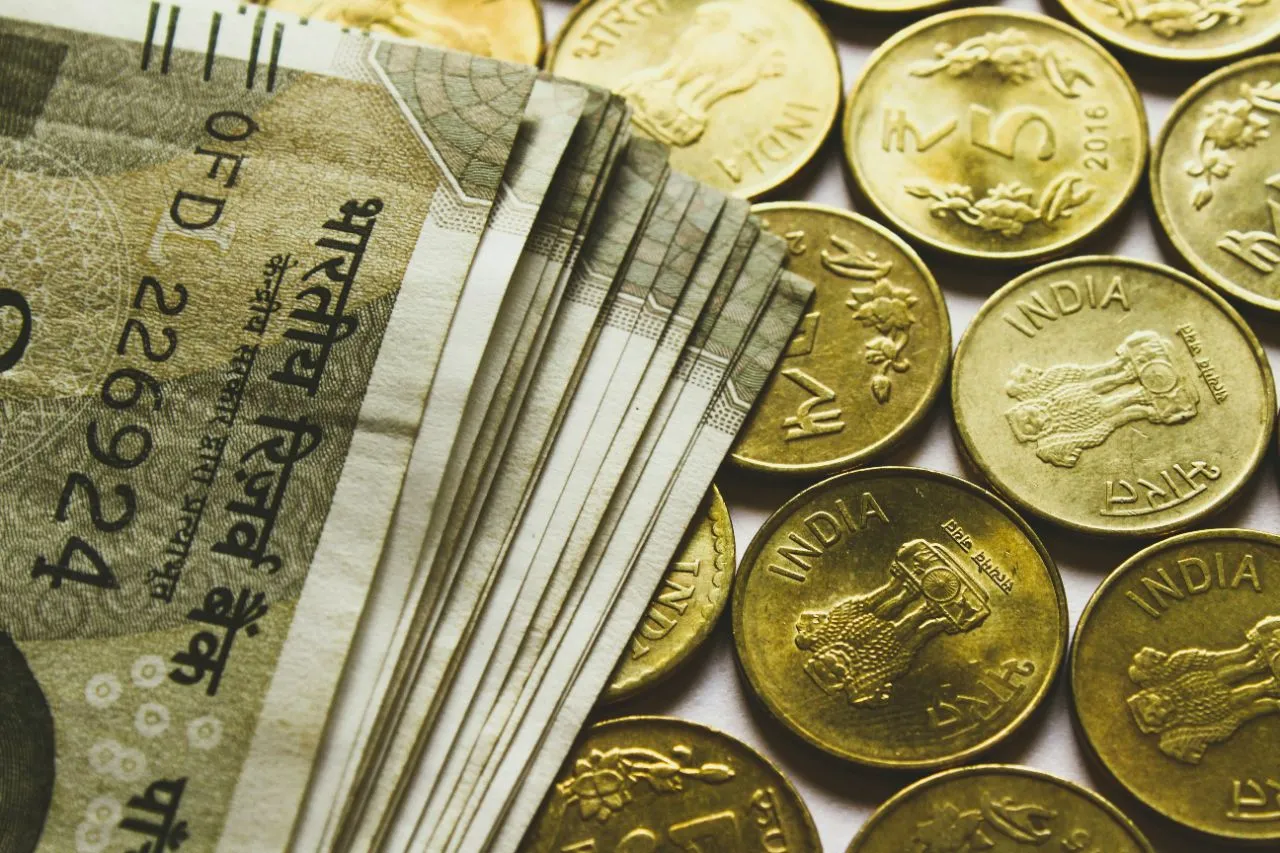
https://asset.coinness.com/en/news/c7063ff54775249cf2b6763f90586ac8.webp
Photo by rupixen on Unsplash

Purchased under Liberalized Remittance Scheme

Mudrex ensures actual transactions are processed through broker partners in the U.S., while its Indian subsidiary facilitates the spot Bitcoin ETF service. This development unfolds amidst a nuanced regulatory environment in India, where regulatory bodies such as the Reserve Bank of India (RBI) and the Finance Ministry's Intelligence Unit hold varying stances on cryptocurrency.


While the RBI remains cautious about crypto, the Finance Ministry's Intelligence Unit has registered numerous Indian crypto service providers and imposed rigorous taxation policies. Patel expanded on the alignment of spot Bitcoin ETFs with the Liberalized Remittance Scheme (LRS), a framework that simplifies overseas investments for Indian investors.


The Reserve Bank of India (RBI) prescribes a limit of $250,000 per year for overseas investments by Indians under the LRS. In line with that, Mudrex is facilitating a minimum investment of $5,000 and a maximum of $250,000. Accessing spot Bitcoin ETFs through Mudrex under the LRS framework offers a more tax-efficient avenue compared to domestic crypto exchanges in India.


Among Mudrex's clientele, comprising approximately 350 institutions, Patel reveals that around 20 have initiated the process of joining the platform for spot BTC ETF investments. With an anticipated average ticket size of $110,000, this demonstrates a growing appetite among institutional investors for exposure to Bitcoin ETFs facilitated through Mudrex's platform.


This move by Mudrex is interesting when contrasted with recent comments made by RBI governor Shaktikanta Das, who suggested that the central bank wasn’t in favor of the offering of such products in India despite the decision by the U.S. authorities to permit spot Bitcoin ETFs.


Hong Kong is working towards the approval of such products while hoping to get out in front of the competition by being the first to launch a similar Ethereum-based product. Meanwhile, the London Stock Exchange announced on March 11 that it intends to commence accepting applications for Bitcoin and Ether exchange-traded notes (ETN).

More to Read
View All
Web3 & Enterprise·

Nov 22, 2023

BIONES partners with Bithumb Burrito Wallet for integrated service development

BIONES partners with Bithumb Burrito Wallet for integrated service developmentBIONES, the developer of Bio Passport, a blockchain-based medical record and healthcare data management service, announced Wednesday that it has signed a memorandum of understanding (MOU) with Rotonda, the operator of the cryptocurrency wallet Bithumb Burrito Wallet. Burrito Wallet’s services are expected to be integrated into Bio Passport to expand accessibility and grow the blockchain ecosystem.Photo by Julia Zyablova on UnsplashRevolutionizing healthcare with blockchainBio Passport is notable for its blockchain-based features. This includes secure management and storage of personal healthcare information, built on distributed identification technology; a token reward system; and a decentralized application (dApp) service that allows users to contact their healthcare providers remotely, among other functions. The company’s ultimate goal is to provide telemedical services so that patients can receive consultations without having to visit a hospital or clinic in person.Simplifying crypto transactions across the worldLaunched in February, Burrito Wallet’s primary functions include convenient chat-based cryptocurrency transfers and crypto swapping. It is the largest multi-chain wallet in Korea that supports 11 mainnets, including Bitcoin and Ethereum, as well as over 1,000 token currencies.It was also recently launched in Latin America, accelerating its global expansion. Notably, users of the service in this region will have access to on- and off-ramp functions for buying and selling crypto.Strategic collaborationThrough this agreement, BIONES said that it would work with Rotonda in blockchain-related business endeavors and participate in various activities for joint development, such as user acquisition, blockchain ecosystem expansion and marketing projects.“Burrito Wallet has a variety of functions, from storing and managing crypto assets to transfers and swaps. Users can take advantage of increased safety and convenience while enjoying user-friendly wallet services,” BIONES said. “By integrating Burrito Wallet into the Bio Passport app, we aim to make it easier for more users to use our Web3-based dApps, and we plan to expand the blockchain ecosystem to create synergized effects through active marketing and technical cooperation.”

news
Policy & Regulation·

Jul 27, 2023

Korean Banks Impose Crypto Exchanges to Maintain a Reserve of at Least 3B KRW

Korean Banks Impose Crypto Exchanges to Maintain a Reserve of at Least 3B KRWIn a significant step towards regulating the cryptocurrency market and ensuring the safety of virtual asset users, South Korea’s Federation of Banks (KFB) has collaborated with financial authorities and virtual asset exchanges to establish the “Guidelines for the Operation of Real Name Accounts for Virtual Assets.” The KFB, as a group of banks and financial institutions, facilitates cooperation between its members and promotes the development of the financial industry.Photo by rc.xyz NFT gallery on UnsplashThe guidelines come as a response to the increasing need for stronger money laundering prevention measures and standardization in the crypto industry. The first step towards this was taken in 2018 when crypto exchanges became obliged to establish a real name account at a bank in order to provide Korean Won (KRW) deposit and withdrawal services to their customers. Currently, the exchanges that won such bank accounts are Upbit, Bithumb, Coinone, Korbit, and Gopax.However, this policy brought with it a set of challenges, including differing practices among various cryptocurrency exchanges, leading to inconveniences for users. Additionally, varying user protection measures, such as reserve requirements, caused confusion in the market.3 billion KRW in reservesTo address these issues, the new guidelines aim to clarify how banks operate cryptocurrency real-name accounts and bolster overall security. One of the key changes is the requirement for crypto exchanges to maintain a reserve of at least 3 billion KRW ($2.36 million). This reserve fund serves as a precautionary measure to address potential financial losses resulting from hacking incidents or system failures at crypto exchanges.Furthermore, the guidelines mandate banks to manage deposit and withdrawal limits by categorizing user accounts into limited and normal accounts. A limited account will not be converted to a normal account, which grants higher deposit and withdrawal limits, until the user’s transaction purpose and the source of funds are verified.Enhanced due diligenceIn addition, banks will perform annual enhanced due diligence (EDD) for individual account holders. This thorough review will encompass users’ identification, transaction purposes, and the origin of funds.User asset segregationTo safeguard users’ funds, crypto exchanges will be required to ensure that customer deposits are held separately or placed in trust. Regular due diligence at crypto exchanges will also be conducted by banks, with mandatory visits occurring at least once a month. Moreover, third-party services will be engaged to perform independent due diligence every quarter on crypto exchanges, providing an additional assessment of their operations.The official launch of these new guidelines is scheduled for January of next year. However, the requirement of depositing at least 3 billion KRW will come into effect earlier, starting in September of this year. Additionally, the implementation of guidelines for expanding deposit and withdrawal limits is anticipated in March of next year.

news
Web3 & Enterprise·

Apr 12, 2023

South Korea’s GDAC Suffers $13M hack

South Korea’s GDAC Suffers $13M hackSouth Korean cryptocurrency exchange, GDAC, has suffered a significant hacking incident that has resulted in the loss of approximately 23% of its custodial digital assets.©Pexels/PixabayThe hack occurred on Sunday when some of the exchange’s hot wallets were breached, and the stolen assets were transferred to an unidentified wallet. GDAC reported the incident on Monday and disclosed that the exchange lost over $13.1 million in Bitcoin, Ether, Wemix, and USDT, with more than $10 million in Wemix.According to blockchain analytics firm Arkham Intelligence, the hacker has since swapped the USDT for ETH, sending 461 ETH to cryptocurrency tumbler, Tornado Cash. The hacker used three separate wallets to take funds from two of the exchange’s hot wallets. Arkham has labeled the wallets as follows:GDAC Hacker 1: 0x244615D99684175d31369332039b2D84ce925EC5GDAC Hacker 2: 0x62B5eb2cb925Ce2898f9327B235b3228e7Cac1C2GDAC Hacker 3: 0x87597bDB421482190e223aCa0A4DEAd75AB0a98DGDAC deposits/withdrawals suspendedGDAC has suspended its withdrawal and deposit services and reported the incident to the Korea Internet and Security Agency and the Financial Intelligence Unit. The exchange has also requested other cryptocurrency exchanges to block incoming transactions from suspicious addresses.In a notice posted on its website, GDAC CEO Seunghwan Han apologized for the suspension of deposits/withdrawals and concern relative to the hack, adding that the firm will be working towards investor protection and safe withdrawal of funds in due course. GDAC also posted the breakdown of the digital asset quantities lost in the hack, with the hacker stealing 60.80 BTC, 350.5 ETH, 10,000 WEMIX and 220,000 USDT.Crypto hacks increasingThis hacking incident comes at a time when cryptocurrency hacks have been on the rise. According to blockchain analytics firm Chainalysis, illicit actors stole $3.8 billion worth of assets last year, the largest one-year loss in crypto’s history. In addition, other crypto platforms have also suffered notable hacks and exploits in the past 15 to 18 months. Axie Infinity’s Ronin bridge, for example, suffered a $625 million hack last year, and decentralized-finance protocol Sushi was exploited for $3.3 million on Sunday.GDAC is not the only South Korean cryptocurrency exchange to suffer a significant hacking incident. In 2018, Coinrail was hacked, resulting in the loss of approximately $40 million worth of assets, and in 2021, Upbit suffered a $50 million hack.In response to these incidents, South Korea has taken steps to tighten regulations around cryptocurrency exchanges. In March 2021, the country’s Financial Services Commission issued a revised regulation that requires cryptocurrency exchanges to maintain stricter anti-money laundering measures and report suspicious transactions.The GDAC hack is a stark reminder of the risks associated with cryptocurrency investing and the importance of implementing robust security measures. Investors and cryptocurrency exchanges should take note of this incident and ensure that they have adequate security measures in place to protect against potential hacks and exploits.

news
Loading