Top

Bithumb launches point-based ‘Benefit Zone’ to attract more crypto investors

Web3 & Enterprise·March 13, 2024, 8:17 AM

South Korea’s one of the leading crypto exchanges, Bithumb, has launched a new service dubbed Benefit Zone. Here, users can participate in the platform’s promotional events and earn in-app points, local media outlet Digital Today reported. These rewarded points can be traded for crypto assets through an in-app point shop. The event missions are available either on its mobile app or on PC. 

https://asset.coinness.com/en/news/fdf56f8739a0fe7e30b3f38473bf1ff4.webp
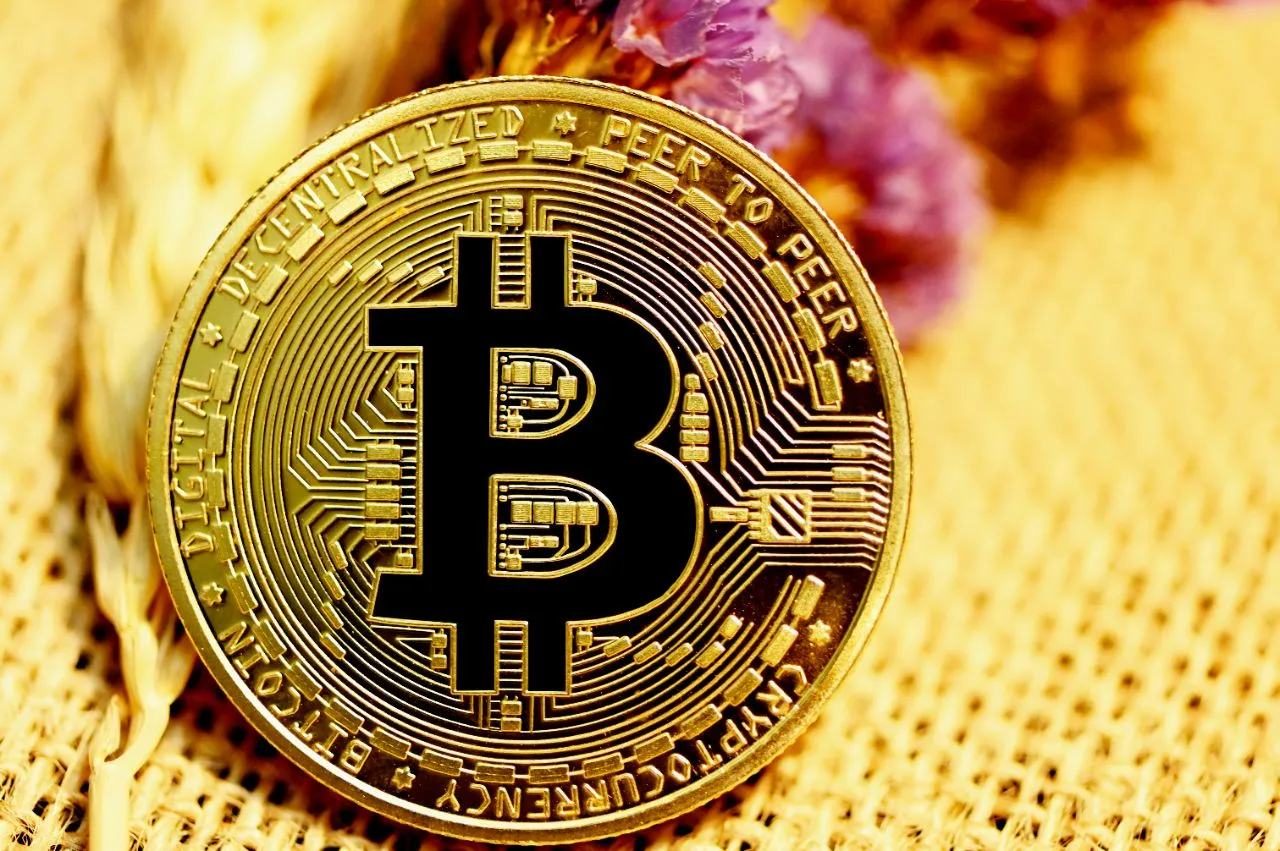
Photo by Kanchanara on Unsplash

One of these event missions involves participants predicting Bitcoin prices – BTC Up? Down? – where users can make a bet on whether Bitcoin’s price will rise or fall compared to its closing price of the previous day. The mission is available daily from 10:00 to 22:00 (KST). Winners of the bet are provided with a reward of 100 points and double that amount if they are newly signed-up users of the given month. If the Bitcoin price remains unchanged, all participants are rewarded points. 


More promotional events to come

Aside from the Benefit Zone, Bithumb is hosting another event targeting new members who joined the platform in March. Those who deposit funds in Korean won into Bithumb deposit accounts are eligible for Bithumb Cash worth around KRW 20,000, or approximately $15.

Bithumb’s Service General Manager Moon Seon-il stated that the exchange platform is conducting various promotional events to offer more perks and benefits to users, showing the company’s commitment to introducing more user-friendly services and events in the future. 


More to Read
View All
Policy & Regulation·

Nov 24, 2023

Singapore proposes additional rules to safeguard retail crypto investors

Singapore proposes additional rules to safeguard retail crypto investorsSingapore announced on Thursday its intention to implement new regulations aimed at protecting individuals by limiting their ability to trade cryptocurrencies.Photo by Daniel Welsh on UnsplashRules follow public consultation processIn a press release published to its website on Thursday, the Monetary Authority of Singapore (MAS), the city-state’s central bank and financial regulator, finalized these measures following a yearlong public consultation and review of cryptocurrency platforms, also known as digital payment token (DPT) service providers.Effective in phases from mid-2024, one key measure will prevent operators from accepting purchases through locally issued credit cards. Along the same lines, the regulator wants operators to discourage the use of margin and leverage transactions, or borrowing to facilitate trading activity. Market commentators, such as Custodia Bank Founder and CEO Caitlin Long, have long warned of the havoc that leverage has played in the crypto sector. Last year Long commented:”SO MUCH of the garbage in #crypto during this cycle was just leverage dressed up as tech innovation.”Additionally, incentives that encourage individuals to trade digital tokens will be banned. Such incentives could include providing free trading credits or digital assets as rewards during sign-ups or referrals.Curbing speculationWhile the MAS acknowledges the speculative and highly risky nature of cryptocurrency trading, it asserts that these regulations aim to help cryptocurrency operators protect customer interests. However, the MAS emphasizes that the regulations “cannot insulate customers from losses associated with the inherently speculative and highly risky nature of cryptocurrency trading.”Ho Hern Shin, the Deputy Managing Director for Financial Supervision at the MAS, urged consumers to exercise caution, stating:“We urge consumers to remain vigilant and exercise utmost caution when dealing in DPT services and to not deal with unregulated entities, including those based overseas.”The MAS expanded the scope of these measures to include all retail customers, regardless of their residency, following public feedback. This includes individuals who are not accredited investors or institutional investors. Accredited investors are those with over $1 million in net financial assets, among other criteria.Responding to crypto platform failuresThese regulatory steps come in response to the increasing access of individuals to the risky asset class, driven in part by the collapse of several unlicensed cryptocurrency companies in Singapore such as Hodlnaut and Vauld last year. The resulting calls for greater oversight prompted the MAS to initiate a feedback-gathering exercise in October, seeking input from industry players on proposed measures and other framework-establishing proposals.The bankruptcy filing of cryptocurrency group FTX the following month further accelerated the need for regulatory action globally, including in Singapore. In July, the MAS published the initial set of measures based on the consultation, requiring operators to keep customer assets in a trust and limiting their lending and “staking” of digital payment tokens.Staking, a process enabling investors to earn yields by depositing crypto assets for use in blockchain transactions, is among the activities facing restrictions. MAS Managing Director Ravi Menon criticized cryptocurrencies recently, stating that they have “failed the test of digital money,” citing poor performance as a medium of exchange or store of value and susceptibility to sharp speculative swings, leading to significant losses for many investors.

news
Policy & Regulation·

Jan 16, 2024

Positive signals in Vietnam suggesting XRP payments adoption

Recent statements by figures well placed in the crypto space and within the Vietnamese government point to increased potential for greater adoption of XRP, the payments solution token first developed by Ripple Labs.Photo by Silver Ringvee on Unsplash‘XRP will be big in Vietnam’Yasin Mobarak is a prominent figure within the XRP community. He’s also the founder and managing member of Dizer Capital, a venture capital and private equity firm that specializes in blockchain, internet of things (IoT) and clean energy projects. On Saturday, Mobarak tweeted out: "$XRP will be big in Vietnam." While Mobarak didn’t comment further, he did include a link to an X social media post published by XRP community member Kenny Nguyen, relaying the news that Vietnamese Finance Minister Ho Duc Phoc had announced that the government is currently working with the Vietnamese Central Bank with a view towards studying and possibly implementing the use of XRP for cross border payments. Central Bank's consideration of XRPVietnam's Central Bank is actively exploring the integration of XRP for cross-border payments, both domestically and internationally. This move aligns with the region's swift adoption of XRP, driven by its promise of faster, cost-effective and secure cross-border payment services. Ripple's recent collaboration with TPB Bank, a major player in Vietnam's banking sector, is set to fortify the entire XRP ecosystem. In September 2023, SBI Remit, a financial service provider and subsidiary company of Japanese financial services conglomerate SBI Group, initiated an XRP-based remittance service covering Southeast Asian countries like the Philippines, Vietnam and Indonesia. SBI has a long-standing partnership in place with Ripple aimed at launching international payment services. As part of that announcement, SBI confirmed the participation of Malaysia-based cross-border payments hub Tranglo in the project. Crypto adoption and growthDespite legal constraints, Vietnam emerged as a leader in crypto adoption in Asia in 2023 by claiming the third position in Chainalysis’ 2023 Global Crypto Adoption rankings. The region, still adapting to the global rise of cryptocurrencies, is undergoing a transformation. While centralized exchanges dominate in various countries, regional preferences vary. In the Philippines, a noteworthy 20% of the population engages with crypto sites for gaming and gambling. In contrast, Vietnam and Pakistan distinguish themselves with citizens favoring peer-to-peer exchanges. This approach allows direct trading between individuals, bypassing large corporations. A report produced by Kyros Ventures and Coin68 in conjunction with Hong Kong’s Animoca Brands last year found that 76% of Vietnamese crypto holders determine their investment choices based upon recommendations from friends and people within their peer group. The collaboration between regulatory bodies, financial institutions, government and crypto projects illustrates the growing integration of digital assets into traditional financial systems. This latest example pertaining to Vietnam and XRP certainly offers the potential of a much greater level of adoption in the region. While activity within Vietnam may be a key consideration for XRP investors and stakeholders in 2024, the potential for a Ripple initial public offering (IPO) is also something they’re likely to be watching out for. Over the course of the past six months, a Ripple IPO has been the subject of speculation. That speculative interest has likely increased following Circle, the issuer of U.S. dollar stablecoin USDC, filing for an IPO last week.  

news
Policy & Regulation·

Oct 01, 2025

South Korean police boost crypto team in fight against drug trade

South Korea’s National Police Agency will assign all 41 narcotics investigators recruited during the second half of the year to cryptocurrency-related duties, according to News1. The move follows the creation of a dedicated “Virtual Asset Analysis and Investigation Team” aimed at tackling drug offenses that use digital assets. To bolster skills, the agency plans specialist training for investigators from Sept. 29 to Oct. 2. Of the 41 recruits, 11 will staff an analysis unit and 30 will join field investigations. The analysis team, based at the Seoul Metropolitan Police Agency, will handle crypto-related drug cases nationwide, generate intelligence, and support phishing probes involving digital assets. The investigation group will be deployed to five regional headquarters (Seoul, Busan, Incheon, southern Gyeonggi, and southern Gyeongsang) to target illicit crypto payment processors and the money launderers behind them.Photo by Scott Rodgerson on UnsplashLatest crypto seizure in UK drug caseThe push mirrors trends overseas. In the U.K., Devon and Cornwall Police said detectives seized £1.3 million (about $1.76 million) in cryptocurrency from Ryan Coleman, 36, who received a 15-year sentence after admitting to supplying cocaine, ecstasy, cannabis, and ketamine via the dark web. Police indicated the seized assets are expected to fund proactive operations and community initiatives, with half allocated to HM Treasury. Cartels turn to crypto in North AmericaNorth American authorities report similar challenges. In a January 2025 post, blockchain intelligence platform TRM Labs pointed to the growing use of cryptocurrencies by Mexican drug cartels and other transnational groups. It noted that an executive order signed by President Trump earlier this year allows U.S. law enforcement to freeze crypto wallets linked to these organizations. The post also outlined laundering pipelines that rely on Chinese money brokers, who convert U.S. cash into crypto for global transfers or for buying precursor chemicals. The scale of these flows is underscored by TRM’s September 2024 research, which estimated that Chinese drug-precursor manufacturers took in over $26 million in crypto in 2023, a 600% jump from the year before. In the first four months of 2024, receipts nearly doubled year-over-year. Roughly 60% of these payments were made in Bitcoin, 30% in TRON, and 6% in Ethereum. The analysis also noted that U.S. cryptocurrency ATMs transferred more than $170,000 directly to Chinese precursor vendors in 2023, modest in scale but valuable for investigators. Freezing stablecoins and tracing Chinese linksWhile targeted sanctions and blockchain tracing have disrupted parts of the network, traffickers remain agile, TRM noted. It underscored the need for continued vigilance, technological adaptation, and cross-border coordination. Suggested steps include freezing cartel-linked stablecoins, tightening U.S. cash-to-bank laundering controls, and using legal tools like the Patriot Act to trace Chinese firms and accounts involved in laundering. South Korea’s redeployment of personnel reflects this push to align national enforcement with evolving enforcement dynamics. 

news
Loading