Top

Bitmain Planning Mining Equipment Support For Aleo Blockchain

Web3 & Enterprise·October 25, 2023, 12:30 AM

Bitmain, the leading Beijing-headquartered crypto mining rig manufacturer, is set to bolster the proof-of-work (PoW) blockchain network of Aleo with its upcoming Antminer release.

The firm announced its intentions via a social media post which was published on WeChat on Monday. The move follows Bitmain’s recent introductions of Filecoin and Kaspa mining machines and its latest series of Bitcoin miners.
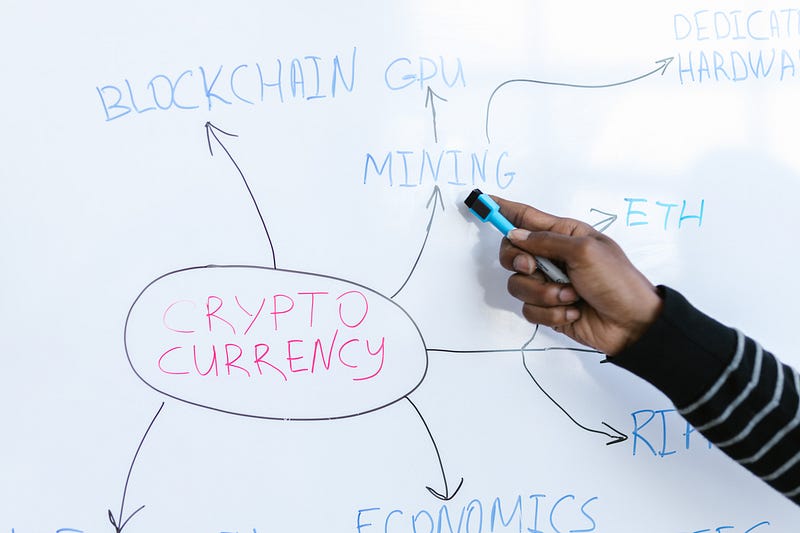
Photo by RDNE Stock project on Pexels


Enhanced privacy through zk proofs

Bitmain plans to unveil a miner compatible with the forthcoming Aleo blockchain network which is currently in testnet mode. Aleo’s PoW blockchain promises to bring enhanced privacy through zero-knowledge (zk) proofs while retaining programmability. Zk proofs represent a cryptographic advancement insofar as they can verify data while it remains encrypted and undisclosed to the verifying party. The blockchain network adopts a statically typed programming language inspired by Rust, known as Leo.

Aleo has been gaining significant attention in the crypto space, much like other venture capital-backed layer 1 blockchains, including Solana, Aptos, and NEAR, before their respective debuts. In April 2021, Aleo’s team successfully secured $28 million in a Series A funding round, with Andreessen Horowitz (a16z) leading the way.

Aleo’s journey reached new heights in February 2022 when its Series B funding round raised a substantial $200 million, pushing the project into unicorn status. This funding round was jointly led by Softbank Vision Fund 2 and Kora Management LP, with participation from a16z, Tiger Global, Sea Capital, Slow Ventures, and Samsung Next.


Latest in series of product launches

Bitmain’s announcement is part of a series of product launches in recent months. In July, the company unveiled a mining rig designed for Filecoin (FIL). The following month marked the shipment of Bitmain’s Kaspa (KAS) mining machines. Shortly after the Kaspa deliveries, Bitmain revealed plans for an August release of a Monero (XMR) mining rig. Most recently, Bitmain introduced two next-generation Bitcoin (BTC) miners from the S21 series.

The Chinese crypto mining equipment manufacturer has faced financial challenges in recent times. In April, it emerged that the company had been fined by the Chinese authorities for tax irregularities.

Earlier this month, reports suggested that the company was experiencing liquidity issues. It failed to pay some of its employees although it later resolved the matter. Reports of staff payment difficulties surfaced two weeks ago. Arising out of that episode, the company subsequently fired three employees for posting information about salary payment issues on social media.

Nevertheless, the firm managed to secure two contracts with US-based mining operations following those reports. In these contracts, Bitmain sold a combined 5.8 exahash per second (EH/s) of its new S21 Antminers to Iris Energy and Cleanspark. In September, Bitmain finalized a deal with troubled crypto miner Core Scientific that will see the firm supply the restructured company with 27,000 Bitcoin miners.

The company has been blighted by internal conflicts going back a number of years between co-founders Jihan Wu and Zhan Ketuan. Subsequently Wu went on to found Singapore-headquartered crypto cloud mining platform Bitdeer.


More to Read
View All
Policy & Regulation·

Jul 26, 2023

Netmarble’s MARBLEX Secures Whitelist Approval for MBX Token in Japan

Netmarble’s MARBLEX Secures Whitelist Approval for MBX Token in JapanSouth Korean gaming company Netmarble made an announcement today that its blockchain subsidiary, MARBLEX, has obtained whitelist approval for its governance token MBX in Japan. This marks a significant milestone for the project, opening up new opportunities for MBX’s utilization within the Japanese market.Photo by Eliobed Suarez on UnsplashCrypto listing in JapanIn Japan, crypto assets must undergo a rigorous review conducted by the Japanese Financial Services Agency (FSA) before being listed on crypto exchanges. Boasting its stability and reliability, MBX has become the first token from a Korean blockchain gaming project to be added to the Japanese whitelist of crypto assets.As part of its expansion plan, MARBLEX is in discussions with Zaif to arrange the listing of the MBX token on the Japanese crypto exchange in October.Utility expansion planMoon Jun-ki, Business Division Director of MARBLEX, expressed confidence in MBX’s competitiveness as a verified token. He highlighted MARBLEX’s strategy to introduce a token burn policy and expand the token’s utility, all aimed at establishing a sustainable and transparent ecosystem.These comments from Moon point to MARBLEX’s overhaul plan for MBX tokenomics. As a key step in this initiative, the blockchain firm burned 67% of its total 1 billion MBX distribution on July 19.

news
Policy & Regulation·

Sep 01, 2023

KISA and Ministry of Science and ICT Launch Blockchain Program for Innovation

KISA and Ministry of Science and ICT Launch Blockchain Program for InnovationThe Korea Internet and Security Agency (KISA) and the Ministry of Science and ICT announced on Thursday that it held an initiation ceremony for the 2023 Blockchain Nuridan — an annual program aimed at recruiting beta testers for blockchain services to foster an ecosystem for blockchain innovation.Photo by Shubham Dhage on UnsplashPublic participation in advancing blockchain in KoreaNow in its fifth year, Blockchain Nuridan offers hands-on experience in blockchain services in order to raise public awareness of blockchain technology and businesses and gather feedback on how to improve these services.This year, 150 citizens who have a high level of understanding of the industry, such as blockchain professionals, university students majoring in blockchain, and more, have been selected to test and experience various services from twelve different blockchain projects, then provide comments and feedback for improvement. They will also be responsible for choosing services to be beta tested next year as well as sharing their reviews of the services on their social media accounts.Fostering collaboration and engagement“Together with the Blockchain Nuridan, KISA will do our best to enhance the competitiveness of companies participating in blockchain projects and provide services that will bring convenience to people’s lives,” said Kwon Hyun-oh, Head of the Digital Industry Division at KISA.At the latest initiation ceremony, the citizens received certificates for their participation and were issued non-fungible token (NFT) badges. There was also an information session outlining the details and role of the program.

news
Policy & Regulation·

Apr 10, 2023

The Philippines Forging Crypto Reg. Path US Could Learn From

The Philippines Forging Crypto Reg. Path US Could Learn FromThe Philippines has demonstrated best practice in operating a sensible regulatory framework relative to cryptocurrency while the United States has erred by engaging in regulation via enforcement while responding after the horse has bolted in relation to a string of crypto company collapses. That’s according to Robert De Guzman, Head of Legal Compliance at Philippines-based cryptocurrency exchange Coins.ph.©Unsplash/C BuezaIn an opinion piece published in Forkcast News on Tuesday, De Guzman lays out his view as to what’s required in terms of regulation, while drawing comparisons between the application of regulation relative to crypto in both jurisdictions.The need for “sensible” regulationDe Guzman believes that the crypto industry’s recent failures are a wake-up call for the whole sector. Losses of billions of dollars affected Celsius Network, BlockFi, Voyager Digital, Genesis, and FTX, and led to Silvergate, Silicon Valley Bank (SVB), and Signature banks’ collapse in a week. To maintain consumers’ trust, he believes that sensible regulation is necessary for the crypto exchanges dealing with digital assets.The legal compliance expert cites the FTX collapse. FTX’s Sam Bankman-Fried’s empire was among the largest collapses. FTX pretended to support regulation, but its true nature was an offshore exchange for global clients. Nonetheless, some businesses act on their regulation support by acquiring licenses and complying with central bank audits in the countries of operation.State-level and industry-level regulationThe crypto industry being open to self regulation is one element of the solution, he says. Regulators must proactively protect their consumers from scams and business failures, not just clean up the mess after millions of people have been harmed.Regulatory failuresDe Guzman points the finger at reactionary regulatory action. Regulators filed charges against crypto industry founders after their collapse. Previously, they missed the problems of the largest companies. FTX, based in the Bahamas, was mismanaged, and American regulators only responded after customer issues. Regulations by enforcement, preferred in several countries, wait for failure to happen before taking action. Over-regulation through enforcement pushes platforms offshore, where Wild West-type environments thrive, with clear consequences.Regulators in some countries focus on surface-level questions, like which tokens should be considered securities, while others, like in the Philippines, prioritize execution-level details to protect consumers. Anti-money laundering measures and custody are core issues, with the G-7’s Financial Action Task Force’s Travel Rule likely to be more strictly applied. Active regulation and audits are needed to ensure financial platforms act responsibly with customer deposits. Basic rules need to be put in place through a licensing regime, followed by regulation of market practices like commingling of assets, self-dealing, and trading against customers.The Philippines sensible approach to regulationThe Coins.ph legal guru holds out his home country as exemplary in terms of its approach to regulation. The Philippines’ regulatory regime requires a virtual asset service provider (VASP) license to operate a crypto exchange, as well as additional licenses for other services. The country’s central bank, BSP, directly regulates all crypto exchanges and expands its crypto regulations to adapt to market needs. KYC processes in the Philippines require recognition of valid ID documents from across 82 provinces.Additionally, the BSP expects the industry to cooperate in quarterly audits where they share balance sheet information and disclose digital assets in hot and cold wallets. Regulators in the Philippines are proactive and knowledgeable about the crypto space, which sets a sensible framework based on customer protection.

news
Loading