Top

Turkish crypto legislation: anticipated reforms await clarity

Policy & Regulation·May 06, 2024, 11:57 PM

Turkey, a significant player in the global cryptocurrency market, has been anticipated to introduce comprehensive crypto-related legislation in 2024. Despite initial announcements suggesting an early rollout, the specifics of the anticipated regulatory framework remain pending, leaving stakeholders in anticipation.


Currently, Turkey operates with limited crypto regulations. While some measures exist, such as those imposed by the Central Bank and the Ministry of Finance’s financial intelligence unit, others remain informal, such as guidance from the Capital Markets Board. These regulations primarily focus on prohibiting certain activities and implementing anti-money laundering (AML) measures.

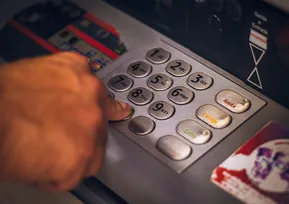
https://asset.coinness.com/en/news/f574aebd61918189d89d7b39136e9357.webp
Photo by Dima Rogachevskiy on Unsplash

Anticipated reforms and their purpose

The forthcoming legislation is expected to address various aspects of the crypto market, including licensing requirements for exchanges, investor protection measures and taxation. The aim is to align with international standards, potentially aiding Turkey in exiting the Financial Action Task Force's (FATF) "gray list." The regulations aim to enhance investor protection, especially in light of past incidents like the collapse of the Thodex exchange, while also providing a legal framework for crypto taxation.


Timing of implementation

Despite expectations for an early introduction, the exact timeline for the enactment of the crypto legislation remains uncertain. Industry observers speculate potential connections between the legislation's timing and Turkey's efforts to exit the FATF's "gray list." While some anticipate a release by mid-year, others suggest a delay until later in the year, underscoring the complexity and importance of the regulatory reforms for Turkey's crypto ecosystem.


More to Read
View All
Policy & Regulation·

Jun 20, 2023

Non-Fiat Crypto Exchanges in Korea Urge Banks for Real-Name Accounts

Non-Fiat Crypto Exchanges in Korea Urge Banks for Real-Name AccountsThe Virtual Asset Exchange Association (VXA) made an announcement today regarding its recent due diligence request sent to 12 South Korean banks, as reported by local news outlet Digital Today. These banks have not yet entered into contracts to provide real-name deposit and withdrawal accounts to cryptocurrency exchanges.VXA is a group comprised of representatives from ten non-fiat crypto trading platforms in the country. Among its members, eight exchanges–Aprobit, Probit, BTX, Foblgate, GDAC, Flata Exchange, Flybit, and High Block (previously known as Huobi Korea)–participated in the request.Photo by Eduardo Soares on UnsplashPartnerships with banksThe objective of the request is to urge the banks to consider establishing partnerships with competent non-fiat exchanges. The requesters argued that such collaborations would promote fair trading in the market and provide customers with more options. They highlighted the growing presence of the virtual asset trading sector in the capital market.Uneven crypto marketAn official from VXA emphasized the key role played by real-name bank account issuers in creating a healthy environment that addresses the existing monopoly in the Korean crypto market. According to a March report published by the Financial Services Commission, non-fiat crypto trading platforms accounted for only 3 percent of the total Korean crypto market capitalization during the second half of 2022. The remaining 97 percent was attributed to fiat-supporting crypto exchanges.The official further explained that allowing more exchanges to support the trading of the Korean won currency would contribute to shaping a free market while bolstering transparency and investor protection.Legal requirementsEarlier this month, VXA also sought fair due diligence from five Korean banks that have already formed partnerships with fiat-supporting crypto exchanges. In Korea, crypto trading platforms are required by law to obtain real-name accounts from banks in order to provide cash deposit and withdrawal services.

news
Web3 & Enterprise·

Oct 20, 2023

Komainu Partners with Copper to Enable Off-Exchange Settlements

Komainu Partners with Copper to Enable Off-Exchange SettlementsKomainu, a well-established and regulated custody service provider and subsidiary of Japanese financial services conglomerate Nomura, has recently unveiled a new partnership with Copper, a digital asset solutions firm.This collaboration offers institutional clients of Komainu a means through which they can access off-exchange settlements. At a broader level, it is another significant development in progressing digital assets infrastructure.Photo by Gerd Altmann on PixabayClearLoop network accessKomainu, which was originally launched by Nomura in conjunction with Ledger and CoinShares, will be accessing Copper’s ClearLoop network as part of this collaboration. This partnership brings a host of possibilities for institutional clients of Komainu.What makes this collaboration particularly noteworthy is its ability to merge Komainu’s regulated, on-chain custody with the advanced off-exchange settlement capabilities of ClearLoop. As the institutional adoption of digital assets continues to gain momentum, the focus on managing custody and counterparty risk has never been more critical. Recent events, such as the collapse of the crypto exchange FTX alongside a plethora of crypto lending platforms, have served as stark reminders of the significance of robust custody solutions in this space.ClearLoop network growthClearLoop, with its distinctive feature of holding assets until just before a trade execution, effectively mitigates counterparty risk by seamlessly connecting multiple exchanges within a single trading network. This innovative approach eliminates the need to transfer assets to an exchange-based wallet, streamlining and fortifying the institutional trading process.UK-based Copper has been making market in-roads with its off-exchange settlement tool which it first launched in 2020. In March crypto exchange platform Huobi signed a memorandum of understanding (MOU) with Copper with the intention of joining the ClearLoop Network. Bitstamp, the world’s oldest crypto exchange, followed in April with its intention to integrate with ClearLoop.Singapore’s Matrixport was next to join in May, followed by Seychelles-headquartered crypto exchange Bitget in August.The leaders of both companies, Nicolas Bertrand, CEO of Komainu, and Dmitry Tokarev, CEO of Copper, expressed their enthusiasm for this partnership. Bertrand highlighted the importance of diversifying counterparty risk and commended the partnership’s ability to offer clients the best of both worlds. He emphasized that by combining Copper’s proven processes and connectivity with Komainu’s on-chain, segregated, and regulated custody platform, this partnership is set to raise the industry’s standards significantly.UK regulatory approvalEarlier this month, Komainu achieved a further milestone when it received regulatory approval from the UK’s Financial Conduct Authority (FCA) to operate as a custodian wallet provider. This achievement aligns with the regulatory framework established to combat money laundering, terrorist financing, and fund transfers.In a landscape where institutions are increasingly embracing digital assets, the partnership between Komainu and Copper demonstrates that the industry is moving towards ushering in a new era of more secure, efficient, and trustworthy financial markets. With the FCA’s regulatory approval, Komainu is solidifying its attempts towards adhering to the industry’s most rigorous security and compliance standards.

news
Policy & Regulation·

Oct 12, 2023

Korean Government Explores Methods for Reporting Statistics on Crypto

Korean Government Explores Methods for Reporting Statistics on CryptoLee Hyoung-il, the head of South Korea’s national statistics agency, Statistics Korea (KOSTAT), said that the organization is currently exploring methods for reporting national statistics related to virtual assets. His comments came during an audit hearing held Thursday (local time) by the Strategy and Finance Committee of the National Assembly.Photo by Алекс Арцибашев on UnsplashCryptocurrency surveysKOSTAT initiated its study into cryptocurrencies in 2022 and subsequently conducted a second survey in April this year to better understand the distribution of cryptocurrency holdings among the Korean population.Commissioner Lee emphasized the importance of enhancing the linkage and utilization of statistical data. He mentioned that the agency would combine statistical registration records with private credit information to conduct in-depth analysis of the characteristics of household debt for all households.Supporting national and municipal policiesLee also stated that KOSTAT is dedicated to creating statistical data to support policies at both the national and municipal levels. Specifically, the agency intends to formulate statistics to assess social mobility and to conduct a survey on the costs of educating young children next year.

news
Loading