Top

Hong Kong spot BTC ETFs record second day of outflows

Markets·May 11, 2024, 3:01 AM

Hong Kong's spot Bitcoin exchange-traded funds (ETFs) encountered their second day of net outflows since their launch on April 30.


According to data published by crypto trading data platform SoSo Value, in excess of 90 BTC exited the Hong Kong ETFs on May 9. The data indicated that China Asset Management's spot Bitcoin ETF observed an outflow of 80.16 BTC, while the Bosera HashKey Bitcoin ETF recorded a lesser outflow of 10 BTC. Meanwhile, Hong Kong’s third spot Bitcoin ETF offered by Harvest Global registered zero flows.
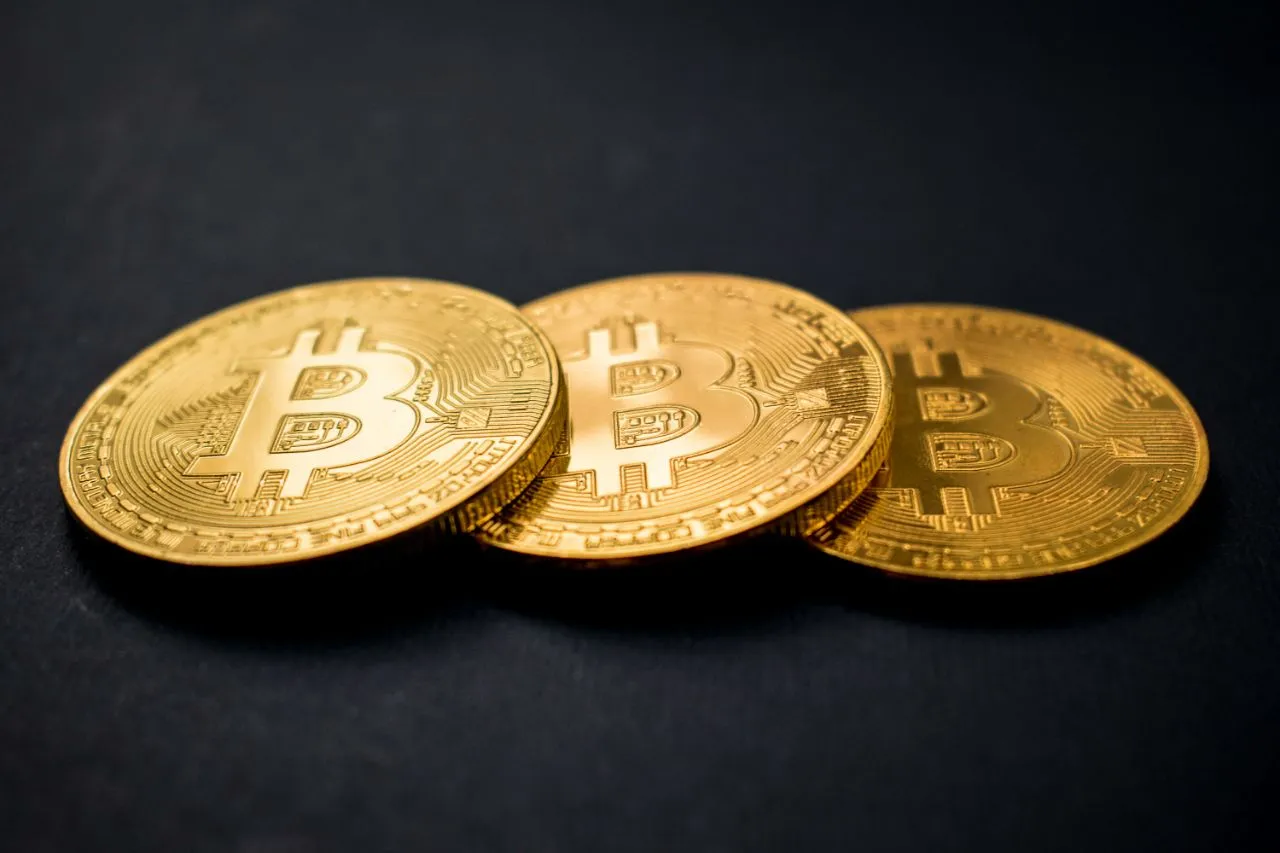
https://asset.coinness.com/en/news/3ad2dc5d1497567fb499f10199eaed3e.webp
Photo by Dmytro Demidko on Unsplash

These daily net outflows follow a trend of net inflows that had developed in the preceding days, with the three ETFs collectively witnessing net inflows of 101.6 BTC on Wednesday and 99.99 BTC on Tuesday.


As of Thursday, the three ETFs, managed by ChinaAMC, Harvest Global and Bosera with HashKey, held approximately 4,260 Bitcoin, with total net assets reaching $261.45 million, marking an increase from $247.7 million on the first day of trading.


The total trading volume for the three ETFs amounted to $2.06 million on Thursday, a decline from $2.67 million the day prior and a significant drop from the $9.74 million recorded on April 30, according to SosoValue data.


This recent outflow represents the second day of net outflows from these products since their launch on April 30.   The initial day of outflows occurred on May 6, with 75.36 BTC flowing out of the products. This marked the first setback for Hong Kong's Bitcoin ETFs following their launch on April 30.  The outflows on that occasion primarily stemmed from the China Asset Management Bitcoin ETF, while other Hong Kong-based products saw no flows.


Potential Stock Connect addition

Many commentators had expected these Hong Kong-based products to see inflows from mainland China. While that hasn’t materialized yet, Harvest Global CEO Han Tongli said that he doesn’t rule out the addition of its Bitcoin and Ether ETF products to Stock Connect. 


Shanghai Hong Kong Stock Connect is a cross border investment channel that would open access to these products to investors that ordinarily invest in and trade products and equities listed within the Shanghai Stock Exchange (SSEC). Tongli made the suggestion to the South China Morning Post (SCMP)  while attending the Bitcoin Asia conference. He suggested that such an addition is a possibility if all goes smoothly over the course of the next two years.


U.S. product outflows

In the U.S., spot Bitcoin ETFs also saw net outflows on Thursday, amounting to $11.29 million. Farside data indicates that the Grayscale Bitcoin Trust (GBTC) witnessed a substantial $43.4 million redemption, marking its largest single-day outflow since May 2, totaling $17.5 billion in outflows overall.


BlackRock’s IBIT has now accumulated $15.4 billion in total inflows. Additionally, other top-performing ETFs — Bitwise (BITB), Fidelity (FBTC) and ARK (ARKB) — also experienced inflows. In total, U.S. ETFs have witnessed $11.7 billion in cumulative net inflows.

More to Read
View All
Web3 & Enterprise·

Feb 27, 2024

OVERDARE partners with USDC issuer Circle

Korean game company Krafton’s metaverse studio OVERDARE announced yesterday via its official blog that it forged a partnership with Circle, a U.S.-based fintech firm that issues stablecoin USDC. Founded in December 2023, OVERDARE is a joint venture between Krafton and Naver Z, a subsidiary of online platform operator NAVER Corporation.  In collaboration with Circle, OVERDARE plans to jointly develop its own USDC payment and settlement system in addition to the Web3 wallet. These services are set to be adopted by its upcoming user-generated content (UGC) platform “OVERDARE,” which bears the same name as the company. Photo by Javier Martínez on Unsplash A metaverse platform for game creationThe soon-to-be-launched OVERDARE is a metaverse platform where users can create various types of games ranging from action role-playing games (RPG) to sports and shooting games. What enables users to create games with ease on this platform is “OVERDARE Studio,” a sandbox tool equipped with generative AI and Unreal Engine 5.   OVERDARE adopts the Create-to-Earn (C2E) system, which returns a portion of the sales profit to creators. The creators’ works in the form of NFTs and their transaction details are recorded onchain, strengthening the transparency of transactions and payments. OVERDARE’s self-developed Layer-1 blockchain mainnet “Settlus” will also do its part in the service operation, which would license the intellectual property (IP) of creators’ works on Web2 platforms.  Stablecoin to empower creator economy“Circle is excited to be at the forefront of this pioneering venture with OVERDARE to empower the creator economy through the provision of secure Web3 wallets and near-instant USDC payouts on a global scale. We believe this partnership will be a catalyst in shaping the future of digital entertainment, ultimately fostering an innovative Web3 environment for all,” said Jeremy Allaire, CEO and co-founder of Circle. Henry Park, CEO of OVERDARE, stated, “We’re excited to unveil our partnership with Circle, a company distinguished by its regulatory compliance and trustworthiness. Their robust support ensures that we are able to support the creator economy, and guarantee creators reliable access to their earnings.”OVERDARE is scheduled to launch a large-scale user test in the first half of this year and officially launch the service in the second half.

news
Policy & Regulation·

Feb 10, 2025

Russia preparing to launch crypto mining equipment registry

The Russian authorities are in the process of bringing in a national registry for crypto mining equipment, with registration to be a mandatory requirement for all operators. That’s according to a report published by Russia’s state-owned news agency, Tass, on Feb. 3. The registry is being established by the country’s Ministry of Energy, with Yevgeny Grabchak, deputy minister of energy, heading up the project.Photo by Egor Filin on UnsplashThe measure is being introduced as part of a raft of amendments to existing mining regulations. The objective is to improve oversight relative to crypto mining activity within the Russian Federation.  Unauthorized mining has been a concern for the Russian authorities for some time. According to the TASS report on this development, the registry would make mining without equipment registration “impossible.” Late last year, a Russian government commission moved to ban crypto mining in specific regions of the country. Management of the power grid was understood to be the main motivating force. Crypto mining activity had caused power shortages in some areas.  A seasonal ban was implemented, running from December to mid-March, with the measure to be repeated each year until 2031. In August of last year, Russian President Vladimir Putin had signed into law legislation that recognized the legitimacy of crypto mining in Russia.  Illegal mining, particularly within these restricted regions, continues to be a concern for the authorities, prompting this latest measure. Additionally, the authorities plan on establishing clear criteria in order to define crypto mining and deal with gaps in current legislation which may be enabling illegal and unregistered operators to carry out such mining activity. According to a report last month by local news media outlet Prime, Russia saw a surge in demand for Bitcoin mining equipment in Q4 2024. Crypto equipment demand increased threefold in comparison with the same quarter in 2023. Addressing the need for a crypto equipment registry, the Russian government stated: “It is important to adapt the law ‘On Mining’ to the current situation, in particular, based on practical experience, to formulate clearer criteria for classifying activities specifically as the production of digital currency.” While efforts are being made to get a firmer grasp on unauthorized mining in areas that are being impacted by power shortages, work is also being done to use crypto mining as a mechanism to fully exploit surplus energy.  Last month, it was revealed that Russian state-owned power company Rosseti is evaluating Bitcoin mining as a means through which surplus energy can be utilized in low-demand regions. In a separate development, the TASS news agency also reported on Feb. 3 that crypto miners are now in a position to report their earnings via online accounts with Russia’s Federal Taxation Service (FNS). The TASS report stated: “A new function has appeared in the personal accounts of taxpayers. With the help of the online service, users can now send information about receiving digital currency to the tax authority.” The feature appears once the registered user submits an electronic signature. 

news
Policy & Regulation·

Dec 08, 2023

Korea invites distinguished financial officials to discuss digital money

Korea invites distinguished financial officials to discuss digital moneyThe Bank of Korea (BOK), South Korea’s central bank, announced on Friday (local time) its participation in an international conference focused on the economic impact and future prospects of digital currencies. This event, co-hosted by the BOK, the Ministry of Economy and Finance (MOEF), the Financial Services Commission (FSC), and the International Monetary Fund (IMF), is scheduled to take place in Seoul on Dec. 14 and 15.The conference, titled “Digital Money: Navigating a Changing Financial Landscape,” is set to welcome high-ranking officials such as Kristalina Georgieva, the Managing Director of the IMF; Choo Kyung-ho, the Minister of the Ministry of Economy and Finance (MOEF); Rhee Chang-yong, the Governor of the Bank of Korea (BOK); and Kim So-young, the Vice Chairman of the Financial Services Commission (FSC). This event is particularly significant as it marks the first visit of IMF head Kristalina Georgieva to South Korea.Photo by pan zhen on UnsplashCrypto, stablecoins, CBDCsDuring the conference, MOEF Minister Choo and FSC Vice Chairman Kim will kick off the event with welcome remarks, followed by a keynote speech from IMF’s Managing Director, Kristalina Georgieva. Spanning over two days, the conference will include seven sessions, covering a diverse range of topics. These sessions will delve into various aspects of digital money, such as practical use cases of digital currencies, regulatory approaches to cryptocurrencies, and discussions on stablecoins and central bank digital currencies (CBDCs).The conference will feature prominent financial officials in both its opening and closing sessions. On the first day, Thursday, a distinguished panel, including IMF Chief Georgieva; Stefan Ingves, the former Governor of Sveriges Riksbank; FSC Vice Chairman Kim; David E. Rutter, the Founder of R3; and Shin Hyun-song, the Economic Adviser at the Bank of International Settlements (BIS), will discuss the opportunities and challenges facing digital money.The final session on Friday will see another group of high-level financial authorities sharing their expertise and insights. This session will include BOK Governor Rhee; Eddie Yue, the Chief Executive of the Hong Kong Monetary Authority; Serey Chea, the Governor of the National Bank of Cambodia; and Veerathai Santiprabhob, the former Governor of the Bank of Thailand. Their discussion will focus on regulatory policies surrounding digital currencies.Live-streaming scheduledThe two sessions of this conference will be accessible to a global audience as they will be live-streamed on the BOK’s official YouTube channel. This provides an opportunity for interested individuals from around the world to tune in and gain insights into the evolving landscape of digital money and its regulatory environment.

news
Loading