Top

Mt. Gox moves $9B in Bitcoin for first time in years

Markets·May 29, 2024, 8:24 AM

Wallets belonging to the defunct Japanese Bitcoin exchange Mt. Gox have transferred over 140,000 Bitcoin (BTC), valued at approximately $9 billion, to an unknown address. 


Sell-off fears

This significant movement began in the early hours of Tuesday morning in Asia, marking the first such transfer from Mt. Gox’s cold wallets in over five years. Julio Moreno, head of research at CryptoQuant, initially confirmed that 12,239 Bitcoin had been transferred from Mt. Gox over the course of an hour. A short time later, he provided an update on X, stating:

"All coins have been transferred to a new address."


Despite market disquiet, the prevailing view which subsequently emerged is that the transfer is believed to be part of a plan to distribute assets back to creditors before the October 31, 2024 deadline. Alex Thorn, head of research at Galaxy Digital, shared his perspective on X, suggesting that most of the transferred Bitcoin would likely be held by creditors rather than being sold on the open market.


Despite these reassurances, the market reacted negatively for a time. Bitcoin's price dropped by 1.4% since the start of Asian trading hours, falling to a low of $67,680 from a Monday high of over $70,000.
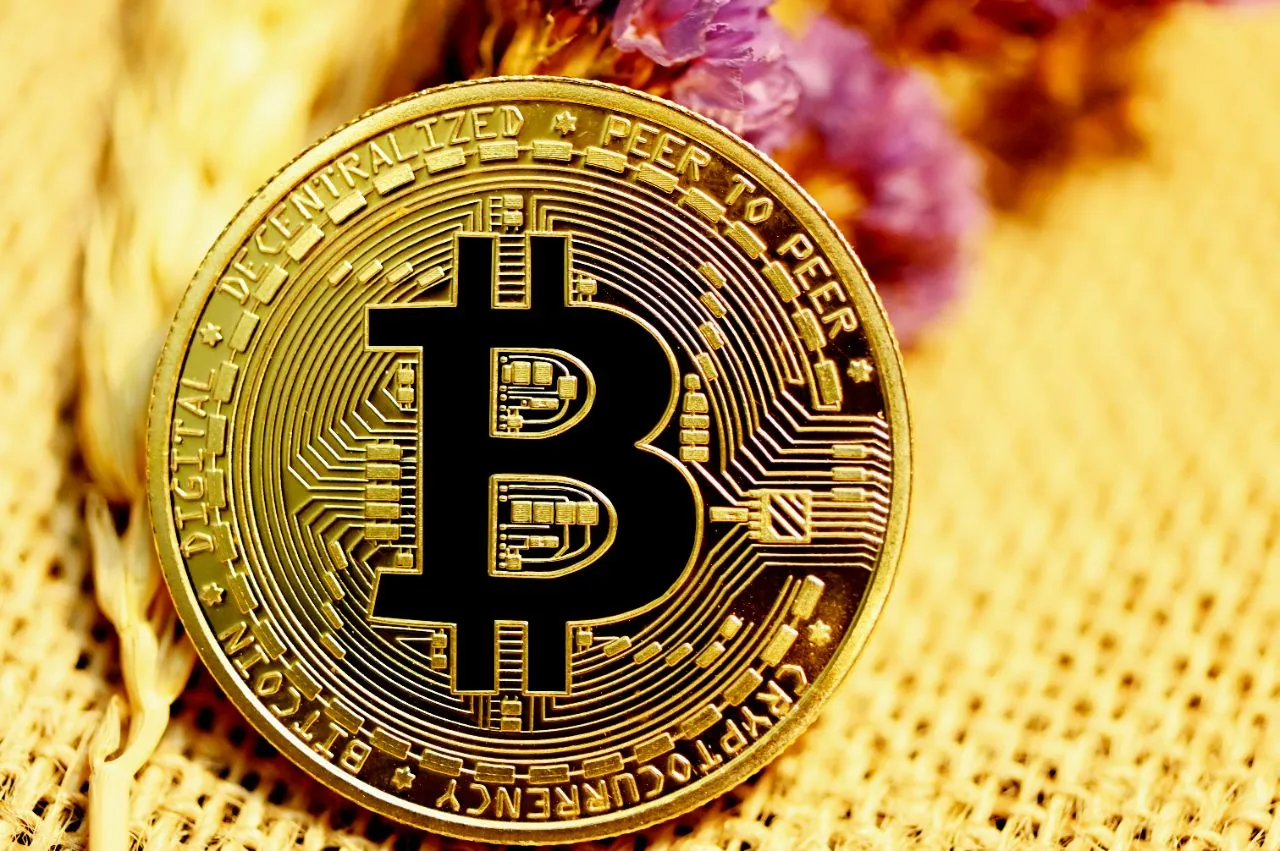
https://asset.coinness.com/en/news/1035212b80c4b1ac157dcf12797a0a1e.webp
Photo by Kanchanara on Unsplash

No Bitcoin Firesale

To quell fears of a massive Bitcoin sell-off, Mark Karpeles, the former CEO of Mt. Gox, addressed the situation on X. He stated:


“As far as I know, everything is fine with MtGox. The trustee is moving coins to a different wallet in preparation for the distribution that will likely happen this year. There is no imminent sale of bitcoins happening."


Rehabilitation trustee Nobuaki Kobayashi also issued a press release, clarifying that no sale of Bitcoin or Bitcoin Cash (BCH) had taken place. He assured that the group was "managing bitcoin and bitcoin cash in a secure manner."


Wallet activity reveals that these movements were executed through thirteen transactions. A test transaction worth $3 was made on May 20, followed by another smaller transaction of $160 early Tuesday. The remaining transactions varied from $1.2 million to $2.2 billion worth of Bitcoin. Bitinfocharts data shows that all of Mt. Gox's Bitcoin has now been consolidated into a single wallet.


A long road to repayment

In September 2023, Mt. Gox’s trustee announced that the repayment deadline had been extended by 12 months to October 31, 2024. It looked like repayments were imminent in November. However, those communications referenced cash repayments rather than the distribution of Bitcoin and Bitcoin Cash. Some cash repayments had started in December 2023. Speculation in January that the bankruptcy estate would begin the distribution of Bitcoin led to market fears of the impact that would have on the Bitcoin unit price. The extension provided a longer timeframe for preparing the distribution of assets to creditors.


Mt. Gox, launched in 2010, quickly rose to prominence, becoming the largest Bitcoin exchange by 2013, handling 70% of all Bitcoin trades worldwide. However, the exchange faced a dramatic downfall in early 2014. 


It suspended trading and stopped all withdrawals after losing hundreds of thousands of Bitcoin in a hack. Subsequently, the site went offline, and the company filed for bankruptcy protection after losing over 800,000 Bitcoins. Creditors have been waiting for repayment ever since.


More to Read
View All
Web3 & Enterprise·

Jun 09, 2023

Taiko Labs Raises Funding to Build Ethereum-Equivalent zkEVM

Taiko Labs Raises Funding to Build Ethereum-Equivalent zkEVMTaiko Labs, a crypto startup focused on scaling the Ethereum blockchain, has successfully raised a total of $22 million in two funding rounds.According to a blog article published to the startup’s website on Thursday, the first funding round, a $10 million seed raise, was led by Sequoia China and concluded in the third quarter of 2022. The second round, a recent pre-Series A round, raised $12 million and was led by Generative Ventures, according to co-founder Daniel Wang.Photo by cottonbro studio on PexelsBroad investor participationNotable investors in the two rounds include IOSG Ventures, GSR, and GGV Capital, as well as angel investors like Patricio Worthalter, the Founder of the Proof of Attendance Protocol (POAP), Tim Beiko from the Ethereum Foundation, and Anthony Sassano, Co-Founder and COO of the decentralized virtual world, The Sandbox. Taiko Labs has not disclosed its valuation.Scaling EthereumThe primary focus of Taiko Labs is to develop a scaling solution for the Ethereum blockchain that closely adheres to Ethereum’s design and ideology. The company refers to its product as a Type 1 zero-knowledge Ethereum Virtual Machine (zkEVM).Vitalik Buterin, the inventor of Ethereum, emphasized the importance of Type 1 zkEVMs for scaling the Ethereum layer 1 in a blog post. Taiko Labs aims to extend Ethereum’s capabilities by sticking to the Ethereum Virtual Machine (EVM) specification and leveraging its best properties, as explained by Matthew Finestone, co-founder of Taiko Labs.On Wednesday, Taiko Labs released its latest version, its alpha-3 testnet, Grímsvötn, marking a significant milestone on its path to a decentralized and Ethereum-equivalent ZK-EVM.Taiko backstoryThe journey towards Taiko Labs began when Daniel Wang and Matthew Finestone worked together at Loopring Foundation, a trading and payment protocol based on zk-rollup technology. Wang served as the founder and CEO of Loopring Foundation from July 2017 until November 2021, while Finestone worked as the head of business for three years.Wang initially intended to build a decentralized social network but encountered a major obstacle — the lack of infrastructure and scalability. This realization led to the birth of the idea for Taiko Labs.Wang commented on the funding milestone, stating: “We believe that we are now on the cusp of having a truly decentralized Ethereum-equivalent ZK-rollup. This is our core mission at Taiko and we are incredibly proud to partner with leading investors who share our uncompromising vision.”The successful financing rounds will enable Taiko Labs to ensure a successful launch of its mainnet. However, the company is considering raising additional capital, partly to establish an ecosystem investment fund that will attract decentralized applications (dApps) and developers to the ecosystem.In terms of organizational structure, Taiko Labs plans to follow in Ethereum’s footsteps. Wang told The Block: “We are going to quickly convert the organization into a non-profit one. Ideally, we’ll operate very similarly to the Ethereum Foundation.”These successful funding rounds provide a solid foundation for Taiko Labs’ future endeavors, and the company is aiming to make a meaningful impact on the global adoption of blockchain technology with its focus on scaling.

news
Policy & Regulation·

Apr 12, 2023

Bitmain Fined by Chinese Authorities for Tax Irregularities

Beijing-based cryptocurrency mining firm Bitmain has reportedly violated tax regulations in China, with local authorities imposing major fines. According to the reports, Bitmain has failed to pay personal income taxes amounting to $2.4 million, which has led to a penalty of $3.7 million from the Beijing Municipal Office of the State Administration of Taxation. Leading mining equipment manufacturerBitmain Technologies is one of the biggest cryptocurrency mining equipment firms in the world, established in 2013. The company is renowned for its reputation as a manufacturer of crypto mining equipment and solutions. Reports suggest that Bitmain was compelled to end its operations in China in October 2021 as a direct result of the blanket ban on cryptocurrencies that was issued by the Chinese government in September 2021.However, despite these regulatory challenges and the bear market in the cryptocurrency industry in 2022, the company has reportedly continued to achieve success in its business. Bitmain’s latest Antminer product sold out within a minute in December, despite the declining profitability of cryptocurrency mining. On Tuesday, it emerged that North American crypto miner CleanSpark had acquired 45,000 Bitmain Antminers, doubling its mining capacity.The company’s founder, Jihan Wu, established a $250 million fund in September 2022 to help the mining industry during the difficult crypto winter. Following his departure from Bitmain in 2021, Wu established Bitdeer, a new cryptocurrency mining company that served as a spin-off of Bitmain. Crypto crackdownThe fine imposed on Bitmain highlights the continued scrutiny of the crypto industry in China. The country has taken steps to crack down on the crypto market, particularly going after the mining industry. China has banned crypto mining, though it still takes place via underground operations. One major headline in recent weeks related to the fact that a former Chinese Communist Party (CCP) secretary helped a crypto mining operation operate. One China court also ruled that cryptocurrency mining affects the climate negatively.Despite the crackdown, China is making headway with its digital yuan, a central bank digital currency (CBDC). The country continues to run pilots for the CBDC, each more extensive than the last. As China’s digital yuan gains momentum, it has been speculated that the country may use it as a tool to further restrict the use of decentralized cryptocurrencies.Companies operating in China will have to keep a close eye on their operations, especially since the country does not take a favorable stance towards crypto. Hong Kong hubHowever, Hong Kong is opening up to the crypto industry and is attempting to become a crypto hub. The Hong Kong government recently launched a regulatory framework for crypto exchanges, making it easier for crypto businesses to operate within the city. This move has attracted a significant number of crypto firms to relocate to Hong Kong from mainland China.Bitmain’s $3.7 million fine imposed for violating tax regulations in China is a clear sign that the scrutiny of the crypto industry in the country is still prevalent. Despite the challenges and uncertainties, the company has continued to achieve success in its business, and the industry’s regulatory landscape is continuously evolving. Companies in China will have to ensure compliance with all relevant regulations, while also exploring opportunities to operate in crypto-friendly jurisdictions like Hong Kong.

news
Web3 & Enterprise·

Mar 31, 2025

HashKey & Bosera launch world’s first tokenized money market ETFs

HashKey Group, a Hong Kong-headquartered digital asset financial services firm, has partnered with Bosera Asset Management (International) Co., the Hong Kong subsidiary of Chinese asset management firm Bosera Asset Management, to launch the world’s first tokenized money market exchange-traded funds (ETFs). In a press release published by PR Newswire on behalf of HashKey Group on March 28, HashKey outlined that the two funds are titled “Bosera HKD Money Market ETF (Tokenised Class)” and ”Bosera USD Money Market ETF (Tokenised Class).”While the products were launched last Friday, they won’t officially go live until April. Both products have been approved by Hong Kong’s Securities and Futures Commission (SFC). Photo by Vighnesh Dudani on UnsplashArising out of Project EnsembleThis latest product offering has its origins in Project Ensemble, an initiative launched by the Hong Kong Monetary Authority (HKMA) back in March 2024. The original aim of Project Ensemble was to support the development of the tokenization market in Hong Kong. The SFC got involved later that year, collaborating with the HKMA in the launch of a regulatory sandbox aimed at advancing the tokenization of assets in various financial sectors. In October 2024 it emerged that HashKey was participating within that sandbox, with these new products arising from those efforts. The company claims that these tokenized products improve upon what’s currently on offer via traditional finance, providing greater transparency and operational efficiency, thanks to the use of blockchain technology.  HashKey Tokenisation, the tokenization arm of the firm, takes care of full-process design and execution for tokenized issuance. Subsequently, these products will be deployed on HashKey Chain, a regulatory-compliant, institutional-grade layer-2 network geared towards bridging the gap between traditional finance and Web3. On that subject, HashKey Group Chairman and CEO Dr. Xiao Feng stated:"Bringing money market ETFs on-chain through blockchain technology is a crucial step for traditional finance to embrace Web3.” Looking towards the future, Feng added that the company expects “more traditional financial institutions to actively enter the crypto finance sector through innovative tokenisation products.”Anna Liu, CEO of HashKey Tokenisation, told the South China Morning Post (SCMP) that “the biggest advantages of this product are that the underlying assets are mature and high-quality, and it fully considers security and regulatory compliance while reducing investor costs and improving overall liquidity.” Liu added that the firm hopes that this product offering is the first of many, paving the way for subsequent tokenized real-world asset (RWA) offerings. Last month, Hong Kong-based digital asset platform OSL launched a tokenized mutual fund, the ChinaAMC HKD Digital Money Market Fund. The retail tokenized fund has been issued by China Asset Management (Hong Kong), with Standard Chartered Bank (Hong Kong) acting as tokenization agent, digital platform operator and administrator. In the U.S., financial services company Fidelity Investments recently filed documents with the intention of rolling out a tokenized U.S. money market fund. BlackRock, the world’s largest asset manager, launched its tokenized money market fund, BUIDL, last year. The fund is expected to surpass a market cap of $2 billion in the coming weeks.

news
Loading
