Top

India tops global crypto adoption despite regulatory hurdles: Chainalysis report

Markets·September 12, 2024, 1:13 AM

India has once again emerged as the global leader in cryptocurrency adoption for the second consecutive year, according to the latest Chainalysis Global Crypto Adoption Index for 2024. Despite strict regulations, including high taxes and restrictions on foreign exchanges, India continues to see widespread participation in digital assets, showcasing resilience in the country’s growing cryptocurrency ecosystem.

https://asset.coinness.com/en/news/5172b689e5e32a54480196465c7ab0d4.webp
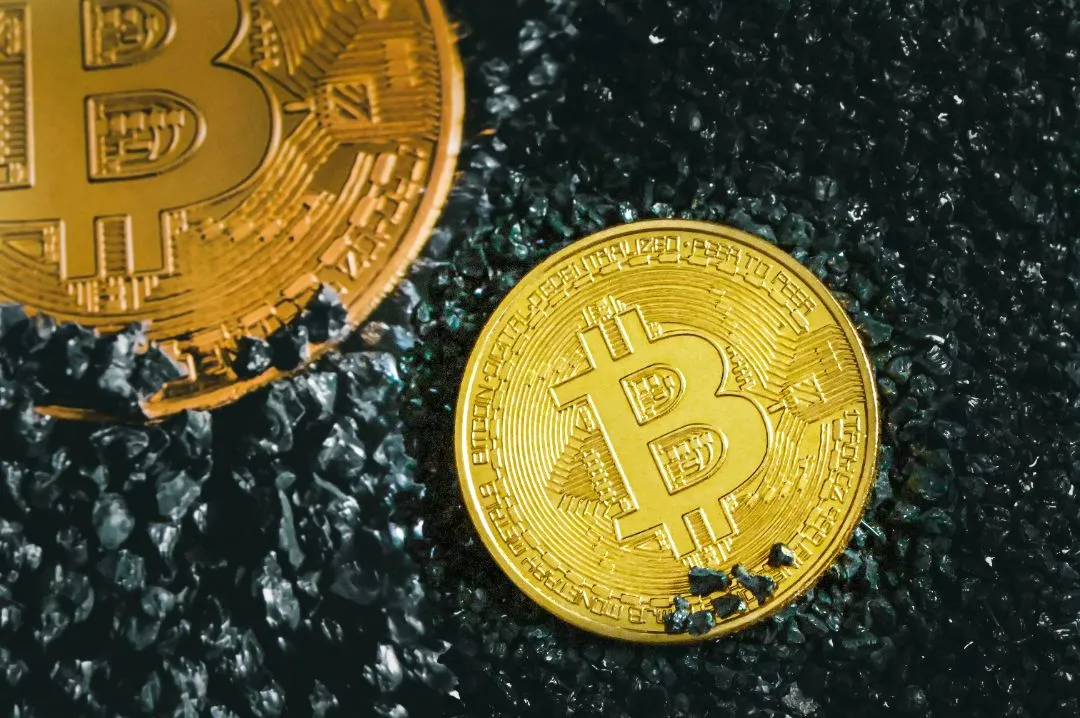
Photo by Jovyn Chamb on Unsplash

India leads in crypto adoption

India ranked first out of 151 countries in the 2024 Chainalysis report, maintaining its top position from 2023. Indian investors have continued engaging with both centralized and decentralized finance (DeFi) platforms despite regulatory challenges such as the 30% capital gains tax and a 1% tax deducted at source (TDS) on crypto transactions. This activity highlights the country's strong interest in digital assets.


India received $143 billion in crypto inflows from July 2023 to June 2024, placing second in the Central and Southern Asia and Oceania (CSAO) region behind Indonesia, which received $157 billion. CSAO as a whole accounted for $750 billion in crypto assets over the same period, making up 16.6% of global crypto activity.


Offshore exchange restrictions and workarounds

In December 2023, India’s Financial Intelligence Unit (FIU) issued show-cause notices to nine offshore cryptocurrency exchanges, including Binance, Kraken and KuCoin, for non-compliance with anti-money laundering laws. The FIU also blocked access to these platforms for Indian users. However, many investors found ways to bypass these restrictions, continuing to access these exchanges via pre-downloaded apps.


Despite these regulatory hurdles, Binance and KuCoin have since re-entered the Indian market after paying fines and complying with local laws. Binance settled a $2.25 million fine in June 2024, while KuCoin resolved a $41,000 penalty in March 2024.


Indonesia’s rapid growth in crypto

Indonesia on the other hand has emerged as the fastest-growing crypto market in the CSAO region, climbing four places to third in the global rankings. The country experienced a nearly 200% year-over-year increase in crypto activity, driven primarily by retail investors seeking alternative investments such as meme coins. Indonesia received $157.1 billion in crypto inflows during the 12-month period, reflecting strong engagement with decentralized finance services.


Broader regional trends

Seven of the top 20 countries in Chainalysis’ adoption index come from the CSAO region, including Vietnam, the Philippines and Pakistan. This growth is fueled by investment opportunities and an embrace of digital assets as new financial tools. Countries with lower purchasing power tend to have higher adoption rates, with retail-sized transactions making up a significant portion of activity.


India’s resilient crypto market

Despite regulatory challenges, India’s crypto market continues to thrive. The government's strict policies have done little to dampen enthusiasm for digital assets. Chainalysis found that investors remained committed to crypto, even as the country enforces strict tax policies. India’s high adoption rate reflects strong demand and adaptability in the market.


Future outlook for India’s crypto ecosystem

India’s leadership in crypto adoption is expected to continue. The FIU is reviewing applications from more foreign exchanges, with at least two expected to be approved by the end of 2025. As the regulatory landscape evolves, clearer guidelines could encourage further growth and innovation in the digital asset space.



More to Read
View All
Web3 & Enterprise·

Jun 26, 2023

HSBC Expands Offering to Include Crypto ETFs in Hong Kong

HSBC Expands Offering to Include Crypto ETFs in Hong KongThe Hong Kong and Shanghai Banking Corporation (HSBC), the largest bank in Hong Kong, has reportedly introduced its first cryptocurrency services for local customers.According to journalist Colin Wu’s tweet on Monday, HSBC now allows its customers to buy and sell Bitcoin-based exchange-traded funds (ETFs).Photo by Cheung Yin on UnsplashOffering three crypto ETFsHSBC’s cryptocurrency services specifically focus on the cryptocurrency ETFs listed on the Stock Exchange of Hong Kong. Currently, the exchange offers three crypto ETFs, including CSOP Bitcoin Futures ETF, CSOP Ethereum Futures ETF, and Samsung Bitcoin Futures Active ETF.The introduction of these services will provide Hong Kong users with more exposure to cryptocurrencies. As of March 2022, HSBC Hong Kong had approximately 1.7 million active mobile customers, with about 95% of all retail transactions processed online. Plenty of the customers that currently access TradFi financial services don’t touch crypto-native products. Bridging this gap and bringing crypto to a more traditional financial services client base is a major step towards mass market adoption of crypto.Educating the marketIn addition to the roll-out of cryptocurrency services, HSBC reportedly launched the Virtual Asset Investor Education Center. The initiative is designed to protect investors from cryptocurrency-related risks by requiring them to read and confirm educational materials and risk disclosures before investing.The Virtual Asset Investor Education Center is accessible through HSBC’s virtual asset-related products, such as the HSBC HK Easy Invest app, HSBC HK Mobile Banking app, and online banking.This is also a significant step forward. It’s entirely valid that while there are good actors in the crypto space, the sector has also had a lot of sharp practice that reflects badly on it. This alone may be reason enough for many conventional investors not to touch digital assets. Their trust in a platform like HSBC will allow them to include crypto within their portfolios.The second aspect to that reluctance is rooted in a misunderstanding of digital assets, the risks involved, and how risk can be minimized. HSBC has clearly identified this by taking the initiative and launching its Virtual Asset Investor Education Center.Crypto ETF growth potentialThis development follows reports in mid-June that the Hong Kong Monetary Authority (HKMA) had exerted pressure on major banks to accept crypto exchanges as clients. The central bank and regulator specifically questioned HSBC and Standard Chartered about their reluctance to onboard crypto exchanges as clients.HSBC’s move to offer cryptocurrency services in Hong Kong reflects the growing acceptance and recognition of cryptocurrencies in the financial industry. By providing access to crypto ETFs, HSBC aims to cater to the increasing demand for digital assets among its customers in the region.The crypto ETF products that are currently on offer in Hong Kong are very recent. As an example, Samsung’s Bitcoin futures ETF was launched in January. The product has already seen a lot of interest due to growing uncertainty relative to the traditional global financial system.A report produced by the Hong Kong stock exchange in April found that crypto ETFs have the potential to play a significant part in unlocking the next phase of digital asset expansion in Asia. Clearly, HSBC have taken notice with this move to further enable that potential.

news
Policy & Regulation·

Apr 10, 2023

The Philippines Forging Crypto Reg. Path US Could Learn From

The Philippines Forging Crypto Reg. Path US Could Learn FromThe Philippines has demonstrated best practice in operating a sensible regulatory framework relative to cryptocurrency while the United States has erred by engaging in regulation via enforcement while responding after the horse has bolted in relation to a string of crypto company collapses. That’s according to Robert De Guzman, Head of Legal Compliance at Philippines-based cryptocurrency exchange Coins.ph.©Unsplash/C BuezaIn an opinion piece published in Forkcast News on Tuesday, De Guzman lays out his view as to what’s required in terms of regulation, while drawing comparisons between the application of regulation relative to crypto in both jurisdictions.The need for “sensible” regulationDe Guzman believes that the crypto industry’s recent failures are a wake-up call for the whole sector. Losses of billions of dollars affected Celsius Network, BlockFi, Voyager Digital, Genesis, and FTX, and led to Silvergate, Silicon Valley Bank (SVB), and Signature banks’ collapse in a week. To maintain consumers’ trust, he believes that sensible regulation is necessary for the crypto exchanges dealing with digital assets.The legal compliance expert cites the FTX collapse. FTX’s Sam Bankman-Fried’s empire was among the largest collapses. FTX pretended to support regulation, but its true nature was an offshore exchange for global clients. Nonetheless, some businesses act on their regulation support by acquiring licenses and complying with central bank audits in the countries of operation.State-level and industry-level regulationThe crypto industry being open to self regulation is one element of the solution, he says. Regulators must proactively protect their consumers from scams and business failures, not just clean up the mess after millions of people have been harmed.Regulatory failuresDe Guzman points the finger at reactionary regulatory action. Regulators filed charges against crypto industry founders after their collapse. Previously, they missed the problems of the largest companies. FTX, based in the Bahamas, was mismanaged, and American regulators only responded after customer issues. Regulations by enforcement, preferred in several countries, wait for failure to happen before taking action. Over-regulation through enforcement pushes platforms offshore, where Wild West-type environments thrive, with clear consequences.Regulators in some countries focus on surface-level questions, like which tokens should be considered securities, while others, like in the Philippines, prioritize execution-level details to protect consumers. Anti-money laundering measures and custody are core issues, with the G-7’s Financial Action Task Force’s Travel Rule likely to be more strictly applied. Active regulation and audits are needed to ensure financial platforms act responsibly with customer deposits. Basic rules need to be put in place through a licensing regime, followed by regulation of market practices like commingling of assets, self-dealing, and trading against customers.The Philippines sensible approach to regulationThe Coins.ph legal guru holds out his home country as exemplary in terms of its approach to regulation. The Philippines’ regulatory regime requires a virtual asset service provider (VASP) license to operate a crypto exchange, as well as additional licenses for other services. The country’s central bank, BSP, directly regulates all crypto exchanges and expands its crypto regulations to adapt to market needs. KYC processes in the Philippines require recognition of valid ID documents from across 82 provinces.Additionally, the BSP expects the industry to cooperate in quarterly audits where they share balance sheet information and disclose digital assets in hot and cold wallets. Regulators in the Philippines are proactive and knowledgeable about the crypto space, which sets a sensible framework based on customer protection.

news
Web3 & Enterprise·

Oct 16, 2024

Solv raises $11M to bring overall funding to $25M

Singapore-based decentralized liquidity infrastructure and on-chain funding project Solv Protocol has raised $11 million in funding, bringing its total inward investment to date to $25 million. Taking to Medium on Oct. 14, the project outlined that in this most recent funding round, $11 million had been raised with participation from Nomura subsidiary Laser Digital, Blockchain Capital, gumi Cryptos Capital, OKX Ventures and CMT Digital. Angel investors associated with a number of blockchain projects such as Berachain, Ethena, Mezo, Core, GMX, Curve and EigenLayer also invested. $200 million valuationThis latest funding round was carried out while placing a $200 million valuation on the company. Going forward, the company plans to roll out additional products over the course of the next few weeks, with a view towards further expanding yield opportunities for Bitcoin (BTC) holders. Solv Protocol’s leading product, SolvBTC, was introduced to the market last March as the world’s first-ever yield-bearing Bitcoin. The protocol initially ran on Ethereum, Arbitrum, BNB Chain and Merlin Chain. Since launch, it has been expanded across 10 blockchain networks. The product claims to enable BTC holders to earn additional BTC all the while maintaining Bitcoin exposure. In excess of 20,000 BTC is currently staked within Solv Protocol’s SolvBTC product, accounting for around $1.3 billion in value. The project claims to have 400,000 users, with 80% of their assets allocated to yield-generating strategies.Photo by Traxer on UnsplashMarket opportunitySolv Protocol’s Co-Founder Ryan Chow spoke to the market opportunity that Bitcoin staking presents. Chow stated: “With a market cap of over $1.2 trillion, Bitcoin holds immense growth potential, Bitcoin’s staking rate is currently much lower than Ethereum’s 28%. If we can unlock similar levels of participation, Bitcoin staking could unlock $330 billion in value. We believe BTCFi will drive the next wave of innovation in the blockchain space.” In a series of X posts published on Oct. 14, the project pointed out that the lack of a native yield, limited integrations with core DeFi primitives and fragmented BTC liquidity relative to DeFi are key challenges for Bitcoin, which Solv claims to have resolved. Staking Abstraction Layer (SAL)Earlier this month, Solv, alongside BNB Chain, Ceffu and Chainlink, launched the Staking Abstraction Layer (SAL). SAL is a framework which has been designed to simplify and standardize Bitcoin staking across a number of blockchain networks. Key SAL features include cross-chain compatibility with Ethereum Virtual Machine (EVM) compatible chains, support for liquidity staking tokens (LSTs) and a focus on security and custody with the involvement of crypto custodian Ceffu deemed to ensure that the user’s underlying Bitcoin is secure. Solv has launched three LSTs. These include SolvBTC.BBN, an LST representing staked Bitcoin on Babylon, another Bitcoin staking platform. SolvBTC.ENA is a trading strategy involving Ethena’s basis trading. Meanwhile, SolvBTC.CORE focuses on providing Bitcoin liquidity on CoreDAO, a Bitcoin-aligned EVM-compatible layer-1 blockchain. Bitcoin staking is a more recent development which appears to have considerable potential. As Solv pointed out on X, Ethereum has a 28% staking rate right now, with Bitcoin not coming anywhere close to this figure. Staking platforms on Ethereum like Lido has $23.7 billion in total value locked (TVL) while EigenLayer weighs in at $10.9 billion.

news
Loading