Top

The Philippines Forging Crypto Reg. Path US Could Learn From

Policy & Regulation·April 10, 2023, 3:32 AM

The Philippines has demonstrated best practice in operating a sensible regulatory framework relative to cryptocurrency while the United States has erred by engaging in regulation via enforcement while responding after the horse has bolted in relation to a string of crypto company collapses. That’s according to Robert De Guzman, Head of Legal Compliance at Philippines-based cryptocurrency exchange Coins.ph.
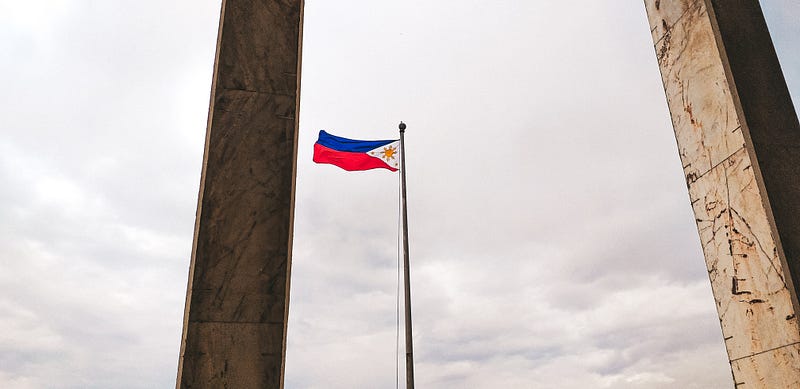
©Unsplash/C Bueza

In an opinion piece published in Forkcast News on Tuesday, De Guzman lays out his view as to what’s required in terms of regulation, while drawing comparisons between the application of regulation relative to crypto in both jurisdictions.


The need for “sensible” regulation

De Guzman believes that the crypto industry’s recent failures are a wake-up call for the whole sector. Losses of billions of dollars affected Celsius Network, BlockFi, Voyager Digital, Genesis, and FTX, and led to Silvergate, Silicon Valley Bank (SVB), and Signature banks’ collapse in a week. To maintain consumers’ trust, he believes that sensible regulation is necessary for the crypto exchanges dealing with digital assets.

The legal compliance expert cites the FTX collapse. FTX’s Sam Bankman-Fried’s empire was among the largest collapses. FTX pretended to support regulation, but its true nature was an offshore exchange for global clients. Nonetheless, some businesses act on their regulation support by acquiring licenses and complying with central bank audits in the countries of operation.


State-level and industry-level regulation

The crypto industry being open to self regulation is one element of the solution, he says. Regulators must proactively protect their consumers from scams and business failures, not just clean up the mess after millions of people have been harmed.


Regulatory failures

De Guzman points the finger at reactionary regulatory action. Regulators filed charges against crypto industry founders after their collapse. Previously, they missed the problems of the largest companies. FTX, based in the Bahamas, was mismanaged, and American regulators only responded after customer issues. Regulations by enforcement, preferred in several countries, wait for failure to happen before taking action. Over-regulation through enforcement pushes platforms offshore, where Wild West-type environments thrive, with clear consequences.

Regulators in some countries focus on surface-level questions, like which tokens should be considered securities, while others, like in the Philippines, prioritize execution-level details to protect consumers. Anti-money laundering measures and custody are core issues, with the G-7’s Financial Action Task Force’s Travel Rule likely to be more strictly applied. Active regulation and audits are needed to ensure financial platforms act responsibly with customer deposits. Basic rules need to be put in place through a licensing regime, followed by regulation of market practices like commingling of assets, self-dealing, and trading against customers.


The Philippines sensible approach to regulation

The Coins.ph legal guru holds out his home country as exemplary in terms of its approach to regulation. The Philippines’ regulatory regime requires a virtual asset service provider (VASP) license to operate a crypto exchange, as well as additional licenses for other services. The country’s central bank, BSP, directly regulates all crypto exchanges and expands its crypto regulations to adapt to market needs. KYC processes in the Philippines require recognition of valid ID documents from across 82 provinces.

Additionally, the BSP expects the industry to cooperate in quarterly audits where they share balance sheet information and disclose digital assets in hot and cold wallets. Regulators in the Philippines are proactive and knowledgeable about the crypto space, which sets a sensible framework based on customer protection.


More to Read
View All
Policy & Regulation·

Apr 10, 2023

Korean Financial Watchdog to Penalize Bankers Involved in Illegal Foreign Remittances

Korean Financial Watchdog to Penalize Bankers Involved in Illegal Foreign RemittancesThe Korean Financial Supervisory Service (FSS) recently completed an investigation into illegal foreign remittances of approximately 16 trillion KRW (~$12,137,718,400) that involved numerous bankers.©Unsplash/Paul FiedlerExploiting the kimchi premiumThe investigation, launched by the Korean financial watchdog last June, found that these lawbreakers sent funds to China, Hong Kong, and other overseas destinations through Korean crypto exchanges, trading firms, and bank branches with an aim of making money through arbitrage by taking the advantage of the kimchi premium, a term used to describe that the higher prices of crypto assets in Korean exchanges compared to their foreign counterparts.Bankers neglecting the KYC ruleSome of these bankers participated in the crime by raising the remittance cap and applying favorable exchange rates to trading companies that had no previous transaction records with banks. By law, bankers in Korea are obligated to follow the “know your customer” rule. It was found that 12 domestic banks and one futures firm were involved in this incident.The FSS has decided to impose strict penalties on these financial institutions, considering they were exploited for money laundering purposes. These entities are likely to have some of their services suspended, with the employees involved being fired.Accountability of top bankersOne key point to watch out for is whether the FSS would be able to hold executives accountable. Some say penalizing top bankers is not easy, given that it has to be proven that the employees’ criminal activities were due to a lack of executives’ internal control.The financial regulator recently announced plans to revise the law governing banks’ governance, but it is expected that such a bill would take some time to pass through the National Assembly.Through a revision of the law, the financial authority aims to hold top executives at financial institutions more responsible for serious financial accidents. It looks forward to bestowing top bankers with the obligation of comprehensive internal control management and making them accountable as an overall manager only in case of critical financial accidents. The term “top executives” in the bill will encompass not only bank presidents but also chairpersons of financial holding companies. More specific revision plans are expected to be revealed by the end of this month.

news
Web3 & Enterprise·

Jul 10, 2023

DeSpread and Crypto Times Team Up to Bridge Blockchain Information Gap in Korea and Japan

DeSpread and Crypto Times Team Up to Bridge Blockchain Information Gap in Korea and JapanDeSpread, a Web3 consulting company based in South Korea, has announced a partnership with Crypto Times, a blockchain media outlet owned by Japanese digital media company Rokubunnoni. The goal of this collaboration is to tackle information asymmetry in the blockchain industries of both countries and expand their global blockchain services.Photo by Ketut Subiyanto on PexelsLeveraging respective expertiseDeSpread intends to leverage its knowledge of the Korean and global markets to assist international Web3 projects in entering the Japanese market, with the ultimate aim of integrating the global Web3 industry into Japan. Recognizing Crypto Times’ thorough understanding of the Japanese market and its culture, DeSpread has chosen to collaborate with them.Sharing market analysesAs part of their partnership, both companies will localize their research reports on a regular basis to share market analyses of the two countries. To start off, Crypto Times will distribute a paper related to the latest trends of zkSync for free. Subsequent papers will be published on DeSpread’s Scribe channel on the digital content monetization platform Access Protocol.The collaboration also aims to provide a comprehensive consulting and marketing solution for Web3 projects seeking to expand into Korea, Japan, and other markets.Creating synergiesRokubunnoni Co-founder Shingo Arai expressed his belief that the cooperation between DeSpread and Crypto Times will create synergies within the Korean and Japanese blockchain industries. Arai expects that the combined expertise of the two firms will offer valuable insights into the Web3 market, delivering new perspectives. He also highlighted that Crypto Times’ research platform, CT Analysis, will improve its services and provide a greater variety of content to its readers, further contributing to the Japanese crypto market.Echoing similar sentiments, Earl Cho, the head of the Japanese business division at DeSpread, emphasized that the collaboration will facilitate the entry of more Web3 companies from Korea and abroad into the Japanese market. Cho expressed hope that this opportunity would unite the efforts of both countries, enabling the East Asian market to better connect with the global market in the Web3 sphere and positioning East Asia as a leader in the crypto industry.

news
Policy & Regulation·

4 days ago

Asia diverges on crypto policy as China clamps down, neighbors embrace

A regulatory divide regarding the digital asset sector is emerging across Asia. While China is moving to strengthen its prohibition on cryptocurrency operations to ensure financial stability, Central Asian states such as Kazakhstan and Turkmenistan are increasingly formalizing frameworks to integrate and regulate the industry.Photo by Road Ahead on UnsplashChina cites renewed crypto speculationAccording to Reuters, the People’s Bank of China (PBOC) has reaffirmed its prohibition on business activities involving digital assets, citing a renewed wave of speculation as a complication in managing financial risks. At a Nov. 28 meeting on crypto regulation, the central bank reiterated that commercial activity involving cryptocurrencies remains illegal. PBOC officials stated that enforcement against unlawful financial operations tied to cryptocurrencies would be intensified to safeguard economic stability. The central bank identified stablecoins as a primary concern, noting that they fail to meet customer identification standards and broader anti-money laundering (AML) requirements. Officials warned that these assets could create vulnerabilities to fraud, money laundering, and unregulated cross-border capital flows. Kazakhstan mulls $300M crypto moveIn contrast to Beijing’s elevated oversight, Kazakhstan is exploring the integration of digital assets into its financial reserves. According to BeInCrypto, National Bank Chairman Timur Suleimenov indicated on Nov. 28 that the monetary authority is considering an allocation of up to $300 million into crypto assets. However, he clarified that deploying the full amount is unlikely. Suleimenov explained that any potential investment would be drawn from the central bank’s gold and foreign-exchange reserves rather than the National Fund. He added that the National Bank of Kazakhstan intends to wait for market conditions to stabilize, citing recent volatility as a factor making the timing of such an investment uncertain. The latest development comes after Bloomberg Law reported last month that the country is preparing to launch a crypto reserve fund valued between $500 million and $1 billion as early as next year. This proposed fund is expected to target exchange-traded products and industry-related companies rather than direct crypto purchases, with capital potentially sourced from repatriated assets and mining proceeds. Simultaneously, the government is advancing physical infrastructure for the sector. In May, President Kassym-Jomart Tokayev unveiled plans for a "CryptoCity" pilot zone in the Alatau development north of Almaty. Under this government-approved sandbox program, authorities are testing blockchain-based tools for taxation, investment, and decentralized identity systems, with the aim of positioning Kazakhstan as a regional hub for innovation. Turkmenistan to launch licensing rulesFurther deepening the regional trend toward adoption, Turkmenistan has moved to establish a formal legal infrastructure for the sector.  Another Reuters report said the country recently passed legislation to legalize and regulate digital assets, which President Serdar Berdymukhamedov has signed into law. Scheduled to take effect on Jan. 1, the legislation creates a licensing regime for crypto exchanges and mining operations. A government spokesperson said the law spells out the legal and economic status of virtual assets, covering their creation, storage, circulation, and other functions, and aims to boost digitalization and draw foreign investment. Despite their differing approaches, the three countries reflect a shared recognition of digital assets’ growing relevance in global finance. China continues to view cryptocurrencies as a source of systemic risk, while Kazakhstan and Turkmenistan are testing whether regulation, licensing, and selective investment can deliver economic gains without compromising stability. Together, these diverging paths underscore a broader debate over whether engagement or exclusion offers a more resilient long-term model. 

news
Loading