Top

Japan’s Remixpoint adding $3.2M in Bitcoin to its treasury

Web3 & Enterprise·November 29, 2024, 8:29 AM

Remixpoint, a publicly listed Japanese company that develops and sells energy management systems, is adding 500 million yen, around $3.2 million, in Bitcoin to its corporate treasury.
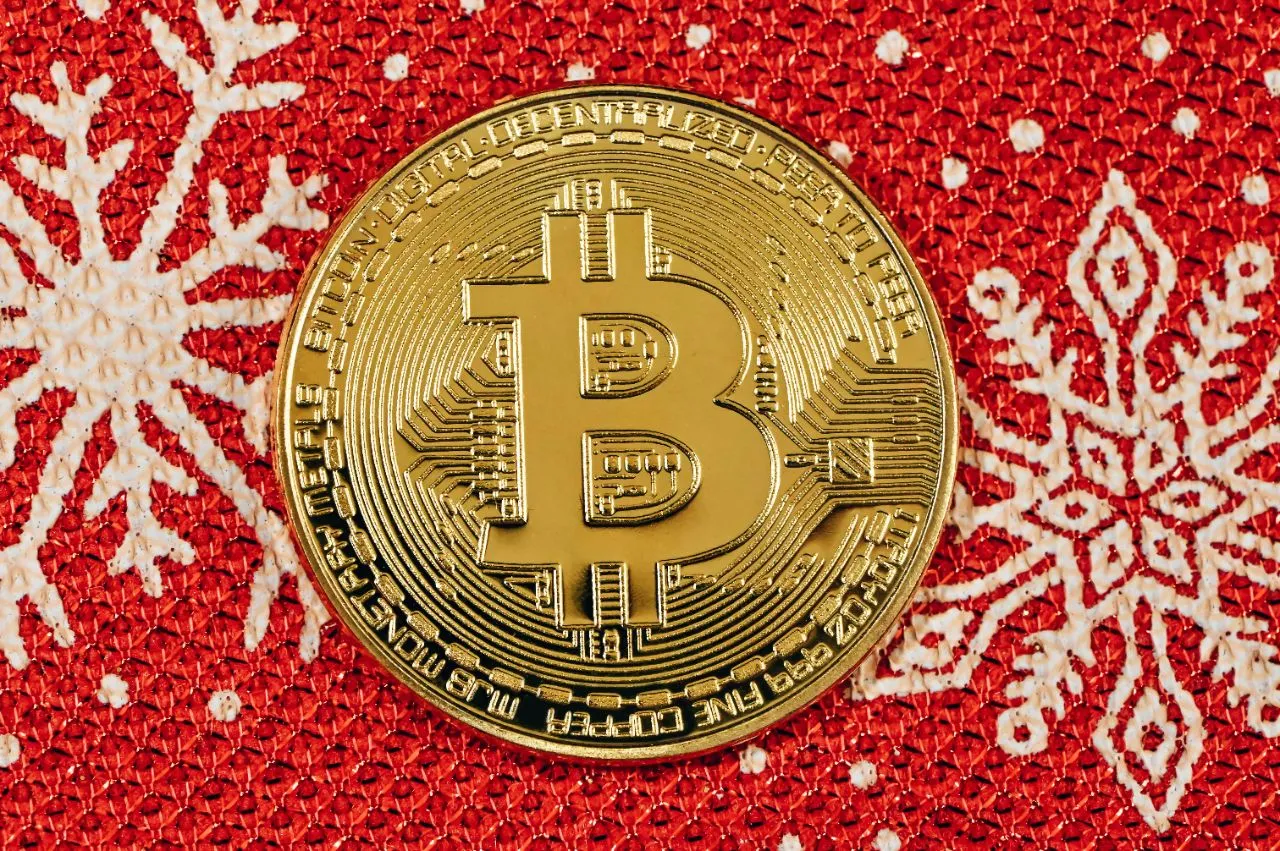
https://asset.coinness.com/en/news/e27ffa9a3747c984c0c63bf3b4c8b1ab.webp
Photo by Traxer on Unsplash

Bitcoin buying motivations

The firm outlined details of the planned purchase in a statement published on Nov. 25, following a meeting of the firm’s board of directors. Remixpoint justified its decision to purchase Bitcoin in light of widespread uptake by institutional investors of spot Bitcoin exchange-traded funds (ETFs) which were launched in the United States in January.


It suggested that there had been an uptick in holdings of the leading digital asset by corporations. Remixpoint cited the increase in the Bitcoin unit price since the Bitcoin halving event earlier this year, together with a positive outlook for the asset following a presidential election victory by Donald Trump in the U.S., as motives for the company to come to the decision to purchase Bitcoin.


However, this is not its first crypto purchase. The company first started to buy Bitcoin, as well as five other cryptocurrencies, in September, suggesting at the time that digital assets provided the company with a mechanism to diversify its holdings at a time when the value and buying power of the Japanese yen had been weakening. 


Including its latest announcement, Remixpoint has worked up total crypto investments to the value of 3.5 billion yen. According to Japanese crypto media publication Coinpost, on Nov. 20 the company held 215.76 Bitcoin (BTC), 9,674 Solana (SOL) and 228 Ether (ETH), with the remainder of its crypto portfolio consisting of Avalanche (AVAX), Dogecoin (DOGE) and Ripple (XRP).


Unrealized gains

The company is understood to be sitting on unrealized gains of approximately 810 million yen, given that Bitcoin has appreciated in value by around 68% since the beginning of September, with all other cryptocurrencies within Remixpoint’s portfolio having experienced unit price increases during that period also. 


In its latest statement, the company advised that while gains and losses related to its crypto portfolio had not been included within its latest consolidated earnings forecast, it will disclose any significant crypto gain or loss in the future if its deemed to have had a significant impact upon consolidated results.


Bitcoin corporate treasury adoption

The Japanese energy management firm has taken its place in a growing list of corporations that have put Bitcoin on their balance sheets in recent weeks. Earlier this week, it emerged that North American video streaming and cloud platform Rumble had made plans to allocate $20 million in excess cash reserves to the acquisition of Bitcoin.


The following day, Jiva Technologies, a Canadian Securities Exchange (CSX)-listed online wellness community builder, approved a $1 million Bitcoin purchase for its treasury.


Last week U.S. e-commerce platform LQR House approved the purchase of $1 million in Bitcoin as part of its treasury management strategy. Furthermore, the company committed to retaining up to $10 million in Bitcoin from crypto payments received via its CWSpirits.com platform. In the same week, AI-powered education company Genius Group established a Bitcoin treasury, acquiring 110 Bitcoin.


In the same week, Cosmos Health, a Nasdaq-listed pharmaceutical company, announced that it was adding Bitcoin and Ethereum to its balance sheet as hedges against inflation and as a diversification mechanism.

More to Read
View All
Policy & Regulation·

Sep 26, 2025

Kazakhstan pilots tenge-backed stablecoin with Solana and Mastercard

Kazakhstan’s central bank has begun testing a stablecoin tied to the national currency, advancing a broader plan to modernize the country’s financial infrastructure. According to Cointelegraph, the pilot, run inside the National Bank of Kazakhstan’s Digital Assets Regulatory Sandbox, introduces Evo, a token with the ticker KZTE that is built on Solana and backed by the tenge. Intebix, a local crypto exchange, and Eurasian Bank are issuing KZTE. Mastercard is preparing connections that would link the token with major stablecoin issuers worldwide. The central bank is not minting the asset, but it is providing the regulatory framework that allows the token to be created and tested. Intebix founder Talgat Dossanov said the initiative is the first instance of the monetary authority directly engaging in the process of stablecoin issuance.Photo by GuerrillaBuzz on UnsplashBuilding a national crypto ecosystemEarly use cases focus on practical payments and on-ramps. The token is designed to widen the bridge between crypto and fiat, support conversions on exchanges, and enable spending through crypto cards. Officials described the pilot as a building block in a national digital asset ecosystem that aims to nurture new financial tools and deepen the local market. The program aligns with guidance from President Kassym Jomart Tokayev, who in a Sept.  8 address urged faster development of a comprehensive digital asset environment. He called for a new banking law to boost competition, attract new players, strengthen fintech, and ease the circulation of digital assets. Tokayev also cited progress with the digital tenge, already in use to finance projects through the sovereign wealth fund, and proposed creating a state crypto fund under the central bank’s investment arm to launch a strategic reserve of promising tokens. USD stablecoin accepted as regulatory feesRegulatory efforts extend beyond the sandbox. On Sept. 4, the Astana Financial Services Authority (AFSA), the independent regulator of the Astana International Financial Centre (AIFC), launched a pilot that lets companies based at the center pay regulatory fees using stablecoins backed by the U.S. dollar. More than 4,000 firms from over 80 countries are registered at the AIFC, and Bybit was the first to sign a multilateral memorandum of understanding with the regulator. Under the fee pilot, licensed Digital Asset Service Providers may join as Providers and act as agents for payers who choose to settle obligations to the regulator with stablecoins. AFSA chief executive Evgeniya Bogdanova said the initiative is meant to position the financial center as a hub for digital finance and to keep pace with global trends in stablecoin adoption. Together, the sandbox stablecoin, the digital tenge rollout, and the AIFC payments pilot signal a coordinated push to make digital assets a larger part of Kazakhstan’s financial system. Authorities are testing how these tools can operate within clear rules, with an eye to drawing investment and keeping the country connected to fast-moving changes in global finance. 

news
Markets·

Nov 28, 2025

Upbit suffers $30M breach, overshadowing Dunamu’s major merger announcement

South Korea’s largest crypto exchange, Upbit, suffered a security breach on Nov. 27 that resulted in the theft of 44.5 billion won ($30.4 million) in digital assets, all taken from the exchange’s hot wallets. The stolen tokens were all Solana-based, and Upbit CEO Oh Kyoung-suk said in a statement that no users will incur losses, as the company will cover the full amount with its own reserves.Photo by FlyD on UnsplashHot-wallet breach hits 24 tokensThe exchange said in a statement that the compromised tokens were transferred to an unknown external wallet at around 7:42 p.m. UTC on Nov. 26. In total, 24 cryptocurrencies were affected, all within the Solana ecosystem. The stolen assets ranged from infrastructure tokens such as Solana (SOL) to staking-related assets like Jito (JTO), along with the stablecoin USD Coin (USDC) and memecoins including Bonk (BONK), Moodeng (MOODENG), and Official Trump (TRUMP). According to Oh, the breach was followed by an emergency security review of the affected networks and wallets. He added that all remaining assets were moved to cold storage to prevent further unauthorized transfers. Oh also said the exchange is working to trace the stolen assets and block on-chain movements wherever possible, noting that Solayer (LAYER) tokens worth 2.3 billion won ($1.6 million) have already been frozen. Upbit is also reaching out to relevant projects and institutions for assistance. This marks Upbit’s second theft case. The first took place on Nov. 27, 2019, exactly six years ago to the day, according to News1. Authorities focus on Lazarus’ involvementFinancial authorities are investigating the incident, and North Korea’s Lazarus Group is being treated as the leading suspect, the Maeil Business Newspaper reported. Lazarus is also believed to have been behind the 58 billion won ($40 million) worth of Ethereum (ETH) stolen from Upbit in 2019. A government official told the paper that the latest breach did not appear to stem from a server intrusion but may have involved a stolen administrator account, allowing the attackers to impersonate internal staff and move assets—similar to the method used in the 2019 case. Security analysts echoed that assessment. One investigator said the stolen funds moved through exchange wallets before being mixed, a pattern often linked to Lazarus. He added that mixers, which are prohibited in Financial Action Task Force (FATF)-member jurisdictions, make tracing difficult and that attackers typically route assets through countries outside that framework, further pointing to North Korea. Following the incident, Upbit suspended deposits and withdrawals for all assets and said services will resume once security is fully verified. The halt has also affected trading dynamics on the exchange, with CryptoQuant CEO Ki Young Ju noting that retail investors are fueling altcoin spikes as arbitrage bots remain offline. Dunamu, Naver set $6.8B growth planThe security crisis struck at a particularly sensitive moment for Upbit’s operator, Dunamu, overshadowing what was intended to be a celebratory corporate milestone. On that same day, Dunamu, Naver, and Naver Financial held a joint press conference to outline their global expansion strategy. Dunamu brings its blockchain and crypto infrastructure, Naver contributes its position as Korea’s dominant search engine, and Naver Financial adds its payment platform serving 34 million users. The event came after reports that Naver Financial and Dunamu had approved a merger plan through a comprehensive share swap, with the ratio set at 2.54 to 1. The three companies said they will combine their respective strengths to invest 10 trillion won ($6.8 billion) over the next five years in building an ecosystem centered on Web3 and artificial intelligence (AI).During the press conference, Naver CEO Choi Soo-yeon said no decisions have been made on a Nasdaq listing for the newly combined Naver Financial–Dunamu entity or on whether it might eventually merge with Naver, according to TechM. She said dual listings remain a matter requiring national consensus. Choi also noted that while Naver Financial is a Naver subsidiary, Dunamu is the larger partner, and a later merger between the combined entity and Naver is unlikely.

news
Policy & Regulation·

Jun 20, 2023

Korean Travel Rule Solution Provider CODE to Start Charging Monthly Fees Next Month

Korean Travel Rule Solution Provider CODE to Start Charging Monthly Fees Next MonthSouth Korean Travel Rule solution provider CODE, established in collaboration between local cryptocurrency exchanges Bithumb, Coinone, and Korbit, has announced the implementation of service fees starting next month. Up until this point, CODE has been offering its services free of charge. The notification regarding this change was issued to CODE’s clientele, which includes various crypto exchanges, as reported by local tech news outlet Digital Daily.Photo by Kenny Eliason on UnsplashTravel RuleThe Travel Rule regulations, set by the Financial Action Task Force (FATF) and Korean legislation, require Korean trading platforms to maintain records of both the sender and recipient’s information for virtual asset transactions exceeding 1 million KRW ($780). The FATF, founded in 1989 and headquartered in Paris, is an international financial watchdog dedicated to combating global money laundering and terrorist financing.More competitive priceCODE is anticipated to offer its services at a more competitive price of 1 million KRW ($780), in contrast to its rival VerifyVASP (VV), which introduced a monthly fee of $1,800 earlier this year. VV is a product developed by Lambda 256, a subsidiary of Dunamu, the parent company of Upbit, the largest cryptocurrency exchange in Korea.CODE launched its services in March last year. Among its crypto exchange members are Gopax, Cashierest, and Coredax. In December, the Travel Rule solution provider appointed Lee Sung-mi, the former compliance officer of Bithumb, as its new CEO, and since then, it has accelerated its monetization plan. Prior to Lee’s appointment, Coinone CEO Cha Myung-hun had been at the helm of CODE.

news
Loading