Top

MANTRA snags VASP license in Dubai

Web3 & Enterprise·February 26, 2025, 7:29 AM

MANTRA, a real-world asset (RWA) tokenization blockchain project headquartered in Hong Kong, has announced that it has been awarded a Virtual Asset Service Provider (VASP) license in the United Arab Emirates (UAE).


In a community update published on its website, MANTRA co-founder and CEO John Patrick Mullin outlined that Dubai regulator, the Virtual Assets Regulatory Authority (VARA), had awarded the company the VASP license, meaning that the project is now entitled to act as a virtual asset exchange. Additionally, it is authorized to offer broker-dealer and investment management services. 
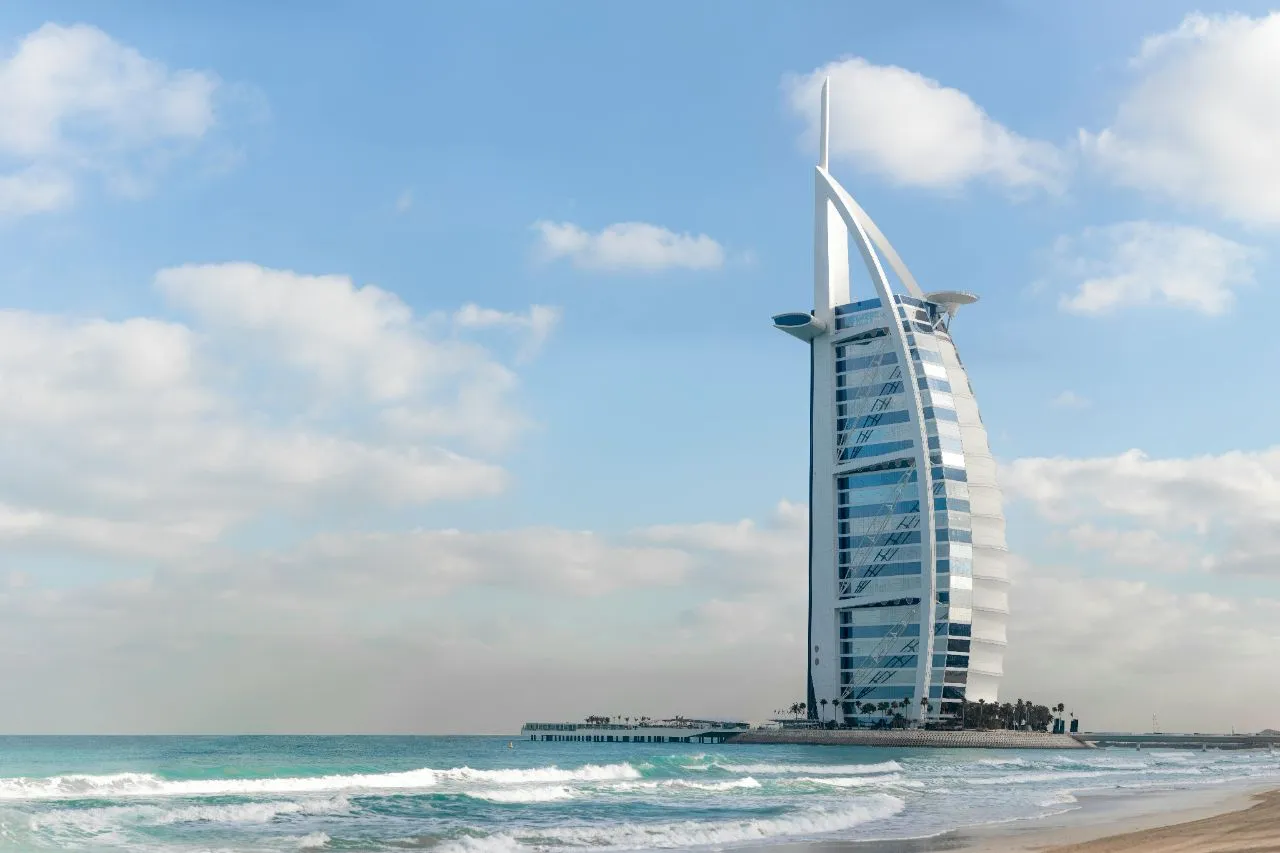
https://asset.coinness.com/en/news/ca74e2751c8cb77b33b4b9de8fa660c0.webp
Photo by Aleksandar Pasaric on Pexels

Mullin claimed that the milestone is huge for both the company and the broader industry. He stated:

”It’s a major step in our objective to bring the world’s financial ecosystem onchain by being the preferred ledger of record for real world assets. It’s a validation of our purpose,which is to provide developers and institutions with a purpose-built RWA Layer 1 Blockchain, that’s capable of adhering to real world regulatory requirements.”


Scaling operations in the Middle East

The project sees the license as a key step in broadening MANTRA’s global footprint and scaling its operations within the Middle East. Mullin outlined that both the UAE and broader Middle East & North Africa (MENA) have become “a progressive global hub and thriving ecosystem for Web3 and virtual assets owing to their regulatory initiatives and frameworks.” Mullin added that the license not only strengthens the project’s presence regionally, but it also “positions us internationally to deliver unique DeFi products that bridge the gap between decentralized finance and traditional finance.” 


Shorooq Partners, a Dubai-based venture capital firm and investor in the project, commented on the announcement on X. It said that the license would mean that MANTRA would set a new standard for compliant and secure DeFi solutions. It emphasized the importance of regulatory compliance in enabling institutional DeFi adoption on a global scale.


The venture capital firm was the lead investor in an $11 million funding round completed by MANTRA in March 2024. At the time, Shane Shin, founding partner at Shorooq, said that he liked MANTRA’s strategic focus on key markets like Hong Kong and Dubai, adding that the investment implicated a future where digital and traditional assets converge seamlessly.


The project intends to launch DeFi-based products that have been formulated to meet investors' needs by combining the benefits of DeFi with the structure and security provided by conventional finance.


Token's price performance

The OM token is a utility and governance token within the MANTRA decentralized autonomous organization (DAO). It was the best-performing layer-1 token as of Feb. 17. At the time of writing, it’s trading at $7.59, according to CoinMarketCap data. The project also announced a $1 billion deal with UAE-based DAMAC Group, a property development company, last month.

More to Read
View All
Web3 & Enterprise·

Jul 22, 2023

McDonald’s Enters the Metaverse with McNuggets Land

McDonald’s Enters the Metaverse with McNuggets LandMcDonald’s, the global fast food giant, has ventured into the metaverse realm to commemorate the 40th anniversary of its beloved Chicken McNuggets, with McDonald’s Hong Kong spearheading the immersive experience.McNuggets Land, a virtual world situated within the metaverse platform The Sandbox, now welcomes enthusiastic players to embark on a quirky adventure filled with pixelated McNugget characters like “Coach McNugget” and his trusty sidekick, “Assistant Coach McNugget.” The project team behind The Sandbox laid out the details of the initiative via a blog post published on Medium on Thursday.In this novel virtual landscape, players are tasked with the mission of locating four McDonald’s signs, sparking excitement for the rewards that await. Among the enticing incentives are a shared prize pool of 100,000 SAND (approximately $44,000) and enigmatic “mystery boxes.” SAND is the native token of The Sandbox virtual world.Photo by Jas Rolyn on UnsplashCustomer engagement challengesThe CEO of The Sandbox, Sebastien Borget, expressed enthusiasm for collaborating with global brands like McDonald’s to drive mass adoption of the metaverse. The Sandbox has already witnessed the presence of several prominent brands like Adidas, Atari, and Gucci within its virtual world. Comparatively, it might be challenging for McNuggets Land to carve out a distinctive niche to capture enduring user engagement.Numerous brands have attempted whimsical activations within metaverses over the years, from Snapple’s virtual bodega to Taco Bell’s metaverse wedding. However, the fundamental question arises when virtual food or drink experiences are introduced — what’s the point when you can’t taste or smell in the metaverse?Bear market & regulatory setbacksMoreover, the timing of brands entering the Web3 space may be subject to scrutiny. With venture capital money flowing toward AI and Disney closing its metaverse ventures, the Web3 landscape faces a more challenging environment in 2023. The ongoing crypto winter and Securities and Exchange Commission (SEC) crackdowns have somewhat dampened the allure of these activations, making it imperative for brands like McDonald’s to offer a compelling “why” for their Web3 endeavors.Starbucks has been experimenting with its Web3 loyalty program called “Odyssey,” which ties in seamlessly with its customers’ real-world coffee purchases. This strategic approach aligns virtual rewards and digital collectibles with existing behaviors, giving added value to their regular activities. In doing so, Starbucks fosters a sense of community and gains valuable feedback for future improvements, ensuring a more sustainable and purposeful presence in the Web3 space.Formative developmentWhile McDonald’s McNuggets Land in the metaverse may excite some players with its whimsical charm, the bigger question remains: What value does it truly bring to the participants, and how does it ensure a lasting impact? In a rapidly evolving Web3 landscape, success lies in offering meaningful experiences that align with users’ existing behaviors and aspirations, fostering genuine engagement and community-building.We are still at a stage where consideration of the metaverse in terms of what it is, what it represents, and what experience users can or should glean from it is still formative. It remains to be seen as to the extent to which Mcdonald's will be successful in this instance, but it is encouraging that they’re brave enough to get involved with the innovation.

news
Web3 & Enterprise·

Jul 19, 2024

UK startups move to expand into Asia

It has emerged in recent days that two London-headquartered crypto startups have taken steps towards expanding into the Asian market.  Funding to fuel Asian expansion Haruko, an investment platform that focuses on digital assets based in London, announced that it has raised $6 million in a Series A funding round, with the intention of using the funds to propel the company’s expansion into Southeast Asia. The round was led by White Star Capital and MMC Ventures. Combined with an initial seed round which was completed in March 2022, Haruko has raised a total of $16 million. The firm provided details of its latest funding earlier this week through a press release published via AccessWire.  Having been founded in 2021, the startup has established its operations in Europe and North America, adding in excess of 50 institutions to its client list. Those clients include hedge funds, family offices, market makers, over-the-counter (OTC) trading desks, digital asset custodians and prime brokerages. Haruko co-founder and CEO Shamyl Malik spoke to the firm’s global expansion plans, stating: "We're looking forward to continuing our global expansion, investing in exceptionally talented team members to support us in our goal of building out an industry-leading, end-to-end solution for digital assets and the future of the finance industry. We will continue to invest singularly in this mission, ensuring the quality of our products and services is at the forefront of all our activity." The company has already established a base in Singapore through which it can expand further into the Asian market. Asia is clearly becoming an attractive destination for crypto startups as alongside Haruko, a recent announcement from crypto custodian Copper outlined that it has acquired a trading license in Hong Kong.Photo by CHUTTERSNAP on UnsplashTCSP license in Hong Kong The London-headquartered digital assets custodian outlined on X that it has secured a Trust or Company Service Provider (TCSP) license in Hong Kong from the autonomous Chinese territory’s Companies Registry. Copper CEO Dmitry Tokarev commented on the milestone, stating: "Combining trust and efficiency is fundamental to our institution-first approach. This license approval in a key global hub only strengthens that unique offer, highlighting Copper’s compliance with Hong Kong’s regulatory frameworks and standards." The license enables the company in extending the offering of its digital asset custody services to clients in Hong Kong. Tokarev added that the license approval “is a key development in Copper’s expansion in the Asia Pacific market.” Back in 2020, the firm raised $8 million in funding in a Series A round that, as with Haruko, featured MMC Ventures, with a view towards expanding into Asia and North America. Towards the end of last year, the firm launched a settlement network for institutional crypto traders. Its ClearLoop network enables clients to manage collateral and settle trades across a number of exchanges while increasing capital efficiency and mitigating counterparty risk. Over the course of the month of June, the company claimed to have processed 13.1 million trades via ClearLoop, accounting for a notional traded volume of $109.9 billion. 17,500 individual risk clearing settlements were finalized, with 3,600 inter-exchange movements. The company had a number of significant announcements last month, including a collaboration with the Sui layer-1 blockchain and the integration of the ClearLoop system by global crypto exchange, Kraken.

news
Markets·

Oct 08, 2025

Korean crypto faces retail slowdown while eyeing institutional future

South Korea’s retail-heavy crypto market is losing momentum ahead of broader institutional access to trading. Data from the Financial Services Commission (FSC) and the Financial Supervisory Service (FSS), cited by Financial News, shows that in the first half of 2025, Korean-won balances held at the country’s five licensed fiat-to-crypto exchanges sank 42% to 6.2 trillion won ($4.4 billion), signaling less dry powder waiting on the sidelines for trading. Only five platforms are permitted to support won-denominated trading, and the drop in parked cash underscores a broader cooling. By the end of June, the Korean crypto market cap stood at 95.1 trillion won ($67.5 billion), down 14% from six months earlier. The global market also contracted, but the decline was more modest at about 7% over the same period.Photo by Y K on UnsplashTrading slows but retail base expandsTrading activity eased as well. Average daily volumes across 25 domestic virtual asset service providers (VASPs) fell 12% to 6.4 trillion won ($4.5 billion) in the first half. Paradoxically, the number of market participants climbed 11% to 107.7 million across those platforms. Nearly all were individuals, as only 220 were institutions, reflecting long-standing restrictions on institutional won trading. That retail skew has consequences. Data submitted by the FSS to a lawmaker, cited by Digital Asset, reveals that the top 10% of users by trading volume accounted for roughly 90% of activity at the five fiat on-ramps. By exchange, the figures were Upbit (89.36%), Bithumb (97.97%), Coinone (97.54%), Korbit (97.52%), and Gopax (97.95%).  Market lawyers warn that this concentration heightens manipulation risk. Lee Seung-min of SEUM Law Firm said volatility may be more pronounced in tokens listed only on Korean venues, but added that deeper institutional participation could help reduce such volatility and support longer market cycles.  Regulators are inching in that direction. Earlier this year, authorities allowed universities and nonprofits to sell their crypto holdings. By year-end, the FSC plans to let about 3,500 publicly traded companies and professional investors, excluding financial institutions, open accounts at the licensed platforms for trading. Exchanges pour cash into promotionsWhile regulators are preparing to bring more institutional players into the fold, exchanges continue their long-running effort to draw in retail users. Another Digital Asset report noted that from 2023 through July 2025, promotional outlays by the five won-enabled platforms totaled 190.3 billion won ($135 million). Bithumb alone accounted for 180.3 billion won ($128 million), far outspending Upbit (9.4 billion won), Coinone (1.7 billion won), Korbit (1.6 billion won), and Gopax (100 million won). The gap suggests Bithumb, which ranks second in market share, has pursued a particularly aggressive approach to expand its customer base. Taken together, the numbers depict a subdued market, with less capital parked on exchanges and lighter trading while activity remains heavily concentrated among a small cohort of traders. Even so, the expanding base of individual accounts represents a bright spot, underscoring the market’s continued dependence on retail investors. If policymakers follow through on opening the door to a broader set of corporate and professional players later this year, Korea’s crypto landscape could shift from retail-driven fluctuations toward steadier, institution-supported flows. 

news
Loading