Top

RWA tokenization gaining momentum in UAE

Web3 & Enterprise·March 05, 2025, 7:45 AM

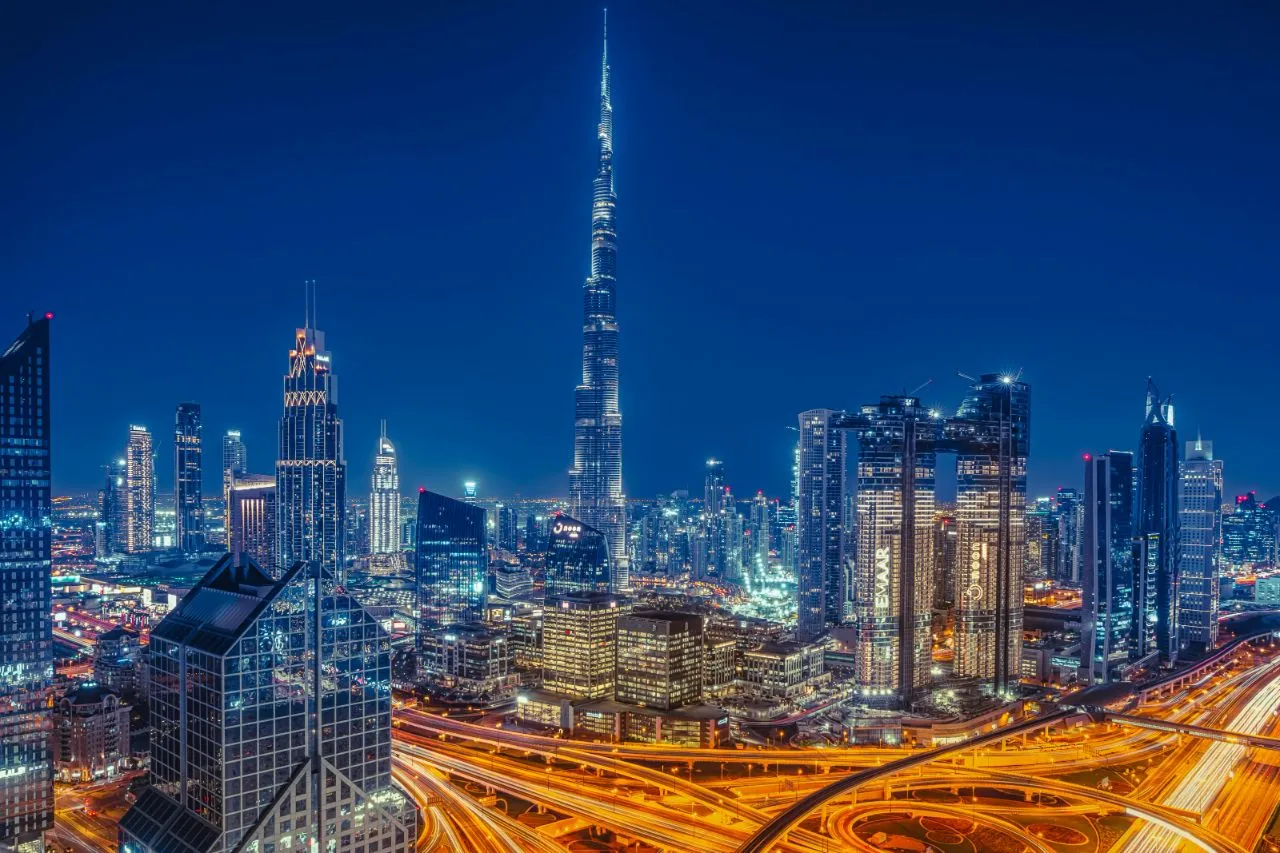
Real-world asset (RWA) tokenization, the conversion of tangible assets into digital tokens on a blockchain, is gaining momentum in the United Arab Emirates (UAE), according to a number of industry professionals working in the sector.
https://asset.coinness.com/en/news/05acbbf08bc21470144d3aa560feef1c.webp
Photo by ZQ Lee on Unsplash

‘No lack of demand’

Scott Thiel, founder and CEO of Dubai-based RWA token marketplace Tokinvest, recently outlined to Cointelegraph that the company is experiencing “no lack of demand” for tokenized RWAs. Thiel believes that demand is coming from real estate developers and large property owners who “want to explore how they can use this as an alternate means of financing or selling their property.”


The Tokinvest CEO explained that a booming property market in the UAE,  particularly in Dubai, is contributing towards RWA tokenization demand in the country. He stated:


“What’s the hottest real estate market in the world? Well, I think today it’s probably Dubai, and so, everyone would like to own a piece of this or to get access to the economic benefits of being a participant in that marketplace.”


RWA tokenization deals

Last year, Liv Digital Bank, a subsidiary of Emirates NBD, the second largest bank in the UAE, signed a deal with RWA tokenization firm Ctrl Alt. At the time, Ctrl Alt CEO Matt Ong pointed to a Boston Consulting Group report that forecast a $16 trillion business opportunity with regard to the tokenization of global illiquid assets by 2030.


In January, MANTRA, a layer-1 blockchain project that focuses on RWA tokenization, inked a $1 billion deal with Damac Group, an Emirati property development company. The objective of the partnership is to bring transparency, security and access to Damac’s assets using blockchain.


Last month, MANTRA was awarded a Virtual Asset Service Provider (VASP) license by Dubai regulator, the Virtual Assets Regulatory Authority (VARA). MANTRA Co-founder and CEO John Patrick Mullin described the license award as “a validation of our purpose, which is to provide developers and institutions with a purpose-built RWA Layer 1 Blockchain, that’s capable of adhering to real world regulatory requirements.”


Proactive regulation

It is with regard to regulation that many in the industry feel that the UAE is gaining the upper hand where RWA tokenization is concerned. Tokeninvest’s Thiel provided input into the formulation of VARA’s regulatory framework back in 2022. He said that the authorities there have taken a proactive approach to digital asset regulation, with a genuine desire to provide regulatory clarity.


The Tokinvest CEO was sufficiently impressed by the regulatory approach in the UAE to relocate the company there. Back in January, VARA awarded the company a trading license for its tokenized RWA marketplace.


Commenting following the announcement of the Damac deal, MANTRA’s Mullin complimented the UAE authorities on their business-friendly approach:


“The UAE has shown time and again that they can lead the crypto industry in innovation.” 


In a series of posts on X recently, Julian Kwan, CEO and founder of IXS, a Singapore-based institutional bridge for tokenized RWAs, cited the Damac tokenized real estate deal while asserting that tokenized “RWAs are no longer a concept — they are an unstoppable financial movement.”
More to Read
View All
Policy & Regulation·

Sep 19, 2023

Rising Cryptocurrency Arbitrage Transactions Raise Concerns in South Korea

Rising Cryptocurrency Arbitrage Transactions Raise Concerns in South KoreaThe number of arbitrage transactions between South Korean and foreign cryptocurrency exchanges has been experiencing a notable uptick, according to a report by local media outlet Maeil Business Newspaper.In recent developments, foreign actors engaging in price manipulation have been transferring substantial amounts of cryptocurrency assets to Korean exchanges, driving up prices. Subsequently, they transfer these tokens from Korean exchanges back to overseas platforms, capitalizing on the price discrepancies to generate profits.Photo by Maxim Hopman on UnsplashBithumb’s case in H1According to documents submitted to Kim Hee-gon, a member of the ruling political party People Power Party, on Monday, KRW 3.4 trillion ($2.6 billion) worth of tokens were moved from Bithumb, a leading Korean cryptocurrency exchange, to foreign trading platforms during the first half of this year. Although this figure marks a 40% decrease compared to H1 2022’s KRW 5.7 trillion, primarily due to the significant decline in token prices across the cryptocurrency market, it’s noteworthy that the number of transactions has seen a significant increase.Other exchangesGopax, another major exchange in the nation, recorded token outflows totaling KRW 12.3 billion. On the other hand, Upbit, Coinone, and Korbit, which are also prominent exchanges, declined to provide data due to reasons like confidentiality concerns. However, given that Upbit holds an 82.0% share of the Korean crypto market, nearly four times larger than Bithumb’s share (14.2%), it is suspected that the volume of tokens transferred from Upbit to foreign platforms would likely have followed a similar proportion.While the value of tokens sent from Bithumb to overseas operators saw a year-over-year decrease, the number of transactions surged to 231,302, nearly doubling the figure of H1 2022’s 124,048 transactions. The average transaction size was KRW 14.7 million.Even though the overall enthusiasm for cryptocurrencies might have cooled off since last year, the spike in the number of transactions suggests that there’s been a surge in arbitrage trading between Korea and foreign markets.Kimchi premiumEarlier this month, a significant transaction caught the eye of cryptocurrency market observers in South Korea. On September 1, crypto data analytics firm Arkham identified that 170,000 CyberConnect (CYBER) tokens were transferred to Bithumb from a crypto wallet thought to be owned by DWF Labs, a firm specializing in cryptocurrency trading and investment. The timing of the transaction coincides with a period during which the Kimchi premium for CYBER exceeded 100%. The Kimchi premium refers to the crypto price gap between Korean exchanges and their foreign counterparts.The complicating factor here is that DWF Labs is a foreign entity that is managed by a foreign team.The use of corporate accounts is virtually prohibited in the Korean crypto market. The Travel Rule mandates that any transfers of tokens between Korean and international exchanges must go through accounts that have been verified under Know Your Customer (KYC) guidelines. Given these regulations, there are growing suspicions within the crypto community that foreign venture capitalists may have used accounts in borrowed names to conduct sales on Korean exchanges, which are restricted to Korean citizens. However, it’s worth noting that there is currently no legal basis for taking punitive action even if borrowed-name accounts were indeed used.Lawmaker Kim commented on the limitations of current financial regulations aimed at preventing money laundering in the cryptocurrency market. Despite efforts by financial authorities, including the introduction of the Travel Rule, Kim stated that these measures have not been very effective. He emphasized the urgency of enhancing the regulatory framework to curb potential illicit activities involving cryptocurrencies, such as those exploiting market arbitrage opportunities.

news
Web3 & Enterprise·

May 22, 2023

Galaxia Metaverse, NFT Marketplace Pala Join Forces to Expand Blockchain Ecosystem

Galaxia Metaverse, NFT Marketplace Pala Join Forces to Expand Blockchain EcosystemGalaxia Metaverse, a South Korean blockchain company, announced last Thursday a partnership with Pala, the largest non-fungible token (NFT) marketplace in the nation, according to a report by gaming media outlet Kyunghyang Games. The collaboration aims to foster various initiatives, including the integration of blockchain wallets and the exploration of web3 business opportunities.Photo by Mariia Shalabaieva on UnsplashAccess to Pala’s servicesPala offers a reliable secondary trading environment by verifying smart contracts for NFTs on Klaytn, Ethereum, and Polygon. This Korean NFT marketplace supports multiple digital wallets such as Klip, MetaMask, Kaikas Mobile, and D’CENT. As part of the agreement, Galaxia Metaverse’s Galaxia Wallet will also be supported by Pala, allowing users of the Galaxia Wallet to access Pala’s services.Galaxia Wallet, a user-friendly wallet, currently supports GXA, ETH, and KLAY, providing blockchain services related to NFTs and DeFi. The partnership with Pala is anticipated to strengthen Galaxia’s services and foster the expansion of the blockchain ecosystem.GXA-based economyGalaxia Metaverse aims to connect Galaxia Wallet with various external services to provide diverse user experiences, thereby expanding its blockchain platform. The company is dedicated to building a GXA-based economy that showcases Web3 projects.

news
Policy & Regulation·

Sep 21, 2023

Philippines Regulator Collaborates with US Counterpart to Tackle Crypto Fraud

Philippines Regulator Collaborates with US Counterpart to Tackle Crypto FraudThe Philippines Securities and Exchange Commission (SEC) has taken a step towards addressing the escalating issue of crypto scams, seeking assistance from its namesake and international counterpart, the US SEC.The international partnership was announced via a Philippines SEC press release, published last Friday. The collaboration highlights the severity of a growing problem in terms of crypto-related fraud, underscoring the importance of inter-agency cooperation in tackling the issue.Photo by Krisia on PexelsJoint training effortsBoth SECs will engage in joint training sessions. The collaboration also involves cooperation with the Asian Development Bank (ADB), and it has been established under the umbrella of the International Organization of Securities Commissions (IOSCO). Notably, the Philippines SEC has also signed IOSCO’s Multilateral Memorandum of Understanding (MoU) aimed at addressing crypto scams.The motivation behind these collaborative efforts is readily apparent given the scale of the cryptocurrency fraud that has occurred recently in the Philippines. Recent instances have captured the attention of the authorities, emphasizing the urgent need for regulatory action.Drawing on overseas enforcement experienceMost in the crypto sector are not enamored with US SEC Chair Gary Gensler’s stance relative to digital assets. Notwithstanding that, it may be that his assertive approach to enforcement may have a place in the Philippine context, given the extent of the issue of crypto fraud in the Southeast Asian country. For example, Gensler’s call for “more cops on the beat” to police the crypto industry, expressed in a Bloomberg Daybreak Podcast interview in July, resonates with the Philippines’ current predicament.Though Gensler’s remarks have been met with resistance from some quarters within the crypto industry, they may serve as sage advice in a climate where crypto-related crimes proliferate.Philippines SEC Chair Emilio Aquino outlined that the collaborative workshop involving the two securities commissions was aimed towards strengthening the capability of the Philippines’ SEC enforcement personnel in conducting investigations on securities-related crimes like insider trading, market manipulation, off-market fraud, and crypto scams.Aquino stated: “Scammers are becoming more advanced and sophisticated in their techniques as new technologies arise. As such, the SEC must constantly improve its investigation and enforcement capabilities to ensure that we are always one step ahead in preventing scams.”The Philippines, in particular, could benefit from a more robust regulatory presence to combat human trafficking networks and quash scams that tarnish the reputation of the crypto sector. These criminal activities have unfortunately led many to associate cryptocurrencies with fraud.The Philippines SEC Chair added that collaboration with US regulators and other enforcement agencies would likely guide the country in its pursuit of initiatives that lead towards the protection of the investing public.While expert training is essential, bolstering regulatory oversight, as suggested by Gensler, may be the key to mitigating the pervasive problem of crypto-related crime and protecting the integrity of the cryptocurrency sector.

news
Loading