Top

Bybit enables stock trading with USDT

Web3 & Enterprise·May 26, 2025, 6:44 AM

Dubai-headquartered crypto derivatives trading platform Bybit has moved to enable stock trading on its platform. 


The offering, initially featuring 78 stocks, is being provided via Bybit’s MT5 platform, which includes access to various financial instruments including forex, commodities, contracts for difference (CFDs) and crypto, according to an announcement made by the company last week.
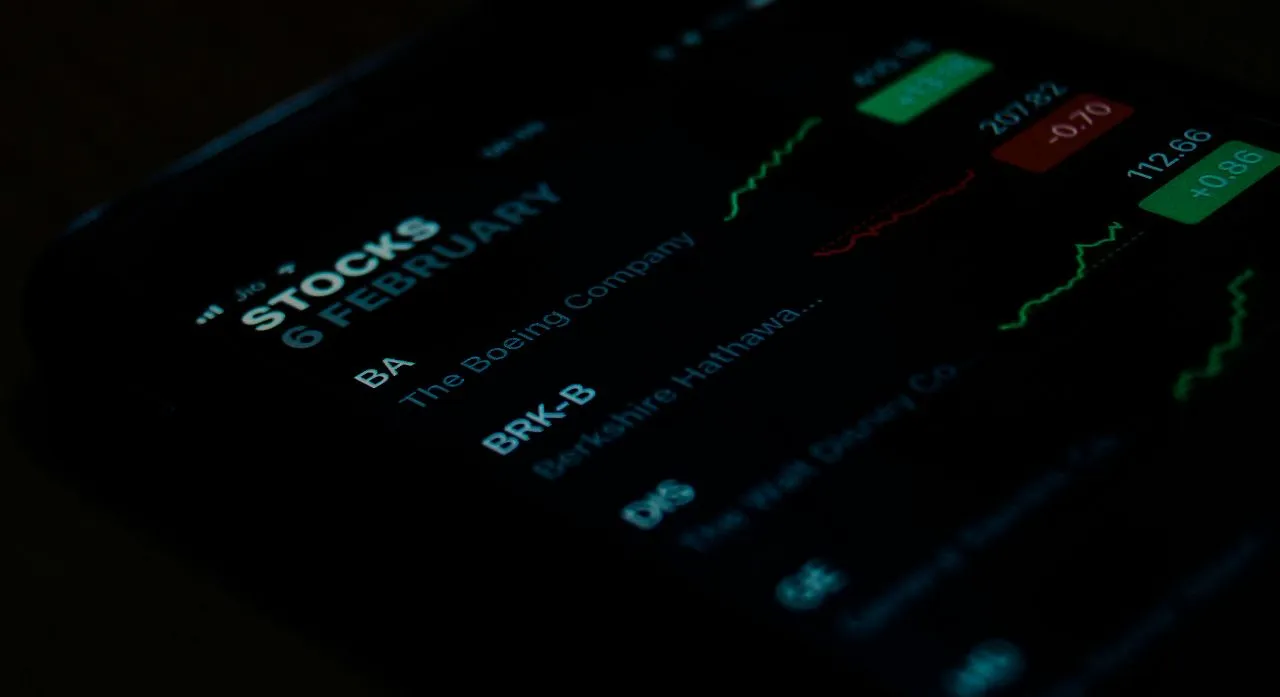
https://asset.coinness.com/en/news/ad12b83bb59c2c6a821dab29c9f8a684.webp
Photo by Ishant Mishra on Unsplash

Stock derivatives via CFDs

Individual stocks are being offered in a pairing with U.S. dollar stablecoin USDT. Bybit’s MT5 is a trading platform originally developed by software company MetaQuotes, facilitating the integration of various asset classes within one platform.


Enabled through the use of CFDs, holders of such stock-derived CFDs can receive dividend adjustments based upon the ex-dividend events of the underlying stocks. A trading fee of 0.04 USDT has been set, with a minimum charge of 5 USDT per order.


Access to leading global equities

Bybit users will now be able to gain exposure to leading U.S. equities such as Apple (AAPL), Amazon (AMZN), Meta (META), Microsoft (MSFT) and Nvidia (NVDA). By adding this product to its multi-asset trading platform, Bybit has reduced a degree of friction for market participants. In pairing these stocks with USDT, it means that there is no fiat onboarding required and transferring funds in fiat from outside the crypto ecosystem is not required.


In a press release, the firm asserted that the development was a “landmark move bridging traditional and decentralized finance.” Bybit further asserted that with this product launch, it has become “the first and only major crypto exchange to unify crypto, stocks, and traditional assets under one roof.”


Previous offerings

A few years ago, global crypto exchange platform Binance had offered tokenized stocks through a partnership with German global financial services firm CM-Equity AG. However, it withdrew that product offering in 2021 when faced with growing regulatory pressure. 


Failed crypto exchange FTX also offered its users exposure to tokenized stocks, which was also facilitated by CM-Equity AG. That product offering came to an abrupt halt in November 2022 when the platform collapsed.


With a more positive regulatory position having been adopted in the United States following the election of U.S. President Donald Trump, tokenized stock offerings are emerging once again. In March Coinbase CFO Alesia Haas said that the Securities and Exchange Commission (SEC) could facilitate such offerings going forward. The U.S. crypto exchange platform has revived plans to tokenize its own COIN stock, alongside other securities.


Bernstein analysts recently predicted that the crypto sector is moving towards integrated platforms that offer both traditional financial products alongside digital assets. Further evidence of this approach emerged on May 22 with the news that global crypto exchange platform Kraken plans to add access soon to a range of tokenized stocks for its global user base. 


The company’s U.S. clients can already access in excess of 11,000 stocks and exchange-traded funds (ETFs). Blurring the lines further between TradFi and the digital assets space, JPMorgan CEO Jamie Dimon indicated last week that the investment bank will facilitate Bitcoin trading for clients from now on.

More to Read
View All
Web3 & Enterprise·

Dec 03, 2025

Token Cat authorizes up to $1B in corporate crypto purchases

Token Cat Limited, a Nasdaq-listed Chinese automotive marketplace formerly known as TuanChe Limited, has approved a new digital asset investment policy that will allow the company to deploy up to $1 billion into cryptocurrencies as part of its treasury strategy. In a press release distributed via Chainwire, the Beijing-headquartered company said its board of directors signed off on a Crypto Asset Investment Policy authorizing the use of a portion of its cash reserves to acquire selected tokens under internal risk-management controls. Any purchased assets will be held with third-party custodians rather than managed in-house, the company said.Photo by Precondo CA on UnsplashThe initial allocation will focus on tokens tied to newer projects in areas such as artificial intelligence, RAW-to-chain infrastructure, and token–equity hybrid models. Further deployments will be evaluated over time and will remain subject to additional board approval, according to the statement. The policy will be implemented under the oversight of Sav Persico, who was recently appointed chief operating officer. Token Cat said he brings decades of experience in technology and blockchain-related businesses and emphasized that the initiative reflects a long-term approach to digital assets rather than a speculative trade. China’s regulation and softer DAT inflowsToken Cat’s decision comes even as China’s central bank continues to stress that crypto-related business activity remains off-limits domestically. According to Reuters, the People’s Bank of China (PBOC) recently reiterated that services involving virtual assets constitute “illegal financial activities” and highlighted that cryptocurrencies do not have the legal status of fiat currency. The statement was issued against the backdrop of what the central bank characterized as a renewed pickup in speculative crypto trading and broader concerns about financial risks. Beyond China, Token Cat’s move fits into a wider trend of companies experimenting with so-called digital asset treasuries (DATs), in which companies commit varying portions of their balance sheets to crypto. Those strategies, however, have seen softer momentum in recent months. Cointelegraph, citing data from DefiLlama, reported that DATs drew about $1.32 billion in fresh capital in November, the lowest monthly intake of 2024. Bitcoin-focused DATs accounted for the bulk of that activity with roughly $1.06 billion of inflows, while Ethereum-based DATs saw about $37 million in outflows. Bitwise chief investment officer Matt Hougan said on X that DATs have generally moved in tandem over the past six months, but he expects that pattern to change as investors begin to differentiate between firms with clearly articulated strategies and those without. He said a limited number of DATs could emerge with more resilient valuations, while others may continue to trade at persistent discounts. Biotech Sonnet advances HYPE-token planDespite the recent slowdown in inflows, new corporate efforts to gain exposure to digital assets continue. One example is Sonnet BioTherapeutics Holdings, a North Carolina–based biotechnology company developing immuno-oncology drugs. On Dec. 2, Sonnet said its shareholders had approved a proposed business combination with Hyperliquid Strategies Inc. (HSI) and Rorschach I LLC. That vote followed an agreement reached in July for Sonnet to merge with Rorschach to form Hyperliquid Strategies, a new entity expected to hold roughly 12.6 million HYPE tokens valued at about $583 million, along with at least $305 million in cash, for a projected combined value of $888 million. Hyperliquid is a decentralized exchange (DEX) built on its own layer-1 blockchain. Its native token, HYPE, has a total supply of one billion and is used for network governance, staking, and smart contract functions on HyperEVM, the platform’s EVM-compatible environment. Sonnet’s move, together with Token Cat’s newly adopted investment policy, adds to a steady stream of corporate initiatives testing the role of digital assets in balance-sheet management. With companies ranging from biotech firms to automotive marketplaces exploring similar strategies, the coming months will show whether crypto holdings can establish themselves as durable components of corporate treasuries. 

news
Web3 & Enterprise·

Nov 08, 2023

Lotte’s NFT marketplace partners with upcycling brand NiUl for membership NFTs

Lotte’s NFT marketplace partners with upcycling brand NiUl for membership NFTsLotte Data Communication, an affiliate of South Korean retail conglomerate Lotte Group, issued a press release on Wednesday (local time) to reveal that its NFT marketplace, Kottonseed, has issued new non-fungible tokens (NFTs) in partnership with upcycling brand NiUl whose name stands for “Nothing is Useless.”Photo by MSA-90 on PixabayPlastic lids to stylish keychainsNiUl recycles discarded plastic lids, transforming them into vibrant, stylish key ring pendants known as NiUl rings. NiUl has successfully sold over 2,000 pendants across a mix of online and offline platforms, with 300 kilograms of plastic lids donated by supporters. In a strategic move to broaden its reach, the company has been partnering with diverse firms and ramping up its donation initiatives, targeting environment and fashion-conscious millennials and Generation Z consumers.In their latest venture with Kottonseed, these pendants have been digitized into membership NFTs, which come with a suite of benefits like a special edition rope strap and discounts on products. Some lucky members may even get the opportunity to be involved in creating a NiUl ring. These membership NFTs are being released in limited numbers and are up for grabs starting today on NiUl’s page on Smart Store, an e-commerce platform of popular search engine Naver.NFTs in five colorsThe NFTs are offered in five distinct colors, each named after the sky’s varying appearances: “Post-rain Clear,” “Blue Sky,” “Sunset,” “Aurora” and “Night Sky.”A spokesperson for Lotte Data Communication expressed that the company sees great value in participating in upcycling initiatives with NiUl through their NFT marketplace, Kottonseed. They are keen on pursuing enjoyable and varied collaborations to support NiUl’s socially beneficial endeavors. Moreover, Lotte is actively exploring ways in which NFTs can contribute to environmental, social and governance (ESG) objectives.

news
Web3 & Enterprise·

May 15, 2023

Singaporean Researchers Devise More Effective DAO Voting

Singaporean Researchers Devise More Effective DAO VotingResearchers at the Singapore University of Social Sciences have come up with a more efficient governance model for decentralized autonomous organizations (DAOs).Photo by Shubham Dhage on UnsplashDAO governance reviewThe scientists presented their work via a paper titled “Voting Schemes in DAO Governance,” which was published earlier this week. The paper is due to appear in the Annual Review of Fintech in due course.The research paper initially sets out with a review of the different forms of voting currently used to affect DAO governance in the various early stage projects that are already up and running. Having taken a deep dive into existing approaches, the research team of Qinxu Ding, Weibiao Xu, Zhiguo Wang and David Kuo Chuen Lee decided that they could go one better themselves.Their review encompassed eight current approaches including the following: token-based quorum voting, knowledge-extractable voting, conviction voting and reputation-based voting. Each voting scheme was then evaluated based on the following factors:Efficiency: An assessment of the speed at which proposals are selected and approved.Fairness: Each voter should have equal rights to vote.Scalability: The degree to which storage, computation and communication needs can be adjusted relative to the number of voters.Robustness: An assessment of the relative resistance of the voting scheme to attacks and collusion.Incentive Schemes: The extent to which DAO members are motivated to vote.Following on from that analysis, the scientists put forward a hypothetical voting mechanism with design considerations relative to fully decentralized and permissionless DAO governance. When it came to ratings, the holographic consensus approach scored highest, with a “high” rating in the categories of efficiency, fairness and robustness, dropping down to medium when it came to scalability. None of the other approaches came close.In trying to go one better, the team took the holographic consensus approach and set out to create their own hypothetical voting mechanism based on this model. As evidenced from the paper, they tried to effect improvements to this approach:“We know that the downside of the conviction voting mechanism is that it takes time to approve an urgent proposal. To address this concern, we introduce a blind betting mechanism: each member could choose whether to bet on any proposals with a certain number of their tokens.”The researcher’s hypothetical model allows stakeholders to gamble their tokens on the likelihood of a proposal passing or failing. The logic with this approach, they claim, is that it would speed up the governance process, while making it more robust at the same time.In concluding remarks, the researchers acknowledged that all approaches were not without their pros and cons. They point out that the further development of DAOs shouldn’t be confined to a static organizational future. While they believe that their own hypothetical scheme is in theory superior, they acknowledge that it too has flaws. With that, the realities of implementing it in the real world may be a challenge.

news
Loading