Top

Binance launches Sharia-compliant staking product

Web3 & Enterprise·July 17, 2025, 8:50 AM

Global crypto exchange platform Binance has launched “Sharia Earn,” a crypto staking product that has been certified as being Sharia-compliant.


Sharia-compliant financial products adhere to Islamic law, with sharia law being Islamic canonical law based upon the teachings of the Koran. The product incorporates multi-token staking featuring BNB, Ether (ETH) and Solana (SOL).


The product has been built on top of existing infrastructure which Binance had already used to offer “Simple Earn Locked Products” relative to BNB and liquid staking in the case of ETH and SOL. Users of the product can earn staking rewards on crypto assets, while secure in the knowledge that they are investing in compliance with Islamic finance principles.
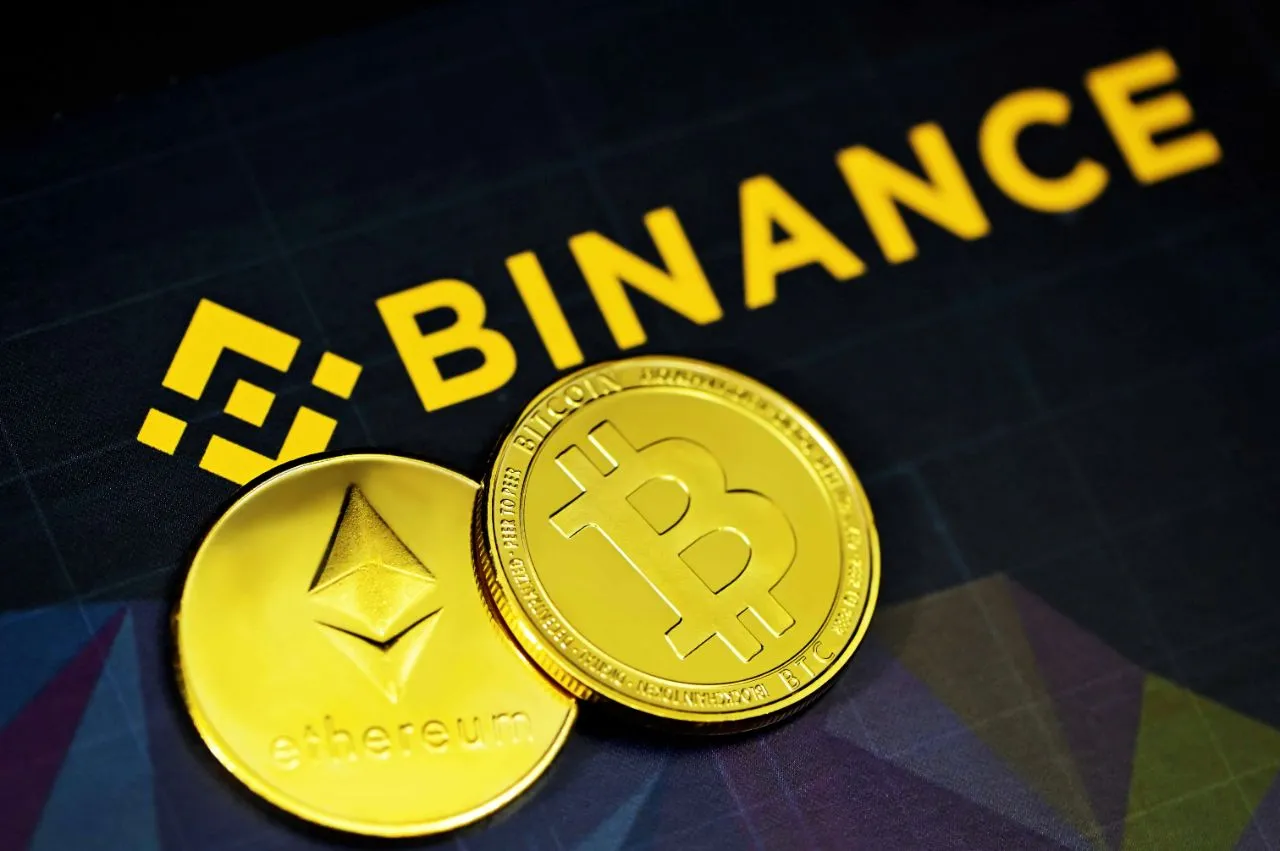
https://asset.coinness.com/en/news/ca6b7e2188c8974bb6ceafd550dfa0f2.webp
Photo by Kanchanara on Unsplash

‘Most meaningful product yet’

The new product was announced by the company during a Binance Square Webinar. Binance CEO Richard Teng described it as the firm’s “most meaningful product yet.” He referred to the launch of the product as a defining moment both for Binance and the broader crypto sector.


Teng said that “a truly inclusive financial system must respect the values and needs of every community, and that’s the vision behind Sharia Earn.” He added that “Islamic finance’s core tenets—transparency and shared prosperity—are universal,” asserting that these same values are at play in driving Binance.


The platform contracted Amanie Advisors, a Dubai-based global Islamic finance advisory service, in order to obtain Sharia-compliant certification for its latest product.


Bader Al Kalooti, Binance’s Head of Operations, Marketing & Growth for the Middle East & North Africa (MENA) region, said that “crypto adoption has surged in many Muslim-majority countries, but yield-generating products have remained largely inaccessible due to compliance concerns.” He claimed that the arrival of “Sharia Earn” addresses this issue.


While this is Binance’s first Sharia-compliant product, it’s not the first major exchange to enter this market. Last year, Bybit, a Dubai-headquartered global crypto exchange, engaged with ZICO Shariah Advisory Services in order to obtain certification for the trading of Sharia-compliant digital assets. At the time, Bybit claimed to have launched the world’s first crypto Islamic account.


Growing Islamic finance sector

Islamic law prohibits interest-based transactions. Crypto staking can be structured in such a way as to avoid interest. Staking is considered to be acceptable as rewards are not fixed. Staking rewards are seen as profit-sharing, with the staker retaining ownership of the asset and being open to the risk of potential losses.


Some forecasts suggest that the overarching Islamic finance sector could reach $4 trillion in the years ahead. That represents a market opportunity for crypto platforms to cater to this market by taking the time to acquire Sharia-compliant certification for their crypto products.


Binance and Bitget are not the only entities to spot this market opportunity. A new crypto trading platform called BurjX, founded by Canadian entrepreneurs Adam Ferris and Omar Abbas, has been established in the United Arab Emirates (UAE) with a vision of developing Sharia-compliant and regulatory-compliant crypto products. 


While no definitive timeline has been established, Abbas told the UAE English language daily newspaper, the Khaleej Times, that his company “will partner with the appropriate Sharia boards, and when we do launch, it’s going to be approved by the appropriate regulators.”


More to Read
View All
Markets·

May 04, 2023

Audius Achieves Token Listing On India’s CoinSwitch

Audius Achieves Token Listing On India’s CoinSwitchAudius, a decentralized music streaming platform which is attempting to cut intermediaries out of the music business, took a major leap forward in the Asian market on Wednesday, scoring a listing of its native $AUDIO token on Indian crypto exchange, CoinSwitch.Photo by Studio Art Smile on PexelsIn announcing the token going live on the platform CoinSwitch encouraged platform users to “trade $AUDIO today and support independent artists worldwide.” Founded in the United States in 2018 by Stanford University graduates Forrest Browning and Roneil Rumberg, the project launched its $AUDIO token in 2020.The token commenced trading on top tier global crypto exchanges shortly afterwards. In terms of listings on Asian exchanges, $AUDIO can be traded on DigitFinex Global, Bitrue and BingX in Singapore, HitBTC and Hotbit in Hong Kong and Tokocrypto and INDODAX in Indonesia. While it is already listed on WazirX, India’s largest crypto exchange by trading volume, the project will welcome another Indian listing via CoinSwitch given a market that ranks sixth in the world in terms of crypto ownership, with a backdrop of a population of 1.4 billion.Web3 with a Web2 UXAudius has taken a different approach than most other crypto projects. From the outset, its founders have focused on giving the platform the look and feel of a Web2 streaming service. Audius decided to embed its non-custodial wallet Hedgehog into the user login process.The strategy has been to make the UX as customer friendly and intuitive as possible in order to aid user on-boarding. There have been trade-offs in taking this approach and with that, the project advises users to keep only a small amount of the $AUDIO token within the Hedgehog wallet. When Hedgehog was launched in 2019, a project blog post proclaimed that “decentralization doesn’t have to come at the expense of user experience.”TikTok integrationEarlier this year, the Web3 streaming service integrated TikTok, allowing platform users to create accounts simply by linking their TikTok profiles. Additionally, the integration meant that users could share their Audius songs in the TikTok videos they produced.In late January, the $AUDIO token jumped 70% in a matter of hours once it became known that Coinbase planned to list the token on January 26. While a CoinSwitch listing is a significant milestone for the project in the Indian market, naturally it doesn’t compare with the volume that a global exchange listing on Coinbase can bring. At the time of publication, the $AUDIO token was trading at $0.29.For its part, CoinSwitch has experienced many of the ups and downs that this nascent industry could possibly deliver. In August 2022, five properties associated with the crypto exchange were searched by India’s Enforcement Directorate on the grounds of suspected contravention of India’s Foreign Exchange Management Act (FEMA).Founded in 2017 by Ashish Singhal, Govind Soni and Vimal Sagar Tiwari, the firm has attracted investment and backing from Andreessen Horowitz, Coinbase Ventures, Tiger Global Management and Paradigm.

news
Policy & Regulation·

Sep 26, 2023

Many Countries Are Welcoming Traditional Financial Institutions Into Crypto — When Will Korea…

Many Countries Are Welcoming Traditional Financial Institutions Into Crypto — When Will Korea Catch Up?Although overseas traditional financial institutions are gradually expanding their reach into the crypto market by launching related services and products, this remains challenging for institutions in South Korea, where it is difficult for them to even invest in virtual assets.Photo by NASA on UnsplashMajor developments in other countriesAccording to industry sources, traditional financial companies such as Japan’s largest investment bank and brokerage group Nomura Group, and New York-based investment banking company Citigroup are starting to bring new crypto-related services and products to the market.Laser Digital, the asset management unit of Nomura Group, launched a Bitcoin adoption fund targeting institutional investors, according to an official press release from last Tuesday (local time), which will provide institutional investors with direct and secure access to investments in Bitcoin.Similarly, Citigroup’s Treasury and Trade Solutions (TTS) is piloting its new crypto-based cash management and trade finance service dubbed Citi Token Services, which caters to institutional clients by utilizing blockchain and smart contract technology to provide digital asset solutions. “Digital asset technologies have the potential to upgrade the regulated financial system by applying new technologies to existing legal instruments and well-established regulatory frameworks. The development of Citi Token Services is part of our journey to deliver real-time, always-on, next-generation transaction banking services to our institutional clients,” said Shahmir Khaliq, Global Head of Services at Citi.Earlier this summer, several asset managers in the US, including BlackRock, applied for a spot-traded Bitcoin exchange-traded fund (ETF) with the US Securities and Exchange Commission (SEC), drawing the interest of the industry as a whole. The SEC has been delaying its decision regarding approval for the ETF and will likely do so until its allotted 240-day review period is over, but industry experts predict that the approval will go through for several reasons including BlackRock’s implicit influence as the world’s biggest asset manager and the SEC’s former court loss against Grayscale for its review of the firm’s spot Bitcoin ETF.These developments are made possible through the commonly held opinion that the involvement of traditional financial institutions in the crypto sphere is beneficial for the industry due to their ability to increase liquidity by moving much larger amounts of capital than the crypto market alone.Moreover, many countries around the world already allow institutions to invest in virtual assets. For instance, the US Nasdaq Stock Market has already listed crypto futures-based ETFs such as Bitcoin and Ether, and there are trust products on the market like Grayscale’s Bitcoin Trust that target qualified investors. Countries like Hong Kong have also gradually begun to allow individual investments in virtual assets again, while institutional investment has always been permitted.Roadblocks in KoreaIn contrast, it remains impossible for institutional or corporate investors in Korea to invest in virtual assets, let alone offer virtual asset fund products. Although local asset managers like Mirae Asset Global Investments and Samsung Asset Management have listed Bitcoin-related ETFs in the US and Hong Kong, such products do not exist in South Korea.Korean authorities also banned financial institutions from holding, purchasing, or investing in virtual assets back in 2017 on the grounds that their investment in cryptocurrencies could stimulate investor sentiment. Also, shadow regulation after the enactment of the Act on Reporting and Using Specified Financial Transaction Information in 2021 practically bars local corporations and institutions from using crypto exchanges, though there is no provision that explicitly prohibits opening corporate bank accounts on crypto exchanges.In response to this situation, an anonymous industry insider highlighted the need for a nationwide drive to support virtual assets and Web3 technology. “This is the time to push emerging industries, and we should not overlook industry trends. The current situation is somewhat frustrating,” they said. “Japan was the most conservative country in this regard, but it has recently opened up and subsequently gained momentum. Korea should also take a more progressive approach.”

news
Policy & Regulation·

Aug 31, 2024

Global crypto fraud suspect arrested in Istanbul

Accused of one of the world's largest cryptocurrency scams, Andreas Szakacs, a Swedish national who became a Turkish citizen under the name Emre Avcı, was detained in Istanbul. The alleged international fraud scheme, led by Szakacs, began in 2019 under the guise of OmegaPro, a company dealing in forex and cryptocurrency trading. OmegaPro claimed to generate significant profits for its investors through complex financial algorithms and high-risk leveraged trading. The company, registered in opaque jurisdictions like Saint Vincent and the Grenadines and headquartered in Dubai, promised returns as high as 300% within 16 months, attracting investors from across the globe. High-profile endorsements and lavish eventsTo bolster credibility, Szakacs and his partners, including well-known figures in the finance and crypto sectors like Dilawar Singh and Mike Sims, organized extravagant events. These included the OmegaPro Legends Cup, a football tournament featuring former stars like Ronaldinho, Kaka and Iker Casillas, who were branded as OmegaPro ambassadors. The company also sponsored car races and held opulent conferences in luxury hotels, where gifts and prizes were distributed to participants, further enticing new investors. OmegaPro's operations spanned multiple continents, with representatives in countries such as Colombia, Mexico, the UK and Nigeria. Over time, the company claimed to have attracted 1.5 million investors. However, in late 2022, as withdrawals were suddenly halted, suspicions grew. By July 2023, the company had shut down, leaving an estimated three million investors defrauded and $4 billion unaccounted for.Photo by Xiaoyi Huang on UnsplashAs OmegaPro collapsed, investors from around the world began filing complaints. In France alone, over 1,500 victims have initiated a class-action lawsuit. Similar legal actions have been reported in countries including Mexico, Congo and Myanmar. Despite multiple investigations, the whereabouts of Szakacs and his partners remained unknown—until recently. A tip-off leads to arrest in IstanbulThe breakthrough came on June 28, when an anonymous informant tipped off Turkish authorities about Szakacs' presence in a luxury villa in Istanbul's Acarkent neighborhood. Following an investigation, the Istanbul Gendarmerie identified 18 complainants connected to OmegaPro. On July 9, Szakacs was arrested in a raid on the villa, where authorities found 32 cold wallets containing cryptocurrencies, along with extensive documentation related to OmegaPro’s operations. During questioning, Szakacs denied all allegations, claiming that OmegaPro was a legitimate business that went bankrupt in late 2022, resulting in significant losses for him and his partners. He also refused to provide access to the cold wallets and the encrypted data on his devices. Despite his defense, Szakacs was charged with fraud using information systems and detained by the Beykoz Criminal Court of Peace on July 10. Ongoing legal battles and future implicationsAs the investigation continues, authorities are scrutinizing Szakacs' digital transactions, which reportedly involve $160 million in movements over a single month. His legal team argues that investors knowingly took on risks in the forex market, but the sheer scale of the losses—especially the $103 million claimed by a Dutch complainant representing 3,000 victims—has intensified the case. The outcome of this case could set a precedent for how international crypto-related fraud is handled, particularly in an era where digital currencies and high-risk investments are increasingly intertwined. 

news
Loading