Top

Vietnam’s Military Bank to launch the country’s first domestic crypto exchange

Policy & Regulation·August 18, 2025, 12:57 AM

Military Bank (MB Bank), a subsidiary of Vietnam’s Ministry of National Defence and a top-five bank in Vietnam serving 33 million customers, has partnered with South Korea’s Dunamu to launch the Southeast Asian nation’s first domestic digital asset exchange.


Dunamu is the operator of Upbit, South Korea’s largest cryptocurrency exchange. In a statement published on its website on Aug. 13, Dunamu outlined that the two companies had signed a memorandum of understanding (MOU) with the objective of forging a technical partnership to foster Vietnam’s virtual asset market.


With that overarching aspiration, the companies plan to establish a digital asset exchange. The deal was signed on Aug. 12 at the Korea-Vietnam Business Forum, an event that was held at the Lotte Hotel in Seoul.


Through Upbit, Dunamu has considerable experience and know-how in the crypto exchange business. Its purpose in this partnership is to bring that ability and Upbit’s technology to the establishment of a new exchange in Vietnam.
https://asset.coinness.com/en/news/6a8a33b4092867aef7276d6b032abd9d.webp
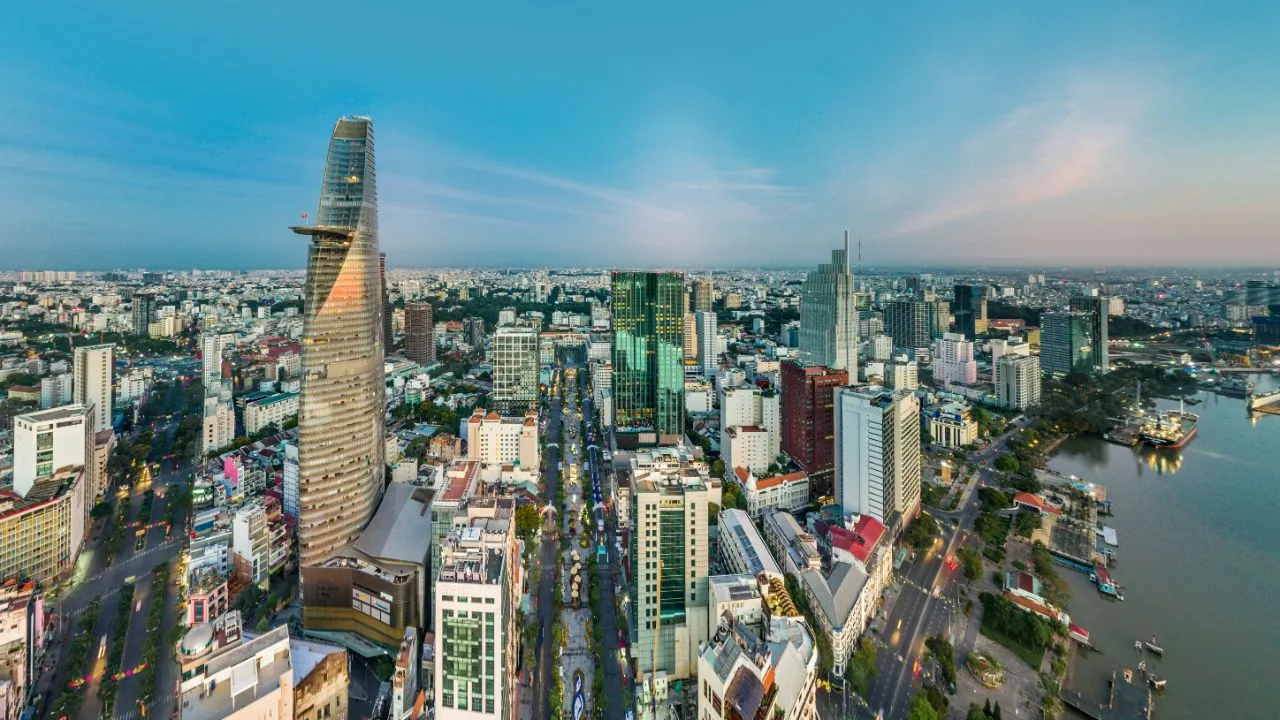
Photo by Peter Nguyen on Unsplash

Dunamu CEO Oh Gyeong-seok commented on the development, stating: 

“Vietnam's potential is shown by the more than 20 million virtual asset holders, annual trading volume of more than $800 billion and the inflow of global top 5 blockchain assets.”


The Dunamu CEO added that when Vietnam’s proven growth potential meets the Upbit model, it will provide an opportunity to go further than the creation of a crypto exchange, with the development and design of “the entire national digital financial infrastructure based on trust.”


Growing and developing Vietnam’s digital financial market

This aspiration was shared by Military Bank Chairman Liu Zongtai, who stated:


“In the future, Vietnam and Korea, Military Bank and Upbit will work together to grow and develop Vietnam's digital financial market as reliable cooperation partners.”


As well as sharing its technology and infrastructure, Dunamu will also advise the company on matters such as regulatory compliance and investor protection.


Vietnam has previously been hailed as a market that is seeing a significant level of crypto adoption. According to Statista, the market is expected to experience significant growth in the coming years. Crypto user penetration has been forecast to reach over 21% by 2026.


The Vietnamese government has also been putting things in order to accommodate crypto assets. In June, the Vietnamese National Assembly passed the Digital Technology Industry Law. The legislation goes some way in providing regulatory clarity, with the categorization of virtual assets and crypto assets.


Last October, the authorities set out a blockchain strategy for the Southeast Asian nation, with the aspiration of achieving regional leadership relative to the digital assets sector by 2030.


Upbit is a significant player in the crypto sector. According to CoinMarketCap data, it’s the fourth-largest spot exchange platform globally, measured in terms of trading volume. For the month of July, it achieved a trading volume of $110.21 billion, trailing Bitget at $126.05 billion and Bybit at $122.3 billion, while Binance led the market with $683.41 billion.


 

More to Read
View All
Policy & Regulation·

May 02, 2023

BitOasis Obtains First Early-Stage Broker Dealer License in Dubai

BitOasis Obtains First Early-Stage Broker Dealer License in DubaiBitOasis, a leading platform within the Middle East and North Africa (MENA) region for the purchase, sale and trading of cryptocurrency, has become the first crypto company to be awarded a broker-dealer license by the Dubai regulator.Photo by ZQ Lee on UnsplashMinimum viable productIn a blog post published to the company’s website on Monday, BitOasis outlined that it has received a minimum viable product (MVP) Operational License from the Virtual Asset Regulatory Authority (VARA) of Dubai. An MVP incorporates the minimum features necessary to satisfy early adopter clients.It’s a means through which a basic offering can be brought onto the market, feedback can be solicited and the product offering can be improved upon on that basis. From the regulator’s perspective, by offering an MVP licensing programme, it too can adjust regulation as products are further developed.BitOasis CEO and Co-Founder Ola Doudin took to Twitter to welcome the news, outlining that the award of the license is “an important milestone for @bitoasis , the Emirate of Dubai and the growing UAE crypto ecosystem.”The license award now allows BitOasis to provide broker-dealer services in respect of virtual assets under VARAs regulatory oversight, to qualified institutional and retail investors, while basing operations out of Dubai.Serving GCC and MENA regionsBitOasis was founded in 2016 by Doudin alongside Daniel Robenek. It’s focusing its efforts on servicing the Gulf Cooperation Council (GCC) area (which covers six Arab countries, Bahrain, Kuwait, Oman, Qatar, Saudi Arabia and the United Arab Emirates), together with the broader MENA region. BitOasis has also obtained “in-principle” approval from the regulator in Bahrain.The platform offers clients the ability to trade in excess of sixty cryptocurrencies in trading pairs with fiat currencies such as the US dollar (USD), the United Arab Emirates dirham (AED), the Saudi rial (SAR) and the Turkish lira (TL). In developing the business, BitOasis has undergone six funding rounds to date, including two initial seed rounds, together with Series A and Series B-level funding. Its backers include companies such as Banvest, Pantera Capital, Digital Currency Group, Wamda Capital and Global Founders Capital.Strategic partnershipsThe company stated that it intends to leverage the license to “launch strategic partnerships in Dubai and across the United Arab Emirates.” Additionally, the licensing will enable the company to launch new virtual asset products “with a continued focus on driving accessibility, consumer protection and utility across the virtual asset ecosystem.”VARAs CEO Henson Orser welcomed BitOasis to the Dubai regulator’s MVP programme phase and outlined that “the VARA ecosystem aims to strike a balance between value creation, risk mitigation, and enhanced investment opportunities with consumer protection at its core.”Dubai and the United Arab Emirates more broadly, have been moving at pace more recently in an effort to develop a regional hub for the virtual assets industry. Last month it emerged that the UAE had begun accepting licensing applications from crypto companies and only a number of weeks later, Dubai’s VARA has already awarded its first license.A number of weeks ago, crypto exchange Bybit announced that it was basing its operations out of Dubai. VARA is licensing crypto companies on a stage by stage basis. In response to a number of high profile crypto firm failures in other jurisdictions in 2022, the Dubai regulator outlined in April that it was stepping up its level of scrutiny of crypto businesses.

news
Web3 & Enterprise·

Jul 07, 2023

South Korean Firms Combine Strengths to Draw Hobbyists into the Metaverse

South Korean Firms Combine Strengths to Draw Hobbyists into the MetaverseCom2Verse, the metaverse subsidiary of South Korean game developer Com2uS, has formed a partnership with Somssidang, a leading hobby sharing platform, and Hana Bank, a prominent financial institution, to attract hobbyists to the metaverse.That’s according to a report by local news agency Newsis. This collaboration aims to create an infrastructure within Com2Verse’s metaverse that offers hobby classes and extends financial support to class providers.Photo by Steve Johnson on UnsplashSeminars and classes in metaverseThrough the combined expertise of the partnering companies, they strive to deliver engaging seminars and interactive classes in the metaverse, while actively promoting and expanding its ecosystem.Com2Verse plans to enable its metaverse users to partake in virtual as well as face-to-face courses offered by Somssidang. This will establish an environment conducive to the growth of hobby-related businesses, effectively bridging the gap between the physical and virtual realms. Somssidang, on its part, aims to expand its operations by providing high-quality content materials, such as classes by distinguished experts, to Com2Verse.Somssidang, boasting a user base of 1.2 million, stands as Korea’s largest hobby platform. The platform is currently offering a wide range of hobby classes, both online and in-person, across the nation. In addition to organizing lectures, Somssidang sells a wide range of do-it-yourself kits, as well as tickets for concerts, exhibitions, and tours. Furthermore, Somssidang provides specialized hobby workshops that are specifically tailored to meet the needs and preferences of business customers.Financial groundworkHana Bank, in collaboration with Com2Verse, will lay the financial groundwork necessary to support the metaverse. This partnership includes extending financial assistance to small business participants within the metaverse and promoting recreational activities for socially marginalized groups.CEO statementsCom2Verse CEO Lee Kyoung-Il expressed his conviction that the company’s metaverse will go beyond the traditional realm of online classes, offering educational courses that exceed expectations. He also emphasized the metaverse’s capacity to provide a diverse range of services, enabling users not only to enjoy their hobbies but also to achieve personal fulfillment. Somssidang CEO Jeong Myeong-won affirmed the platform’s commitment to developing content and services tailored specifically to the metaverse.Kim So-jung, Deputy President of Hana Bank, said this opportunity would converge cultural and financial sectors to realize our daily lives onto the metaverse. Kim added that Hana Bank is committed to ongoing strategic cooperation with the other two partners to deliver innovative financial services and fulfill its social responsibilities.

news
Web3 & Enterprise·

Mar 16, 2024

MANTRA sets sights on real-world asset tokenization in Middle East and Asia

MANTRA, a real-world asset (RWA) layer one blockchain built on Cosmos, recently outlined its vision for the on-chain financial ecosystem, outlining that it plans to acquire licensing in the Middle East and Asia as part of its efforts to expand. In a press release published on Chainwire on March 14, the company outlined that it has applied for licensing in the United Arab Emirates (UAE) in an effort to pave the way for MANTRA to target a global clientele who want to harness the potential of RWA asset tokenization. Issuing and trading tokenized RWAsAt the core of the Hong Kong-headquartered project’s offering lies its layer one blockchain, aptly named MANTRA Chain. The network is designed to streamline the issuance and trading of tokenized RWAs. Having established this technological product base, the company is now on a mission to onboard financial institutions and commercial entities with an interest in asset tokenization. With teams stationed in Hong Kong and the UAE, MANTRA has honed a full understanding of the shifting regulatory landscapes in pivotal regions. By securing its inaugural financial licenses in the UAE, MANTRA is aiming to take a slice of market share in the swiftly evolving RWA sector across the Middle East and Asia. The overarching goal for 2024 is to tokenize a diverse spectrum of assets, spanning real estate, private market funds, equity, art and treasuries.Photo by Sigmund on UnsplashIn an X social media post, MANTRA Founder and CEO John Patrick Mullin outlined that the company is already engaging with institutions and partners in the private sector. Mullin stated: “MANTRA is actively collaborating with real-world institutions and partners, including real estate, private market funds, private equity, the art sector, and treasuries, among others, to help bring these traditional asset classes onchain.” Mullin claims that the current crypto market capitalization of around $2 trillion is just a drop in the ocean by comparison with the potential that exists in the tokenization of RWAs and in unlocking the RWA economy. Hong Kong licensingAlongside the Middle East, Asia is the other target market for the company. Mullin suggested that Asian countries are already preparing for this fundamental shift, having developed RWA regulations. Last November, it emerged that Hong Kong was setting out a regulatory roadmap in respect of RWA tokenization. In February 2023 the Chinese autonomous territory achieved a first-of-its-kind tokenized green bond issuance.With that, the company’s home base of Hong Kong will also be central to its efforts to acquire relevant licensing. In recent weeks, MANTRA claims to have made significant progress in decentralizing its network, garnering validator support on a more broadly distributed basis. The project is expected to launch its final testnet, dubbed “Hongbai,” shortly. MANTRA is aiming to emerge as the pioneer RWA layer one blockchain with the capability to ensure real-world regulatory compliance. By expediting the adoption of tokenized RWAs, the project suggests that there’s an RWA economy value unlock potential of $16 trillion with its regulatory-ready blockchain being positioned to benefit from that. The network is gearing to offer a compliant framework, so that traditional finance (TradFi) companies can seamlessly transition to and harness asset tokenization and blockchain solutions, propelling global RWA expansion. 

news
Loading