Top

Ex-PBOC governor warns on stablecoin speculation, questions case for yuan peg

Policy & Regulation·August 29, 2025, 8:00 AM

China’s former central bank governor has warned that speculation in stablecoins could threaten financial stability, Bloomberg reported, citing a post from the Beijing-based think tank CF40 Research. His remarks run counter to calls from some economists and industry figures for a yuan-backed stablecoin as the U.S. advances its digital-asset policy agenda.


Zhou Xiaochuan, who led the People’s Bank of China (PBOC) from 2002 to 2018, delivered the comments at a closed-door meeting in mid-July. He argued that China’s payment rails—spanning third-party platforms, the central bank digital currency (CBDC), digital wallets, and clearing infrastructure—are already highly efficient, leaving little scope for stablecoins to deliver meaningful cost savings. He also rejected the premise that conventional cross-border payments come at steep costs.


Zhou identified price manipulation driven by speculative trading as the chief risk to financial and asset markets, adding that current safeguards in the U.S., Hong Kong, and Singapore remain inadequate.
https://asset.coinness.com/en/news/832cd253aa5f55653103c2e855fd6db3.webp
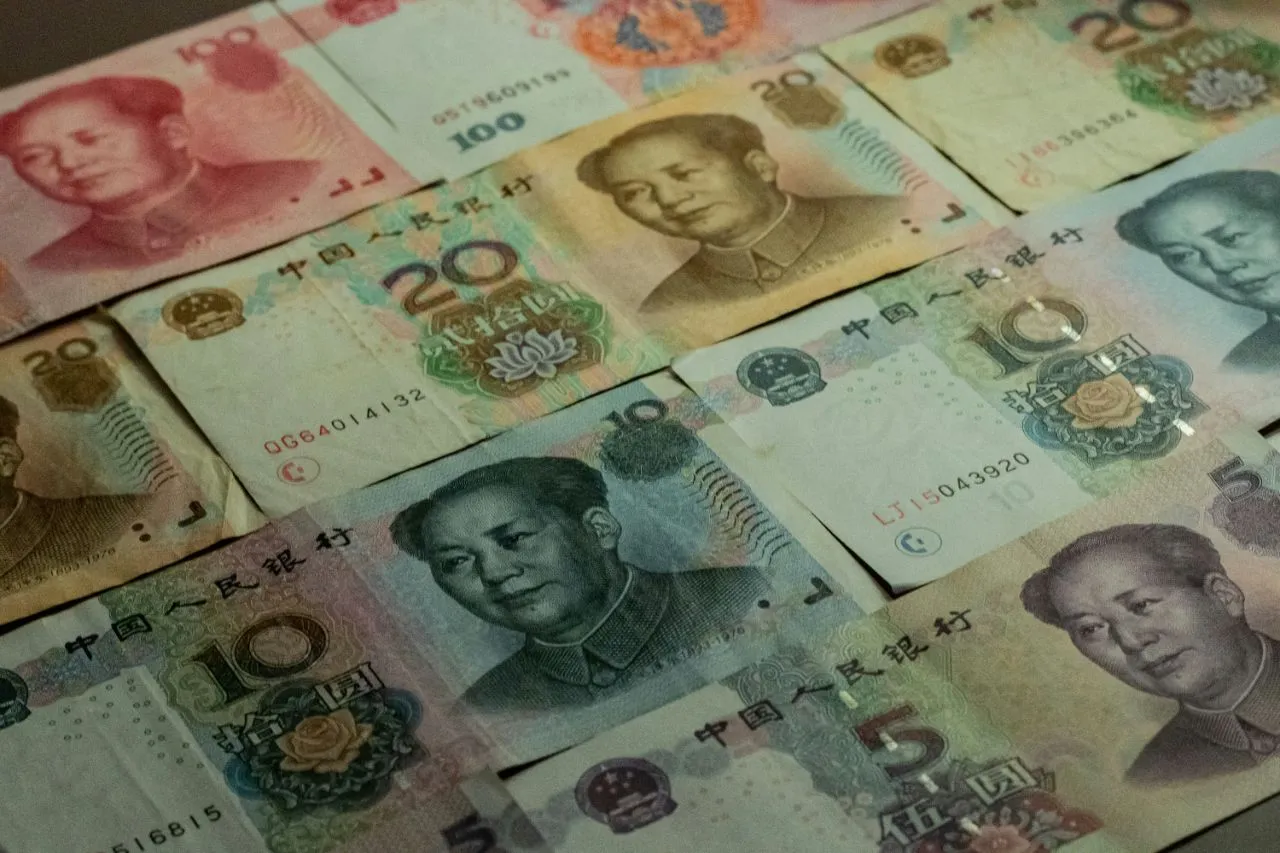
Photo by Mitchell Luo on Unsplash

Onshore controls push yuan stablecoins offshore

Any debate over a yuan-linked token must also contend with China’s currency structure. The onshore yuan (CNY) is subject to strict capital controls and limited cross-border convertibility, while the offshore yuan (CNH) trades more freely. As a result, any prospective yuan stablecoin would likely reference the CNH; pegging directly to the CNY would conflict with Beijing’s capital rules.


An earlier Reuters report has indicated that Beijing is weighing whether to authorize a yuan-pegged stablecoin to promote international use of the currency. Analysts caution that such a token would almost certainly be confined to offshore markets, even if regulators proceed.


U.S. sets federal guardrails for stablecoins

Meanwhile, policy moves in the U.S. are gathering pace. In July, President Donald Trump signed the Guiding and Establishing National Innovation for U.S. Stablecoins (GENIUS) Act into law, creating a federal framework for stablecoins. A White House fact sheet says the law requires issuers to maintain 100% reserves in liquid assets such as U.S. dollars or short-term Treasuries and to publish monthly disclosures on reserve composition. The administration has argued that dollar-backed stablecoins could bolster demand for Treasuries and reinforce the dollar’s reserve-currency role.


Hong Kong has emerged as comparatively receptive to digital assets. The special administrative region’s Stablecoins Ordinance entered into force on Aug. 1, establishing a licensing regime to oversee Hong Kong dollar–backed stablecoins. Earlier this month, CMB International Securities, a subsidiary of China Merchants Bank, became the first Chinese bank-affiliated institution to offer trading in Bitcoin, Ethereum, and Tether (USDT).


Industry voices are also pressing the case for stablecoins. At the WebX conference in Tokyo on Aug. 25, Binance co-founder Changpeng Zhao (CZ) argued that CBDCs are becoming obsolete, while stablecoins—typically backed by real assets—enable wider transactions and are gaining market traction. He said CBDCs remain rarely implemented due to limited demand and suggested China appears more open to stablecoins after years of tighter oversight, pointing to Hong Kong’s efforts to build an ecosystem.


Potential PBOC stimulus may lift crypto

China remains a consequential force in global crypto markets. A recent report suggested that potential PBOC stimulus could fuel an altcoin rally. With China accounting for 19.5% of global GDP, shifts in its monetary stance are seen as important drivers of worldwide liquidity. Following July data showing a 0.1% month-on-month decline in retail sales, a 0.4% rise in industrial production, and an uptick in unemployment to 5.2%, analysts expect measures to support growth. Any additional liquidity could flow into risk assets, including cryptocurrencies, potentially pushing digital tokens toward new highs.


 

More to Read
View All
Policy & Regulation·

Nov 30, 2023

Regulatory breach sees Philippines initiate blockade on Binance

Regulatory breach sees Philippines initiate blockade on BinanceIt’s been a very challenging year for global crypto platform Binance — one that doesn’t appear to be improving with the latest move to block access to the platform in the Philippines.Photo by Alexes Gerard on UnsplashUnlicensed to tradeIn a noteworthy development, the Philippines Securities and Exchange Commission (SEC) declared on Tuesday its intention to block access to the Binance platform due to regulatory irregularities.The SEC asserted in a statement that Binance lacks the necessary license to operate in the Philippines, cautioning the public against engaging in investment products on the platform. The regulator stated:”BINANCE is NOT REGISTERED as a corporation in the Philippines and OPERATES WITHOUT THE NECESSARY LICENSE AND/OR AUTHORITY.”The regulatory body is actively working to have Binance blocked in the country, citing concerns about unregistered investment products. The impending ban is set to take effect within three months, allowing investors a window to exit their positions held through Binance.Pushback on advertisingIn addition to its attempts to block access to the platform, the SEC has also approached tech giants Google and Meta (Facebook’s parent company), requesting the blocking of Binance advertisements on their platforms within the country. This is a response to social media campaigns designed to attract Filipino investors to the embattled cryptocurrency exchange. While users can still download the Binance app from Google and Apple app stores in the Philippines, the extent of investor activity in the country remains uncertain.Follows U.S. regulatory actionThese actions in the Philippines come hot on the heels of Binance’s CEO Changpeng Zhao (CZ) stepping down and pleading guilty in a U.S. money-laundering case. The Philippines’ ban adds to Binance’s challenges as it aims to expand in Southeast Asia amid legal troubles in the U.S. and restrictions on operations in China.Over the course of a three-month period earlier this year, the world’s largest crypto exchange platform lost its ability to trade in Germany, Canada, Belgium, the Netherlands and Cyprus. Additionally, French authorities have been investigating the platform for alleged illegal provision of digital asset services and aggravated money laundering.Facing regulatory pushback in the U.S. and Europe, Binance appeared to be concentrating on making further in-roads in Asian markets over the course of this past year. It had recently pursued a joint venture with Gulf Energy in Thailand to launch a new digital assets exchange.Media reports previously suggested that Binance was considering acquiring a Philippine company to obtain operating licenses in the country. The SEC’s move to ban the platform follows a warning issued last year against using Binance, and it represents a broader effort to regulate the cryptocurrency sector and protect the public interest.The recent guilty plea by CZ for violating U.S. money laundering laws has added to the legal woes of the cryptocurrency giant. CZ agreed to personally pay $50 million in penalties as part of a $4.3 billion settlement to resolve investigations into Binance’s practices. He may also still face prison time in the U.S. In the Philippines, the SEC warns that Section 28 of the Securities Regulation Code (SRC) allows the application of a fine of up to five million pesos ($90,000) and a maximum prison term of 21 years.

news
Web3 & Enterprise·

Sep 09, 2023

Ant Group Targets Web3 Developers With New Brand Launch

Ant Group Targets Web3 Developers With New Brand LaunchChina’s Ant Group, the powerhouse firm behind the world’s largest mobile payment platform, Alipay, has made a strategic move by introducing its new blockchain-focused sub-brand, ZAN.The initiative signals Ant Group’s intention to carve out a specific niche in the blockchain sector while simultaneously preparing for a potential initial public offering (IPO) that is free from its affiliations with Web3.Photo by Denys Nevozhai on UnsplashOffering a suite of solutionsZAN’s unveiling, which was announced in an official press release via Business Wire on Friday, heralds a comprehensive suite of technical solutions and services catering to both institutional players and individual developers in the Web3 ecosystem. At its core, ZAN offers a solution that enables Web3 companies to seamlessly issue and manage real-world assets (RWAs) while adhering to local regulatory frameworks.But ZAN’s ambitions don’t stop there. The brand aspires to revolutionize the Web3 landscape with a suite of technical offerings, including cutting-edge tools for electronic Know Your Customer (KYC) procedures, anti-money laundering (AML) measures, and Know Your Transaction (KYT) checks, all purpose-built with a view towards achieving the highest levels of compliance.Focus on dAppsMoreover, ZAN will also focus its attention on decentralized applications (dApps) through its provision of smart contract reviews and node services. These services, including remote procedure calls (RPCs), are poised to empower developers, offering them the essential tools they need to craft innovative dApps that can thrive within the Web3 ecosystem.ZAN’s journey has already seen notable partnerships, with HashKey DID, a decentralized identity data aggregator in the Web3 space, announcing its adoption of ZAN’s electronic KYC solution during the Hong Kong Web3 Festival in April.This move by Ant Group aligns with its reported intention to segregate its blockchain subsidiary from its core entity. In July it emerged that the company was restructuring with implications for its blockchain activities having been envisaged at the time. Given the size of the enterprise, the adoption of blockchain by Ant Group thus far has played a pivotal role in furthering blockchain use and implementation within Mainland China.IPO and further expansionThis separation is expected to be a pivotal step for the company in securing a financial holding license in China, further underscoring Ant Group’s interest in pursuing compliance and regulatory alignment.Ant Group had ambitious plans for a $30 billion initial public offering (IPO) in Hong Kong and Shanghai in 2020, with a staggering $226 billion valuation at the time. It’s evident that the financial giant remains resolute in its pursuit of expansion and diversification, although it has faced regulatory obstacles in its endeavors to do so.While the IPO was thwarted by the Chinese government, it is promising for the development of blockchain within China to see that the firm is once again making strategic moves in the blockchain sector, spearheaded in this instance through ZAN.

news
Web3 & Enterprise·

Feb 06, 2024

Animoca Brands makes key appointment to drive Japanese market expansion

Animoca Brands Japan, a key subsidiary of Hong Kong-headquartered Web3 investor Animoca Brands, has welcomed Kensuke Amo as its Chief Operating Officer (COO) to spearhead the company's growth in Japan. Industry credentialsAmo, a seasoned industry veteran who previously served as the managing executive officer at Japanese bitcoin wallet and exchange service Coincheck, officially assumed his role as COO last Thursday. With a proven track record in launching NFT businesses and steering new crypto asset ventures, Amo played a pivotal role at Coincheck. During his tenure as an executive officer from 2020, he pioneered initiatives such as Japan's first NFT marketplace for crypto asset exchanges and an inaugural initial exchange offering (IEO). In a social media post, Amo stated that in the role, he “will be committed to doing [his] best to contribute [to] Web3 technology [so that it takes] root in society.” In 2022, Amo ascended to the leadership position at Coincheck, where he led the NFT business and metaverse business, heading three distinct web domains. His involvement in the expansion of "The Sandbox" and "Otherside" in Japan, stemming from the partnership between Coincheck and Animoca Brands in 2020, further underscores his influence in the sector.Photo by Richard Tao on UnsplashJapanese market expansionRegulatory headwinds in the United States in 2023 led to the company pivoting and focusing on non-U.S. markets. It became clear later in 2023 that the company had a specific interest in growing its business in Japan when Animoca Brands Japan acquired an equity share in Cool Cats Group, an NFT-related project. That deal also implicated a collaboration with Animoca’s digital experience label, KLKTN. As Animoca Brands Japan strategically aligns itself within Animoca Brands' larger framework, Kensuke Amo aims to leverage the company's extensive assets and network, including over 400 portfolio companies. His mission involves combining his expertise in business and rule-making within the Japanese Web3 industry to facilitate the integration of Web3 into society. Commenting further on his appointment, Amo expressed his commitment to advancing the Web3 landscape in Japan. He stated: “As a strategic subsidiary of Animoca Brands, Animoca Brands Japan will make the most of its assets and network, including its more than 400 portfolio companies, while combining its knowledge and experience in business and rule-making in the Japanese Web3 industry.” Established in 2021, Animoca Brands Japan has played a crucial role in supporting Japanese intellectual property and content holders in their global Web3 expansion efforts. The company secured an undisclosed investment from Mitsui & Co., one of Japan’s largest trading companies, in June. Daisuke Iwase, the CEO of Animoca Brands Japan, expressed optimism about the collaboration with Kensuke Amo, emphasizing his leadership in the realms of crypto assets, NFTs and the metaverse in Japan. Amo’s industry involvement extends beyond Animoca Brands Japan, as he currently advises the Japan Cryptoasset Business Association (JCBA), Shibuya-ku Startup Ecosystem, Web3 project "OASIS" and real estate information service company LIFULL Co., Ltd. Additionally, he is the author of "Textbook of NFT" and "Non Fungible Me." 

news
Loading