Top

Metaverse Expo 2023 in Seoul: Exploring the Future of the 3D Internet

Web3 & Enterprise·May 31, 2023, 1:59 AM

The Metaverse Expo 2023 is scheduled to be held at the COEX, an exhibition and convention venue in Seoul, from June 14 to 16, according to a press release. With its focus on the future of the three-dimensional Internet, this event seeks to attract metaverse enthusiasts eager to explore cutting-edge technologies. This year, the “Metaverse + Generative AI Summit” will run alongside the expo, showcasing the diverse applications of generative AI in enhancing efficiency within the metaverse.

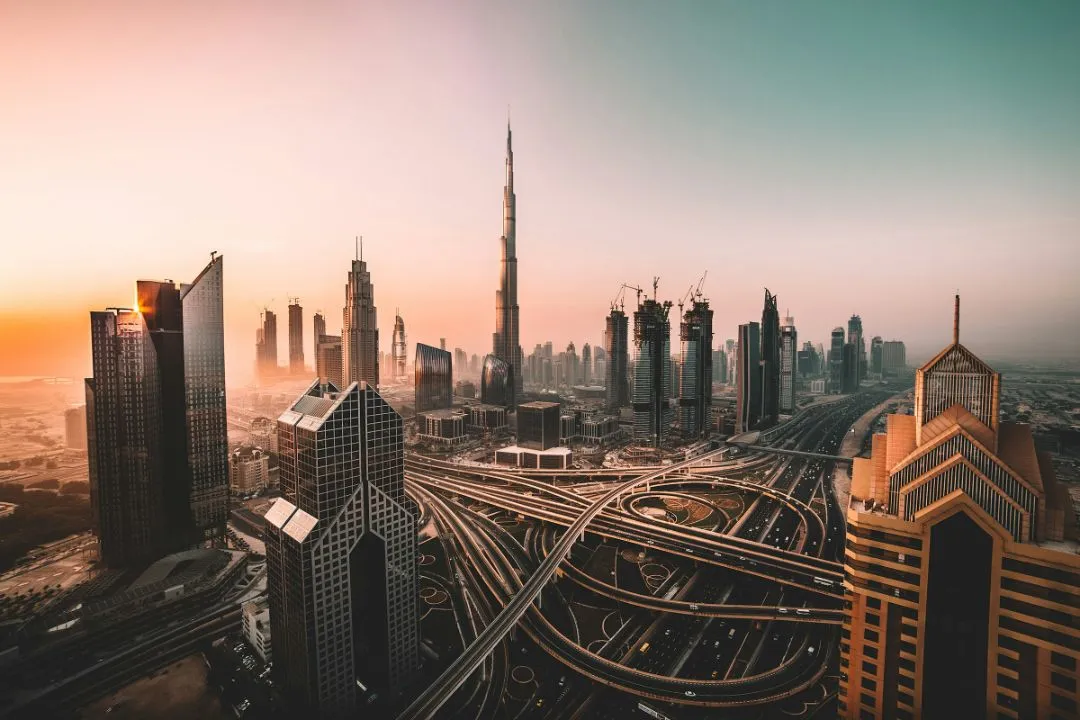
Photo by julien Tromeur on Unsplash


Korea’s strategy for metaverse promotion

In February last year, the Korean Ministry of Science and ICT revealed a metaverse promotion strategy involving a comprehensive support plan of 237 billion KRW ($179.6 million). This initiative seeks to cultivate an augmented reality ecosystem by developing metaverse platforms, fostering metaverse companies, and aiding their international expansion.

The expo will host exhibits centered around four key topics: metanomics, digital twins, education, and NFTs. Attendees will explore innovative business models, learn about the replication of physical objects in the virtual realm, discover the potential of the metaverse in reshaping educational approaches, and understand the role of non-fungible tokens in establishing digital ownership.


Side events to support businesses

In addition to the main exhibits, the expo will host various side events such as export and investment counseling sessions, new product presentations, and seminars. In collaboration with the Korea Trade-Investment Promotion Agency (KOTRA), a consultation program will be offered to encourage overseas buyers to engage with Korean companies. This program aims to support Korean businesses in promoting their products and services overseas, as well as connecting them with new buyers and investors who can contribute to their growth and expansion.

Previously known as the Seoul VR-AR Expo, this event has been an annual feature since 2018, with VR representing virtual reality and AR representing augmented reality. In line with evolving industry trends, the event was rebranded to the “Metaverse Expo” in 2022. This year’s event will mark its sixth running, further cementing its role as a beacon for developments in the rapidly advancing metaverse landscape.

More to Read
View All
Policy & Regulation·

Mar 13, 2024

Hong Kong regulator unveils stablecoin sandbox

Following December's release of proposed fiat-referenced stablecoin regulations, the Hong Kong Monetary Authority (HKMA) has progressed further with the introduction of a stablecoin sandbox.Photo by Nextvoyage on PexelsFormulating a regulatory regimeThe regulatory sandbox, announced through a press release published to the regulator’s website on March 12, encompasses stablecoin currencies beyond the Hong Kong dollar, although the HKMA refrained from specifying particular currencies. Eddie Yue, CEO of the HKMA, emphasized the sandbox's role as a platform for constructive dialogue between the regulatory authority and the industry. Yue stated:"The sandbox arrangement serves as an effective channel for the HKMA and the industry to exchange views on the proposed regulatory regime.”Yue further noted that such engagement is pivotal for formulating regulatory requirements conducive to the sustainable and responsible growth of the stablecoin issuance business. The stablecoin sandbox finds its digital footprint within the International Financial Centre on the HKMA's website. The documentation accompanying the sandbox outlines several key requirements for potential participants. These include demonstrating genuine interest and a feasible plan for issuing fiat-referenced stablecoins in Hong Kong, as well as a concrete strategy for engagement within the sandbox. Additionally, applicants must exhibit a reasonable prospect of compliance with the proposed regulatory framework. Minimum capital requirementsOne notable regulation proposed stipulates that issuers must be Hong Kong-based entities with a minimum capital requirement of HK$25 million ($3.2 million) or 2% of the stablecoin issuance, whichever is higher. The HKMA remains vigilant regarding public announcements by sandbox participants, ensuring that such declarations do not misconstrue endorsement or accreditation from the regulatory authority. In late January, reports suggested discussions between Harvest Global Investment, RD Technologies, Venture Smart Financial Holdings and the HKMA regarding their potential entry into the sandbox. Harvest Global Investment, boasting over $200 billion in assets under management, signifies a significant player in this evolving digital assets space.RD Technologies took to the X social media platform to publicize its approval of the HKMA’s stablecoin sandbox. It also availed of the opportunity to outline that it’s in the process of launching a Hong Kong dollar (HKD)-based stablecoin, which will be known by the short-code HKDR.Hong Kong-based fintech firm AnchorX also chimed in, stating that the sandbox is “a pivotal step forward for the industry, enabling informed dialogue and collaboration between regulators and fintech innovators.” Like RD Technologies, AnchorX is also looking to get involved in the stablecoin business, having developed the AxHKD Hong Kong dollar-based stablecoin, which it is currently beta testing, in collaboration with Conflux Network. Juan Leon, crypto analyst with Bitwise Asset Management, suggested that the move is a great initiative, while calling on the U.S. Federal Reserve Chair Jerome Powell to follow Hong Kong’s example. On the tokenization front, Hong Kong made headlines in 2023 with the issuance of the world's largest native digital bond — a green bond exceeding $750 million. Late last year, it also proposed regulations relative to tokenization of real-world assets.Guidance provided to banks on tokenization, coupled with plans for forthcoming legislation, further solidifies Hong Kong's position as a trailblazer in the realm of digital finance.  

news
Web3 & Enterprise·

Dec 01, 2023

Late Korean artist Lee Jung-seob’s ‘Bull’ NFT on auction at OpenSea

Late Korean artist Lee Jung-seob’s ‘Bull’ NFT on auction at OpenSeaNFT marketplace OpenSea is hosting an ongoing auction for a digital representation of the painting “Bull” by the late Korean artist Lee Jung-seob, Yonhap News TV reported on Tuesday. Celebrated for his distinctive lines in his paintings, Lee passed away in 1956. This auction is set to conclude on Dec. 12, with the starting bid placed at 300 WETH (Wrapped Ethereum), which is approximately equivalent to $626,000.Photo by Hans Eiskonen on UnsplashWhite bull as NFTLee’s “Bull,” featured in the OpenSea auction, is distinguished by its depiction of a white bull set against a dark green background. This particular piece is one of Lee’s unpublished works and is currently being offered for sale by a private art collector. Regarding the authenticity of the painting, the description on the OpenSea page states, “This work received a handwritten evaluation from Professor Jung Jum-sik, a founding member of the Lee Jung-seob Art Award, on November 9, 2000.”The current owner of the original artwork has expressed their intention for auctioning it as a desire to share a valuable piece of art. The painting originally belonged to poet Ku Sang and has since changed hands multiple times, experiencing some damage along the way. While the copyright for an artist’s work typically remains with their inheritors for 70 years posthumously, in the case of Lee Jung-seob, this period has already lapsed.Authenticity and NFT investmentsMeanwhile, art appraisal experts are advising caution, emphasizing the need to first confirm the authenticity of the original painting. This caution stems from the fact that the painting has not undergone evaluation by an official appraisal organization.During his interview with Yonhap, Jung Jun-mo, CEO of Korea Art Authentication Appraisal Inc., offered a word of caution regarding investment in NFTs tied to artworks with questionable authenticity. He emphasized that NFTs representing works that lack genuine authentication also hold no value in terms of authenticity. Jung advised potential investors to thoroughly verify the legitimacy of such artworks before proceeding with any investment in their NFT representations.Last year, many paintings of modern Korean artists were converted into NFTs, but they sparked controversy over issues of authenticity. Experts in art investment have since been advising thorough research prior to making any investments in these digital assets. They warn that losses incurred from transactions involving these NFTs fall squarely on the investors.

news
Policy & Regulation·

Apr 28, 2025

Russian exchange raided against backdrop of cash-to-crypto ban proposal

Mosca, a cash-to-crypto exchange headquartered at the Moscow International Business Center, was subject to a raid carried out by the Russian authorities on April 23. The raid occurred in the immediate aftermath of a call from a member of the commission of the Public Chamber (OP) of the Russian Federation to ban crypto exchanges from facilitating the purchase of cryptocurrencies using cash.Photo by Egor Filin on UnsplashInvestigating fraudWhile attending the Blockchain Life 2025 event in Moscow, Mosca’s Head of Development, Dmitry Titarenko, confirmed to Cointelegraph that the rationale provided for the raid was that it was in connection with fraud perpetrated by one of its platform users. Titarenko added: “Law enforcement agencies have carried out a standard procedure of checking our customer data.” The raid occurred during the company’s attendance at the Blockchain Life conference. Mosca was a key conference participant, having established two stands at the event and winning an award for the best crypto exchange service. Reporting on the raid, local media outlet Baza said that it had been carried out in relation to fraud perpetrated against the former head of the Samara Region Development Corporation, Olga Serova. It explained that Serova had been conned into handing over 350 million rubles ($4.24 million) and $800,000 to the scammers.  Seven arrestsShe withdrew these funds from her bank at the end of last year, despite bank officials having tried to persuade her against the withdrawal for this purpose. The news outlet added that to date, seven people have been arrested in connection with the alleged fraud. The Mosca exchange service may be proving to be attractive to scammers as the platform allows users to buy up to 100,000 USDT per day using cash. Titarenko couldn’t confirm that the raid was carried out in connection with the Serova fraud case. He said that “maybe it was [in relation to] another client.”The exchange executive also confirmed that the company had been in the process of putting in place more resources to carry out anti-money laundering (AML) and know-your-customer (KYC) checks, together with a blacklisting system related to suspicious platform users. Cash-to-crypto ban proposalThe raid occurred within 24 hours of Yevgeny Masharov, a member of the commission of the Public Chamber (OP) of the Russian Federation, putting forward a proposal to ban crypto exchanges from receiving cash, making services like Mosca’s cash-to-crypto exchange illegal. According to state-owned Russian news agency TASS, Masharov said that such a move would “cause a large-scale blow to scammers, because it’s no secret that telephone scammers use crypto exchangers to withdraw cash.”Sergey Mendeleev, a well-known figure within crypto circles in Russia, told attendees at the Blockchain Life conference that such a cash-to-crypto ban would be an unwelcome development for the sector. If such a ban were to materialize, Mendeleev suggested that it would be an indication that the Russian authorities were turning away from the greater development of cryptocurrency in Russia. Last week, it emerged that Russia’s Ministry of Finance, in collaboration with the country’s central bank, plans to launch a crypto exchange for qualified investors. The central bank also confirmed plans to launch a digital ruble payment network in 2026.

news
Loading