Top

Korean crypto exchanges list Trump-linked cryptocurrencies

Web3 & Enterprise·September 02, 2025, 5:25 AM

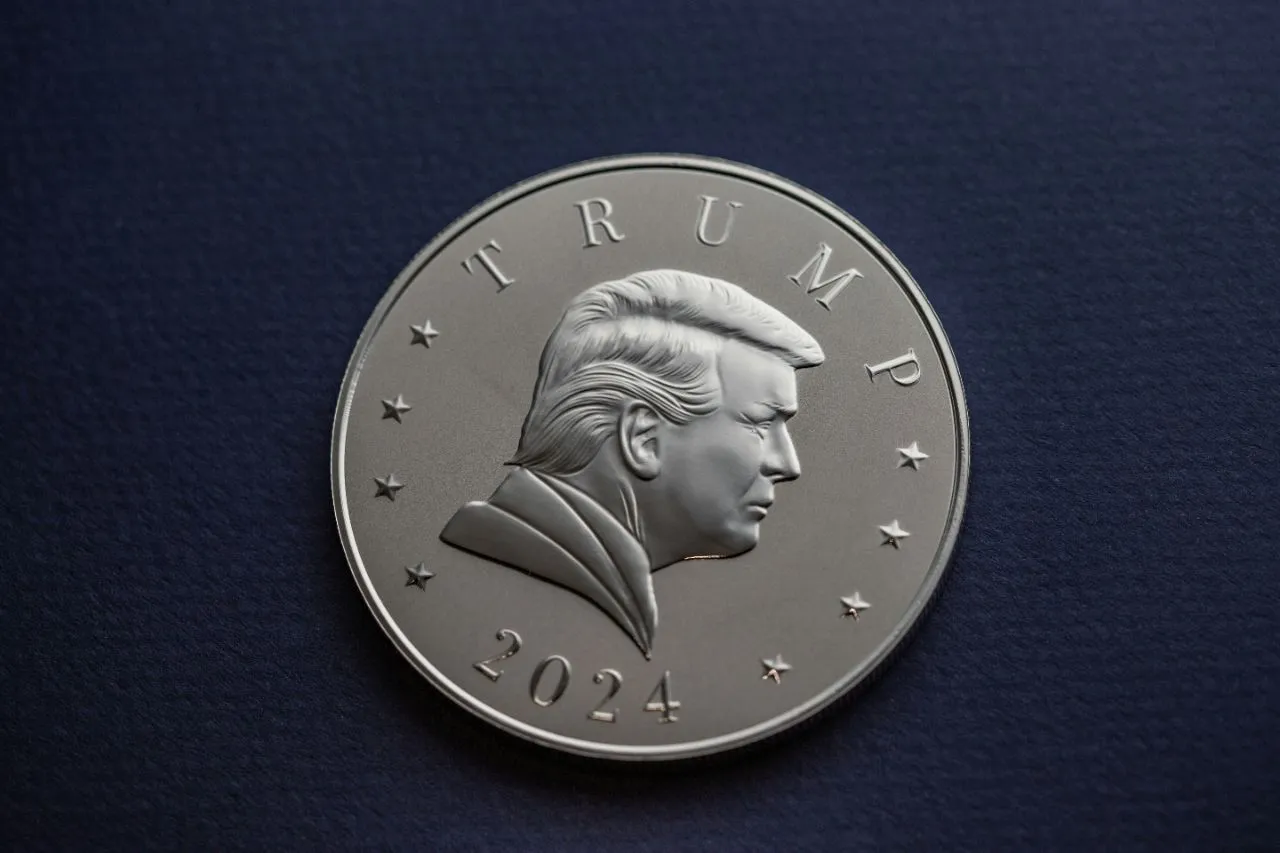
Cryptocurrencies tied to the family of U.S. President Donald Trump began trading on South Korea’s major exchanges on Monday.


Upbit, the country’s largest exchange, listed WLFI—the native token of World Liberty Financial, a DeFi platform backed by the Trump family—and World Liberty Financial USD (USD1), a stablecoin the platform says is pegged 1:1 to the U.S. dollar and backed by dollars and government money market funds. Bithumb also listed both WLFI and USD1, while Coinone listed WLFI only.
https://asset.coinness.com/en/news/8cdbcae8b4a6a0aad470e9f5784ab395.webp
Photo by Scottsdale Mint on Unsplash

From global listings to a volatile debut

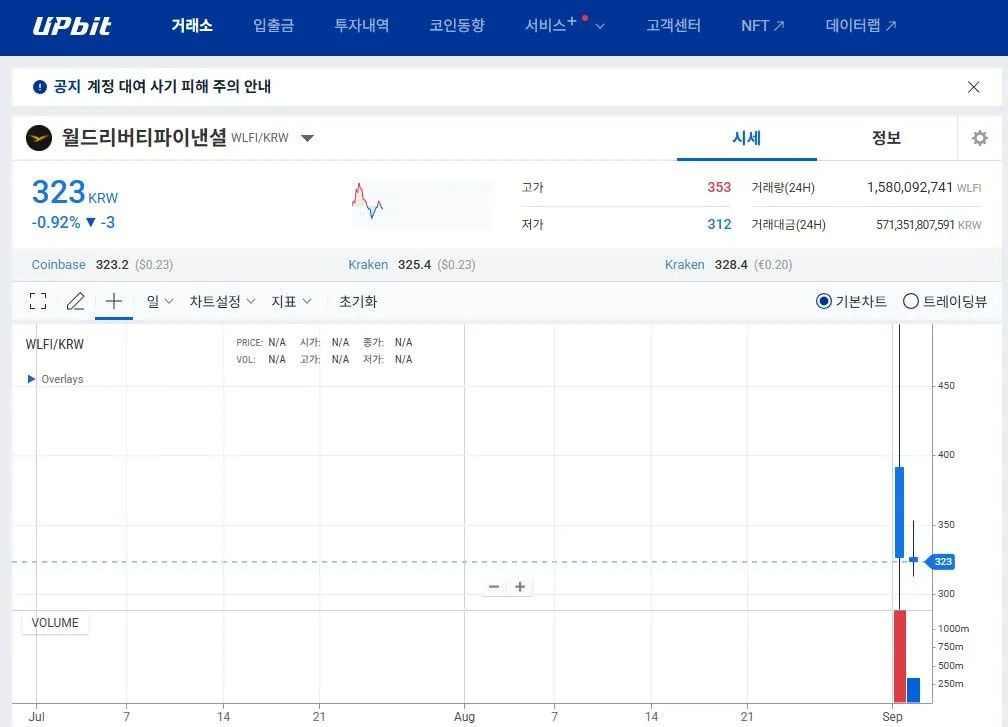
WLFI’s first session was volatile. It opened on Upbit at a floor price of 433.76 won ($0.31) and, roughly 17 hours later, was down about 25% at 323 won ($0.23) at the time of publication.
https://asset.coinness.com/en/news/ddebe18a850dcbf79d22ca0153c03238.webp
Source: WLFI/KRW spot trading pair on Upbit

The Korean launch comes alongside listings on major global venues, including Binance and Coinbase. Until its exchange listings, WLFI holders had been unable to trade their tokens. The Wall Street Journal estimated the Trump family’s holdings, representing less than a quarter of the supply, to be worth close to $5 billion after the listing. Trump’s three sons are named as co-founders of World Liberty, which says tokens allocated to founders and team members will remain locked. President Trump is described as the project’s “co-founder emeritus.”


Political controversy over crypto and holdings

The project has drawn criticism from those who argue it could serve as a conduit for influence, with partners and investors seeking political favor. In April, Democratic lawmakers Senator Elizabeth Warren and Representative Maxine Waters warned the U.S. Securities and Exchange Commission that the family’s stake posed “an unprecedented conflict of interest” in oversight of the crypto industry. Later, White House press secretary Karoline Leavitt said, “Neither the President nor his family have ever engaged, or will ever engage, in conflicts of interest.”


Controversy over public officials’ crypto exposure is not new. Recently, it was reported by The Chosun Ilbo that as of Aug. 14, Lee Eog-weon, nominee to chair South Korea’s Financial Services Commission (FSC), held 10 shares of Strategy, a Nasdaq-listed Bitcoin treasury company with 632,457 BTC in reserves. The disclosure indicates no legal violation because the holdings predate his nomination, but it highlights tension with his public views. In a letter to parliament ahead of his confirmation hearing, Lee questioned crypto’s intrinsic value and argued its volatility undermines its utility as a store of value or medium of exchange.


If Lee were not seeking a government post, his holdings of crypto-related stocks would hardly surprise South Koreans. According to Money Today, citing data from the Korea Securities Depository (KSD), Korean investors increased purchases of crypto-related U.S. equities amid expectations of U.S. rate cuts. Bitmine Immersion Technologies—a Bitcoin miner that also accumulates Ethereum as a treasury asset—was the second-most purchased U.S. stock by Koreans in August, with net buys of $252.77 million, or 7.6% of all purchases among the top 50 U.S. stocks. Stablecoin issuer Circle ranked 10th at $92.62 million, and the GraniteShares 2x Long COIN Daily ETF, which delivers twice the daily price movement of Coinbase, ranked 11th at $90.74 million. In total, crypto-related stocks and ETFs accounted for 30.4% of the top 50 U.S. equity holdings by value.


South Korea weighs spot ETFs amid investor surge

Policy is moving in tandem with market interest. Spot crypto ETFs have recently been elevated to South Korea’s national agenda, opening the door to potential approval. Analysts say such products could repatriate demand that has been flowing overseas. Kim Jin-young of Kiwoom Securities argues that expanded regulatory approval could reshape Korea’s capital market by widening investor access, drawing in institutional capital, stabilizing prices, and diversifying available crypto-linked products.

 

More to Read
View All
Web3 & Enterprise·

Jul 17, 2023

CertiLife Secures Funding for Blockchain-Based Medical Device Warranties

CertiLife Secures Funding for Blockchain-Based Medical Device WarrantiesCertiLife, a South Korean startup that specializes in blockchain-based warranty services for medical devices, has recently secured seed funding from dentists and the blockchain industry. The amount of the investment remains undisclosed, as reported by local media outlet Mirakle Ahead.Photo by Jonathan Borba on UnsplashBlockchain advantagesCertiLife leverages the power of blockchain technology to issue warranties for medical devices. Unlike traditional physical warranties, CertiLife’s digital warranties are not only environmentally friendly but also offer cost-saving benefits to medical device manufacturers. This is achieved by eliminating the need for physical resources.Through messaging appCertiLife’s blockchain-powered warranties are issued through South Korea’s popular messaging app KakaoTalk, providing convenience to clinics and patients. They can be easily managed using Klip, a digital asset wallet developed by GroundX, a blockchain subsidiary of Kakao Corp.One of the investors expressed expectations that blockchain-based warranties would address the inconvenience and risk of loss associated with traditional warranties. The investor said that CertiLife’s digital warranties will ensure secure data management, save time, and offer improved convenience.CEO Kim Do-hee of CertiLife emphasized the company’s commitment to utilizing investment funds to enhance its services. Kim said that CertiLife is actively preparing to collaborate with various medical device manufacturers and also exploring opportunities to expand into international markets later this year.

news
Policy & Regulation·

May 03, 2023

VCs Say US Crypto Crackdown Opportunity for Asia

VCs Say US Crypto Crackdown Opportunity for AsiaA couple of Hong Kong-based venture capitalists told Bloomberg TV in an interview that aired on Tuesday that the current crypto crackdown in the United States is a boon for Asia and particularly for Hong Kong in establishing itself as a global crypto hub.© Pexels/lalesh aldarwishMartin Baumann, Managing Partner and Co-Founder of CMCC Global, one of Asia’s first VC funds focused purely on blockchain and crypto, said that “Hong Kong has always been a financial capital of Asia and we believe in this location.”Golden opportunityWhile the fund has a global mandate, it believes that investor focus is shifting away from North America towards Asia. Baumann’s colleague, CMCC Global Managing Partner and Co-Founder Charlie Morris said that “the US has been quite negative from the regulatory perspective and it really seems to us that the US is shooting itself in the foot with a machine gun.”Morris elaborated, stating that the US crypto crackdown is handing a golden opportunity to other world regions to lead on blockchain and crypto. Baumann chimed in to clarify that one third of all blockchain equity deals are currently being done in Asia. He maintains that most of the investment community in the West doesn’t appreciate the extent to which capital is being committed into the space by Asian entities.Morris expanded further: “We see places like Hong Kong having a real opportunity at this point in time to bring those firms and entrepreneurs to the city.”Launching $100M blockchain fundAgainst that backdrop CMCC Global is launching a $100 million fund, where funding will be allocated to blockchain projects. Specifically the duo are targeting crypto and blockchain firms at Series A and Series B funding stages. Baumann believes that in tandem with the fact that there’s a lot of innovation emerging in Asia, “there’s plenty of capital sitting on the sidelines waiting for the right entry valuations to pull the trigger.”While Baumann and Morris are majority stakeholders in CMCC Global, the Winklevoss twins (Cameron and Tyler Winklevoss) also have an equity stake in the business. Founders of the Gemini crypto exchange platform, they are investors alongside Hong Kong based Richard Li, who has a net worth estimated to be in the region of $4.6 billion.VC investment into crypto slowed down considerably since the onset of the most recent crypto winter. However, that activity has still been ongoing, something that is entirely different to the 2018 bear market when investment came to a complete standstill. In April, CMCC partnered with Switzerland-based Syz Group with the objective of establishing a funding vehicle with a minimum $50 million fund earmarked for crypto-centric hedge fund investment.Meanwhile, in speculating on the prospects of bitcoin, the CMCC duo expressed the view that double digit gains are well within reach. Morris envisages a Bitcoin unit price of $40,000 in 2023. From a long term perspective the CMCC co-founder suggested that “I can easily see us breaking all time highs and easily breaking $100,000 for bitcoin.”

news
Web3 & Enterprise·

Jun 14, 2023

Finblox Launching Tokenized US Treasury Bonds

Finblox Launching Tokenized US Treasury BondsHong Kong-based cryptocurrency firm Finblox has unveiled a groundbreaking solution aimed at meeting the growing demand among crypto investors for traditional assets that generate yields. By launching tokenized rights to US Treasury Bills (T-Bills), the company seeks to bridge the gap between the crypto and traditional financial worlds.In a tweet thread posted on Tuesday, the company set out some detail on the product offering it has been working on. In collaboration with smart-contract vault OpenEden, Finblox aims to tap into the trillion-dollar market of Web3 users. Finblox is a crypto app, with the enterprise being backed by leading venture capital firms such as Dragonfly Capital, Sequoia Capital, and Saison Capital. This innovative offering provides crypto investors with access to a highly secure AAA-rated financial asset, leveraging the advantages of blockchain technology.Photo by Karolina Grabowska on PexelsYield generationUnlike stablecoins, which have failed to deliver substantial returns, and crypto lending, which carries notable risks as recent defaults and insolvencies in the digital asset sector have shown, tokenized US T-Bills provide a reliable investment option.By converting the rights to these assets into digital tokens that can be traded and held within the blockchain ecosystem, Finblox enables fractional ownership. This means that users can invest small amounts and still earn proportional yields, opening up investment opportunities to a wider range of individuals.Through the Finblox platform, users can directly benefit from the yield generated by these tokenized T-Bills. Historically, Treasury Bills have been regarded as blue-chip financial assets, offering reliable returns and serving as a benchmark for global financial markets.OpenEden integrationTo ensure transparency and security, Finblox has integrated the T-Bill vault of Singapore-based OpenEden with decentralized blockchain Chainlink. This integration provides on-chain verification, guaranteeing that Finblox’s T-Bill tokens are backed by US Treasury securities, USDC stablecoins, and US dollars on a 1:1 basis.Finblox founder Peter Hoang emphasized the seamless and secure bridge that T-Bills offer between traditional and emerging markets in an interview with Tech in Asia. He stated: “With T-Bills, we are offering users a real-world asset while also benefiting from the custody of a regulated financial institution. It’s a seamless and secure bridge for both traditional and emerging markets, bringing safer yields to a wide range of users.”To access Finblox’s T-Bill tokens, investors need to follow a straightforward process. Initially, they must obtain USDC from a reputable exchange, either through Finblox or other exchanges. Once the know-your-customer (KYC) verification process is completed, users can swap their USDC for T-Bills within the Finblox platform.To enhance transparency, Finblox makes its wallets publicly available, enabling users to track deposits and withdrawals and verify the accuracy of transactions. The company also holds working capital in hot wallets to facilitate withdrawals below 2% of the entire pool, ensuring swift processing within three business days.It’s understood that Finblox will market the product offering to users in the Philippines, Indonesia, India, and Vietnam, among other jurisdictions within Asia.

news
Loading