Top

South Korea's ruling party forms task force to expedite stablecoin legislation

Policy & Regulation·September 24, 2025, 6:35 AM

South Korea’s ruling Democratic Party has set up a new task force to accelerate the creation of a clear regulatory framework for stablecoins, aiming to unify competing legislative proposals ahead of government guidelines expected in October.


According to Etoday, the nine-member group, chaired by Representative Lee Jung-moon of the National Policy Committee, is composed of lawmakers from three key parliamentary committees. Its primary objective is to consolidate the party's position on digital asset policy and coordinate with the Financial Services Commission (FSC) to establish a definitive rulebook for the burgeoning sector.


Lee stated that the task force would work to harmonize multiple stablecoin bills already circulating within the party, noting that there was mounting pressure from both regulators and the private sector. He explained that government agencies had urged swift legislative action, while financial institutions and exchanges preparing to launch won-pegged stablecoins were waiting for regulatory certainty.
https://asset.coinness.com/en/news/4dc3f3cedadf5744b5e9327858b0aa2d.webp
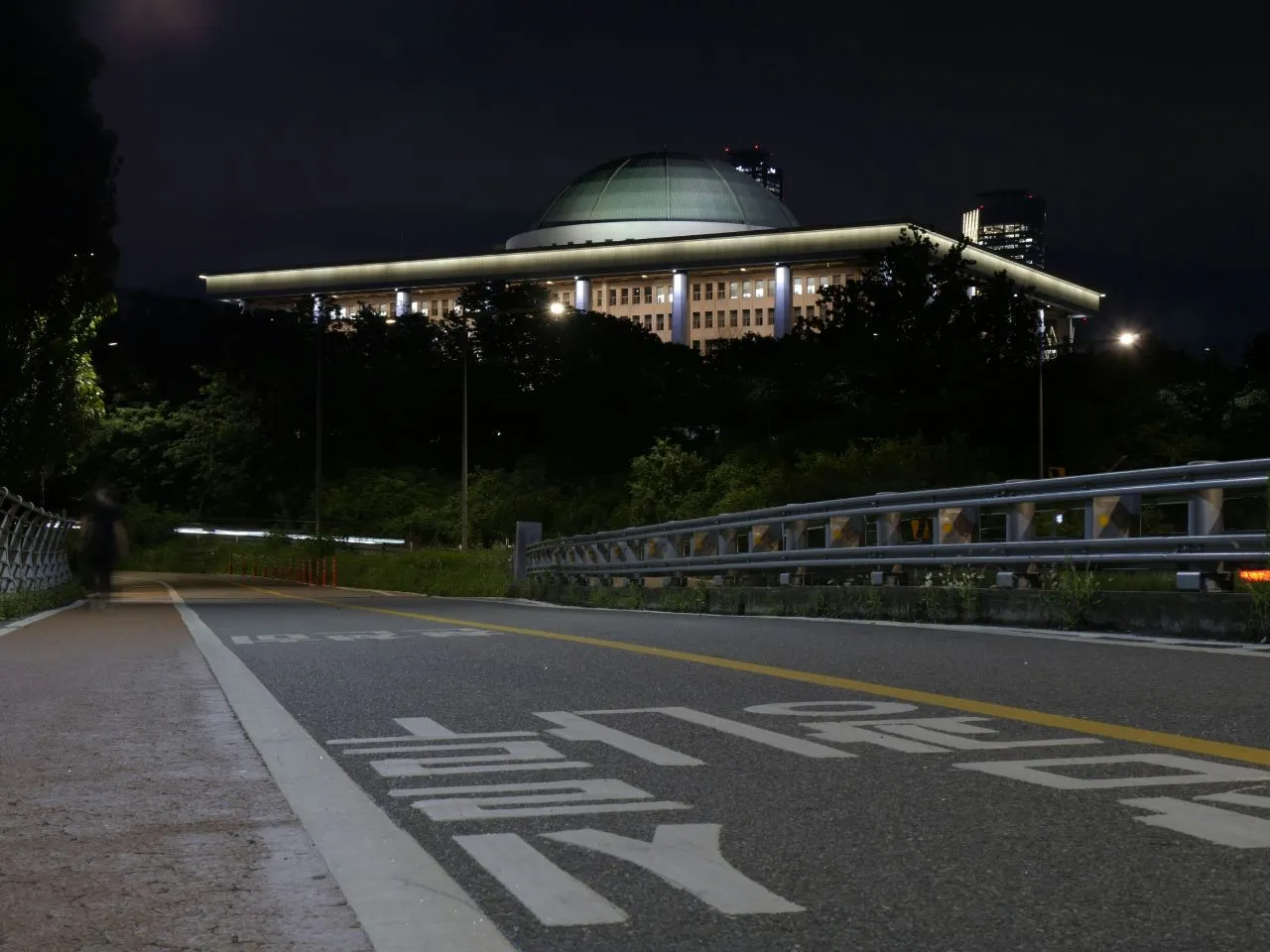
Photo by SC Jang on Unsplash

Regulatory debate over capital standards

A central point of contention for the task force will be establishing appropriate capital requirements for stablecoin issuers. Current proposals vary in scope, with suggested thresholds ranging from 500 million won (approximately $358,000), a figure intended to encourage fintech innovation, to as high as 5 billion won (about $3.58 million) to prioritize investor protection. The committee is tasked with striking a balance between fostering market growth and ensuring financial stability.


Seoul's initiative reflects a broader global movement toward formal oversight of fiat-backed digital currencies. The U.S. passed its GENIUS Act for stablecoins in July, while the EU has implemented its Markets in Crypto-Assets (MiCA) regulation. Similarly, Japan amended its Payment Services Act in 2023 to restrict stablecoin issuance to licensed banks and registered financial firms.


Former White House crypto advisor’s input

The push for clear rules has drawn keen interest from industry leaders. Speaking at Korea Blockchain Week 2025 in Seoul, Bo Hines, chief executive of Tether USAT, stressed the regulatory clarity provided by the GENIUS Act in the U.S. According to ZDnet Korea, he noted that his company's new dollar-backed token, USAT, is designed for full compliance with U.S. law, featuring one-to-one reserves and audits by top-tier accounting firms to attract institutional investors.


Hines, a former digital assets adviser at the White House, clarified that USAT is intended to serve the regulated U.S. market, complementing Tether’s flagship product, USDT, which has a global user base exceeding 500 million. He also discussed Tether’s view of South Korea as a key market, pointing to the significant USDT trading volumes there. Hines encouraged the country to adopt comparable stablecoin standards and expressed optimism that it would move toward a more open and efficient global financial network.


With the FSC’s guidance approaching, the Democratic Party’s task force is working to reconcile differing legislative proposals. The resulting framework will shape the pace at which stablecoins move from pilot projects to an established part of South Korea’s financial system.

 

More to Read
View All
Policy & Regulation·

Apr 28, 2023

Hong Kong to Issue Digital Asset Licensing Guidelines in May

Hong Kong to Issue Digital Asset Licensing Guidelines in MayAccording to Hong Kong’s Securities and Futures Commission (SFC), the Commission will issue new guidelines for virtual asset exchanges within the Chinese autonomous special administrative region (SAR).© Pexels/Jimmy ChanSFC CEO Julia Leung made that announcement while speaking at an event in the city on Thursday, indicating that the guidelines are due to be released next month. Additionally the autonomous region intends to introduce a new licensing system from June 1 onwards, enabling the retail investors among Hong Kong’s populace to trade leading cryptocurrencies like Bitcoin and Ethereum.Hong Kong authorities had provided an insight into this approach back in February, when plans to provide retail access to digital assets were first set out. At the time, they outlined the need for retail customers to pass a knowledge test relative to digital assets or otherwise only being allowed to trade such assets once the customer had completed a certain level of training relative to digital assets, provided by a regulated crypto service provider.This latest announcement has arrived amid a backdrop of a series of recent indications that signify the intent of authorities in Hong Kong to make the autonomous region a major financial hub centered around digital assets.Leung articulated that the further development of this digital assets framework follows a consultation process that attracted more than 150 responses. Although virtual asset service providers (VASPs) will need to await the complete rollout of the licensing system, a handful of crypto businesses such as OSL and Hashkey, under the supervision of the Hong Kong regulator, have already started to offer their services.Crypto as propertyA Hong Kong court recently recognized cryptocurrency as property. The ruling emerged in a bankruptcy hearing pertaining to failed cryptocurrency exchange Gatecoin. In presiding over the case, Justice Linda Chan outlined that the autonomous region takes a broad view of what constitutes property. In finding crypto to meet the definition of property, she went on to clarify that it therefore has the capability of being held in trust.The finding has particular relevance in the crypto world right now given the consequences of an “in trust” custodianship of customer’s digital assets relative to numerous ongoing bankruptcy processes involving failed crypto businesses, and the pecking order of creditors in those instances, in their efforts to recover their digital assets.Positive approachWhile mainland China remains an adverse territory relative to digital assets, Hong Kong has taken to welcoming the sector and with that, enticing crypto firms to relocate to the autonomous region from the mainland. Leadership in the city has been making all the right soundings to demonstrate that it is actively trying to nurture the nascent sector.While recent months have seen the Biden administration in the United States attempt to close off banking from the crypto sector, in contrast, Hong Kong’s largest virtual bank, ZA Bank, was recently given permission to act as a settlement bank for regulated Web3 businesses located within Hong Kong.

news
Web3 & Enterprise·

Dec 03, 2024

DWF Labs switches headquarters from Singapore to Abu Dhabi

DWF Labs, a Singapore-based crypto sector investment firm and market maker, has decided to move its headquarters to Abu Dhabi in the United Arab Emirates (UAE). Alongside its current offices and headquarters in Singapore, the company has established offices in Dubai, Hong Kong, Switzerland, South Korea and the British Virgin Islands (BVI).Photo by Adnan Uddin on PexelsFocusing on MENA growthIn an X post published on Dec. 2, DWF Labs Co-Founder Andrei Grachev announced the change of headquarters location from Singapore to Abu Dhabi, stating: “In order to build a strong presence in the Middle East and run more RWA [Real World Assets] and financial services there, @DWFLabs is moving the headquarter to Abu Dhabi.” Grachev added that more news in this regard will be announced soon, advising stakeholders to stay tuned regarding the matter. In the past, the DWF Labs founder has highlighted the significance of the Middle Eastern market.  Earlier this year, he suggested that the Middle East and North Africa (MENA) market is “one of the fastest growing markets in the world,” while commenting on the firm’s partnership with the Dubai Multi Commodities Centre (DMCC), a Dubai-based ecosystem for blockchain and distributed ledger technologies.  That isn’t the firm’s only partnership within the UAE. In September, it emerged that it had partnered with Abu Dhabi-based Web3 venture capital firm Klumi Ventures. The firms intend to collaborate in relation to the offering of strategic crypto advisory services in the UAE, investments and market making, market education and in the facilitation of over-the-counter (OTC) deals and crypto asset options. Strategic positioningAt the time, Grachev said that the two firms were “strategically positioned to drive the digital transformation in the UAE,” with the ability to empower both new market entrants and established institutions to succeed within the digital assets arena. It appears that Grachev has been spending a significant amount of time in Abu Dhabi of late. On Sept. 25, he posted on X that he had arrived in Abu Dhabi and was “cooking something special for the industry.” He followed up on that more recently, posting a selfie on X on Nov. 25 with the caption “Chef cooking in Abu Dhabi.” The authorities in both Dubai and Abu Dhabi, as well as Singapore, have all been working towards attracting crypto startups to their cities. All of them have had some success in that regard, although DWF Labs’ move away from Singapore indicates how competitive this environment is and how mobile crypto startups are. ADGM crypto hubIn the case of Abu Dhabi, most crypto sector activity has happened within the city’s international financial centre (ADGM), which has attracted projects such as the Kaia DLT Foundation, stablecoin issuer Paxos, blockchain infrastructure firm Blockdaemon, crypto custodian Liminal, crypto venture capital fund Token Bay Capital and many others. DWF Labs was first founded in Singapore in 2022. It has established ecosystem funds and grants relative to projects such as EOS, Floki, Gala Chain, Klaytn and TON. Additionally, the firm has just announced the launch of a $20 million fund focused on meme coin projects.

news
Policy & Regulation·

Apr 28, 2025

Russian exchange raided against backdrop of cash-to-crypto ban proposal

Mosca, a cash-to-crypto exchange headquartered at the Moscow International Business Center, was subject to a raid carried out by the Russian authorities on April 23. The raid occurred in the immediate aftermath of a call from a member of the commission of the Public Chamber (OP) of the Russian Federation to ban crypto exchanges from facilitating the purchase of cryptocurrencies using cash.Photo by Egor Filin on UnsplashInvestigating fraudWhile attending the Blockchain Life 2025 event in Moscow, Mosca’s Head of Development, Dmitry Titarenko, confirmed to Cointelegraph that the rationale provided for the raid was that it was in connection with fraud perpetrated by one of its platform users. Titarenko added: “Law enforcement agencies have carried out a standard procedure of checking our customer data.” The raid occurred during the company’s attendance at the Blockchain Life conference. Mosca was a key conference participant, having established two stands at the event and winning an award for the best crypto exchange service. Reporting on the raid, local media outlet Baza said that it had been carried out in relation to fraud perpetrated against the former head of the Samara Region Development Corporation, Olga Serova. It explained that Serova had been conned into handing over 350 million rubles ($4.24 million) and $800,000 to the scammers.  Seven arrestsShe withdrew these funds from her bank at the end of last year, despite bank officials having tried to persuade her against the withdrawal for this purpose. The news outlet added that to date, seven people have been arrested in connection with the alleged fraud. The Mosca exchange service may be proving to be attractive to scammers as the platform allows users to buy up to 100,000 USDT per day using cash. Titarenko couldn’t confirm that the raid was carried out in connection with the Serova fraud case. He said that “maybe it was [in relation to] another client.”The exchange executive also confirmed that the company had been in the process of putting in place more resources to carry out anti-money laundering (AML) and know-your-customer (KYC) checks, together with a blacklisting system related to suspicious platform users. Cash-to-crypto ban proposalThe raid occurred within 24 hours of Yevgeny Masharov, a member of the commission of the Public Chamber (OP) of the Russian Federation, putting forward a proposal to ban crypto exchanges from receiving cash, making services like Mosca’s cash-to-crypto exchange illegal. According to state-owned Russian news agency TASS, Masharov said that such a move would “cause a large-scale blow to scammers, because it’s no secret that telephone scammers use crypto exchangers to withdraw cash.”Sergey Mendeleev, a well-known figure within crypto circles in Russia, told attendees at the Blockchain Life conference that such a cash-to-crypto ban would be an unwelcome development for the sector. If such a ban were to materialize, Mendeleev suggested that it would be an indication that the Russian authorities were turning away from the greater development of cryptocurrency in Russia. Last week, it emerged that Russia’s Ministry of Finance, in collaboration with the country’s central bank, plans to launch a crypto exchange for qualified investors. The central bank also confirmed plans to launch a digital ruble payment network in 2026.

news
Loading