Top

India’s RBI Cites Stablecoin Risks With Call for Global Regulation

Policy & Regulation·June 29, 2023, 7:06 AM

In its latest Financial Stability Report released on Wednesday, the Reserve Bank of India (RBI) expressed concerns about the potential harm stablecoins could inflict on emerging markets and developing economies (EMDE).
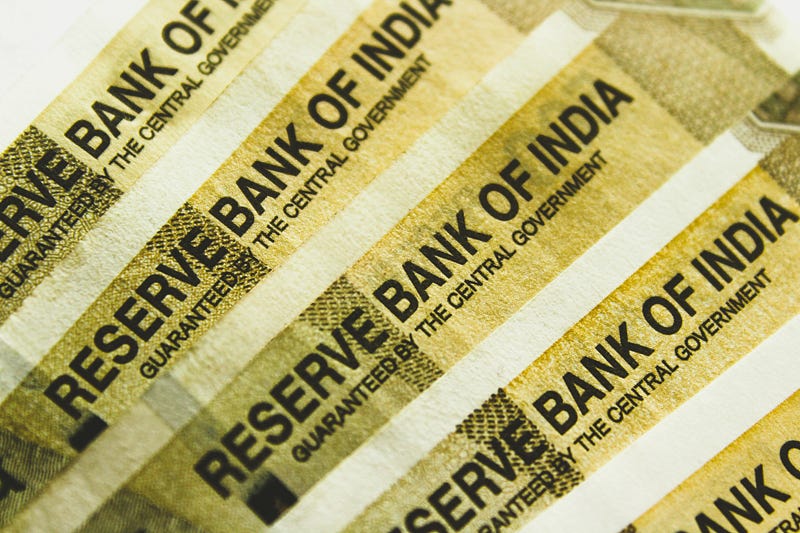
Photo by rupixen.com on Unsplash


Perennial critic

The RBI has been a consistent critic of cryptocurrencies, but particularly so in the case of stablecoins, from an EMDE perspective. However, the lack of authenticated data and inherent data gaps in the crypto ecosystem hindered a comprehensive assessment of financial stability risks.

According to the report, one of the ways stablecoins could pose a threat to an EMDE is through currency substitution. Since the underlying assets of stablecoins are generally denominated in freely convertible foreign currencies, the widespread adoption of stablecoins could lead to currency mismatches on the balance sheets of banks, firms, and households, resulting in an increased risk to the economy.


Monetary policy headache

Furthermore, the presence of stablecoins in the economy could create challenges for an EMDE’s central bank in setting domestic interest rates and managing liquidity conditions. The decentralized, borderless, and pseudonymous characteristics of crypto-assets make them potentially attractive instruments for circumventing capital flow management measures.

Another concern highlighted by the RBI is that stablecoins could undermine credit risk assessment and interfere with banks’ ability to mobilize money and create credit by offering an alternative to the domestic financial system. Additionally, the report emphasized the difficulty in tracking peer-to-peer transactions, on the basis that they increase the potential for illicit activities.

In light of these risks, the RBI reiterated its call for global coordination and regulation. It emphasized the need for a globally coordinated approach to analyze the risks posed to EMDEs compared to advanced economies (AEs). As India holds the G20 presidency, one of its priorities is to establish a framework for the global regulation of unbacked crypto-assets, stablecoins, and decentralized finance (DeFi).


Establishing a CBDC

While the RBI has been cautious about cryptocurrencies, it has shown more enthusiasm for central bank digital currencies (CBDCs). In November, the RBI launched a wholesale digital rupee pilot project. It followed that up in February with a retail digital rupee pilot project. In March, it signed an agreement with the Central Bank of the United Arab Emirates to study a CBDC bridge aimed at facilitating trade and remittances.

By calling for global regulation and highlighting the risks associated with stablecoins, the RBI aims to foster a safer and more secure environment for financial transactions while exploring the potential benefits of CBDCs in facilitating trade and remittances.

As the discussions around stablecoins and CBDCs continue, we’re likely to see ever greater collaboration between regulators, policymakers, and international organizations with a view towards establishing a comprehensive regulatory framework that addresses the challenges and harnesses the potential of digital assets on a global basis.


More to Read
View All
Policy & Regulation·

May 09, 2023

Bank of Korea Conducts Successful CBDC Pilot Test with Financial Institutions

Bank of Korea Conducts Successful CBDC Pilot Test with Financial InstitutionsThe Bank of Korea (BOK) announced yesterday in a press release that its central bank digital currency (CBDC) pilot program operated successfully in a practical setting involving multiple financial institutions.Testing environmentsPreviously, the CBDC system was tested in an isolated cloud environment. In this recent test, the system was installed on the servers of various financial institutions over a five-month period to evaluate its performance.The 1.2 billion KRW ($905,000) project included the participation of six companies, such as Kakao’s Krust Universe, KakaoBank, and KakaoPay, as well as 14 banks and the Korea Financial Telecommunications and Clearings Institute. Kookmin, Shinhan, and Woori were among the participating banks.Four scenariosThe BOK and financial institutions tested the system’s performance under four scenarios: increasing transaction requests per second, increasing the number of active users, reducing the transaction queue size, and adjusting the block generation time ratio.The increase in transaction requests led to a 10% decrease in transactions per second (TPS), from 2,100 TPS to 1,900 TPS, compared to the single cloud environment test. This result is still deemed acceptable, as the highest TPS recorded in the current small payment infrastructure network is 1,200, which occurs on paydays and other high-transaction days.Issues such as slower response times arose with higher transaction request volumes but were resolved by enlarging the transaction queue size and increasing the block formation time proportion in the block generation process. The block generation process involves two stages: block formation, where transactions are recorded, and block validation, where transactions are verified.Greater stabilityThe test demonstrated that transaction errors at individual institutions did not affect others, suggesting that a distributed ledger system offers greater management stability than a centralized system. However, institutional officers cited challenges in problem-solving and communication when using the distributed ledger system.The BOK plans to involve more institutions in ongoing experiments this year, supporting them in testing their smart contracts on the CBDC pilot system.Photo by Bundo Kim on Unsplash

news
Web3 & Enterprise·

Feb 26, 2024

Com2uS Holdings’ XPLA partners with SOOHO.IO for easier DeFi access

Korean mobile game company Com2uS Holdings’ blockchain mainnet XPLA has announced today that it entered a partnership with SOOHO.IO, a Seoul-based security services provider for smart contracts. This news was reported by the local online media iNews24. The partnership aims to enhance blockchain security and facilitate public access to decentralized finance (DeFi). Photo by GuerrillaBuzz on UnsplashXPLA’s further push into the Japanese marketEstablished by local security experts in 2018, SOOHO.IO is currently providing smart contract technologies to approximately 200 big companies and validation institutions. Furthermore, SOOHO.IO is a developer and operator of Tealswap, the sole decentralized exchange on the Oasy network that specializes in blockchain games.  An insider from XPLA expressed excitement about this partnership, stating that the collaboration with SOOHO.IO will enable the game company to strengthen its position in the Japanese Web3 gaming market.  Smart contract-powered securityXPLA, already closely partnered with Oasys, promises to provide financial solutions equipped with safe and convenient smart contract security to Web2 users by strengthening collaboration with SOOHO.IO.  Paul Kim, the head of XPLA team, said this partnership will revolutionize the Web3 games and entertainment industry, with the company’s plans to introduce easy-to-access DeFi services and “GameFi,” a concept that combines game and finance.  Park Ji-su, CEO of SOOHO.IO., expressed his excitement about partnering with the global mainnet XPLA, which he thinks will bring substantial synergy effects for both companies through the sharing of key technologies. 

news
Web3 & Enterprise·

Oct 25, 2023

Upbit Adds Polygon Staking Service

Upbit Adds Polygon Staking ServiceDunamu, the blockchain and fintech firm that operates South Korea’s largest cryptocurrency exchange Upbit, announced on Wednesday (local time) the addition of Polygon’s MATIC to Upbit’s staking service, now available via the Upbit website and mobile application.Photo by GuerrillaBuzz on UnsplashStaking is a service where users entrust their cryptocurrency to a blockchain network to boost its security and receive virtual assets as rewards. The virtual assets deposited by staking users are used in the transaction verification process of generating new blocks in the blockchain network of the respective asset. Users are then rewarded with virtual assets for their participation in the process.Polygon is an Ethereum Layer 2 scaling solution that allows developers to build various decentralized applications (DApps) within the Ethereum ecosystem. Its native token is called MATIC.Expanded staking optionsAny Upbit user who has completed the Know Your Customer (KYC) process and enabled two-factor authentication can participate in staking on Upbit. The minimum staking amount is 2.7 MATIC. Users who participate in staking receive rewards once every day. They can also unstake their tokens at any time they want.“At Upbit, we utilize our world-class security measures, robust infrastructure, and years of technological expertise to operate validators and stake users’ assets for them,” the exchange said. “Users’ crypto assets that are used in staking are safely stored in a cold wallet.”Dunamu officially launched the Upbit Staking service in January of last year, serving as an intermediary in the complex staking process. The service aims to facilitate the convenient and secure staking of virtual assets. With the latest addition of Polygon, the exchange now supports a total of five staking options, namely Ethereum, Cosmos, Cardano, Solana, and Polygon.New NFT collectionsThe exchange’s non-fungible token (NFT) marketplace, Upbit NFT, also recently opened trading, deposits, and withdrawals for new NFT collections based on Ethereum and Polygon. To celebrate this additional functionality, Upbit NFT will conduct Ethereum giveaway events for lucky participants until next Wednesday.

news
Loading
