Top

Kazakhstan pilots tenge-backed stablecoin with Solana and Mastercard

Policy & Regulation·September 26, 2025, 6:51 AM

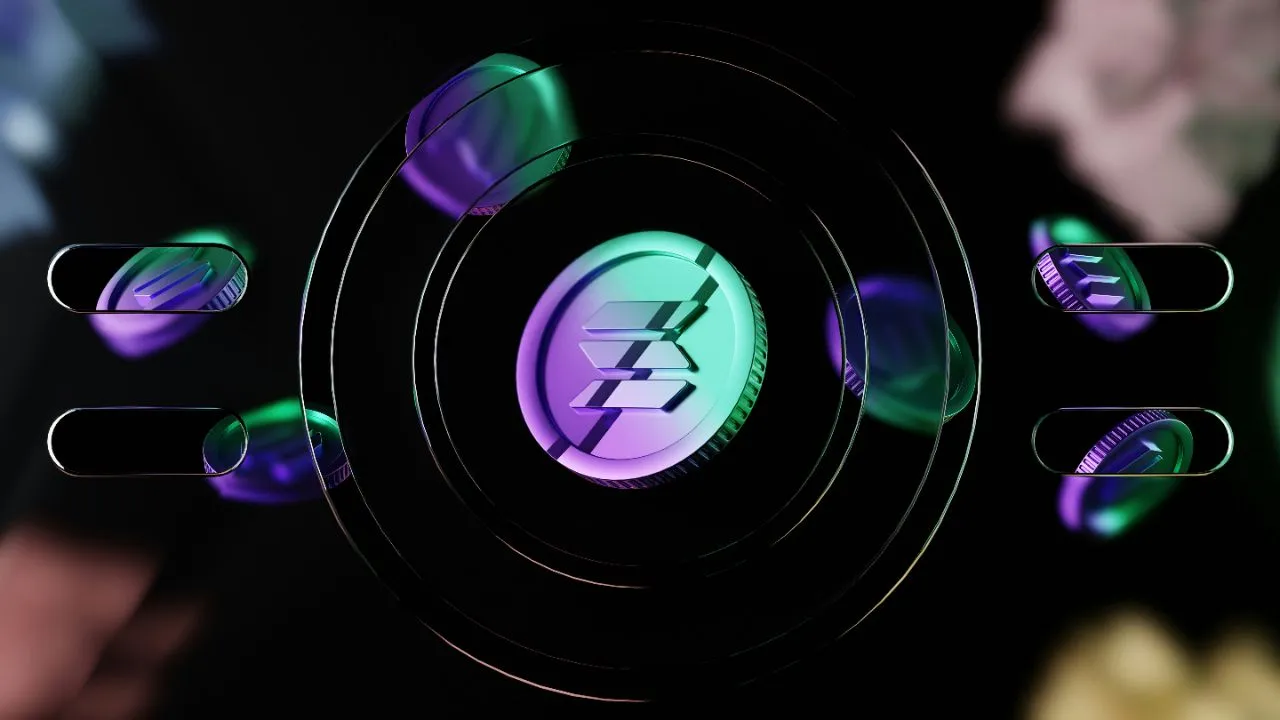
Kazakhstan’s central bank has begun testing a stablecoin tied to the national currency, advancing a broader plan to modernize the country’s financial infrastructure. According to Cointelegraph, the pilot, run inside the National Bank of Kazakhstan’s Digital Assets Regulatory Sandbox, introduces Evo, a token with the ticker KZTE that is built on Solana and backed by the tenge.


Intebix, a local crypto exchange, and Eurasian Bank are issuing KZTE. Mastercard is preparing connections that would link the token with major stablecoin issuers worldwide. The central bank is not minting the asset, but it is providing the regulatory framework that allows the token to be created and tested. Intebix founder Talgat Dossanov said the initiative is the first instance of the monetary authority directly engaging in the process of stablecoin issuance.
https://asset.coinness.com/en/news/43cc65a6b5429b5151882772a928f02b.webp
Photo by GuerrillaBuzz on Unsplash

Building a national crypto ecosystem

Early use cases focus on practical payments and on-ramps. The token is designed to widen the bridge between crypto and fiat, support conversions on exchanges, and enable spending through crypto cards. Officials described the pilot as a building block in a national digital asset ecosystem that aims to nurture new financial tools and deepen the local market.


The program aligns with guidance from President Kassym Jomart Tokayev, who in a Sept.  8 address urged faster development of a comprehensive digital asset environment. He called for a new banking law to boost competition, attract new players, strengthen fintech, and ease the circulation of digital assets. Tokayev also cited progress with the digital tenge, already in use to finance projects through the sovereign wealth fund, and proposed creating a state crypto fund under the central bank’s investment arm to launch a strategic reserve of promising tokens.


USD stablecoin accepted as regulatory fees

Regulatory efforts extend beyond the sandbox. On Sept. 4, the Astana Financial Services Authority (AFSA), the independent regulator of the Astana International Financial Centre (AIFC), launched a pilot that lets companies based at the center pay regulatory fees using stablecoins backed by the U.S. dollar. More than 4,000 firms from over 80 countries are registered at the AIFC, and Bybit was the first to sign a multilateral memorandum of understanding with the regulator.


Under the fee pilot, licensed Digital Asset Service Providers may join as Providers and act as agents for payers who choose to settle obligations to the regulator with stablecoins. AFSA chief executive Evgeniya Bogdanova said the initiative is meant to position the financial center as a hub for digital finance and to keep pace with global trends in stablecoin adoption.


Together, the sandbox stablecoin, the digital tenge rollout, and the AIFC payments pilot signal a coordinated push to make digital assets a larger part of Kazakhstan’s financial system. Authorities are testing how these tools can operate within clear rules, with an eye to drawing investment and keeping the country connected to fast-moving changes in global finance.


 

More to Read
View All
Policy & Regulation·

Sep 22, 2023

Korea to Tighten Scrutiny of Crypto Exchange Shareholders Amid Rising Concerns

Korea to Tighten Scrutiny of Crypto Exchange Shareholders Amid Rising ConcernsSouth Korea’s financial regulator is stepping up efforts to evaluate the qualifications of majority shareholders of cryptocurrency exchanges, according to a report by local news outlet Newsis. This initiative follows instances where majority shareholders of local exchanges, including Bithumb, found themselves embroiled in criminal proceedings. Drawing parallels with the banking sector, the regulator is scrutinizing the credentials of majority shareholders to ensure compliance and integrity within the cryptocurrency exchange landscape.Photo by Terrence Low on UnsplashRevamping reporting requirementsThe Financial Intelligence Unit (FIU) under the Financial Services Commission recently set up a task force to revamp the reporting requirements for crypto exchanges.The upcoming requirements are anticipated to be integrated into the reporting forms that cryptocurrency exchanges must complete, starting in October of next year. Essentially, these stipulations will determine whether existing exchanges, such as Upbit, Bithumb, and Coinone, can sustain their operations in the future.Periodic evaluationAccording to the Enforcement Decree of the Financial Transaction Reports Act, all virtual asset service providers (VASPs), including exchanges, are mandated to submit a renewal report every three years. Upbit, having been the first to submit its initial report in October 2021, will join other crypto exchanges in updating their reports in October 2024.A majority shareholder qualification assessment is a process in which the government periodically checks whether majority shareholders have the necessary qualifications to operate a financial company. Through this process, the FIU aims to curb potential illicit activities by majority shareholders, who hold significant sway over cryptocurrency exchange operations, thereby mitigating any potential harm to the users.Regulatory grey areaThis measure emerged from concerns that majority shareholders of exchanges have existed in a regulatory grey area. In fact, under the Financial Transaction Reports Act, only exchange representatives and registered officers are required to report and undergo examination when declaring VASPs. This leaves the actual owners and controllers — the majority shareholders — unidentified and unexamined.The current circumstances involving VASPs are markedly different and more concerning compared to other financial sectors. In the banking sector, restrictions are placed on share ownership and voting rights if majority shareholders have breached financial laws or if they are capital entities forbidden from owning a bank. Similarly, online peer-to-peer lenders and large lenders are also under obligation to have their majority shareholders scrutinized, as they fall under analogous regulations.Fraud and manipulation allegationsThe heightened scrutiny is also thought to have been sparked by recent allegations of fraud and market manipulation involving some majority shareholders of Korean exchanges. For instance, Mr. Kang Jong-hyun, a majority shareholder of Bithumb, is currently facing a criminal trial for allegations of fraudulent and unfair trade activities under the Capital Markets Act. Additionally, Song Chi-hyung, the majority shareholder of Upbit and chairman of Dunamu, is facing a Supreme Court trial over alleged price manipulation through wash trading.Moves to amend legislationMeanwhile, efforts are underway in the National Assembly to amend the existing legislation. Yun Chang-hyun, a lawmaker from the ruling People Power Party and a member of the National Policy Committee, has recently proposed a bill to revise the Financial Transaction Reports Act. The amendment seeks to implement a majority shareholder screening system for VASPs.The proposed amendments would obligate VASPs, including crypto exchanges, to disclose information about their majority shareholders in their reports, thereby enabling the FIU to scrutinize any past financial crimes or economic offenses committed by these majority shareholders.

news
Policy & Regulation·

Nov 26, 2025

Korea tightens crypto oversight as major merger targets Nasdaq listing

South Korea’s cryptocurrency market is moving through a period of stricter oversight and policy debate, while major industry players pursue overseas listings against a backdrop of falling market valuations and weaker investor sentiment.Photo by Ori Song on UnsplashAccording to Newsis, financial regulators are close to finalizing penalties for the country’s major crypto exchanges after a wide-ranging review of their compliance systems. The Financial Intelligence Unit (FIU) under the Financial Services Commission (FSC) is preparing to issue sanctions such as institutional warnings, fines, and personnel measures against platforms found to have breached anti-money laundering (AML) rules. These actions follow a series of on-site inspections that began in August 2024 with Dunamu, the operator of Upbit, and were later extended to Bithumb, Coinone, Korbit, and Gopax. Authorities plan to determine and announce penalties in the order of these inspections, which concluded in April 2025. Stablecoin debate growsAt the same time, a policy debate is unfolding in the parliament over how far South Korea should go in supporting digital asset innovation. The Maeil Business Newspaper reported that Democratic Party lawmaker Min Byoung-dug has questioned the Bank of Korea’s cautious stance on launching a won-backed stablecoin. The central bank has identified seven main risks associated with such an asset, including possible de-pegging and threats to monetary policy stability. Min argues that the bank is placing too much weight on these micro-level risks. In a recent report, he contended that delaying innovation could lead to larger, structural economic losses and said the risks identified by the central bank can be managed through oversight and product design rather than by avoiding stablecoins altogether. Dunamu–Naver deal targets NasdaqIn the corporate sector, major fintech firms are pushing ahead with international expansion plans. Naver Financial and Dunamu, which operates the Upbit exchange, have endorsed a merger plan involving a comprehensive share swap, according to The Herald Business. The share swap ratio has been set at 1 to 2.54. This development follows earlier reports that the two firms were close to an agreement intended to support a future Nasdaq listing in the United States. Bitcoin slide persistsThese regulatory, legislative, and corporate developments are taking place as market conditions deteriorate. Global data show weakening demand, with spot Bitcoin exchange-traded funds (ETFs) recording about $3.5 billion in net outflows in November, according to Bloomberg, while CoinMarketCap data show Bitcoin prices down roughly 24% over the past month.  Domestic sentiment reflects this caution. In a weekly survey conducted by CoinNess and Cratos, 59.5% of South Korean investors said over the weekend that they expect Bitcoin prices to fall or crash this week, up from 43.6% a week earlier. Only 12.4% of respondents forecast a price increase. Views on the broader market cycle are also shifting. In the same survey, 42.9% of participants said they believe the bull market has already ended. Reflecting this sentiment, Alternative.me’s Crypto Fear & Greed Index is at 15, in the “Extreme Fear” zone as of Nov. 26. 

news
Web3 & Enterprise·

Jul 11, 2023

LINE NEXT and Sega Join Hands to Develop Web3 Games with NFTs

LINE NEXT and Sega Join Hands to Develop Web3 Games with NFTsLINE NEXT, the NFT business arm of Tokyo-based messaging app developer Line Corporation, has announced the signing of a memorandum of understanding (MOU) with Japanese game company Sega. This partnership will see LINE NEXT acquiring intellectual property (IP) licenses of Sega’s video game franchises for the purpose of jointly developing Web3 games.Renowned for its iconic Sonic the Hedgehog franchise, Sega boasts studios in Japan and abroad. The Japanese game publisher produces games of various genres on different platforms, including arcade machines, desktop computers, and mobile phones. Sega has gained recognition for creating generational games for international users through innovative ideas and outstanding game development skills.Photo by Shubham’s Web3 on UnsplashWeb3 game popularizationThrough this collaboration, LINE NEXT will introduce Sega-licensed games on its NFT-based gaming platform, GAME DOSI, with the aim of popularizing Web3 games. GAME DOSI will provide functionalities such as NFT creation, easy payment, and marketing. While the specific lineup of games and their details will be revealed at a later date, LINE NEXT CEO Ko Young-su expressed his belief that this MOU with Sega will bring new elements of joy to global gamers, emphasizing that the NFT company is dedicated to delivering readily enjoyable Web3 content not only to Sega fans but to everyone through GAME DOSI.Launched in May, GAME DOSI focuses on user-oriented games with the slogan “Gamer First, Web3 Next.” The platform has recently unveiled several new games, including Sweet Monster Guardians (a village defense game); Vestria the Last Order, also known as V.L.O, (a roguelite role-playing game); and KEROZ (a hack and slash game). Additionally, GAME DOSI is actively involved in Project GD, an initiative aimed at developing a diverse range of games based on its own intellectual properties.LINE NEXT’s NFT endeavorsIn its efforts to attract NFT enthusiasts, LINE NEXT has undertaken various projects. Last month, it introduced DOSI Land, a program that rewards users with the FINSCHIA token (FNSA). FNSA is currently listed on crypto exchanges Bithumb, Bittrex, Huobi, and Gate.io, according to crypto market data website CoinMarketCap.Sega’s blockchain hesitancyMeanwhile, it was reported earlier that Sega has been rethinking its involvement in blockchain gaming. Shuji Utsumi, the Co-Chief Operating Officer of Sega, recently stated in an interview with Bloomberg that the company intends to protect the value of its content by withholding from participating in third-party blockchain gaming projects. Utsumi expressed his belief in the importance of the fun element in games, while he described “play-to-earn” (P2E) blockchain games as “boring.” P2E games refer to those that enable players to earn tokens as rewards for completing specific tasks or winning battles against other players.

news
Loading